The hub of the local robotics industry

The MIT spinout Ori attracted a lot of attention when it unveiled its shapeshifting furniture prototypes in 2014. But after the founders left MIT, they faced a number of daunting challenges. Where would they find the space to build and demo their apartment-scale products? How would they get access to the machines and equipment necessary for prototyping? How would they decide on the control systems and software to run with their new furniture? Did anyone care about its innovations?

Ori, which signed a global agreement with Ikea in 2019, got help with all of those challenges when it found a home in MassRobotics, a nonprofit that incubates startups in addition to many other networking, education, and industry-building initiatives.

Ori is one of over 100 young companies MassRobotics has supported since its founding in 2014. With more than 40,000 square feet of office and lab space, MassRobotics’ headquarters in Boston’s Seaport District holds over 30 testing robots, prototyping machines, 3-D printers, and more.

Today MassRobotics works with hundreds of companies of all sizes, from startups to large corporate partners like Amazon, Google, and Mitsubishi Electric, fostering collaboration and advancing the robotics industry by publishing standards, hosting events, and organizing educational workshops to inspire the next generation of roboticists.

“MassRobotics is growing the robotics ecosystem in Massachusetts and beyond,” says Daniela Rus, director of the Computer Science and Artificial Intelligence Laboratory (CSAIL) at MIT, who has served on the board of MassRobotics since its inception. “It’s doing so much more than helping startups. They work with the academic community on grants, they act as matchmaker between companies and research groups, they have educational programs for high school students and facilitate internships, and it’s also working on diversity and inclusion.”

Just as MIT’s mission emphasizes translating knowledge into impact, MassRobotics’ mission is to help roboticists and entrepreneurs make a positive impact by furthering a field that most agree will play an increasingly large role in our work and personal lives.

“We have a job to envision a future that is better, more equitable and sustainable than the past, and then make it happen,” says Daniel Theobald ’95 SM ’98, who co-founded MassRobotics with Fady Saad SM ’13, Tye Brady ’99, Steve Paschall SM ’04, and Joyce Sidopoulos.

Bringing an industry together

Theobald first got the idea to start a robotics organization when he was giving a tour of his company Vecna Robotics to former CSAIL director Rodney Brooks. Around 2014, he began brainstorming ways to start a robotics organization with former Vecna director of strategy Fady Saad.

Joyce Sidopoulos, who was working at the Massachusetts Technology Leadership Council (Mass TLC) at the time, connected the pair with Brady and Paschall, who were working on a similar idea while at Draper in Cambridge.

“Before MassRobotics, robotics startups were creating amazing technologies, but they couldn’t easily break through to a commercialized product, because even if you have a working prototype, you can’t ship anything, and investors want to see validation,” Saad says. “Our motivation for founding MassRobotics was helping more of these companies become successful.”

Early on, the founders worked with MIT’s Industrial Liaison Program to get input from robotics companies and received help from people including Liz Reynolds, a principal research scientist at MIT and executive director of the MIT Industrial Performance Center. The first check was written by Gururaj Deshpande, founder of the MIT Deshpande Center for Technological Innovation. Today, dozens of corporate partners provide funding as well as the state of Massachusetts.

None of the founders think it’s a coincidence that so many of them hail from MIT.

“At commencement, [President L. Rafael Reif] gave a message that I’ll never forget: He said, ‘Go hack the world,’” says Saad, who also recently launched an investment firm for early-stage robotics companies called Cybernetix Ventures. “I think Reif’s message captures the DNA of MIT alumni. We’re all hackers. We make things happen. We see a problem or a need and we fix it.”

Of course, MIT has also played a huge role in bolstering the local robotics ecosystem that MassRobotics seeks to foster.

“A lot of talent, tech and ideas are at MIT, but also a number of startups have come directly out of MIT and we house a number of them,” MassRobotics executive director Tom Ryden says. “That’s huge because it’s one thing to create technology, but creating companies is huge for the ecosystem and I think MIT does that exceptionally well.”

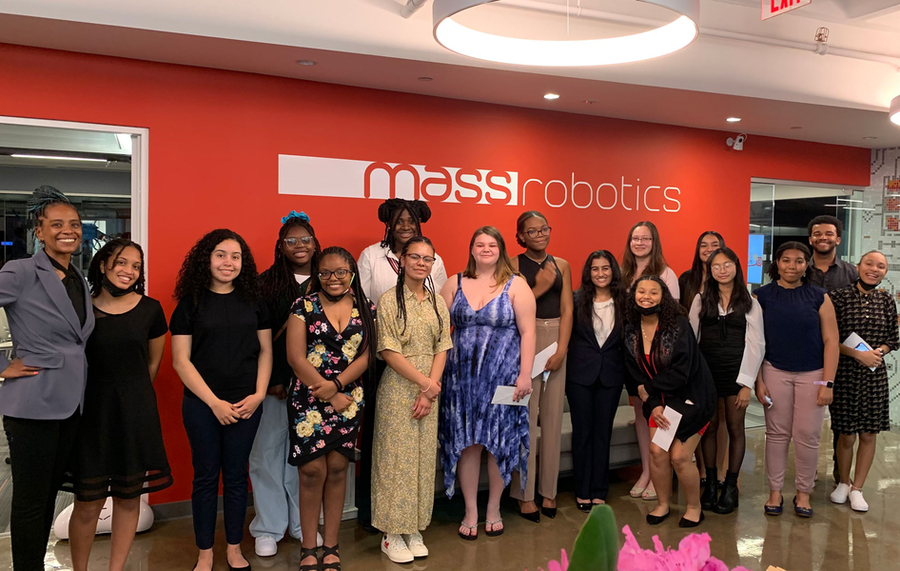
One of MassRobotics’ lead educational programs is geared toward female high school students from diverse backgrounds. The program includes six months of education during weekends or summer vacation and a guaranteed internship at a local robotics company.

MassRobotics also recently announced a new “Robotics Medal” that will be awarded each year to a female researcher that has made significant discoveries or advances in robotics. The medal comes with a $50,000 prize and a fellowship that will give the recipient access to MassRobotics facilities.

“This is the first time in our field we have such a visible prize for a female roboticist,” says Rus, who is also the Andrew and Erna Viterbi Professor of Electrical Engineering and Computer Science at MIT. “I hope this sends a positive message to all the young aspiring roboticists. Robotics is an exciting field of work with the important mission to develop intelligent tools that help people with physical and cognitive work.”

Meanwhile, MIT’s connections with MassRobotics have come full circle: After years of collaboration, one of the first graduates of MassRobotics’ educational courses just finished her first year as an undergraduate in mechanical engineering at MIT.

Advancing an industry

The impact of MassRobotics’ educational programs hit home for Theobald a few years ago when he got a letter from a young woman who told him they had changed her life.

“The problem with robotics education is it’s very easy for young people to say, ‘Oh that’s hard’ and move on,” Theobald says. “Getting them to sit down and actually build something and realize what they can do is so powerful.”

A few weeks ago, Theobald was at MassRobotics to meet a group of German business leaders when he got off the elevator on the wrong floor and stumbled into a STEM education session with a group of middle schoolers. He could have just as easily walked into a networking session between startups and business leaders or, as Rus did recently, run into Bloomberg journalists hosting a television segment on the robotics industry.

The breadth of activities hosted by MassRobotics is a testament to the organization’s commitment to advancing every aspect of the industry.

“Robotics is the most challenging engineering endeavor humanity has ever taken on because it involves electrical engineering, mechanical engineering, software — plus you’re trying to emulate human behavior and intelligence — so it requires the best of artificial intelligence,” Theobald says. “It all has to come together for successful robotics. That’s what we help do.”
School of Engineering second quarter 2022 awards

Members of the MIT engineering faculty receive many awards in recognition of their scholarship, service, and overall excellence. The School of Engineering periodically recognizes their achievements by highlighting the honors, prizes, and medals won by faculty working in our academic departments, labs, and centers.

School of Engineering Awards for 2022

The MIT School of Engineering recently announced its 2022 awards, honoring outstanding faculty, graduate, and undergraduate students.

The Bose Award for Excellence in Teaching, given to a faculty member whose contributions have been characterized by dedication, care, and creativity, was presented to Michael Short, Class of ’42 Associate Professor in Nuclear Science and Engineering.

The Junior Bose Award, for an outstanding contributor to education from among the junior faculty of the School of Engineering, went to Irmgard Bischofberger, the Class of 1942 Career Development Professor in Mechanical Engineering.

Ruth and Joel Spira Awards for Excellence in Teaching are awarded annually to one faculty member in each of three departments — Electrical Engineering and Computer Science, Mechanical Engineering, and Nuclear Science and Engineering — to acknowledge “the tradition of high-quality engineering education at MIT.” A fourth award rotates among the School of Engineering’s five other academic departments. This year’s recipients were:

  • George Barbastathis, Singapore Research Professor of Optics and professor of mechanical engineering
     
  • Phillip Isola, Bonnie and Marty (1964) Tenenbaum Career Development Assistant Professor
     
  • Nuno Loureiro, professor of nuclear science and engineering and professor of physics
     
  • Kevin O’Brien, Emanuel E. Landsman (1958) Career Development Professor and assistant professor

The Barry M. Goldwater Scholarship, given to students who exhibit an outstanding potential and intend to pursue careers in mathematics, the natural sciences, or engineering disciplines that contribute significantly to technological advances in the United States, was awarded to engineering students Zoë Marschner and Charlotte Wickert

The Henry Ford II Award, presented to a senior engineering student who has maintained a cumulative average of 5.0 at the end of their seventh term and who has exceptional potential for leadership in the profession of engineering and in society, was presented to Sreya Vangara ’22, who double majored in mechanical engineering and electrical engineering and computer science.

The Capers and Marion McDonald Award for Excellence in Mentoring and Advising, awarded to a faculty member who has demonstrated a lasting commitment to the personal and professional development of others, was presented to Colette Heald, The Germeshausen Professor in the Department of Civil and Environmental Engineering.

The Graduate Student Extraordinary Teaching and Mentoring Award, given to a graduate student in the School of Engineering who has demonstrated extraordinary teaching and mentoring as a teaching or research assistant, was presented to Keegan Mendez

The newly launched School of Engineering Distinguished Educator Award recognizing outstanding contributions to undergraduate and/or graduate education by members of its faculty and teaching staff (lecturer or instructor), was awarded to Barbara Hughey.

Artificial intelligence model finds potential drug molecules a thousand times faster

The entirety of the known universe is teeming with an infinite number of molecules. But what fraction of these molecules have potential drug-like traits that can be used to develop life-saving drug treatments? Millions? Billions? Trillions? The answer: novemdecillion, or 1060. This gargantuan number prolongs the drug development process for fast-spreading diseases like Covid-19 because it is far beyond what existing drug design models can compute. To put it into perspective, the Milky Way has about 100 billion, or 1011, stars.

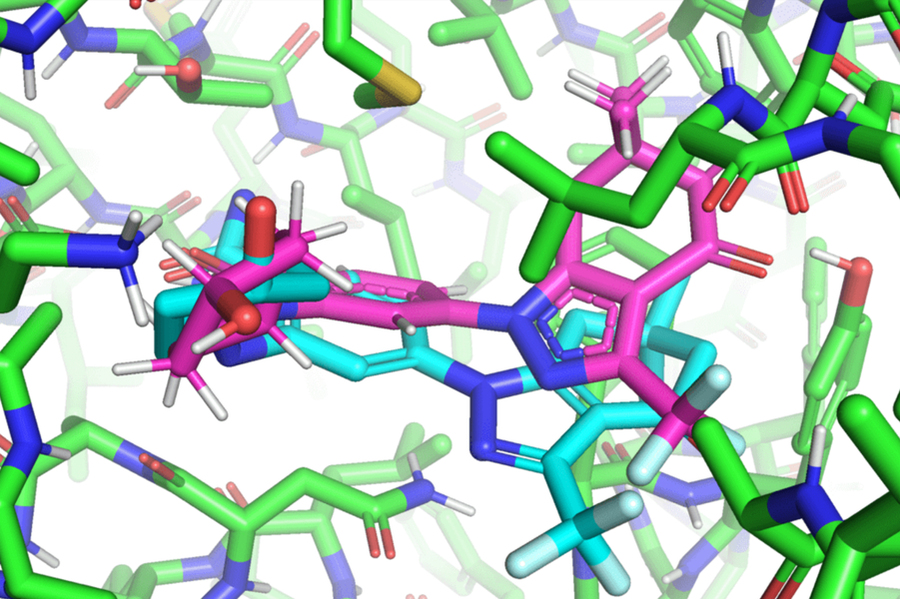
In a paper that will be presented at the International Conference on Machine Learning (ICML), MIT researchers developed a geometric deep-learning model called EquiBind that is 1,200 times faster than one of the fastest existing computational molecular docking models, QuickVina2-W, in successfully binding drug-like molecules to proteins. EquiBind is based on its predecessor, EquiDock, which specializes in binding two proteins using a technique developed by the late Octavian-Eugen Ganea, a recent MIT Computer Science and Artificial Intelligence Laboratory and Abdul Latif Jameel Clinic for Machine Learning in Health (Jameel Clinic) postdoc, who also co-authored the EquiBind paper.

Before drug development can even take place, drug researchers must find promising drug-like molecules that can bind or “dock” properly onto certain protein targets in a process known as drug discovery. After successfully docking to the protein, the binding drug, also known as the ligand, can stop a protein from functioning. If this happens to an essential protein of a bacterium, it can kill the bacterium, conferring protection to the human body.

However, the process of drug discovery can be costly both financially and computationally, with billions of dollars poured into the process and over a decade of development and testing before final approval from the Food and Drug Administration. What’s more, 90 percent of all drugs fail once they are tested in humans due to having no effects or too many side effects. One of the ways drug companies recoup the costs of these failures is by raising the prices of the drugs that are successful.

The current computational process for finding promising drug candidate molecules goes like this: most state-of-the-art computational models rely upon heavy candidate sampling coupled with methods like scoring, ranking, and fine-tuning to get the best “fit” between the ligand and the protein. 

Hannes Stärk, lead author of the paper and a first-year graduate student advised by Regina Barzilay and Tommi Jaakkola in the MIT Department of Electrical Engineering and Computer Science, likens typical ligand-to-protein binding methodologies to “trying to fit a key into a lock with a lot of keyholes.” Typical models time-consumingly score each “fit” before choosing the best one. In contrast, EquiBind directly predicts the precise key location in a single step without prior knowledge of the protein’s target pocket, which is known as “blind docking.”

Unlike most models that require several attempts to find a favorable position for the ligand in the protein, EquiBind already has built-in geometric reasoning that helps the model learn the underlying physics of molecules and successfully generalize to make better predictions when encountering new, unseen data.

The release of these findings quickly attracted the attention of industry professionals, including Pat Walters, the chief data officer for Relay Therapeutics. Walters suggested that the team try their model on an already existing drug and protein used for lung cancer, leukemia, and gastrointestinal tumors. Whereas most of the traditional docking methods failed to successfully bind the ligands that worked on those proteins, EquiBind succeeded.

“EquiBind provides a unique solution to the docking problem that incorporates both pose prediction and binding site identification,” Walters says. “This approach, which leverages information from thousands of publicly available crystal structures, has the potential to impact the field in new ways.”

“We were amazed that while all other methods got it completely wrong or only got one correct, EquiBind was able to put it into the correct pocket, so we were very happy to see the results for this,” Stärk says.

While EquiBind has received a great deal of feedback from industry professionals that has helped the team consider practical uses for the computational model, Stärk hopes to find different perspectives at the upcoming ICML in July.

“The feedback I’m most looking forward to is suggestions on how to further improve the model,” he says. “I want to discuss with those researchers … to tell them what I think can be the next steps and encourage them to go ahead and use the model for their own papers and for their own methods … we’ve had many researchers already reaching out and asking if we think the model could be useful for their problem.”

This work was funded, in part, by the Pharmaceutical Discovery and Synthesis consortium; the Jameel Clinic; the DTRA Discovery of Medical Countermeasures Against New and Emerging threats program; the DARPA Accelerated Molecular Discovery program; the MIT-Takeda Fellowship; and the NSF Expeditions grant Collaborative Research: Understanding the World Through Code.

This work is dedicated to the memory of Octavian-Eugen Ganea, who made crucial contributions to geometric machine learning research and generously mentored many students — a brilliant scholar with a humble soul.

Costis Daskalakis appointed inaugural Avanessians Professor in the MIT Schwarzman College of Computing

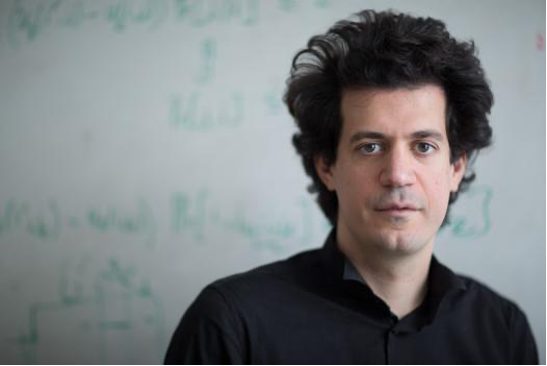
The MIT Stephen A. Schwarzman College of Computing has named Costis Daskalakis as the inaugural holder of the Avanessians Professorship. His chair began on July 1.

Daskalakis is the first person appointed to this position generously endowed by Armen Avanessians ’81. Established in the MIT Schwarzman College of Computing, the new chair provides Daskalakis with additional support to pursue his research and develop his career.

“I’m delighted to recognize Costis for his scholarship and extraordinary achievements with this distinguished professorship,” says Daniel Huttenlocher, dean of the MIT Schwarzman College of Computing and the Henry Ellis Warren Professor of Electrical Engineering and Computer Science.

A professor in the Department of Electrical Engineering and Computer Science, Daskalakis is a theoretical computer scientist who works at the interface of game theory, economics, probability theory, statistics, and machine learning. He has resolved long-standing open problems about the computational complexity of the Nash equilibrium, the mathematical structure and computational complexity of multi-item auctions, and the behavior of machine-learning methods such as the expectation–maximization algorithm. He has obtained computationally and statistically efficient methods for statistical hypothesis testing and learning in high-dimensional settings, as well as results characterizing the structure and concentration properties of high-dimensional distributions. His current work focuses on multi-agent learning, learning from biased and dependent data, causal inference and econometrics.

A native of Greece, Daskalakis joined the MIT faculty in 2009. He is a member of the Computer Science and Artificial Intelligence Laboratory and is affiliated with the Laboratory for Information and Decision Systems and the Operations Research Center. He is also an investigator in the Foundations of Data Science Institute.

He has previously received such honors as the 2018 Nevanlinna Prize from the International Mathematical Union, the 2018 ACM Grace Murray Hopper Award, the Kalai Game Theory and Computer Science Prize from the Game Theory Society, and the 2008 ACM Doctoral Dissertation Award.

Martha Gray named Whitaker Professor in Biomedical Engineering

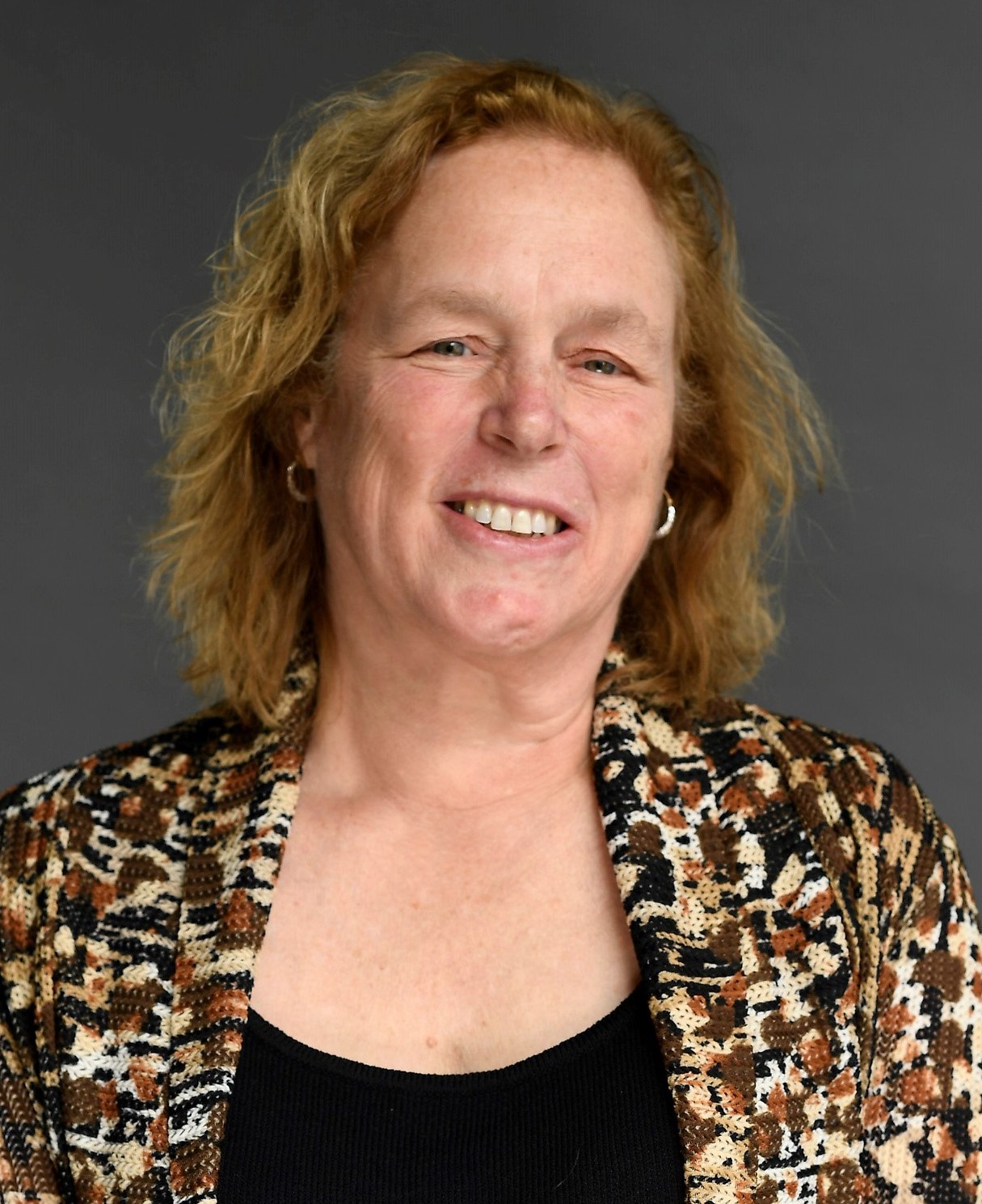
Martha Gray, PhD, professor of Electrical Engineering and Computer Science (EECS), has been appointed as the Whitaker Professor in Biomedical Engineering, effective July 1. Martha is also a core faculty member at the Institute for Medical Engineering and Science (IMES), and is a member of the faculty of the Harvard-MIT Program in Health Sciences and Technology (HST).

Gray (BS in computer science Michigan State University, SM ’81, PhD ’86) has built a wide-ranging, multi-faceted career at MIT, in which she has built programs to drive biomedical technology innovation, conducted research to better understand and prevent osteoarthritis, led a preeminent academic unit, and served the profession through work with organizations and institutions. Trained in computer science and electrical and biomedical engineering, and serving as an MIT faculty for three decades, Gray was the first woman to lead a science or engineering department at MIT. For more than 13 years she directed HST (where she received her PhD in medical engineering), and she currently directs MIT LinQ, which operates several multi-institutional ventures focusing on accelerating and deepening early-career researchers’ potential for impact.

Among her other honors, Gray is an elected fellow of the AAAS, the Biomedical Engineering Society (BMES), and the American Institute of Medical and Biological Engineers (AIMBE). She is associate editor of the Annual Reviews of Biomedical Engineering.

The Whitaker Professor in Biomedical Engineering is a chair established by the late Uncas A. Whitaker, a life member of the MIT Corporation. His research focused on applications of physics and engineering to solving problems in biology and medicine, particularly in the cardiovascular area.

MIT design for Mars propellant production trucks wins NASA competition

Using the latest technologies currently available, it takes over 25,000 tons of rocket hardware and propellant to land 50 tons of anything on the planet Mars. So, for NASA’s first crewed mission to Mars, it will be critical to learn how to harvest the red planet’s local resources in order to “live off the land” sustainably.

On June 24, NASA announced that an MIT team received first place in the annual Revolutionary Aerospace Systems Concepts – Academic Linkage (RASC-AL) competition for their in-situ resource utilization (ISRU) design that produces propellant on Mars from local resources instead of bringing it from Earth.

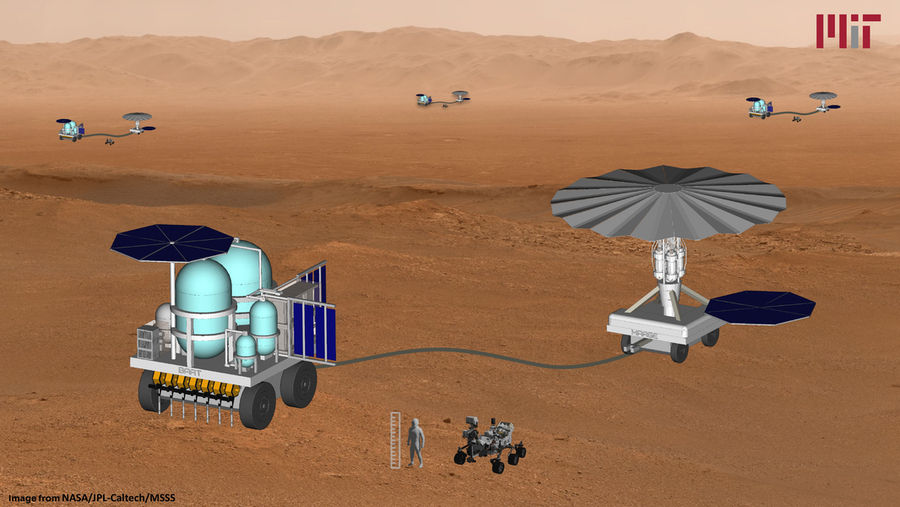
Their project “Bipropellant All-in-one In-situ Resource Utilization Truck and Mobile Autonomous Reactor Generating Electricity” (BART & MARGE) describes a system where pairs of BART and MARGE travel around Mars in tandem; BART handles all aspects of production, storage, and distribution of propellant, while MARGE provides power for the operation. After presenting their concept to a panel of NASA experts and aerospace industry leaders at the RASC-AL Forum in June, the team took first place overall at the competition and was also recognized as “Best in Theme.”

“Previous ISRU concepts utilized several different small rovers and a fixed central plant, but MIT’s BART and MARGE concept is composed of essentially just two types of fully mobile, integrated large trucks with no central plant,” says Chloé Gentgen, PhD candidate in the Department of Aeronautics and Astronautics (AeroAstro) who served as team lead for the project. “The absence of a central plant enables easy scalability of the architecture, and being fully mobile and integrated, our system has the flexibility to produce propellant wherever the best ice reserves can be found and then deliver it wherever it is needed.”

Gentgen led an interdisciplinary group of undergraduate and graduate students from MIT, including Guillem Casadesus Vila, a visiting undergraduate student in AeroAstro from the Centre de Formació Interdisciplinària Superior at the Universitat Politècnica de Catalunya; Madelyn Hoying, a PhD candidate in the Medical Engineering and Medical Physics program within the Harvard-MIT Program in Health Sciences and Technology; AeroAstro alum Jayaprakash Kambhampaty ’22, rising MIT senior Mindy Long of the Department of Electrical Engineering and Computer Science (EECS); rising sophomore Laasya Nagareddy of the Department of Mathematics; rising junior John Posada of AeroAstro; and rising sophomore Marina Ten Have of EECS. The team was formed last September when interested students joined the project. AeroAstro PhD candidate George Lordos, who founded the MIT Space Resources Workshop and who has led or advised all MIT NASA competition teams since 2017, was a mentor for the project team. Jeffrey Hoffman, professor of the practice in AeroAstro; and Olivier de Weck, Apollo Program Professor and professor of astronautics and engineering systems in AeroAstro, served as faculty advisors.

“One year ago, the MOXIE experiment led by Dr. Michael Hecht and our team’s advisor, Professor Jeffrey Hoffman, produced the first oxygen on Mars. Today, we are on the cusp of orbital test flights that will bring us closer to the first human mission to Mars,” says Lordos. “As humans venture to other worlds, finding and utilizing local water and carbon resources will be indispensable for sustainable exploration of the solar system, so the objective of our MIT team’s concept is an exciting and topical technology.”

The MIT team addressed the RASC-AL theme “Mars Water-based ISRU Architecture,” which required delivering the target 50 tons of propellant at the end of each year and the ability to operate for at least five years without human maintenance. A few other constraints were placed, chief among them that teams could rely on one or more landings of 45 tons of mass and 300 cubic meters of volume on Mars, leaving it to university teams to propose an architecture, budget, and a flight schedule to support their mission.

They developed a comprehensive Mars mission architecture and defined a comprehensive concept of operations, from a precursor ice scouting and technology demonstration mission in 2031 to the main propellant production, storage, and delivery mission in 2036. BART is an end-to-end “ice-to-propellant” system that gathers water from Martian subsurface ice and extracts carbon dioxide from the red planet’s atmosphere to synthesize liquid methane and liquid oxygen bipropellant. These are then stored onboard at cryogenic temperatures until delivery directly into a rocket’s propellant tanks.

BART is accompanied by MARGE, a 40 kilowatt electric mobile nuclear reactor based on NASA’s Kilopower Reactor Using Stirling Technology project (KRUSTY, which also inspired the MIT team’s name) that generates power from nuclear fission to support long-duration operations on distant planets. For the team’s proposed mission, four tandems of BART and MARGEs will roam the region known as Arcadia Planitia at the mid-northern latitudes of Mars following a prospecting rover named LISA (Locating Ice Scouting Assistant) in search of accessible ice to use for propellant production. The entire system has 100 tons of storage capacity and can produce 156 tons per year, against a demand of 50 tons per year, and requires only three landings.

“When designing our concept, we focused on reliability and operational flexibility as our system-level design principles, to guarantee that the architecture could provide the propellant needed for a Mars ascent vehicle to be refilled before the first humans arrive on Mars, and that even after multiple years of robotic-only operations. Ultimately, our design achieved double-fault tolerance,” explains Casadesus Vila, who served as architecture lead on the project. “Next, we plan to present the BART & MARGE concept at an aerospace conference to get feedback from the ISRU community, and we will then describe the analysis work we have done in more detail for publication in a peer-reviewed journal,” adds Gentgen.

More than 50 teams responded to the initial call for RASC-AL entries, where participants submitted a proposal and a two-minute video. While this year marks the first time an MIT team took the top spot overall, MIT is no stranger to the RASC-AL competition. Previously, MIT placed first in the graduate division in 2017 and 2010 and second overall in 2016. In addition, MIT teams supported by Space Resources Workshop have won awards at other NASA competitions, including First Place Overall and Most Water Collected at the 2021 RASC-AL Special Edition for the HYDRATION III Mars Ice drilling system, and the Path to Flight and Industry Collaboration Awards for the MELLTT lunar tower system at the 2020 BIG Idea Challenge. Both Gentgen and Lordos spearheaded a sustained effort to increase MIT student participation in NASA-sponsored projects and competitions. This year, they were recognized for their leadership with the Apollo Program Prize given by MIT AeroAstro during their annual recognition ceremony in the spring.

“George Lordos and Chloé Gentgen brought together MIT students from all academic levels and four different departments. They mentored and led them throughout the past year and demonstrated how MIT AeroAstro is a great program providing system integration,” says de Weck. “The team framed their search for a superior ISRU architecture by stating that the question wasn’t how to produce propellant on Mars, but rather how to do so reliably and in a scalable way. Their application of state-of-the-art systems engineering yielded this award-winning, novel, and robust Mars propellant production architecture. We hope to see MIT’s BART & MARGE at Arcadia Planitia on Mars in the not-too-distant future.”

The Thriving Stars of AI

From fake news on social media to bias in facial recognition software, the negative effects of technology are hard to ignore. But these effects aren’t inevitable. Researchers in artificial intelligence (AI) and machine learning (ML) are actively tackling these problems, putting social outcomes at the forefront of their research. 

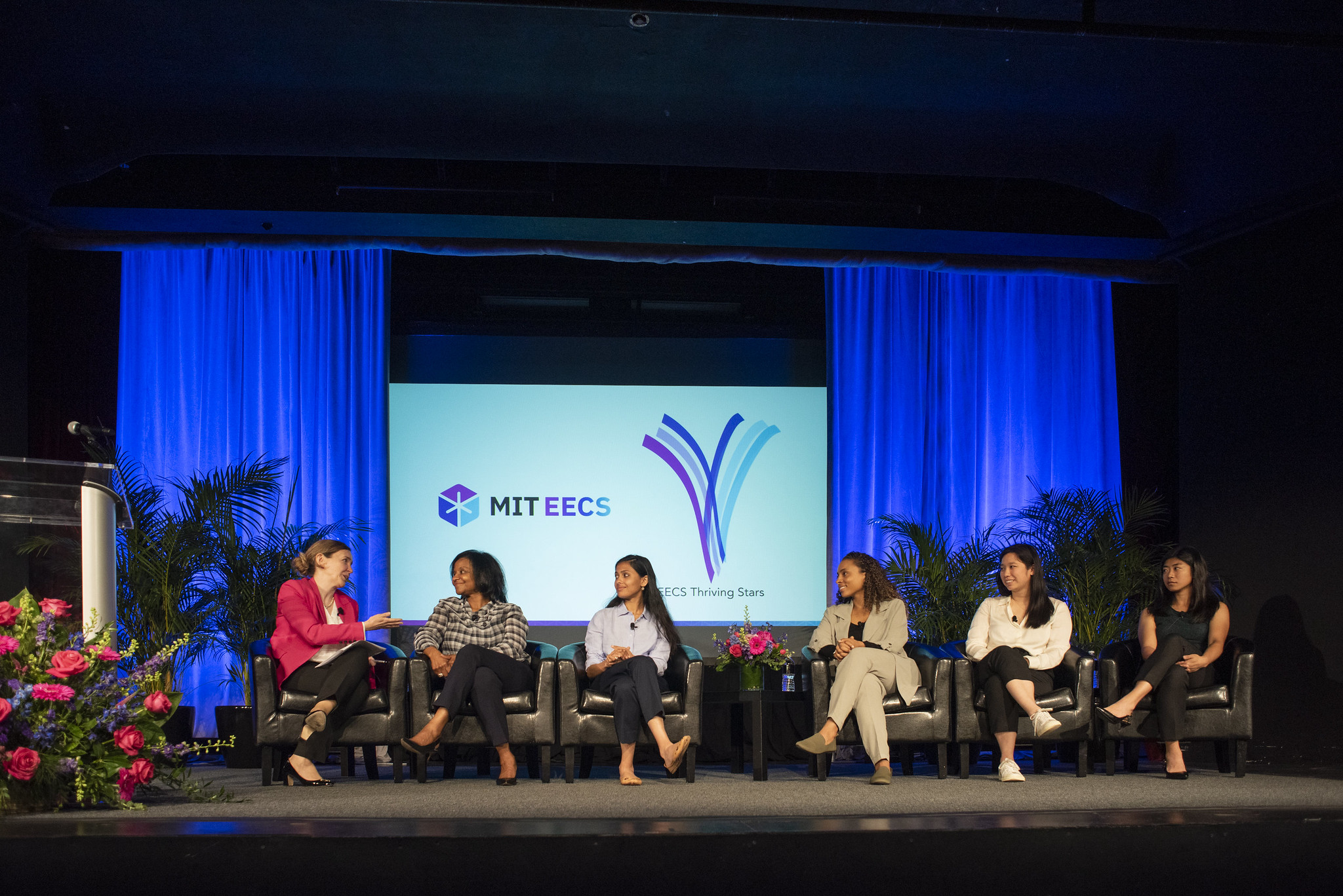
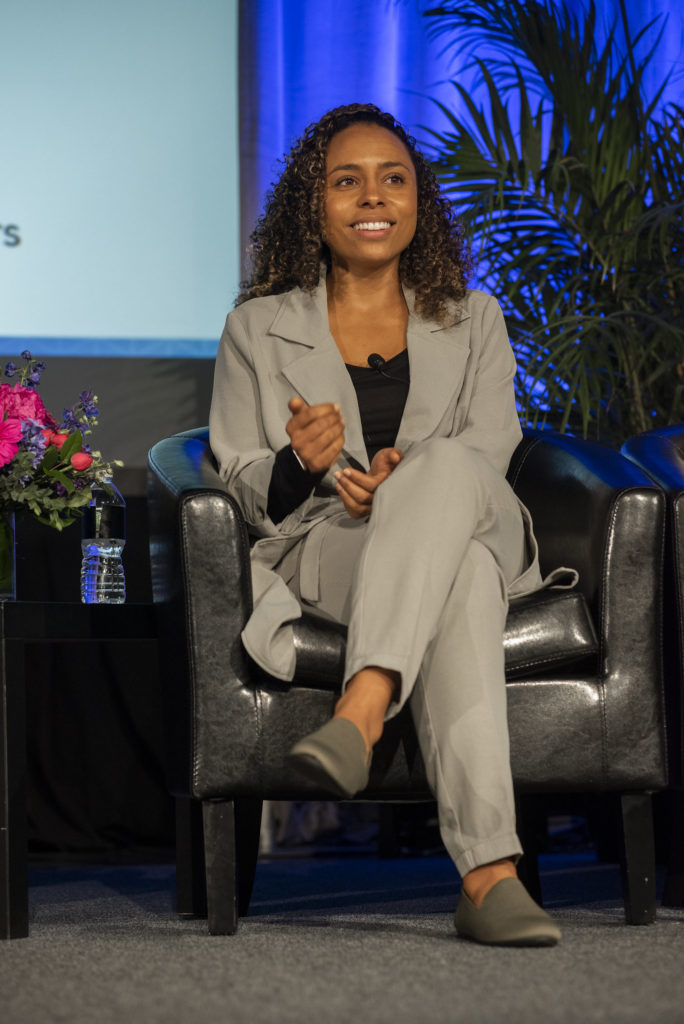
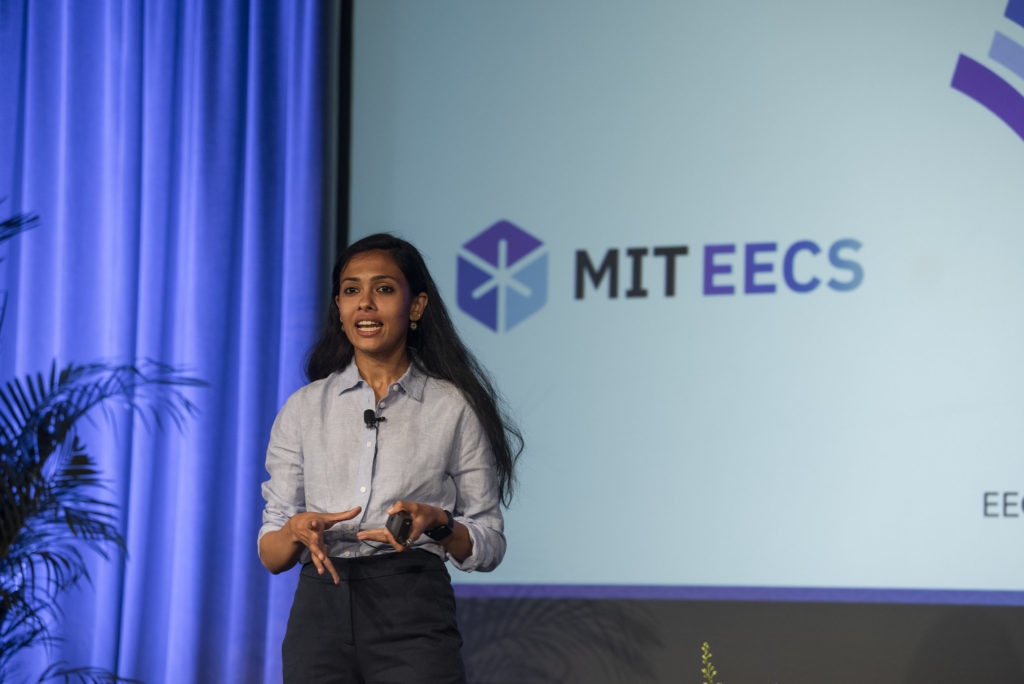
On May 13, Thriving Stars hosted a research summit on the social implications of AI and ML, featuring talks from four early-career researchers: Sarah Cen, Irene Chen, Danielle Olson-Getzen, and Shibani Santurkar. The speakers discussed how AI can be both helpful and detrimental in different contexts, from healthcare to social media to video games. Following the talks, Professor Carol Espy-Wilson of the University of Maryland at College Park joined the researchers on a panel, moderated by Professor Asu Ozdaglar, MIT EECS Department Head. 

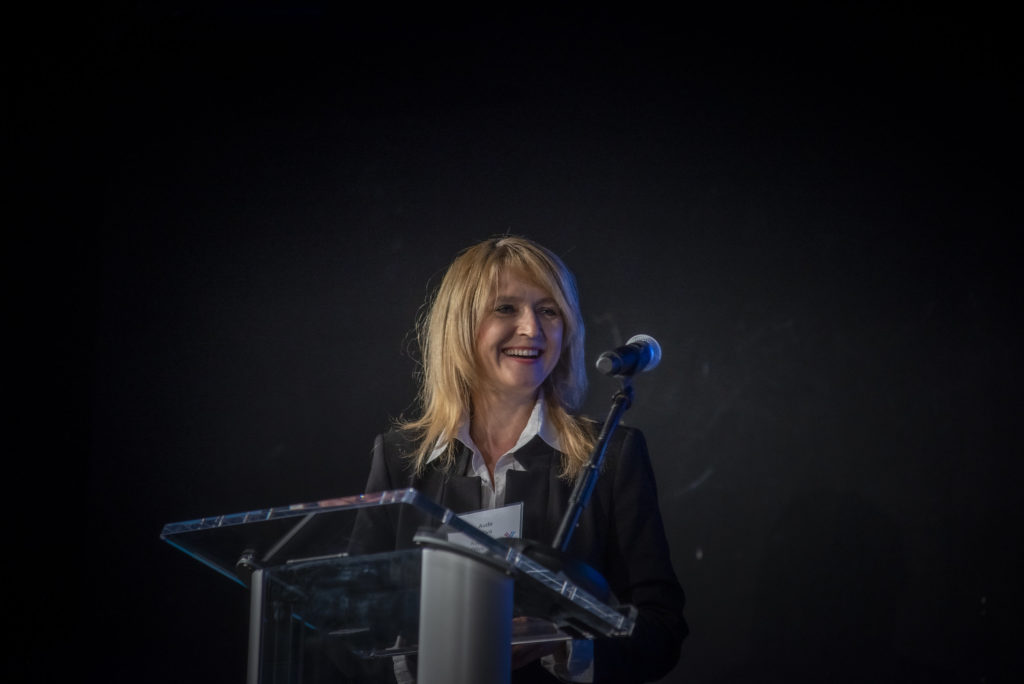
Aude Oliva, director of strategic industry engagement in the MIT Schwarzman College of Computing, served as the afternoon’s host. Photo credit: David Sella.

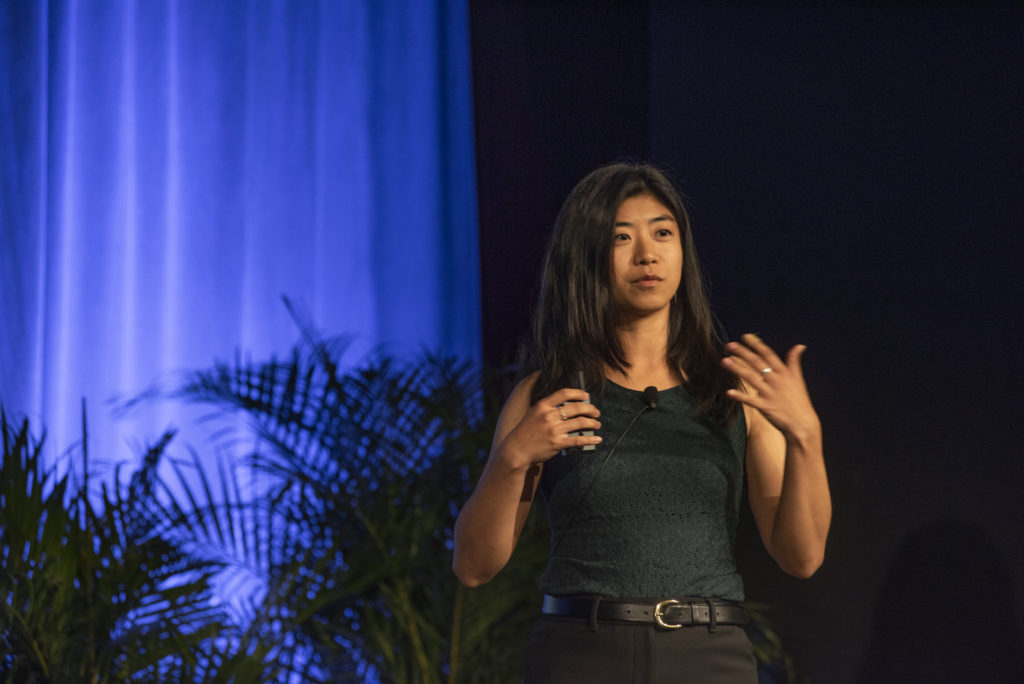
Shibani Santurkar, who earned her PhD at MIT last year and is now a postdoc at Stanford University, is tracking down the culprits behind AI’s negative effects. To do this, she’s breaking down how machine learning models, or systems, are developed. “It’s not that these models have some kind of bug in them,” she said, “It’s more systemic.” She examines each step of the development pipeline, or process – which includes collecting example data for a particular application, training models to make predictions from the data, and evaluating whether the models are performing properly – and then pinpoints places that need improvement. Now, Santurkar is “rethinking the machine learning pipeline” by figuring out how to “bake” social values, such as privacy and fairness, into these models. “We really need to rethink not only how these models are making their decisions but also how we want them to make their decisions,” she said.

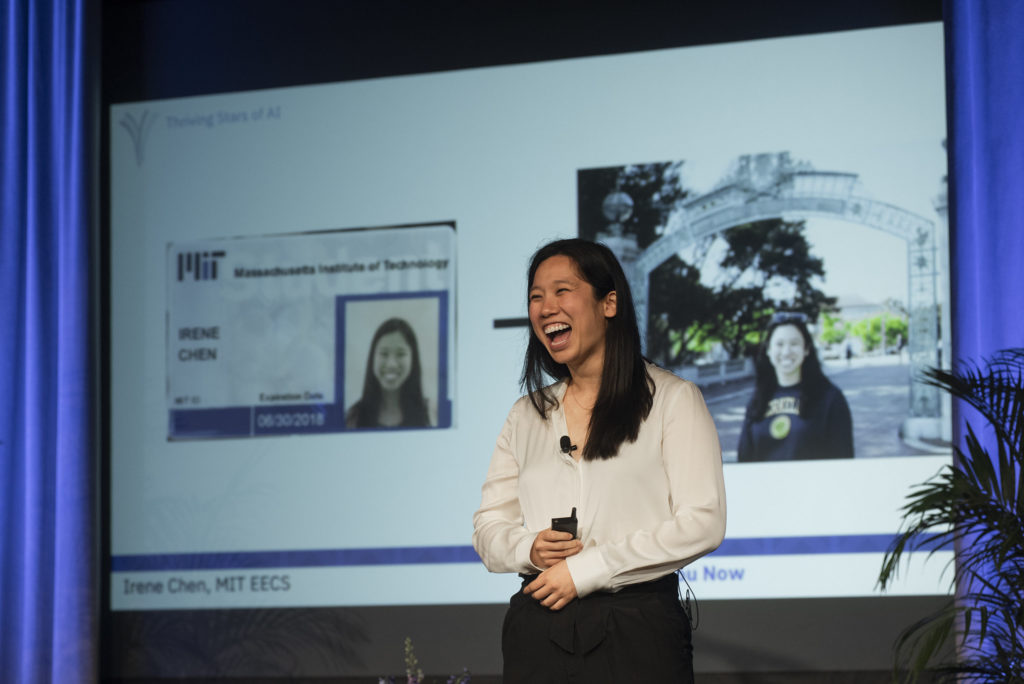
Irene Chen, a current MIT PhD student, also grapples with systemic problems with machine learning applications in healthcare. In this space, additional challenges arise. “Medical data is super messy,” she said. Patient data is often incomplete, with patient visits being spaced out in time and even patient histories having holes. With incomplete data, researchers struggle to train machine learning models that can accurately diagnose patients or devise treatment plans. Moreover, by using data from an already flawed system, these models can inadvertently “create and magnify bias in healthcare,” Chen said. 

Irene Chen interspersed her talk with lively personal anecdotes from her time at MIT. Photo credit: David Sella

For example, models can skew towards demographics that appear more often in the training data, such as patients with better health insurance who may seek healthcare more frequently. “I often feel like doing machine learning for healthcare is doing machine learning on hard mode,” she said. Through her research, Chen is working to concretely understand these challenges to help make ethical and equitable AI for healthcare.

The summit’s speakers also discussed how they’re addressing social concerns with AI through interdisciplinary research. Sarah Cen, a current MIT PhD student, is combining strategies in engineering, economics, and public policy to develop protections for users of online platforms, such as social media. 

“We need guardrails in place,” said Sarah Cen of the social media platforms which millions of users rely upon. Photo credit: David Sella.

With so many stakeholders on these platforms, ranging from users to advertisers to the platforms themselves, it’s a juggling act to balance everyone’s demands. But users are often the ones who take the hit, suffering poor mental health or being led astray by misinformation. “The problem right now is that we just don’t have the infrastructure necessary [to protect users],” Cen said. “[We need] guardrails in place.” She is currently tackling this problem with a two-pronged approach, looking for technological and legislative solutions.

Danielle Olson-Getzen, who earned her PhD at MIT in spring 2021, draws upon her background in computer science and journalism to build people-centric technology. During her PhD, she worked to improve the diversity of avatars used in video games and virtual reality. To do this, she developed a design framework to help developers be mindful about how their algorithms generate an avatar’s race. “Representations within the stories around us have a tremendous impact on the way we live, work, and play,” she said. In fact, her experience growing up without a relatable STEM role model almost led her to pursue an entirely different career. 

Danielle Olson-Getzen, the first ever AI/ML human factors researcher at Apple, shared her perspective on the power of storytelling. Photo credit: David Sella.

Now, Olson-Getzen is the first AI/ML human factors researcher at Apple, where she researches people’s experiences with AI and uses their stories to inform AI design. “By listening to stories, we can better center humans in the AI development process,” she said.  

The summit’s speakers also stressed that despite the hazards of AI, the technology can lead to positive social outcomes. For example, in healthcare, AI can help uncover victims of domestic violence who might otherwise be afraid to speak up. By analyzing radiology scans, AI can flag clinicians if patients’ old injuries indicate a history of such violence, Chen said. Santurkar also provided a more meta example, where researchers can “use machine learning algorithms as a tool to understand the bias in our data” for training AI. 

The Thriving Stars of AI research summit was open to the public, attracting attendees both within and outside the MIT community. Many attendees were researchers in fields outside of AI who wanted a glimpse into their colleagues’ thoughts. “[I was curious] how they see the world and solve problems,” said Lakshita Boora, a PhD student in organizational behavior at Michigan State University, who added an MIT visit to her Boston vacation when she realized she could attend the summit. 

Shibani Santurkar is working to “bake in” human values such as fairness and equity into machine learning models. Photo credit: David Sella.

In the venue’s cozy atmosphere, audience members felt connected with the speakers, especially when they shared their personal stories. For Sara Pidò, a visiting PhD student in computer science at MIT, a memorable part of the summit was hearing the speakers’ challenges with balancing their professional and personal obligations. “I learned I’m not alone in this,” she said. Whenever the speakers shared their achievements – such as when Chen announced her upcoming job as an assistant professor at the University of California at Berkeley – the room immediately exploded with applause and cheers. “It felt good to see people succeeding and reaching their goals,” said Katia Oussar, a MS/PhD student in computer science at the University of Massachusetts Lowell.

The Thriving Stars of AI research summit is part of the Thriving Stars initiative to improve gender representation in the PhD program in EECS. Through this summit, researchers of underrepresented genders gained a platform to share their research and perspectives on a critical societal issue. In this way, the summit furthers the Thriving Stars mission “to ensure that the field of computing and information science fully represents the spectrum of humanity and is sensitive to our needs, our differing perspectives, and our very many shared challenges,” Ozdaglar said. Thriving Stars plans to host more research summits in the future to tackle other important technological challenges in our society.

As the four AI summit speakers move forward in their careers, they plan to carefully consider the double-edged social implications of AI in their research. “Technology has this ability to magnify what’s already there,” Chen said. “It can make people even more productive; it can also exacerbate existing biases.” With researchers being mindful of the hazards of AI and actively tackling its negative effects, the future for AI is hopeful.

MIT announces 2022 Bose grants for ambitious ideas

MIT Provost Cynthia Barnhart has announced three Professor Amar G. Bose Research Grants to support bold research projects across diverse areas of study including biology, engineering, and the humanities. 

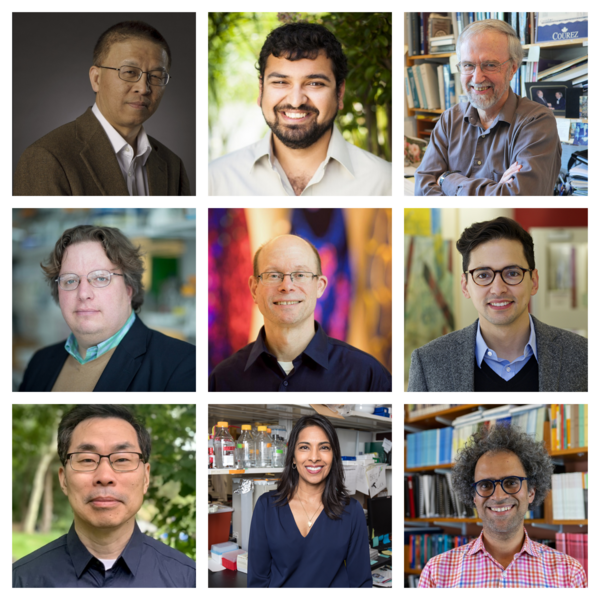
The three grants honor the visionary and bold thinking in the winning proposals of the following nine researchers: John J. and Dorothy Wilson Professor of Health Sciences and Technology and Electrical Engineering and Computer Science Sangeeta Bhatia; Carl Richard Soderberg Professor of Power Engineering Gang Chen; professor of biology Jianzhu Chen; associate professor of biology Michael Hemann; professor of anthropology and Margaret MacVicar Faculty Fellow Graham Jones; Latham Family Career Development Professor Sebastian Lourido; assistant professor of computer science Arvind Satayanaryan; Howard Hughes Medical Institute Professor Graham Walker; and David H. Koch Professor in Science Michael Yaffe;

“Innovation is born when a unique vision drives daring researchers to take on risky and adventurous projects, a notion that Amar Bose understood well,” says Barnhart. “With support and recognition from this program, these nine talented and forward-thinking faculty have the freedom to explore and study areas not typically backed by conventional funding sources.” 

The program was named for the visionary founder of the Bose Corporation and MIT alumnus, Amar G. Bose ’51, SM ’52, ScD ’56. After gaining admission to MIT, Bose became a top math student and a Fulbright Scholarship recipient. He spent 46 years as a professor at MIT, led innovations in sound design, and founded the Bose Corporation in 1964. MIT launched the program a decade ago.

“The legendary explorations and innovations of Professor Amar Bose inspire the Bose Research Grant program,” says President Emerita and Professor Susan Hockfield. “The grants support projects that reach beyond the horizon and so would not receive funding from standard sources. Since its inception, the program has supported 49 MIT faculty to pursue their most compelling ideas and, in doing so, to join the Bose Fellows community of like-minded adventurers.”  

The program, which has honored 35 projects to date, is a tribute to the legacy of Bose, who believed that passion and curiosity drive innovation. With that spirit in mind, the projects typically supported by the program are original, cross-disciplinary, and high-risk. The program has encouraged collaborative projects, as reflected in this year’s winners.

This year’s recipients are:

Gang Chen of the Department of Mechanical Engineering. With his proposal, “Photomolecular Effect and Clouds Thinning,” Chen will advance research into his discovery of a way in which photons can be absorbed by cleaving off water clusters from the water-air surface, significantly impacting technologies related to energy and water and climate models. 

Graham Jones of the Anthropology Section and Arvind Satayanaryan of the Department of Electrical Engineering and Computer Science (EECS). Their “Magical Data Visualization” proposal uses performance magic to create new visualizations that are responsive to the users’ intent, potentially impacting how misinformation spreads. 

Graham WalkerMichael HemannMichael YaffeSebastian LouridoJianzhu Chen of the Department of Biology and Sangeeta Bhatia of EECS and the Institute of Medical Engineering and Science. Their proposal, “Addressing Critical Human Health Problems with a Special Heme-binding Peptide,” uses a recently discovered plant peptide that binds and sequesters a molecule critical in hemoglobin oxygen binding in a new way, which has significant implications on many health issues. 

“This year, more than a dozen faculty members from departments across all five schools and the college participated in the evaluations,” says Chancellor for Academic Advancement Eric Grimson. “Their diverse perspectives were critical in assessing what was a very strong field of interesting proposals. We are grateful for their generous commitment of time and energy and the thoughtfulness with which they approached the selection process.”  

The program explores out-of-the-box ideas that would face difficulty in acquiring funding through traditional means but have the potential for strong impacts on the scientific community. Any member of the faculty in any discipline in MIT’s five schools and college is eligible to submit a proposal for a Bose Research Grant, which provides funding over three years. 

Robots play with play dough

The inner child in many of us feels an overwhelming sense of joy when stumbling across a pile of the fluorescent, rubbery mixture of water, salt, and flour that put goo on the map: play dough. (Even if this happens rarely in adulthood.)

While manipulating play dough is fun and easy for 2-year-olds, the shapeless sludge is hard for robots to handle. Machines have become increasingly reliable with rigid objects, but manipulating soft, deformable objects comes with a laundry list of technical challenges, and most importantly, as with most flexible structures, if you move one part, you’re likely affecting everything else. 

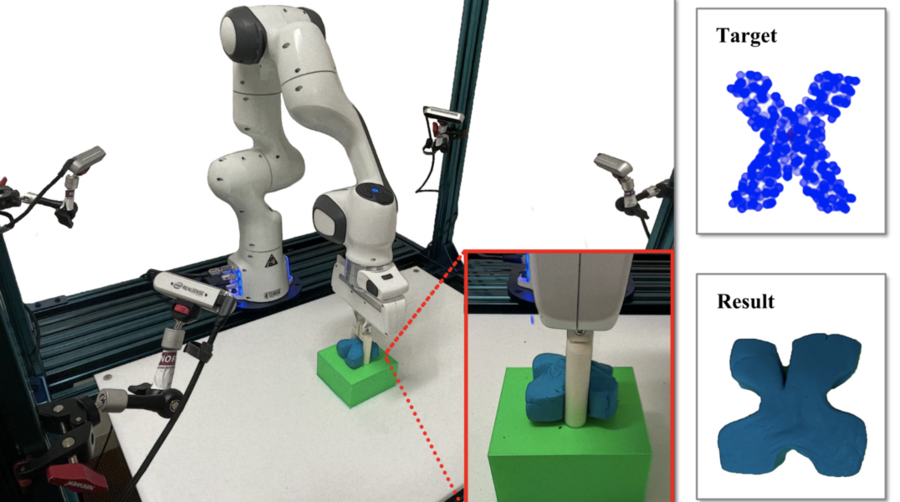
Scientists from MIT’s Computer Science and Artificial Intelligence Laboratory (CSAIL) and Stanford University recently let robots take their hand at playing with the modeling compound, but not for nostalgia’s sake. Their new system learns directly from visual inputs to let a robot with a two-fingered gripper see, simulate, and shape doughy objects. “RoboCraft” could reliably plan a robot’s behavior to pinch and release play dough to make various letters, including ones it had never seen. With just 10 minutes of data, the two-finger gripper rivaled human counterparts that teleoperated the machine — performing on-par, and at times even better, on the tested tasks. 

“Modeling and manipulating objects with high degrees of freedom are essential capabilities for robots to learn how to enable complex industrial and household interaction tasks, like stuffing dumplings, rolling sushi, and making pottery,” says Yunzhu Li, CSAIL PhD student and author on a new paper about RoboCraft. “While there’s been recent advances in manipulating clothes and ropes, we found that objects with high plasticity, like dough or plasticine — despite ubiquity in those household and industrial settings — was a largely underexplored territory. With RoboCraft, we learn the dynamics models directly from high-dimensional sensory data, which offers a promising data-driven avenue for us to perform effective planning.” 

With undefined, smooth material, the whole structure needs to be accounted for before you can do any type of efficient and effective modeling and planning. By turning the images into graphs of little particles, coupled with algorithms, RoboCraft, using a graph neural network as the dynamics model, makes more accurate predictions about the material’s change of shapes. 

Typically, researchers have used complex physics simulators to model and understand force and dynamics being applied to objects, but RoboCraft simply uses visual data. The inner-workings of the system relies on three parts to shape soft material into, say, an “R.” 

The first part — perception — is all about learning to “see.” It uses cameras to collect raw, visual sensor data from the environment, which are then turned into little clouds of particles to represent the shapes. A graph-based neural network then uses said particle data to learn to “simulate” the object’s dynamics, or how it moves. Then, algorithms help plan the robot’s behavior so it learns to “shape” a blob of dough, armed with the training data from the many pinches. While the letters are a bit loose, they’re indubitably representative. 

Besides cutesy shapes, the team is (actually) working on making dumplings from dough and a prepared filling. Right now, with just a two finger gripper, it’s a big ask. RoboCraft would need additional tools (a baker needs multiple tools to cook; so do robots) — a rolling pin, a stamp, and a mold. 

A more far in the future domain the scientists envision is using RoboCraft for assistance with household tasks and chores, which could be of particular help to the elderly or those with limited mobility. To accomplish this, given the many obstructions that could take place, a much more adaptive representation of the dough or item would be needed, and as well as exploration into what class of models might be suitable to capture the underlying structural systems. 

“RoboCraft essentially demonstrates that this predictive model can be learned in very data-efficient ways to plan motion. In the long run, we are thinking about using various tools to manipulate materials,” says Li. “If you think about dumpling or dough making, just one gripper wouldn’t be able to solve it. Helping the model understand and accomplish longer-horizon planning tasks, such as, how the dough will deform given the current tool, movements and actions, is a next step for future work.” 

Li wrote the paper alongside Haochen Shi, Stanford master’s student; Huazhe Xu, Stanford postdoc; Zhiao Huang, PhD student at the University of California at San Diego; and Jiajun Wu, assistant professor at Stanford. They will present the research at the Robotics: Science and Systems conference in New York City. The work is in part supported by the Stanford Institute for Human-Centered AI (HAI), the Samsung Global Research Outreach (GRO) Program, the Toyota Research Institute (TRI), and Amazon, Autodesk, Salesforce, and Bosch.