

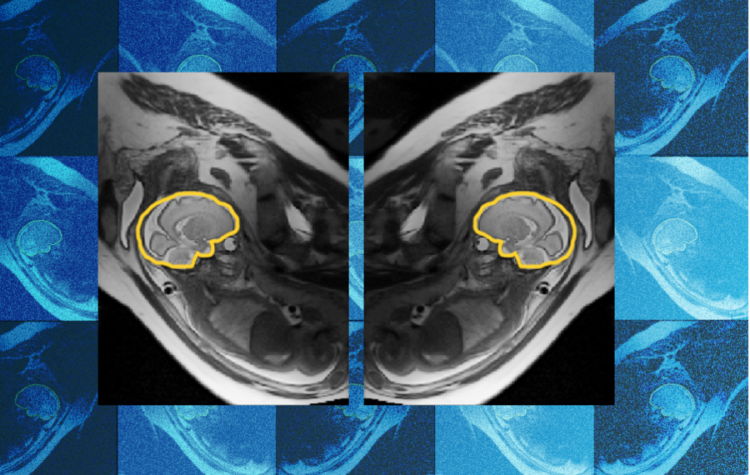
A model developed by researchers at MIT and Boston Children’s Hospital adjusts scans on the fly to track fetal movement, potentially sparing families repeat hospital visits.

Sensing with purpose
Fadel Adib uses wireless technologies to sense the world in new ways, taking aim at sweeping problems such as food insecurity, climate change, and access to health care.

Subtle biases in AI can influence emergency decisions
But the harm from a discriminatory AI system can be minimized if the advice it delivers is properly framed, an MIT team has shown.

A geometric deep-learning model is faster and more accurate than state-of-the-art computational models, reducing the chances and costs of drug trial failures.

Scientists demonstrate that AI-risk models, paired with AI-designed screening policies, can offer significant and equitable improvements to cancer screening.