Anantha Chandrakasan named MIT provost

Anantha Chandrakasan, a professor of electrical engineering and computer science who has held multiple leadership roles at MIT, has been named the Institute’s new provost, effective July 1.

Chandrakasan has served as the dean of the School of Engineering since 2017 and as MIT’s inaugural chief innovation and strategy officer since 2024. Prior to becoming dean, he headed the Department of Electrical Engineering and Computer Science (EECS), MIT’s largest academic department, for six years.

“Anantha brings to this post an exceptional record of shaping and leading important innovations for the Institute,” wrote MIT President Sally Kornbluth, in an email announcing the decision to the MIT community today. “I am particularly grateful that we will be able to draw on Anantha’s depth and breadth of experience; his nimbleness, entrepreneurial spirit and boundless energy; his remarkable record in raising funds from outside sources for important ideas; and his profound commitment to MIT’s mission.”

The provost is MIT’s senior academic and budget officer, with overall responsibility for the Institute’s educational programs, as well as for the recruitment, promotion, and tenuring of faculty. With the president and other members of the Institute’s senior leadership team, the provost establishes academic priorities, manages financial planning and research support, and oversees MIT’s international engagements.

“I feel deeply honored to take on the role of provost,” says Chandrakasan, who is also the Vannevar Bush Professor of Electrical Engineering and Computer Science. “Looking ahead, I see myself as a key facilitator, enabling faculty, students, postdocs, and staff to continue making extraordinary contributions to the nation and the world.”

Investing in excellence

Chandrakasan succeeds Cynthia Barnhart, who announced her decision to step down from the role in February. As dean of engineering, Chandrakasan worked with Barnhart closely during her tenure as provost and, before that, chancellor.

“Cindy has been a tremendous mentor,” he says. “She is always very thoughtful and makes sure she hears all the viewpoints, which is something I will strive to do as well. I so admire how deftly she approaches complex problems and supports a variety of perspectives and approaches.”

As MIT’s chief academic officer, Chandrakasan will focus on three overarching priorities: understanding institutional needs and strategic financial planning, attracting and retaining top talent, and supporting cross-cutting research, education, and entrepreneurship programming. On all of these fronts, he plans to seek frequent input from across the Institute.

“Recognizing that each school and other academic units operate within a unique context, I plan to engage deeply with their leaders to understand their challenges and aspirations. This will help me refine and set the priorities for the Office of the Provost,” Chandrakasan says.

He also plans to establish a provost faculty advisory group to hear on an ongoing basis from faculty across the five schools and the college, as well as student/postdoc advisory groups and an external provost advisory council.

“My goal is to continue to facilitate excellence at MIT at all levels,” Chandrakasan says.

He adds: “There is a tremendous opportunity for MIT to be at the center of the innovations in areas where the United States wants to lead. It’s about AI. It’s about semiconductors. It’s about quantum, the biosecurity and biomanufacturing space — but not only that. We need students who can do more than just code or design or build. We really need students who understand the human perspective and human insights. This is why collaborations between STEM fields and the humanities, arts and social sciences, such as through the new MIT Human Insights Collaborative, are so important.”

In her email to the MIT community, Kornbluth also noted that Institute Professor Paula Hammond, currently vice provost for faculty, will take on an expanded portfolio with the new title of executive vice provost, and Deputy Dean of Engineering Maria Yang will serve as interim dean until the new dean is in place.

Advancing the president’s vision

In February 2024, Chandrakasan was appointed at MIT’s first chief innovation and strategy officer, to help develop and implement plans to advance research, education, and innovation in areas that President Kornbluth identified as her top priorities.

Working closely with the president, Chandrakasan oversaw MIT’s launch of several Institute-wide initiatives, including the MIT Human Insight Collaborative (MITHIC), the MIT Health and Life Sciences Collaborative (MIT HEALS), the MIT Generative AI Impact Consortium (MGAIC, or “magic”), the MIT Initiative for New Manufacturing (INM), and multiple energy- and climate-related initiatives including the MIT-GE Vernova Energy and Climate Alliance.

These initiatives bring together MIT faculty, staff, and students from across the Institute, as well as industry partners, supporting bold, ground-breaking research and education to address pressing problems. In launching them, Chandrakasan was responsible for the “full stack” of tasks, from developing the vision to finding funding to implementing the programming — a significant undertaking on top of his other responsibilities.

“People consider me intense, which might be true,” he says, with a chuckle. “The reality is that I’m deeply passionate about the academic mission of MIT to create breakthrough technologies, educate the next generation of leaders, and serve the country and the world.”

New models for collaboration

During his time as dean of engineering, Chandrakasan played a key role in advancing a variety of historic Institute-wide initiatives, including the founding of the MIT Schwarzman College of computing and the development of the MIT Fast Forward plan for addressing climate change. He also served as the inaugural chair of the Abdul Latif Jameel Clinic for Machine Learning in Health and as the co-chair of the academic workstream for MIT’s Task Force 2021. Earlier, he led an Institute-wide working group to guide the development of policies and procedures related to MIT’s 2016 launch of The Engine, an incubator and accelerator for tough tech, and also served on its inaugural board.

He implemented a variety of interdisciplinary programs within the School of Engineering, creating new models for how academia and industry can work together to accelerate the pace of research. This work led to multiple new initiatives, such as the MIT Climate and Sustainability Consortium, the MIT-IBM Watson AI Lab, the MIT-Takeda Program, the MIT and Accenture Convergence Initiative, the MIT Mobility Initiative, the MIT Quest for Intelligence, the MIT AI Hardware Program, the MIT-Northpond Program, the MIT Faculty Founder Initiative, and the MIT-Novo Nordisk Artificial Intelligence Postdoctoral Fellows Program.

Chandrakasan also welcomed and supported 110 new faculty members to the School of Engineering, including in the Department of Electrical Engineering and Computer Science, which jointly reports between the School of Engineering and the MIT Schwarzman College of Computing. He also oversaw 274 faculty and senior researcher promotion cases in Engineering Council.

One of his priorities as dean was to bolster the School of Engineering’s sense of community, launching several programs to give students and staff a more active role in shaping the initiatives and operations of the school, including the Staff Advice and Implementation Committee (SAIC), the undergraduate Student Advisory Group, the Graduate Student Advisory Group (GradSage), and the MIT School of Engineering Postdoctoral Fellowship Program for Engineering Excellence. Working closely with GradSage, Chandrakasan also played a key role in establishing the Daniel J. Riccio Graduate Engineering Leadership Program.

A champion for EECS research and education

Chandrakasan earned his BS, MS, and PhD in electrical engineering and computer sciences from the University of California at Berkeley. After joining the MIT faculty, he was the director of the Microsystems Technology Laboratories from 2006 until 2011, when he became the EECS department head.

An active researcher throughout his time at MIT, Chandrakasan has led the MIT Energy-Efficient Circuits and Systems Group even while taking on new administrative roles. The group works on the design and implementation of integrated systems, from ultra-low-power wireless sensors and multimedia devices to biomedical systems. Chandrakasan has more than 120,000 citations and has advised or co-advised and graduated 78 PhD students. He says this experience will help him succeed as provost.

“To understand the pain points of our researcher scholars, you have to be in the trenches,” he says.

While at the helm of EECS, Chandrakasan also launched a number of initiatives on behalf of the department’s students. For example, the Advanced Undergraduate Research Opportunities Program, more commonly known as “SuperUROP,” is a year-long independent research program that launched in EECS in 2012 and expanded to the whole School of Engineering in 2015.

Chandrakasan also initiated the Rising Stars program in EECS, an annual event that convenes graduate and postdoc women for the purpose of sharing advice about the early stages of an academic career. Another program for EECS postdocs, Postdoc6, aimed to foster a sense of community for postdocs and help them develop skills that will serve their careers.

As higher education faces new challenges, Chandrakasan says he is looking forward to helping MIT position itself for the future. “I’m not afraid to try bold things,” he says.

Professor Emeritus Hank Smith honored for pioneering work in nanofabrication

Nanostructures are a stunning array of intricate patterns that are imperceptible to the human eye, yet they help power modern life. They are the building blocks of microchip transistors, etched onto grating substrates of space-based X-ray telescopes, and drive innovations in medicine, sustainability, and quantum computing.

Since the 1970s, Henry “Hank” Smith, MIT professor emeritus of electrical engineering, has been a leading force in this field. He pioneered the use of proximity X-ray lithography, proving that X-rays’ short optical wavelength could produce high-resolution patterns at the nanometer scale. Smith also made significant advancements in phase-shifting masks (PSMs), a technique that disrupts light waves to enhance contrast. His design of attenuated PSMs, which he co-created with graduate students Mark Schattenburg PhD ʼ84 and Erik H. Anderson ʼ81, SM ʼ84, PhD ʼ88, is still used today in the semiconductor industry.

In recognition of these contributions, as well as highly influential achievements in liquid-immersion lithography, achromatic-interference lithography, and zone-plate array lithography, Smith recently received the 2025 SPIE Frits Zernike Award for Microlithography. Given by the Society of Photo-Optical Instrumentation Engineers (SPIE), the accolade recognizes scientists for their outstanding accomplishments in microlithographic technology.

“The Zernike Award is an impressive honor that aptly recognizes Hank’s pioneering contributions,” says Karl Berggren, MIT’s Joseph F. and Nancy P. Keithley Professor in Electrical Engineering and faculty head of electrical engineering. “Whether it was in the classroom, at a research conference, or in the lab, Hank approached his work with a high level of scientific rigor that helped make him decades ahead of industry practices.”

Now 88 years old, Smith has garnered many other honors. He was also awarded the SPIE BACUS Prize, named a member of the National Academy of Engineering, and is a fellow of the American Academy of Arts and Sciences, IEEE, the National Academy of Inventors, and the International Society for Nanomanufacturing.

Jump-starting the nano frontier

From an early age, Smith was fascinated by the world around him. He took apart clocks to see how they worked, explored the outdoors, and even observed the movement of water. After graduating from high school in New Jersey, Smith majored in physics at College of the Holy Cross. From there, he pursued his doctorate at Boston College and served three years as an officer in the U.S. Air Force.

It was his job at MIT Lincoln Laboratory that ultimately changed Smith’s career trajectory. There, he met visitors from MIT and Harvard University who shared their big ideas for electronic and surface acoustic wave devices but were stymied by the physical limitations of fabrication. Yet, few were inclined to tackle this challenge.

“The job of making things was usually brushed off the table with, ‘oh well, we’ll get some technicians to do that,’” Smith said in his oral history for the Center for Nanotechnology in Society. “And the intellectual content of fabrication technology was not appreciated by people who had been ‘traditionally educated,’ I guess.”


In the December 1988 edition of the RLE Currents, Professor Henry I. Smith explains the development of an alignment system for X-ray nanolithography that should be capable of 100-angstrom precision. Photo courtesy of the Research Laboratory of Electronics.

More interested in solving problems than maintaining academic rank, Smith set out to understand the science of fabrication. His breakthrough in X-ray lithography signaled to the world the potential and possibilities of working on the nanometer scale, says Schattenburg, who is a senior research scientist at MIT Kavli Institute for Astrophysics and Space Research.

“His early work proved to people at MIT and researchers across the country that nanofabrication had some merit,” Schattenburg says. “By showing what was possible, Hank really jump-started the nano frontier.”

Cracking open lithography’s black box

By 1980, Smith left Lincoln Lab for MIT’s main campus and continued to push forward new ideas in his NanoStructures Laboratory (NSL), formerly the Submicron Structures Laboratory. NSL served as both a research lab and a service shop that provided optical gratings, which are pieces of glass engraved with sub-micron periodic patterns, to the MIT community and outside scientists. It was a busy time for the lab; NSL attracted graduate students and international visitors. Still, Smith and his staff ensured that anyone visiting NSL would also receive a primer on nanotechnology.

“Hank never wanted anything we produced to be treated as a black box,” says Mark Mondol, MIT.nano e-beam lithography domain expert who spent 23 years working with Smith in NSL. “Hank was always very keen on people understanding our work and how it happens, and he was the perfect person to explain it because he talked in very clear and basic terms.”

The physical NSL space in MIT Building 39 shuttered in 2023, a decade after Smith became an emeritus faculty member. NSL’s knowledgeable staff and unique capabilities transferred to MIT.nano, which now serves as MIT’s central hub for supporting nanoscience and nanotechnology advancements. Unstoppable, Smith continues to contribute his wisdom to the ever-expanding nano community by giving talks at the NSL Community Meetings at MIT.nano focused on lithography, nanofabrication, and their future. 

Smith’s career is far from complete. Through his startup LumArray, Smith continues to push the boundaries of knowledge. He recently devised a maskless lithography method, known as X-ray Maskless Lithography (XML), that has the potential to lower manufacturing costs of microchips and thwart the sale of counterfeit microchips.

Dimitri Antoniadis, MIT professor emeritus of electrical engineering and computer science, is Smith’s longtime collaborator and friend. According to him, Smith’s commitment to research is practically unheard-of.

“Once professors reach emeritus status, we usually inspire and supervise research,” Antoniadis says. “It’s very rare for retired professors to do all the work themselves, but he loves it.”

Enduring influence

Smith’s legacy extends far beyond the groundbreaking tools and techniques he pioneered, say his friends, colleagues, and former students. His relentless curiosity and commitment to his graduate students helped propel his field forward.

He earned a reputation for sitting in the front row at research conferences, ready to ask the first question. Fellow researchers sometimes dreaded seeing him there.

“Hank kept us honest,” Berggren says. “Scientists and engineers knew that they couldn’t make a claim that was a little too strong, or use data that didn’t support the hypothesis, because Hank would hold them accountable.”

Smith never saw himself as playing the good cop or bad cop — he was simply a curious learner unafraid to look foolish.

“There are famous people, Nobel Prize winners, that will sit through research presentations and not have a clue as to what’s going on,” Smith says. “That is an utter waste of time. If I don’t understand something, I’m going to ask a question.”

As an advisor, Smith held his graduate students to high standards. If they came unprepared or lacked understanding of their research, he would challenge them with tough, unrelenting questions. Yet, he was also their biggest advocate, helping students such as Lisa Su SB/SM ʼ91, PhD ʼ94, who is now the chair and chief executive officer of AMD, and Dario Gil PhD ʼ03, who is now the chair of the National Science Board and senior vice president and director of research at IBM, succeed in the lab and beyond.

Research Specialist James Daley has spent nearly three decades at MIT, most of them working with Smith. In that time, he has seen hundreds of advisees graduate and return to offer their thanks. “Hank’s former students are all over the world,” Daley says. “Many are now professors mentoring their own graduate students and bringing with them some of Hank’s style. They are his greatest legacy.”

Startup’s biosensor makes drug development and manufacturing cheaper

In the biotech and pharmaceutical industries, ELISA tests provide critical quality control during drug development and manufacturing. The tests can precisely quantify protein levels, but they also require hours of work by trained technicians and specialized equipment. That makes them prohibitively expensive, driving up the costs of drugs and putting research testing out of reach for many.

Now the Advanced Silicon Group (ASG), founded by Marcie Black ’94, MEng ’95, PhD ’03 and Bill Rever, is commercializing a new technology that could dramatically lower the time and costs associated with protein sensing. ASG’s proprietary sensor combines silicon nanowires with antibodies that can bind to different proteins to create a highly sensitive measurement of their concentration in a given solution.

The tests can measure the concentration of many different proteins and other molecules at once, with results typically available in less than 15 minutes. Users simply place a tiny amount of solution on the sensor, rinse the sensor, and then insert it into ASG’s handheld testing system.

“We’re making it 15 times faster and 15 times lower cost to test for proteins,” Black says. “That’s on the drug development side. This could also make the manufacturing of drugs significantly faster and more cost-effective. It could revolutionize how we create drugs in this country and around the world.”

Since developing its sensor, ASG’s team has received inquiries from a long list of people interested in using them to develop new therapeutics, help elite athletes train, and understand soil concentrations in agriculture, among other applications.

For now, though, the small company is focusing on lowering barriers in health care by selling its low-cost sensors to companies developing and manufacturing drugs.

“Right now, money is a limiting factor in researching and creating new drugs,” explains Marissa Gillis, a member of ASG’s team. “Making these processes faster and less costly could dramatically increase the amount of biologic testing and creation. It also makes it more viable for companies to develop drugs for rare conditions with smaller markets.”

A family away from home

Black grew up in a small town in Ohio before coming to MIT for three degrees in electrical engineering.

“Going to MIT changed my life,” Black says. “It opened my eyes to the possibilities of doing science and engineering to make the world a better place. Also, just being around so many amazing people taught me how to dream big.”

For her PhD, Black worked with the late Institute Professor Mildred Dresselhaus, a highly acclaimed physicist and nanotechnology pioneer who Black remembers for her mentorship and compassion as much as her contributions to our understanding of exotic materials. Black couldn’t always afford to go home for holidays, so she’d spend Thanksgivings with the Dresselhaus family.

“Millie was an amazing person, and her family was a family away from home for me,” Black says. “Millie continued to be my mentor — and I hear she did this with a lot of students — until the day she died.”

For her thesis, Black studied the optical properties of nanowires, which taught her about the nanostructures and optoelectronics she’d eventually use as part of the Advanced Silicon Group.

Following graduation, Black worked at the Los Alamos National Laboratory before founding the company Bandgap Engineering, which developed efficient, low-cost nanostructured solar cells. That technology was subsequently commercialized by other companies and became the subject of a patent dispute. In 2015, Black spun out the Advanced Silicon Group to apply a similar technology to protein sensing.

ASG’s sensors combine known approaches for sensitizing silicon to biological molecules, using the photoelectric properties of silicon nanowires to detect proteins electrically.

“It’s basically a solar cell that we functionalize with an antibody that’s specific to a certain protein,” Black says. “When the protein gets close, it brings an electrical charge with it that will repel light carriers inside the silicon, and doing that changes how well the electron and the holes can recombine. By looking at the photocurrent when you’re exposed to a solution, you can tell how much protein is bound to the surface and thus the concentration of that protein.”

ASG was accepted into MIT.nano’s START.nano startup accelerator and MIT’s Office of Corporate Relations Startup Exchange Program soon after its founding, which gave Black’s team access to cutting-edge equipment at MIT and connected her with potential investors and partners.

Black has also received broad support from MIT’s Venture Mentoring Service and worked with researchers from MIT’s Microsystems Technology Laboratories (MTL), where she conducted research as a student.

“Even though the company is in Lowell, [Massachusetts], I’m constantly going to MIT and getting help from professors and researchers at MIT,” Black says.

Biosensing for impact

From extensive discussions with people in the pharmaceutical industry, Black learned about the need for a more affordable protein-measurement tool. During drug development and manufacturing, protein levels must be measured to detect problems such as contamination from host cell proteins, which can be fatal to patients even at very low quantities.

“It can cost more than $1 billion to develop a drug,” Black says. “A big part of the process is bioprocessing, and 50 to 80 percent of bioprocessing is dedicated to purifying these unwanted proteins. That challenge leads to drugs being more expensive and taking longer to get to market.”

ASG has since worked with researchers to develop tests for biomarkers associated with lung cancer and dormant tuberculosis and has received multiple grants from the National Science Foundation, the National Institute of Standards and Technology, and the commonwealth of Massachusetts, including funding to develop tests for host cell proteins.

This year, ASG announced a partnership with Axogen to help the regenerative nerve repair company grow nerve tissue.

“There’s a lot of interest in using our sensor for applications in regenerative medicine,” Black says. “Another example we envision is if you’re sick in rural India and there’s no doctor nearby, you can show up at a clinic, nurses can give this to you and test for the flu, Covid-19, food poisoning, pregnancy, and 10 other things all at once. The results come in 15 minutes, then you could get what you need or teleconference a doctor.”

ASG is currently able to produce about 2,000 of its sensors on 8-inch chips per production line in its partner’s semiconductor foundry. As the company continues scaling up production, Black is hopeful the sensors will lower costs at every step between drug developers and patients.

“We really want to lower the barriers for testing so that everyone has access to good health care,” Black says. “Beyond that, there are so many applications for protein sensing. It’s really where the rubber hits the road in biology, agriculture, diagnostics. We’re excited to partner with leaders in every one of these industries.”

Photonic processor could streamline 6G wireless signal processing

As more connected devices demand an increasing amount of bandwidth for tasks like teleworking and cloud computing, it will become extremely challenging to manage the finite amount of wireless spectrum available for all users to share.

Engineers are employing artificial intelligence to dynamically manage the available wireless spectrum, with an eye toward reducing latency and boosting performance. But most AI methods for classifying and processing wireless signals are power-hungry and can’t operate in real-time.

Now, MIT researchers have developed a novel AI hardware accelerator that is specifically designed for wireless signal processing. Their optical processor performs machine-learning computations at the speed of light, classifying wireless signals in a matter of nanoseconds.

The photonic chip is about 100 times faster than the best digital alternative, while converging to about 95 percent accuracy in signal classification. The new hardware accelerator is also scalable and flexible, so it could be used for a variety of high-performance computing applications. At the same time, it is smaller, lighter, cheaper, and more energy-efficient than digital AI hardware accelerators.

The device could be especially useful in future 6G wireless applications, such as cognitive radios that optimize data rates by adapting wireless modulation formats to the changing wireless environment.

By enabling an edge device to perform deep-learning computations in real-time, this new hardware accelerator could provide dramatic speedups in many applications beyond signal processing. For instance, it could help autonomous vehicles make split-second reactions to environmental changes or enable smart pacemakers to continuously monitor the health of a patient’s heart.

“There are many applications that would be enabled by edge devices that are capable of analyzing wireless signals. What we’ve presented in our paper could open up many possibilities for real-time and reliable AI inference. This work is the beginning of something that could be quite impactful,” says Dirk Englund, a professor in the MIT Department of Electrical Engineering and Computer Science, principal investigator in the Quantum Photonics and Artificial Intelligence Group and the Research Laboratory of Electronics (RLE), and senior author of the paper.

He is joined on the paper by lead author Ronald Davis III PhD ’24; Zaijun Chen, a former MIT postdoc who is now an assistant professor at the University of Southern California; and Ryan Hamerly, a visiting scientist at RLE and senior scientist at NTT Research. The research appears today in Science Advances.

Light-speed processing  

State-of-the-art digital AI accelerators for wireless signal processing convert the signal into an image and run it through a deep-learning model to classify it. While this approach is highly accurate, the computationally intensive nature of deep neural networks makes it infeasible for many time-sensitive applications.

Optical systems can accelerate deep neural networks by encoding and processing data using light, which is also less energy intensive than digital computing. But researchers have struggled to maximize the performance of general-purpose optical neural networks when used for signal processing, while ensuring the optical device is scalable.

By developing an optical neural network architecture specifically for signal processing, which they call a multiplicative analog frequency transform optical neural network (MAFT-ONN), the researchers tackled that problem head-on.

The MAFT-ONN addresses the problem of scalability by encoding all signal data and performing all machine-learning operations within what is known as the frequency domain — before the wireless signals are digitized.

The researchers designed their optical neural network to perform all linear and nonlinear operations in-line. Both types of operations are required for deep learning.

Thanks to this innovative design, they only need one MAFT-ONN device per layer for the entire optical neural network, as opposed to other methods that require one device for each individual computational unit, or “neuron.”

“We can fit 10,000 neurons onto a single device and compute the necessary multiplications in a single shot,” Davis says.   

The researchers accomplish this using a technique called photoelectric multiplication, which dramatically boosts efficiency. It also allows them to create an optical neural network that can be readily scaled up with additional layers without requiring extra overhead.

Results in nanoseconds

MAFT-ONN takes a wireless signal as input, processes the signal data, and passes the information along for later operations the edge device performs. For instance, by classifying a signal’s modulation, MAFT-ONN would enable a device to automatically infer the type of signal to extract the data it carries.

One of the biggest challenges the researchers faced when designing MAFT-ONN was determining how to map the machine-learning computations to the optical hardware.

“We couldn’t just take a normal machine-learning framework off the shelf and use it. We had to customize it to fit the hardware and figure out how to exploit the physics so it would perform the computations we wanted it to,” Davis says.

When they tested their architecture on signal classification in simulations, the optical neural network achieved 85 percent accuracy in a single shot, which can quickly converge to more than 99 percent accuracy using multiple measurements.  MAFT-ONN only required about 120 nanoseconds to perform entire process.

“The longer you measure, the higher accuracy you will get. Because MAFT-ONN computes inferences in nanoseconds, you don’t lose much speed to gain more accuracy,” Davis adds.

While state-of-the-art digital radio frequency devices can perform machine-learning inference in a microseconds, optics can do it in nanoseconds or even picoseconds.

Moving forward, the researchers want to employ what are known as multiplexing schemes so they could perform more computations and scale up the MAFT-ONN. They also want to extend their work into more complex deep learning architectures that could run transformer models or LLMs.

This work was funded, in part, by the U.S. Army Research Laboratory, the U.S. Air Force, MIT Lincoln Laboratory, Nippon Telegraph and Telephone, and the National Science Foundation.

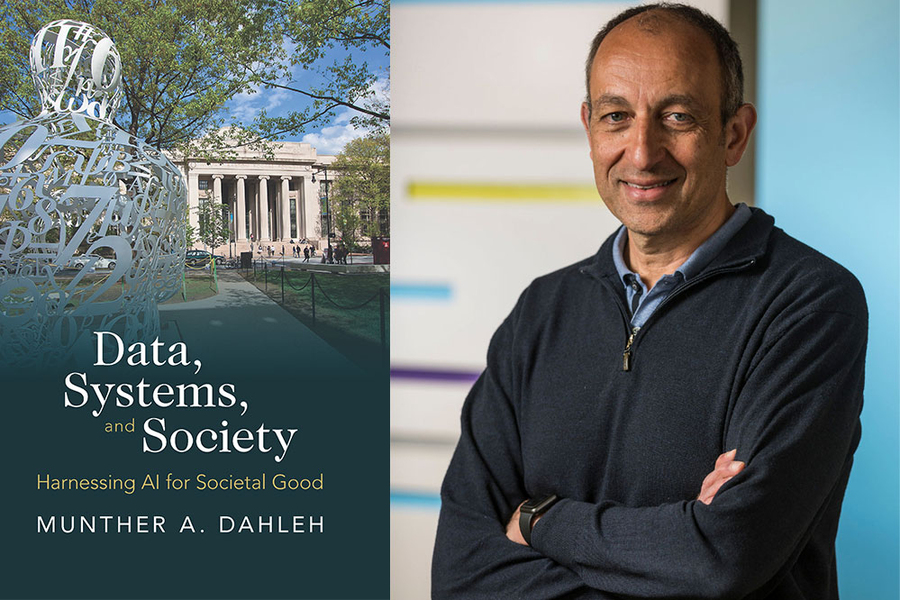
Melding data, systems, and society

Research that crosses the traditional boundaries of academic disciplines, and boundaries between academia, industry, and government, is increasingly widespread, and has sometimes led to the spawning of significant new disciplines. But Munther Dahleh, a professor of electrical engineering and computer science at MIT, says that such multidisciplinary and interdisciplinary work often suffers from a number of shortcomings and handicaps compared to more traditionally focused disciplinary work.

But increasingly, he says, the profound challenges that face us in the modern world — including climate change, biodiversity loss, how to control and regulate artificial intelligence systems, and the identification and control of pandemics — require such meshing of expertise from very different areas, including engineering, policy, economics, and data analysis. That realization is what guided him, a decade ago, in the creation of MIT’s pioneering Institute for Data, Systems and Society (IDSS), aiming to foster a more deeply integrated and lasting set of collaborations than the usual temporary and ad hoc associations that occur for such work.

Dahleh has now written a book detailing the process of analyzing the landscape of existing disciplinary divisions at MIT and conceiving of a way to create a structure aimed at breaking down some of those barriers in a lasting and meaningful way, in order to bring about this new institute. The book, “Data, Systems, and Society: Harnessing AI for Societal Good,” was published this March by Cambridge University Press.

The book, Dahleh says, is his attempt “to describe our thinking that led us to the vision of the institute. What was the driving vision behind it?” It is aimed at a number of different audiences, he says, but in particular, “I’m targeting students who are coming to do research that they want to address societal challenges of different types, but utilizing AI and data science. How should they be thinking about these problems?”

A key concept that has guided the structure of the institute is something he refers to as “the triangle.” This refers to the interaction of three components: physical systems, people interacting with those physical systems, and then regulation and policy regarding those systems. Each of these affects, and is affected by, the others in various ways, he explains. “You get a complex interaction among these three components, and then there is data on all these pieces. Data is sort of like a circle that sits in the middle of this triangle and connects all these pieces,” he says.

When tackling any big, complex problem, he suggests, it is useful to think in terms of this triangle. “If you’re tackling a societal problem, it’s very important to understand the impact of your solution on society, on the people, and the role of people in the success of your system,” he says. Often, he says, “solutions and technology have actually marginalized certain groups of people and have ignored them. So the big message is always to think about the interaction between these components as you think about how to solve problems.”

As a specific example, he cites the Covid-19 pandemic. That was a perfect example of a big societal problem, he says, and illustrates the three sides of the triangle: there’s the biology, which was little understood at first and was subject to intensive research efforts; there was the contagion effect, having to do with social behavior and interactions among people; and there was the decision-making by political leaders and institutions, in terms of shutting down schools and companies or requiring masks, and so on. “The complex problem we faced was the interaction of all these components happening in real-time, when the data wasn’t all available,” he says.

Making a decision, for example shutting schools or businesses, based on controlling the spread of the disease, had immediate effects on economics and social well-being and health and education, “so we had to weigh all these things back into the formula,” he says. “The triangle came alive for us during the pandemic.” As a result, IDSS “became a convening place, partly because of all the different aspects of the problem that we were interested in.”

Examples of such interactions abound, he says. Social media and e-commerce platforms are another case of “systems built for people, and they have a regulation aspect, and they fit into the same story if you’re trying to understand misinformation or the monitoring of misinformation.”

The book presents many examples of ethical issues in AI, stressing that they must be handled with great care. He cites self-driving cars as an example, where programming decisions in dangerous situations can appear ethical but lead to negative economic and humanitarian outcomes. For instance, while most Americans support the idea that a car should sacrifice its driver rather than kill an innocent person, they wouldn’t buy such a car. This reluctance lowers adoption rates and ultimately increases casualties.

In the book, he explains the difference, as he sees it, between the concept of “transdisciplinary” versus typical cross-disciplinary or interdisciplinary research. “They all have different roles, and they have been successful in different ways,” he says. The key is that most such efforts tend to be transitory, and that can limit their societal impact. The fact is that even if people from different departments work together on projects, they lack a structure of shared journals, conferences, common spaces and infrastructure, and a sense of community. Creating an academic entity in the form of IDSS that explicitly crosses these boundaries in a fixed and lasting way was an attempt to address that lack. “It was primarily about creating a culture for people to think about all these components at the same time.”

He hastens to add that of course such interactions were already happening at MIT, “but we didn’t have one place where all the students are all interacting with all of these principles at the same time.” In the IDSS doctoral program, for instance, there are 12 required core courses — half of them from statistics and optimization theory and computation, and half from the social sciences and humanities.

Dahleh stepped down from the leadership of IDSS two years ago to return to teaching and to continue his research. But as he reflected on the work of that institute and his role in bringing it into being, he realized that unlike his own academic research, in which every step along the way is carefully documented in published papers, “I haven’t left a trail” to document the creation of the institute and the thinking behind it. “Nobody knows what we thought about, how we thought about it, how we built it.” Now, with this book, they do.

The book, he says, is “kind of leading people into how all of this came together, in hindsight. I want to have people read this and sort of understand it from a historical perspective, how something like this happened, and I did my best to make it as understandable and simple as I could.”

Animation technique simulates the motion of squishy objects

Animators could create more realistic bouncy, stretchy, and squishy characters for movies and video games thanks to a new simulation method developed by researchers at MIT.

Their approach allows animators to simulate rubbery and elastic materials in a way that preserves the physical properties of the material and avoids pitfalls like instability.

The technique simulates elastic objects for animation and other applications, with improved reliability compared to other methods. In comparison, many existing simulation techniques can produce elastic animations that become erratic or sluggish or can even break down entirely.

To achieve this improvement, the MIT researchers uncovered a hidden mathematical structure in equations that capture how elastic materials deform on a computer. By leveraging this property, known as convexity, they designed a method that consistently produces accurate, physically faithful simulations.

The method can simulate wide range of elastic behavior, from bouncing shapes to squishy characters, with preservation of important physical properties and stability over long periods of time.

Image: Courtesy of the researchers.

“The way animations look often depends on how accurately we simulate the physics of the problem,” says Leticia Mattos Da Silva, an MIT graduate student and lead author of a paper on this research. “Our method aims to stay true to physical laws while giving more control and stability to animation artists.”

Beyond 3D animation, the researchers also see potential future uses in the design of real elastic objects, such as flexible shoes, garments, or toys. The method could be extended to help engineers explore how stretchy objects will perform before they are built.

She is joined on the paper by Silvia Sellán, an assistant professor of computer science at Columbia University; Natalia Pacheco-Tallaj, an MIT graduate student; and senior author Justin Solomon, an associate professor in the MIT Department of Electrical Engineering and Computer Science and leader of the Geometric Data Processing Group in the Computer Science and Artificial Intelligence Laboratory (CSAIL). The research will be presented at the SIGGRAPH conference.

MIT researchers developed a computationally efficient method that could enable artists to design realistic simulations of elastic objects, like bouncy or squishy characters, for animated movies or video games.
Credits:Courtesy of the researchers

Truthful to physics

If you drop a rubber ball on a wooden floor, it bounces back up. Viewers expect to see the same behavior in an animated world, but recreating such dynamics convincingly can be difficult. Many existing techniques simulate elastic objects using fast solvers that trade physical realism for speed, which can result in excessive energy loss or even simulation failure.

More accurate approaches, including a class of techniques called variational integrators, preserve the physical properties of the object, such as its total energy or momentum, and, in this way, mimic real-world behavior more closely. But these methods are often unreliable because they depend on complex equations that are hard to solve efficiently.

The MIT researchers tackled this problem by rewriting the equations of variational integrators to reveal a hidden convex structure. They broke the deformation of elastic materials into a stretch component and a rotation component, and found that the stretch portion forms a convex problem that is well-suited for stable optimization algorithms.

“If you just look at the original formulation, it seems fully non-convex. But because we can rewrite it so that is convex in at least some of its variables, we can inherit some advantages of convex optimization algorithms,” she says.

These convex optimization algorithms, when applied under the right conditions, come with guarantees of convergence, meaning they are more likely to find the correct answer to the problem. This generates more stable simulations over time, avoiding issues like a bouncing rubber ball losing too much energy or exploding mid-animation.

One of the biggest challenges the researchers faced was reinterpreting the formulation so they could extract that hidden convexity. Some other works explored hidden convexity in static problems, but it was not clear whether the structures remained solid for dynamic problems like simulating elastic objects in motion, Mattos Da Silva says.

Stability and efficiency

In experiments, their solver was able to simulate a wide range of elastic behavior, from bouncing shapes to squishy characters, with preservation of important physical properties and stability over long periods of time. Other simulation methods quickly ran into trouble: Some became unstable, causing erratic behavior, while others showed visible damping.

“The way animations look often depends on how accurately we simulate the physics of the problem,” says Mattos Da Silva.

Image: Courtesy of the researchers

“Because our method demonstrates more stability, it can give animators more reliability and confidence when simulating anything elastic, whether it’s something from the real world or even something completely imaginary,” she says.

While the solver is not as fast as some simulation tools that prioritize speed over accuracy, it avoids many of the trade-offs those methods make. Compared to other physics-based approaches, it also avoids the need for complex, nonlinear solvers that can be sensitive and prone to failure.

In the future, the researchers want to explore techniques to further reduce computational cost. In addition, they want to explore applications of this technique in fabrication and engineering, where reliable simulations of elastic materials could support the design of real-world objects, like garments and toys.

“We were able to revive an old class of integrators in our work. My guess is there are other examples where researchers can revisit a problem to find a hidden convexity structure that could offer a lot of advantages,” she says.

This research is funded, in part, by a MathWorks Engineering Fellowship, the Army Research Office, the National Science Foundation, the CSAIL Future of Data Program, the MIT-IBM Watson AI Laboratory, the Wistron Corporation, and the Toyota-CSAIL Joint Research Center.

Teaching AI models the broad strokes to sketch more like humans do

When you’re trying to communicate or understand ideas, words don’t always do the trick. Sometimes the more efficient approach is to do a simple sketch of that concept — for example, diagramming a circuit might help make sense of how the system works.

But what if artificial intelligence could help us explore these visualizations? While these systems are typically proficient at creating realistic paintings and cartoonish drawings, many models fail to capture the essence of sketching: its stroke-by-stroke, iterative process, which helps humans brainstorm and edit how they want to represent their ideas.

A new drawing system from MIT’s Computer Science and Artificial Intelligence Laboratory (CSAIL) and Stanford University can sketch more like we do. Their method, called “SketchAgent,” uses a multimodal language model — AI systems that train on text and images, like Anthropic’s Claude 3.5 Sonnet — to turn natural language prompts into sketches in a few seconds. For example, it can doodle a house either on its own or through collaboration, drawing with a human or incorporating text-based input to sketch each part separately.

The researchers showed that SketchAgent can create abstract drawings of diverse concepts, like a robot, butterfly, DNA helix, flowchart, and even the Sydney Opera House. One day, the tool could be expanded into an interactive art game that helps teachers and researchers diagram complex concepts or give users a quick drawing lesson.

SketchAgent: a collaborative system that teaches AI models to sketch more like humans do.
Video: MIT CSAIL

CSAIL postdoc Yael Vinker, who is the lead author of a paper introducing SketchAgent, notes that the system introduces a more natural way for humans to communicate with AI.

“Not everyone is aware of how much they draw in their daily life. We may draw our thoughts or workshop ideas with sketches,” she says. “Our tool aims to emulate that process, making multimodal language models more useful in helping us visually express ideas.”

SketchAgent teaches these models to draw stroke-by-stroke without training on any data — instead, the researchers developed a “sketching language” in which a sketch is translated into a numbered sequence of strokes on a grid. The system was given an example of how things like a house would be drawn, with each stroke labeled according to what it represented — such as the seventh stroke being a rectangle labeled as a “front door” — to help the model generalize to new concepts.

Vinker wrote the paper alongside three CSAIL affiliates — postdoc Tamar Rott Shaham, undergraduate researcher Alex Zhao, and MIT Professor Antonio Torralba — as well as Stanford University Research Fellow Kristine Zheng and Assistant Professor Judith Ellen Fan. They’ll present their work at the 2025 Conference on Computer Vision and Pattern Recognition (CVPR) this month.

Assessing AI’s sketching abilities

While text-to-image models such as DALL-E 3 can create intriguing drawings, they lack a crucial component of sketching: the spontaneous, creative process where each stroke can impact the overall design. On the other hand, SketchAgent’s drawings are modeled as a sequence of strokes, appearing more natural and fluid, like human sketches.

Prior works have mimicked this process, too, but they trained their models on human-drawn datasets, which are often limited in scale and diversity. SketchAgent uses pre-trained language models instead, which are knowledgeable about many concepts, but don’t know how to sketch. When the researchers taught language models this process, SketchAgent began to sketch diverse concepts it hadn’t explicitly trained on.

Still, Vinker and her colleagues wanted to see if SketchAgent was actively working with humans on the sketching process, or if it was working independently of its drawing partner. The team tested their system in collaboration mode, where a human and a language model work toward drawing a particular concept in tandem. Removing SketchAgent’s contributions revealed that their tool’s strokes were essential to the final drawing. In a drawing of a sailboat, for instance, removing the artificial strokes representing a mast made the overall sketch unrecognizable.

In another experiment, CSAIL and Stanford researchers plugged different multimodal language models into SketchAgent to see which could create the most recognizable sketches. Their default backbone model, Claude 3.5 Sonnet, generated the most human-like vector graphics (essentially text-based files that can be converted into high-resolution images). It outperformed models like GPT-4o and Claude 3 Opus.

“The fact that Claude 3.5 Sonnet outperformed other models like GPT-4o and Claude 3 Opus suggests that this model processes and generates visual-related information differently,” says co-author Tamar Rott Shaham.

She adds that SketchAgent could become a helpful interface for collaborating with AI models beyond standard, text-based communication. “As models advance in understanding and generating other modalities, like sketches, they open up new ways for users to express ideas and receive responses that feel more intuitive and human-like,” says Rott Shaham. “This could significantly enrich interactions, making AI more accessible and versatile.”

While SketchAgent’s drawing prowess is promising, it can’t make professional sketches yet. It renders simple representations of concepts using stick figures and doodles, but struggles to doodle things like logos, sentences, complex creatures like unicorns and cows, and specific human figures.

At times, their model also misunderstood users’ intentions in collaborative drawings, like when SketchAgent drew a bunny with two heads. According to Vinker, this may be because the model breaks down each task into smaller steps (also called “Chain of Thought” reasoning). When working with humans, the model creates a drawing plan, potentially misinterpreting which part of that outline a human is contributing to. The researchers could possibly refine these drawing skills by training on synthetic data from diffusion models.

Additionally, SketchAgent often requires a few rounds of prompting to generate human-like doodles. In the future, the team aims to make it easier to interact and sketch with multimodal language models, including refining their interface. 

Still, the tool suggests AI could draw diverse concepts the way humans do, with step-by-step human-AI collaboration that results in more aligned final designs.

This work was supported, in part, by the U.S. National Science Foundation, a Hoffman-Yee Grant from the Stanford Institute for Human-Centered AI, the Hyundai Motor Co., the U.S. Army Research Laboratory, the Zuckerman STEM Leadership Program, and a Viterbi Fellowship.

Teaching AI models what they don’t know

Artificial intelligence systems like ChatGPT provide plausible-sounding answers to any question you might ask. But they don’t always reveal the gaps in their knowledge or areas where they’re uncertain. That problem can have huge consequences as AI systems are increasingly used to do things like develop drugs, synthesize information, and drive autonomous cars.

Now, the MIT spinout Themis AI is helping quantify model uncertainty and correct outputs before they cause bigger problems. The company’s Capsa platform can work with any machine-learning model to detect and correct unreliable outputs in seconds. It works by modifying AI models to enable them to detect patterns in their data processing that indicate ambiguity, incompleteness, or bias.

“The idea is to take a model, wrap it in Capsa, identify the uncertainties and failure modes of the model, and then enhance the model,” says Themis AI co-founder and MIT Professor Daniela Rus, who is also the director of the MIT Computer Science and Artificial Intelligence Laboratory (CSAIL). “We’re excited about offering a solution that can improve models and offer guarantees that the model is working correctly.”

Rus founded Themis AI in 2021 with Alexander Amini ’17, SM ’18, PhD ’22 and Elaheh Ahmadi ’20, MEng ’21, two former research affiliates in her lab. Since then, they’ve helped telecom companies with network planning and automation, helped oil and gas companies use AI to understand seismic imagery, and published papers on developing more reliable and trustworthy chatbots.

“We want to enable AI in the highest-stakes applications of every industry,” Amini says. “We’ve all seen examples of AI hallucinating or making mistakes. As AI is deployed more broadly, those mistakes could lead to devastating consequences. Themis makes it possible that any AI can forecast and predict its own failures, before they happen.”

Helping models know what they don’t know

Rus’ lab has been researching model uncertainty for years. In 2018, she received funding from Toyota to study the reliability of a machine learning-based autonomous driving solution.

“That is a safety-critical context where understanding model reliability is very important,” Rus says.

In separate work, Rus, Amini, and their collaborators built an algorithm that could detect racial and gender bias in facial recognition systems and automatically reweight the model’s training data, showing it eliminated bias. The algorithm worked by identifying the unrepresentative parts of the underlying training data and generating new, similar data samples to rebalance it.

In 2021, the eventual co-founders showed a similar approach could be used to help pharmaceutical companies use AI models to predict the properties of drug candidates. They founded Themis AI later that year.

“Guiding drug discovery could potentially save a lot of money,” Rus says. “That was the use case that made us realize how powerful this tool could be.”

Today Themis AI is working with enterprises in a variety of industries, and many of those companies are building large language models. By using Capsa, these models are able to quantify their own uncertainty for each output.

“Many companies are interested in using LLMs that are based on their data, but they’re concerned about reliability,” observes Stewart Jamieson SM ’20, PhD ’24, Themis AI’s head of technology. “We help LLMs self-report their confidence and uncertainty, which enables more reliable question answering and flagging unreliable outputs.”

Themis AI is also in discussions with semiconductor companies building AI solutions on their chips that can work outside of cloud environments.

“Normally these smaller models that work on phones or embedded systems aren’t very accurate compared to what you could run on a server, but we can get the best of both worlds: low latency, efficient edge computing without sacrificing quality,” Jamieson explains. “We see a future where edge devices do most of the work, but whenever they’re unsure of their output, they can forward those tasks to a central server.”

Pharmaceutical companies can also use Capsa to improve AI models being used to identify drug candidates and predict their performance in clinical trials.

“The predictions and outputs of these models are very complex and hard to interpret — experts spend a lot of time and effort trying to make sense of them,” Amini remarks. “Capsa can give insights right out of the gate to understand if the predictions are backed by evidence in the training set or are just speculation without a lot of grounding. That can accelerate the identification of the strongest predictions, and we think that has a huge potential for societal good.”

Research for impact

Themis AI’s team believes the company is well-positioned to improve the cutting edge of constantly evolving AI technology. For instance, the company is exploring Capsa’s ability to improve accuracy in an AI technique known as chain-of-thought reasoning, in which LLMs explain the steps they take to get to an answer.

“We’ve seen signs Capsa could help guide those reasoning processes to identify the highest-confidence chains of reasoning,” Jamieson says. “We think that has huge implications in terms of improving the LLM experience, reducing latencies, and reducing computation requirements. It’s an extremely high-impact opportunity for us.”

For Rus, who has co-founded several companies since coming to MIT, Themis AI is an opportunity to ensure her MIT research has impact.

“My students and I have become increasingly passionate about going the extra step to make our work relevant for the world,” Rus says. “AI has tremendous potential to transform industries, but AI also raises concerns. What excites me is the opportunity to help develop technical solutions that address these challenges and also build trust and understanding between people and the technologies that are becoming part of their daily lives.”

New system enables robots to solve manipulation problems in seconds

Ready for that long-awaited summer vacation? First, you’ll need to pack all items required for your trip into a suitcase, making sure everything fits securely without crushing anything fragile.

Because humans possess strong visual and geometric reasoning skills, this is usually a straightforward problem, even if it may take a bit of finagling to squeeze everything in.

To a robot, though, it is an extremely complex planning challenge that requires thinking simultaneously about many actions, constraints, and mechanical capabilities. Finding an effective solution could take the robot a very long time — if it can even come up with one.

Researchers from MIT and NVIDIA Research have developed a novel algorithm that dramatically speeds up the robot’s planning process. Their approach enables a robot to “think ahead” by evaluating thousands of possible solutions in parallel and then refining the best ones to meet the constraints of the robot and its environment.

Instead of testing each potential action one at a time, like many existing approaches, this new method considers thousands of actions simultaneously, solving multistep manipulation problems in a matter of seconds.

The researchers harness the massive computational power of specialized processors called graphics processing units (GPUs) to enable this speedup.

In a factory or warehouse, their technique could enable robots to rapidly determine how to manipulate and tightly pack items that have different shapes and sizes without damaging them, knocking anything over, or colliding with obstacles, even in a narrow space.

“This would be very helpful in industrial settings where time really does matter and you need to find an effective solution as fast as possible. If your algorithm takes minutes to find a plan, as opposed to seconds, that costs the business money,” says MIT graduate student William Shen SM ’23, lead author of the paper on this technique.

He is joined on the paper by Caelan Garrett ’15, MEng ’15, PhD ’21, a senior research scientist at NVIDIA Research; Nishanth Kumar, an MIT graduate student; Ankit Goyal, a NVIDIA research scientist; Tucker Hermans, a NVIDIA research scientist and associate professor at the University of Utah; Leslie Pack Kaelbling, the Panasonic Professor of Computer Science and Engineering at MIT and a member of the Computer Science and Artificial Intelligence Laboratory (CSAIL); Tomás Lozano-Pérez, an MIT professor of computer science and engineering and a member of CSAIL; and Fabio Ramos, principal research scientist at NVIDIA and a professor at the University of Sydney. The research will be presented at the Robotics: Science and Systems Conference.

Planning in parallel

The researchers’ algorithm is designed for what is called task and motion planning (TAMP). The goal of a TAMP algorithm is to come up with a task plan for a robot, which is a high-level sequence of actions, along with a motion plan, which includes low-level action parameters, like joint positions and gripper orientation, that complete that high-level plan.

To create a plan for packing items in a box, a robot needs to reason about many variables, such as the final orientation of packed objects so they fit together, as well as how it is going to pick them up and manipulate them using its arm and gripper.

It must do this while determining how to avoid collisions and achieve any user-specified constraints, such as a certain order in which to pack items.

With so many potential sequences of actions, sampling possible solutions at random and trying one at a time could take an extremely long time.

“It is a very large search space, and a lot of actions the robot does in that space don’t actually achieve anything productive,” Garrett adds.

Instead, the researchers’ algorithm, called cuTAMP, which is accelerated using a parallel computing platform called CUDA, simulates and refines thousands of solutions in parallel. It does this by combining two techniques, sampling and optimization.

Sampling involves choosing a solution to try. But rather than sampling solutions randomly, cuTAMP limits the range of potential solutions to those most likely to satisfy the problem’s constraints. This modified sampling procedure allows cuTAMP to broadly explore potential solutions while narrowing down the sampling space.

“Once we combine the outputs of these samples, we get a much better starting point than if we sampled randomly. This ensures we can find solutions more quickly during optimization,” Shen says.

Once cuTAMP has generated that set of samples, it performs a parallelized optimization procedure that computes a cost, which corresponds to how well each sample avoids collisions and satisfies the motion constraints of the robot, as well as any user-defined objectives.

It updates the samples in parallel, chooses the best candidates, and repeats the process until it narrows them down to a successful solution.

Harnessing accelerated computing

The researchers leverage GPUs, specialized processors that are far more powerful for parallel computation and workloads than general-purpose CPUs, to scale up the number of solutions they can sample and optimize simultaneously. This maximized the performance of their algorithm.

“Using GPUs, the computational cost of optimizing one solution is the same as optimizing hundreds or thousands of solutions,” Shen explains.

When they tested their approach on Tetris-like packing challenges in simulation, cuTAMP took only a few seconds to find successful, collision-free plans that might take sequential planning approaches much longer to solve.

And when deployed on a real robotic arm, the algorithm always found a solution in under 30 seconds.

The system works across robots and has been tested on a robotic arm at MIT and a humanoid robot at NVIDIA. Since cuTAMP is not a machine-learning algorithm, it requires no training data, which could enable it to be readily deployed in many situations.

“You can give it a brand-new problem and it will provably solve it,” Garrett says.

The algorithm is generalizable to situations beyond packing, like a robot using tools. A user could incorporate different skill types into the system to expand a robot’s capabilities automatically.

In the future, the researchers want to leverage large language models and vision language models within cuTAMP, enabling a robot to formulate and execute a plan that achieves specific objectives based on voice commands from a user.

This work is supported, in part, by the National Science Foundation (NSF), Air Force Office for Scientific Research, Office of Naval Research, MIT Quest for Intelligence, NVIDIA, and the Robotics and Artificial Intelligence Institute.

An anomaly detection framework anyone can use

Sarah Alnegheimish’s research interests reside at the intersection of machine learning and systems engineering. Her objective: to make machine learning systems more accessible, transparent, and trustworthy.

Alnegheimish is a PhD student in Principal Research Scientist Kalyan Veeramachaneni’s Data-to-AI group in MIT’s Laboratory for Information and Decision Systems (LIDS). Here, she commits most of her energy to developing Orion, an open-source, user-friendly machine learning framework and time series library that is capable of detecting anomalies without supervision in large-scale industrial and operational settings.

Early influence 

The daughter of a university professor and a teacher educator, she learned from an early age that knowledge was meant to be shared freely. “I think growing up in a home where education was highly valued is part of why I want to make machine learning tools accessible.” Alnegheimish’s own personal experience with open-source resources only increased her motivation. “I learned to view accessibility as the key to adoption. To strive for impact, new technology needs to be accessed and assessed by those who need it. That’s the whole purpose of doing open-source development.”

Alnegheimish earned her bachelor’s degree at King Saud University (KSU). “I was in the first cohort of computer science majors. Before this program was created, the only other available major in computing was IT [information technology].” Being a part of the first cohort was exciting, but it brought its own unique challenges. “All of the faculty were teaching new material. Succeeding required an independent learning experience. That’s when I first time came across MIT OpenCourseWare: as a resource to teach myself.”

Shortly after graduating, Alnegheimish became a researcher at the King Abdulaziz City for Science and Technology (KACST), Saudi Arabia’s national lab. Through the Center for Complex Engineering Systems (CCES) at KACST and MIT, she began conducting research with Veeramachaneni. When she applied to MIT for graduate school, his research group was her top choice.

Creating Orion

Alnegheimish’s master thesis focused on time series anomaly detection — the identification of unexpected behaviors or patterns in data, which can provide users crucial information. For example, unusual patterns in network traffic data can be a sign of cybersecurity threats, abnormal sensor readings in heavy machinery can predict potential future failures, and monitoring patient vital signs can help reduce health complications. It was through her master’s research that Alnegheimish first began designing Orion.

Orion uses statistical and machine learning-based models that are continuously logged and maintained. Users do not need to be machine learning experts to utilize the code. They can analyze signals, compare anomaly detection methods, and investigate anomalies in an end-to-end program. The framework, code, and datasets are all open-sourced.

“With open source, accessibility and transparency are directly achieved. You have unrestricted access to the code, where you can investigate how the model works through understanding the code. We have increased transparency with Orion: We label every step in the model and present it to the user.” Alnegheimish says that this transparency helps enable users to begin trusting the model before they ultimately see for themselves how reliable it is.

“We’re trying to take all these machine learning algorithms and put them in one place so anyone can use our models off-the-shelf,” she says. “It’s not just for the sponsors that we work with at MIT. It’s being used by a lot of public users. They come to the library, install it, and run it on their data. It’s proving itself to be a great source for people to find some of the latest methods for anomaly detection.”

Repurposing models for anomaly detection

In her PhD, Alnegheimish is further exploring innovative ways to do anomaly detection using Orion. “When I first started my research, all machine-learning models needed to be trained from scratch on your data. Now we’re in a time where we can use pre-trained models,” she says. Working with pre-trained models saves time and computational costs. The challenge, though, is that time series anomaly detection is a brand-new task for them. “In their original sense, these models have been trained to forecast, but not to find anomalies,” Alnegheimish says. “We’re pushing their boundaries through prompt-engineering, without any additional training.”

Because these models already capture the patterns of time-series data, Alnegheimish believes they already have everything they need to enable them to detect anomalies. So far, her current results support this theory. They don’t surpass the success rate of models that are independently trained on specific data, but she believes they will one day.

Accessible design

Alnegheimish talks at length about the efforts she’s gone through to make Orion more accessible. “Before I came to MIT, I used to think that the crucial part of research was to develop the machine learning model itself or improve on its current state. With time, I realized that the only way you can make your research accessible and adaptable for others is to develop systems that make them accessible. During my graduate studies, I’ve taken the approach of developing my models and systems in tandem.”

The key element to her system development was finding the right abstractions to work with her models. These abstractions provide universal representation for all models with simplified components. “Any model will have a sequence of steps to go from raw input to desired output.  We’ve standardized the input and output, which allows the middle to be flexible and fluid. So far, all the models we’ve run have been able to retrofit into our abstractions.” The abstractions she uses have been stable and reliable for the last six years.

The value of simultaneously building systems and models can be seen in Alnegheimish’s work as a mentor. She had the opportunity to work with two master’s students earning their engineering degrees. “All I showed them was the system itself and the documentation of how to use it. Both students were able to develop their own models with the abstractions we’re conforming to. It reaffirmed that we’re taking the right path.”

Alnegheimish also investigated whether a large language model (LLM) could be used as a mediator between users and a system. The LLM agent she has implemented is able to connect to Orion without users needing to know the small details of how Orion works. “Think of ChatGPT. You have no idea what the model is behind it, but it’s very accessible to everyone.” For her software, users only know two commands: Fit and Detect. Fit allows users to train their model, while Detect enables them to detect anomalies.

“The ultimate goal of what I’ve tried to do is make AI more accessible to everyone,” she says. So far, Orion has reached over 120,000 downloads, and over a thousand users have marked the repository as one of their favorites on Github. “Traditionally, you used to measure the impact of research through citations and paper publications. Now you get real-time adoption through open source.”