

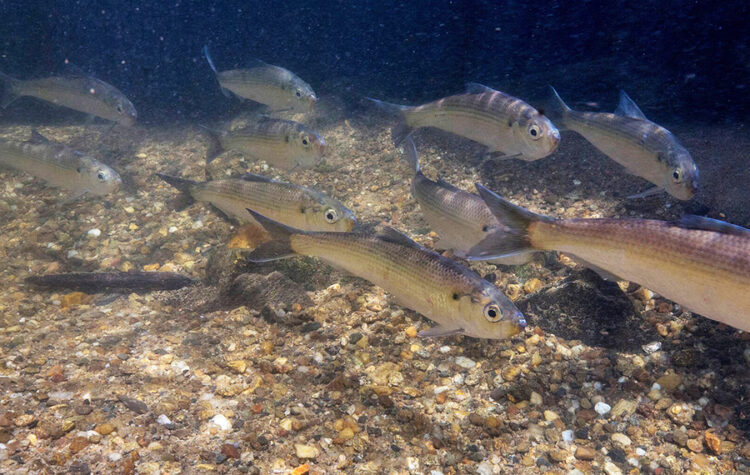
MIT Sea Grant works with the Woodwell Climate Research Center and other collaborators to demonstrate a deep learning-based system for fish monitoring.
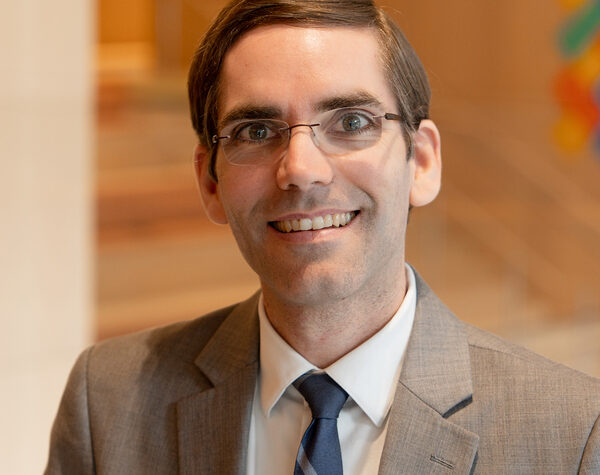
The electrical engineering and nanotechnology leader will guide the US Army-sponsored research center as it advances next-generation materials, electronics, and photonics for national security.
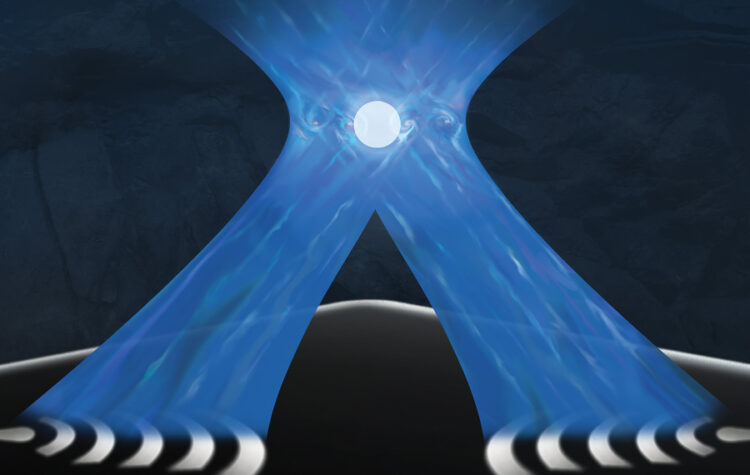
New technique could improve the scalability of trapped-ion quantum computers, an essential step toward making them practically useful.

The student becomes the teacher
Titus Roesler was ready to drop his class in signal processing. Now, he hopes to become an expert in the field.
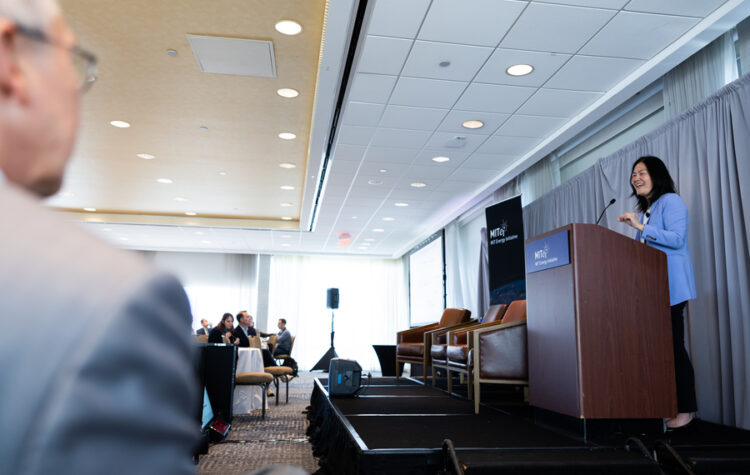
Confronting the AI/energy conundrum
The MIT Energy Initiative’s annual research symposium explores artificial intelligence as both a problem and a solution for the clean energy transition.

The high-tech wizardry of integrated photonics
PhD candidate Sabrina Corsetti builds photonic devices that manipulate light to enable previously unimaginable applications, like pocket-sized 3D printers.

Longtime MIT electrical engineer receives SPIE Frits Zernike Award for Microlithography in recognition of outstanding accomplishments in microlithographic technology.

By determining how readily electron pairs flow through this material, scientists have taken a big step toward understanding its remarkable properties.

By emulating a magnetic field on a superconducting quantum computer, researchers can probe complex properties of materials.
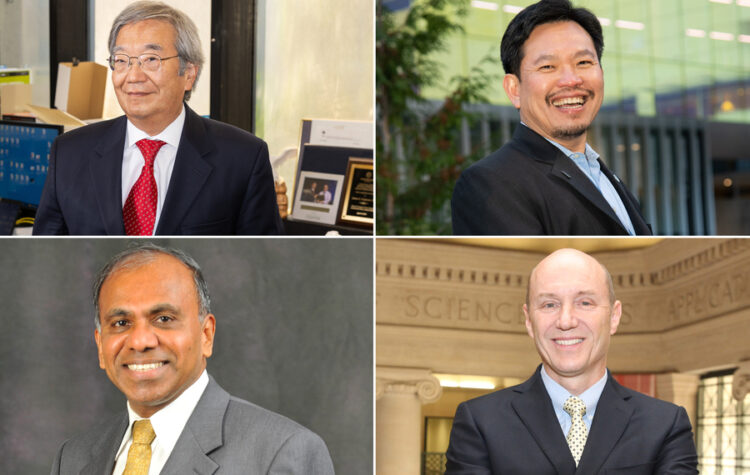
Four from MIT awarded National Medals of Technology, Science
James Fujimoto, Eric Swanson, and David Huang are recognized for their technique to rapidly detect diseases of the eye; Subra Suresh is honored for his commitment to research and collaboration across borders.