Device enables direct communication among multiple quantum processors

Quantum computers have the potential to solve complex problems that would be impossible for the most powerful classical supercomputer to crack.

Just like a classical computer has separate, yet interconnected, components that must work together, such as a memory chip and a CPU on a motherboard, a quantum computer will need to communicate quantum information between multiple processors.

Current architectures used to interconnect superconducting quantum processors are “point-to-point” in connectivity, meaning they require a series of transfers between network nodes, with compounding error rates.

On the way to overcoming these challenges, MIT researchers developed a new interconnect device that can support scalable, “all-to-all” communication, such that all superconducting quantum processors in a network can communication directly with each other.

They created a network of two quantum processors and used their interconnect to send microwave photons back and forth on demand in a user-defined direction. Photons are particles of light that can carry quantum information.

The device includes a superconducting wire, or waveguide, that shuttles photons between processors and can be routed as far as needed. The researchers can couple any number of modules to it, efficiently transmitting information between a scalable network of processors.

They used this interconnect to demonstrate remote entanglement, a type of correlation between quantum processors that are not physically connected. Remote entanglement is a key step toward developing a powerful, distributed network of many quantum processors.

“In the future, a quantum computer will probably need both local and nonlocal interconnects. Local interconnects are natural in arrays of superconducting qubits. Ours allows for more nonlocal connections. We can send photons at different frequencies, times, and in two propagation directions, which gives our network more flexibility and throughput,” says Aziza Almanakly, an electrical engineering and computer science graduate student in the Engineering Quantum Systems group of the Research Laboratory of Electronics (RLE) and lead author of a paper on the interconnect.

Her co-authors include Beatriz Yankelevich, a graduate student in the EQuS Group; senior author William D. Oliver, the Henry Ellis Warren (1894) Professor of Electrical Engineering and Computer Science (EECS) and professor of Physics, director of the Center for Quantum Engineering, and associate director of RLE; and others at MIT and Lincoln Laboratory. The research appears today in Nature Physics.

A scalable architecture

The researchers previously developed a quantum computing module, which enabled them to send information-carrying microwave photons in either direction along a waveguide.

In the new work, they took that architecture a step further by connecting two modules to a waveguide in order to emit photons in a desired direction and then absorb them at the other end.

Each module is composed of four qubits, which serve as an interface between the waveguide carrying the photons and the larger quantum processors.

The qubits coupled to the waveguide emit and absorb photons, which are then transferred to nearby data qubits.

The researchers use a series of microwave pulses to add energy to a qubit, which then emits a photon. Carefully controlling the phase of those pulses enables a quantum interference effect that allows them to emit the photon in either direction along the waveguide. Reversing the pulses in time enables a qubit in another module any arbitrary distance away to absorb the photon.

“Pitching and catching photons enables us to create a ‘quantum interconnect’ between nonlocal quantum processors, and with quantum interconnects comes remote entanglement,” explains Oliver.

“Generating remote entanglement is a crucial step toward building a large-scale quantum processor from smaller-scale modules. Even after that photon is gone, we have a correlation between two distant, or ‘nonlocal,’ qubits. Remote entanglement allows us to take advantage of these correlations and perform parallel operations between two qubits, even though they are no longer connected and may be far apart,” Yankelevich explains.

However, transferring a photon between two modules is not enough to generate remote entanglement. The researchers need to prepare the qubits and the photon so the modules “share” the photon at the end of the protocol.

Generating entanglement

The team did this by halting the photon emission pulses halfway through their duration. In quantum mechanical terms, the photon is both retained and emitted. Classically, one can think that half-a-photon is retained and half is emitted.

Once the receiver module absorbs that “half-photon,” the two modules become entangled.

But as the photon travels, joints, wire bonds, and connections in the waveguide distort the photon and limit the absorption efficiency of the receiving module.

To generate remote entanglement with high enough fidelity, or accuracy, the researchers needed to maximize how often the photon is absorbed at the other end.

“The challenge in this work was shaping the photon appropriately so we could maximize the absorption efficiency,” Almanakly says.

They used a reinforcement learning algorithm to “predistort” the photon. The algorithm optimized the protocol pulses in order to shape the photon for maximal absorption efficiency.

When they implemented this optimized absorption protocol, they were able to show photon absorption efficiency greater than 60 percent.

This absorption efficiency is high enough to prove that the resulting state at the end of the protocol is entangled, a major milestone in this demonstration.

“We can use this architecture to create a network with all-to-all connectivity. This means we can have multiple modules, all along the same bus, and we can create remote entanglement among any pair of our choosing,” Yankelevich says.

In the future, they could improve the absorption efficiency by optimizing the path over which the photons propagate, perhaps by integrating modules in 3D instead of having a superconducting wire connecting separate microwave packages. They could also make the protocol faster so there are fewer chances for errors to accumulate.

“In principle, our remote entanglement generation protocol can also be expanded to other kinds of quantum computers and bigger quantum internet systems,” Almanakly says.

This work was funded, in part, by the U.S. Army Research Office, the AWS Center for Quantum Computing, and the U.S. Air Force Office of Scientific Research. 

AI tool generates high-quality images faster than state-of-the-art approaches

The ability to generate high-quality images quickly is crucial for producing realistic simulated environments that can be used to train self-driving cars to avoid unpredictable hazards, making them safer on real streets.

But the generative artificial intelligence techniques increasingly being used to produce such images have drawbacks. One popular type of model, called a diffusion model, can create stunningly realistic images but is too slow and computationally intensive for many applications. On the other hand, the autoregressive models that power LLMs like ChatGPT are much faster, but they produce poorer-quality images that are often riddled with errors.

Researchers from MIT and NVIDIA developed a new approach that brings together the best of both methods. Their hybrid image-generation tool uses an autoregressive model to quickly capture the big picture and then a small diffusion model to refine the details of the image.

Their tool, known as HART (short for hybrid autoregressive transformer), can generate images that match or exceed the quality of state-of-the-art diffusion models, but do so about nine times faster.

The generation process consumes fewer computational resources than typical diffusion models, enabling HART to run locally on a commercial laptop or smartphone. A user only needs to enter one natural language prompt into the HART interface to generate an image.

HART could have a wide range of applications, such as helping researchers train robots to complete complex real-world tasks and aiding designers in producing striking scenes for video games.

“If you are painting a landscape, and you just paint the entire canvas once, it might not look very good. But if you paint the big picture and then refine the image with smaller brush strokes, your painting could look a lot better. That is the basic idea with HART,” says Haotian Tang SM ’22, PhD ’25, co-lead author of a new paper on HART.

He is joined by co-lead author Yecheng Wu, an undergraduate student at Tsinghua University; senior author Song Han, an associate professor in the MIT Department of Electrical Engineering and Computer Science (EECS), a member of the MIT-IBM Watson AI Lab, and a distinguished scientist of NVIDIA; as well as others at MIT, Tsinghua University, and NVIDIA. The research will be presented at the International Conference on Learning Representations.

The best of both worlds

Popular diffusion models, such as Stable Diffusion and DALL-E, are known to produce highly detailed images. These models generate images through an iterative process where they predict some amount of random noise on each pixel, subtract the noise, then repeat the process of predicting and “de-noising” multiple times until they generate a new image that is completely free of noise.

Because the diffusion model de-noises all pixels in an image at each step, and there may be 30 or more steps, the process is slow and computationally expensive. But because the model has multiple chances to correct details it got wrong, the images are high-quality.

Autoregressive models, commonly used for predicting text, can generate images by predicting patches of an image sequentially, a few pixels at a time. They can’t go back and correct their mistakes, but the sequential prediction process is much faster than diffusion.

These models use representations known as tokens to make predictions. An autoregressive model utilizes an autoencoder to compress raw image pixels into discrete tokens as well as reconstruct the image from predicted tokens. While this boosts the model’s speed, the information loss that occurs during compression causes errors when the model generates a new image.

With HART, the researchers developed a hybrid approach that uses an autoregressive model to predict compressed, discrete image tokens, then a small diffusion model to predict residual tokens. Residual tokens compensate for the model’s information loss by capturing details left out by discrete tokens.

“We can achieve a huge boost in terms of reconstruction quality. Our residual tokens learn high-frequency details, like edges of an object, or a person’s hair, eyes, or mouth. These are places where discrete tokens can make mistakes,” says Tang.

Because the diffusion model only predicts the remaining details after the autoregressive model has done its job, it can accomplish the task in eight steps, instead of the usual 30 or more a standard diffusion model requires to generate an entire image. This minimal overhead of the additional diffusion model allows HART to retain the speed advantage of the autoregressive model while significantly enhancing its ability to generate intricate image details.

“The diffusion model has an easier job to do, which leads to more efficiency,” he adds.

Outperforming larger models

During the development of HART, the researchers encountered challenges in effectively integrating the diffusion model to enhance the autoregressive model. They found that incorporating the diffusion model in the early stages of the autoregressive process resulted in an accumulation of errors. Instead, their final design of applying the diffusion model to predict only residual tokens as the final step significantly improved generation quality.

Their method, which uses a combination of an autoregressive transformer model with 700 million parameters and a lightweight diffusion model with 37 million parameters, can generate images of the same quality as those created by a diffusion model with 2 billion parameters, but it does so about nine times faster. It uses about 31 percent less computation than state-of-the-art models.

Moreover, because HART uses an autoregressive model to do the bulk of the work — the same type of model that powers LLMs — it is more compatible for integration with the new class of unified vision-language generative models. In the future, one could interact with a unified vision-language generative model, perhaps by asking it to show the intermediate steps required to assemble a piece of furniture.

“LLMs are a good interface for all sorts of models, like multimodal models and models that can reason. This is a way to push the intelligence to a new frontier. An efficient image-generation model would unlock a lot of possibilities,” he says.

In the future, the researchers want to go down this path and build vision-language models on top of the HART architecture. Since HART is scalable and generalizable to multiple modalities, they also want to apply it for video generation and audio prediction tasks.

This research was funded, in part, by the MIT-IBM Watson AI Lab, the MIT and Amazon Science Hub, the MIT AI Hardware Program, and the U.S. National Science Foundation. The GPU infrastructure for training this model was donated by NVIDIA. 

3D printing approach strings together dynamic objects for you

It’s difficult to build devices that replicate the fluid, precise motion of humans, but that might change if we could pull a few (literal) strings.

At least, that’s the idea behind “cable-driven” mechanisms in which running a string through an object generates streamlined movement across an object’s different parts. Take a robotic finger, for example: You could embed a cable through the palm to the fingertip of this object and then pull it to create a curling motion.

While cable-driven mechanisms can create real-time motion to make an object bend, twist, or fold, they can be complicated and time-consuming to assemble by hand. To automate the process, researchers from MIT’s Computer Science and Artificial Intelligence Laboratory (CSAIL) have developed an all-in-one 3D printing approach called “Xstrings.” Part design tool, part fabrication method, Xstrings can embed all the pieces together and produce a cable-driven device, saving time when assembling bionic robots, creating art installations, or working on dynamic fashion designs.

3D printing approach strings together cable-driven mechanisms for you. Video: MIT CSAIL

In a paper to be presented at the 2025 Conference on Human Factors in Computing Systems (CHI2025), the researchers used Xstrings to print a range of colorful and unique objects that included a red walking lizard robot, a purple wall sculpture that can open and close like a peacock’s tail, a white tentacle that curls around items, and a white claw that can ball up into a fist to grab objects.

To fabricate these eye-catching mechanisms, Xstrings allows users to fully customize their designs in a software program, sending them to a multi-material 3D printer to bring that creation to life. You can automatically print all the device’s parts in their desired locations in one step, including the cables running through it and the joints that enable its intended motion.

MIT CSAIL postdoc and lead author Jiaji Li says that Xstrings can save engineers time and energy, reducing 40 percent of total production time compared to doing things manually. “Our innovative method can help anyone design and fabricate cable-driven products with a desktop bi-material 3D printer,” says Li.

A new twist on cable-driven fabrication

To use the Xstrings program, users first input a design with specific dimensions, like a rectangular cube divided into smaller pieces with a hole in the middle of each one. You can then choose which way its parts move by selecting different “primitives:” bending, coiling (like a spring), twisting (like a screw), or compressing — and the angle of these motions.

For even more elaborate creations, users can incorporate multiple primitives to create intriguing combinations of motions. If you wanted to make a toy snake, you could include several twists to create a “series” combo, in which a single cord drives a sequence of motions. To create the robot claw, the team embedded multiple cables into a “parallel” combination, where several strings are embedded, to enable each finger to close up into a fist.

Xstrings facilitates how cables are integrated into the object it’s producing. Users can choose exactly how the strings are secured, including its endpoint, the holes within the structure that the cord passes through, and where you’d pull to operate the device. Image courtesy of the researchers.

Beyond fine-tuning the way cable-driven mechanisms move, Xstrings also facilitates how cables are integrated into the object. Users can choose exactly how the strings are secured, in terms of where the “anchor” (endpoint), “threaded areas” (or holes within the structure that the cord passes through), and “exposed point” (where you’d pull to operate the device) are located. With a robot finger, for instance, you could choose the anchor to be located at the fingertip, with a cable running through the finger and a pull tag exposed at the other end.

Xstrings also supports diverse joint designs by automatically placing components that are elastic, compliant, or mechanical. This allows the cable to turn as needed as it completes the device’s intended motion.

Driving unique designs across robotics, art, and beyond

Once users have simulated their digital blueprint for a cable-driven item, they can bring it to life via fabrication. Xstrings can send your design to a fused deposition modeling 3D printer, where plastic is melted down into a nozzle before the filaments are poured out to build structures up layer by layer.

Xstrings uses this technique to lay out cables horizontally and build around them. To ensure their method would successfully print cable-driven mechanisms, the researchers carefully tested their materials and printing conditions.

For example, the researchers found that their strings only broke after being pulled up and down by a mechanical device more than 60,000 times. In another test, the team discovered that printing at 260 degrees Celsius with a speed of 10-20 millimeters per second was ideal for producing their many creative items.

“The Xstrings software can bring a variety of ideas to life,” says Li. “It enables you to produce a bionic robot device like a human hand, mimicking our own gripping capabilities. You can also create interactive art pieces, like a cable-driven sculpture with unique geometries, and clothes with adjustable flaps. One day, this technology could enable the rapid, one-step creation of cable-driven robots in outer space, even within highly confined environments such as space stations or extraterrestrial bases.”

The team’s approach offers plenty of flexibility and a noticeable speed boost to fabricating cable-driven objects. It creates objects that are rigid on the outside, but soft and flexible on the inside; in the future, they may look to develop objects that are soft externally but rigid internally, much like humans’ skin and bones. They’re also considering using more resilient cables, and, instead of just printing strings horizontally, embedding ones that are angled or even vertical.

Li wrote the paper with Zhejiang University master’s student Shuyue Feng; Tsinghua University master’s student Yujia Liu; Zhejiang University assistant professor and former MIT Media Lab visiting researcher Guanyun Wang; and three CSAIL members: Maxine Perroni-Scharf, an MIT PhD student in electrical engineering and computer science; Emily Guan, a visiting researcher; and senior author Stefanie Mueller, the TIBCO Career Development Associate Professor in the MIT departments of Electrical Engineering and Computer Science and Mechanical Engineering, and leader of the HCI Engineering Group.

This research was supported, in part, by a postdoctoral research fellowship from Zhejiang University, and the MIT-GIST Program.

Security scheme could protect sensitive data during cloud computation

A hospital that wants to use a cloud computing service to perform artificial intelligence data analysis on sensitive patient records needs a guarantee those data will remain private during computation. Homomorphic encryption is a special type of security scheme that can provide this assurance.

The technique encrypts data in a way that anyone can perform computations without decrypting the data, preventing others from learning anything about underlying patient records. However, there are only a few ways to achieve homomorphic encryption, and they are so computationally intensive that it is often infeasible to deploy them in the real world.

MIT researchers have developed a new theoretical approach to building homomorphic encryption schemes that is simple and relies on computationally lightweight cryptographic tools. Their technique combines two tools so they become more powerful than either would be on its own. The researchers leverage this to construct a “somewhat homomorphic” encryption scheme — that is, it enables users to perform a limited number of operations on encrypted data without decrypting it, as opposed to fully homomorphic encryption that can allow more complex computations.

This somewhat homomorphic technique can capture many applications, such as private database lookups and private statistical analysis.

While this scheme is still theoretical, and much work remains before it could be used in practice, its simpler mathematical structure could make it efficient enough to protect user data in a wider range of real-world scenarios.

“The dream is that you type your ChatGPT prompt, encrypt it, send the encrypted message to ChatGPT, and then it can produce outputs for you without ever seeing what you are asking it,” says Henry Corrigan-Gibbs, the Douglas Ross Career Development Professor of Software Technology in the MIT Department of Electrical Engineering and Computer Science (EECS) and a co-author of a paper on this security scheme. “We are a long way from getting there, in part because these schemes are so inefficient. In this work, we wanted to try to build homomorphic encryption schemes that don’t use the standard tools, since different approaches can often lead to more efficient, more practical constructions.”

His co-authors include Alexandra Henzinger, an EECS graduate student; Yael Kalai, an Ellen Swallow Richards (1873) Professor and professor of EECS; and Vinod Vaikuntanathan, the Ford Professor of Engineering and a principal investigator in the MIT Computer Science and Artificial Intelligence Laboratory (CSAIL). The research will be presented at the International Conference on the Theory and Applications of Cryptographic Techniques.

Balancing security and flexibility

MIT researchers began theorizing about homomorphic encryption in the 1970s. But designing the mathematical structure needed to securely embed a message in a manner flexible enough to enable computation proved to be enormously challenging. The first homomorphic encryption scheme wasn’t designed until 2009.

“These two requirements are very much in tension. On the one hand, we need security, but on the other hand, we need this flexibility in the homomorphism. We have very few mathematical pathways to get there,” says Henzinger.

Essentially, homomorphic schemes add noise to a message to encrypt it. As algorithms and machine-learning models perform operations on that encrypted message, the noise inevitably grows. If one computes for too long, the noise can eventually overshadow the message.

“If you run a deep neural network on these encrypted data, for instance, by the time you get to the end of the computation, the noise might be a billion times larger than the message and you can’t actually figure out what the message says,” Corrigan-Gibbs explains.

There are two main ways to get around this problem. A user could keep operations to a minimum, but this restricts how the encrypted data can be used. On the other hand, a user could add extra steps to reduce noise, but these techniques require a massive amount of additional computation.

Somewhat homomorphic encryption seeks to meet users somewhere in the middle. They can use the technique to perform secure operations on encrypted data using a specific class of functions that keep the noise from growing out of hand.

These functions, known as bounded polynomials, are designed to prevent excessively complex operations. For instance, the functions allow many additions, but only a few multiplications on encrypted data to avoid generating too much extra noise.

Greater than the sum of their parts

The researchers built their scheme by combining two simple cryptographic tools. They started with a linear homomorphic encryption scheme, which can only perform additions on encrypted data, and added one theoretical assumption to it.

This cryptographic assumption “lifts” the linear scheme into a somewhat homomorphic one that can operate with a broader class of more complex functions.

“On its own, this assumption doesn’t give us much. But when we put them together, we get something much more powerful. Now, we can do additions and some bounded number of multiplications,” Henzinger says.

The process for performing homomorphic encryptions is quite simple. The researchers’ scheme encrypts each piece of data into a matrix in a way that the matrix provably hides the underlying data. Then, to perform additions or multiplications on those encrypted data, one only needs to add or multiply the corresponding matrices.

The researchers used mathematical proofs to show that their theoretical encryption scheme provides guaranteed security when operations are limited to this class of bounded polynomial functions.

Now that they have developed this theoretical approach, one next step will be making it practical for real-world applications. For that, they will need to make the encryption scheme fast enough to run certain types of computations on modern hardware.

“We haven’t spent 10 years trying to optimize this scheme yet, so we don’t know how efficient it could get,” Henzinger says.

In addition, the researchers hope to expand their technique to allow more complex operations, perhaps moving closer to developing a new approach for fully homomorphic encryption.

“The exciting thing for us is that, when we put these two simple things together, something different happened that we didn’t expect. It gives us hope. What else can we do now? If we add something else, maybe we can do something even more exciting,” Corrigan-Gibbs says.

This research was funded, in part, by Apple, Capital One, Facebook, Google, Mozilla, NASDAQ, MIT’s FinTech@CSAIL Initiative, the National Science Foundation (NSF), and a Simons Investigator Award.

Department of EECS announces 2025 promotions and appointments

The Department of EECS is proud to announce the following promotions and appointment, all effective July 1, 2025:

To Associate Professor Without Tenure (AWOT)

Henry Corrigan-Gibbs is being promoted to Associate Professor Without Tenure, effective July 1, 2025. Corrigan-Gibbs builds computer systems that provide strong security and privacy properties using ideas from cryptography, computer security, and computer systems. His work has influenced IETF and NIST standards, and his Prio system for privacy-preserving telemetry data collection is used in Apple’s iOS and Google’s Android operating systems.

Corrigan-Gibbs has received the MIT EECS Jerome Saltzer Award for Excellence in Teaching Recitation Sections (2023), an Honorable Mention for the ACM Doctoral Dissertation Award (2020), three IACR Best Young Researcher Paper Awards, the Caspar Bowden Award for Outstanding Research in Privacy Enhancing Technologies (2016), and an IEEE Security and Privacy Distinguished Paper Award (2015). He completed his PhD in the Applied Cryptography Group at Stanford, where he was advised by Dan Boneh. After that, he was a postdoc with Bryan Ford at EPFL.

Within the Department, Corrigan-Gibbs has co-developed (alongside Yael Kalai and Srini Devadas) 6.160, a new undergraduate security class focusing on both cryptographic theory and hands-on, applied security skills. He has also developed an online tool focusing on finance management for researchers, which is widely used by both PIs and the CSAIL fiscal staff.

Dylan Hadfield-Menell is being promoted to Associate Professor Without Tenure, effective July 1, 2025.  Hadfield-Menell’s research focuses on the problem of agent alignment: the challenge of identifying algorithmic solutions to alignment problems that arise from groups of AI systems, principal-agent pairs (i.e., human-robot teams), and societal oversight of ML systems. He aims to develop frameworks that account for uncertainty about the objective being optimized. 

Hadfield-Menell is a recipient of the Berkeley Fellowship, the NSF Graduate Research Fellowship, the C.V. Ramamoorthy Distinguished Research Award, and the AI2050 Early Career Fellowship. He earned his undergraduate degree from MIT and his PhD from the University of California Berkeley, before joining MIT EECS in 2021. From 2020-2024, he served as the CRO of Preamble AI, an AI-Safety-as-a-Service company.

Within the Department, Hadfield-Menell has taught a wide range of undergraduate and graduate courses, including introductory programming (6.009, 6.1010), robotics (6.141, 6.4200), a seminar on AI alignment (6.s979); and, most recently, “AI: Decision-Making and Society” (6.3950). he has also introduced a new robotics ethics module, and modernized lectures and assignments on modern neural network methods for 6.4200. Additionally, Hadfield-Menell has contributed to AI regulation through outreach to policymakers, authorship and co-authorship of opinion pieces and policy briefs, and participation in international dialogues between academics focused on AI policy and safety.

Yoon Kim is being promoted to Associate Professor Without Tenure, effective July 1, 2025. A principal investigator in CSAIL, Kim’s work straddles the intersection between natural language processing and machine learning, and touches upon efficient training and deployment of large-scale models, exploring the limitations of large language models, as well as enhancing their capabilities. His work has been recognized with an AI2050 Early Career Fellowship.

Kim earned his PhD in computer science at Harvard University; his MS in Data Science from New York University; his MA in Statistics from Columbia University; and his BA in both Math and Economics from Cornell. After earning his PhD, he joined IBM as a postdoc and CSAIL as a visiting scientist until 2021, when he joined MIT EECS. 

Within the department, Kim has joined with Jacob Andreas to teach 6.8611 (Quantitative Methods in Natural Language Processing), and also developed and has been teaching 6.S986 (a special subject on LLMs). He has served on the graduate admissions committee for the NLSP area and the SCC-BCS search committee.

Anand Natarajan is being promoted to Associate Professor Without Tenure, effective July 1, 2025. A principal investigator within CSAIL, Natarajan’s research is in theoretical quantum information, particularly nonlocality, quantum complexity theory, and semidefinite programming hierarchies. Essentially, his work attempts to assess the complexity of computational problems in a quantum setting, determining both the limits of quantum computers’ capability and the trustworthiness of their output.

Natarajan is a recipient of the NSF Career Fellowship (2024) and a FOCS Best Paper Award (2019). He earned his PhD in Physics from MIT, and an MS in Computer Science and BS in Physics from Stanford University. Prior to joining MIT, he spent time as a postdoc at the Institute for Quantum Information and Matter at Caltech.

Within the department, Natarajan has taught Intro to Algorithms (6.006/6.1210) and Math for Computer Science (6.042/6.1200), as well as four quantum computing classes, three of which he co-developed (graduate courses on Quantum Nonlocality and Quantum Cryptography and an undergraduate class on Quantum Systems Engineering), and one of which he significantly revamped (Quantum Complexity Theory). He has served on the graduate admissions committee and helped organize the theory colloquium and theory visit day.

Jelena Notaros is being promoted to Associate Professor Without Tenure, effective July 1, 2025. She is a Principal Investigator in the MIT Research Laboratory of Electronics and a Core Faculty Member of the MIT Microsystems Technology Laboratories.

Notaros’s research has been focused on developing novel silicon-photonics-based systems, devices, and fabrication platforms that enable emission of light from photonic chips that spans the infrared-to-visible spectrum and with reconfigurable holographic emission profiles. She has then applied these developments to demonstrate next-generation chip-based solutions for holographic augmented-reality displays, volumetric 3D printers, trapped-ion quantum systems, optical tweezers for biophotonics, underwater communications transceivers, and adaptive solid-state LiDAR sensors. Her work has both enabled foundational advancements for the field of silicon photonics and opened up many of these new application areas for the field of silicon photonics as a whole for the first time. For her research contributions, Notaros has received the NSF CAREER Award, has been named to the Forbes 30 Under 30 List in Science, was selected as one of three Top DARPA Risers, and has received best paper awards at the 2024 CLEO, 2022 APC, 2022 FiO (in two categories), and 2019 CLEO Conferences, among other honors. Notaros received her Ph.D. and M.S. degrees from the Massachusetts Institute of Technology in 2020 and 2017, respectively, and B.S. degree from the University of Colorado Boulder in 2015. Immediately after receiving her Ph.D., she joined MIT EECS as an assistant professor in 2020.

In addition to her research activities, Notaros has developed a first-of-its-kind silicon-photonics class (6.2320/6.6320) that incorporates hands-on labs in which students utilize state-of-the-art equipment and custom-built probe stations to experimentally characterize a suite of chips specifically designed for the class. Additionally, she has taught the core undergraduate electromagnetics class (6.2300[6.013]) and the core graduate electromagnetics class (6.6300[6.630]). Beyond classroom teaching, she has codeveloped a chipset for lab-based silicon-photonics education that is being distributed nationwide, a silicon-photonics online course, a lab-based silicon-photonics bootcamp, and a design-based silicon-photonics summer academy. Moreover, she has served as Co-Chair of the EECS Rising Stars Workshop, Photonics and Quantum Area Chair of the MIT EECS Graduate Admissions Committee, Organizer of the MIT RLE Hermann Haus Lecture, TPC Member for the Optica CLEO and APC Conferences, Chair of the MIT EE Curriculum Electromagnetics and Photonics Track, Member of the MIT EE Teaching Lab Visioning Committee, and panelist, presenter, or volunteer for over 50 student-specific events during her time on the faculty thus far.

Negar Reiskarimian is being promoted to Associate Professor Without Tenure, effective July 1, 2025.  Reiskarimian is a core faculty member of the Microsystems Technology Laboratories (MTL). Her research group interests include RF and millimeter-wave microelectronic devices, circuits and systems and applied electromagnetics for a variety of applications. Her recent research seeks to develop novel circuit architecture that improves wireless communication systems across several fronts, including vulnerability to strong interference.

Reiskarimian has been a co-recipient of several best paper awards at top circuits conferences and journals such as IEEE ISSCC Jack Kilby Outstanding Student Paper Award in 2025, IEEE RFIC 2024 Best Student Paper Award – 1st Place, 2021 IEEE Microwave Magazine Best Paper Award, IEEE IMS 2020 Best Student Paper Award – 2nd Place. She is a Marconi Society Paul Baran Young Scholar, a recipient of the Qualcomm Innovation Fellowship and has been named to an X-Window Career Development Chair. Reiskarimian received her B.S. and M.S. degrees in electrical engineering, from Sharif University of Technology (Tehran, Iran), in 2011 and 2013 and the M.Phil. and Ph.D. degrees in electrical engineering from Columbia University in 2017 and 2020.

Within the Department, Reiskarimian has taught the core circuits class (6.200, formerly 6.002), the analog electronics laboratory subject (6.204, formerly 6.101), and the solid-state circuits class (6.209, now 6.301). Additionally, she co-developed (along with Ruonan Han) a new semiconductor electronic circuits class that focuses on nonlinear devices with an integrated circuit design project. Reiskarimian is a member of the electrical engineering curriculum committee, in which she has been a track convener for the Devices, Circuits, and Systems track; she has chaired the circuits graduate admissions, and served as a mentor for MSRP.

Tess Smidt is being promoted to Associate Professor Without Tenure, effective July 1, 2025. Smidt is the principal investigator of the Atomic Architects group at the Research Laboratory of Electronics (RLE), where she works at the intersection of physics, geometry, and machine learning to design algorithms that aid in the understanding of physical systems under physical and geometric constraints, with applications to the design both of new materials and new molecules. She has a particular focus on symmetries present in 3D physical systems, such as rotation, translation, and reflection.

Smidt has received an Air Force Young Investigator Research Program (YIP) award, the EECS Outstanding Educator Award, and been named to X-Window Consortium career development chair. She earned her SB in Physics from MIT in 2012 and her PhD in Physics from the University of California, Berkeley in 2018. Prior to joining the MIT EECS faculty in 2021, she was the 2018 Alvarez Postdoctoral Fellow in Computing Sciences at Lawrence Berkeley National Laboratory and a Software Engineering Intern on the Google Accelerated Sciences team, where she developed Euclidean symmetry equivariant neural networks which naturally handle 3D geometry and geometric tensor data.

Within the department, Smidt has taught 6.3900 (Introduction to Machine Learning) and (6.730 Physics: Solid-State Applications), and has developed her own graduate class focusing on the intersection between ML and physics, (6.S966 Symmetry and its Application to Machine Learning). She has served on the graduate admissions committees for both the Department of EECS and the Center for Computational Science and Engineering (CSE), serves on the SoE/SCC “with computing” degrees committee, and co-chaired the 2024 EECS Rising Stars workshop.

To Full Professor

Mohammad Alizadeh has been promoted to Full Professor, effective July 1, 2025. A member of CSAIL, his research focuses on computer networks and systems, with an emphasis on leveraging ML/AI for data-driven optimization, intelligent decision-making, and simulation.

Alizadeh’s contributions have been widely recognized with numerous honors, including the ACM Grace Murray Hopper Award, Microsoft Research Faculty Fellowship, VMware Systems Research Award, SIGCOMM Rising Star Award, NSF CAREER Award, Alfred P. Sloan Research Fellowship, SIGCOMM Test of Time Award, and multiple best paper awards. He earned his MS and PhD in Electrical Engineering from Stanford University and his BS from Sharif University of Technology. Before joining MIT EECS in 2015, he worked at Insieme Networks and Cisco Systems.

Within the department, Alizadeh has redesigned the curriculum for 6.5820 (formerly 6.829) to emphasize the role of models and theory in network design, co-created a seminar-style course on machine learning for systems, and contributed to 6.1800 (formerly 6.033). He has served on the CS faculty search committee, the EE special faculty search committee, and various award and fellowship committees. As Industry Officer for EECS, he oversees the EECS Alliance, which connects students with internships, post-graduation opportunities, and industry collaborations, as well as 6A, an internship matching program linking students with leading companies.

Ruonan Han is being promoted to full Professor, effective July 1, 2025. A core faculty member and Associate Director of the Microsystems Technology Laboratories (MTL), his research explores microelectronic circuits and systems which bridge the terahertz gap between microwave and infrared domains, while still being able to be fabricated at commercial silicon foundries. Among other THz components and systems, he has developed chip-scale molecular clocks and ultra-miniature RFID tags, and is currently investigating THz 3D imaging, THz-based security for RFID tags, and quantum applications of THz.

Han is the recipient of the ECE Outstanding PhD Thesis Award and Innovation Award from Cornell University, three Best Student Paper Awards from IEEE RFIC Symposium, NSF Faculty Early CAREER Development Award, the Intel Outstanding Researcher Award, IEEE Microwave Theory & Technique Society Distinguished Lecturer, IEEE Solid-State Circuits Society Distinguished Lecturer and the IEEE Solid-State Circuits Society New Frontier Award, among others. He received his B.S. degree in microelectronics from Fudan University, China, in 2007; his M.S. degree in electrical engineering from the University of Florida in 2009; and his Ph.D. in electrical and computer engineering from Cornell University in 2014. He joined MIT EECS in 2014.

Within the Department, Han has taught 6.002 (now 6.200) Circuits and Electronics, 6.012 (now 6.250) Nanoelectronics and Computer Systems, 6.301 (now 6.209) Solid-State Circuits, and 6.775 (now 6.600) CMOS Analog and Circuit Design. He also taught and contributed to the development of 6.776 (now 6.602) High Frequency Integrated Circuits, and has co-developed (alongside Negar Reiskarimian and Karl Berggren) a new sophomore/junior transistor circuits class that includes a chip tape-out experience. Han is the Director of MIT MTL Center of Integrated Circuits and Systems, and also serves as the Undergraduate Laboratory Officer for the department, overseeing 10K+ square feet of undergraduate laboratory teaching space, 10+ classes, and several staff.

Thomas Heldt is being promoted to full Professor, effective July 1, 2025. Heldt is a core member of both EECS and the Institute for Medical Engineering and Science (IMES) and a principal investigator with MIT’s Research Laboratory of Electronics (RLE). He was recently named an associate director of IMES. Heldt conducts research in critical care informatics with relation to neuromonitoring applications, primarily in high-acuity clinical environments (such as neurocritical and neonatal critical care units) where patients present with deeply unique situations. He has developed methods to non-invasively measure intracranial pressure; created early-warning systems for sepsis; worked on reducing alarms in the neonatal intensive care units; and designed techniques using consumer-grade portable electronics to measure eye movements to detect neurodegenerative diseases.

After studying Physics at Johannes Gutenberg University (Germany), and then at Yale University, Heldt received his Medical Engineering and Medical Physics (MEMP) PhD from the Harvard-MIT Program in Health Sciences and Technology (HST) in 2004. He then began postdoctoral training at MIT’s Laboratory for Electromagnetic and Electronics Systems and RLE before joining MIT EECS and IMES in 2013.

Within the Department, Heldt has taught and revised 6.021(now 6.481) and 6.022 (now 6.482), and redeveloped (alongside Collin Stultz) the HST.090 Cardiovascular Pathophysiology class. He has also worked with Ahmad Bahai to introduce a new seminar series on microelectronics within life sciences. He leads the EE graduate admissions process and serves on the MIT Presidential Committee on Distinguished Fellowships and is an elected member of the MIT Faculty Newsletter Editorial Board.

Appointment To Professor of the Practice

Alfred Spector is being appointed Professor of the Practice, effective June 1, 2025.  Spector, a Senior Advisor at Blackstone, joined MIT EECS as a Visiting Scholar in 2022. His career has led him from innovation in large scale, networked computing systems to broad engineering and research leadership. Previously, Spector was CTO and Head of Engineering at Two Sigma Investments. Before that, he spent eight years as VP of Research and Special Initiatives at Google, and he held various senior-level positions at IBM, including as global VP of Services and Software Research and global CTO of IBM’s Software Business. Earlier in his career, he founded Transarc Corporation, a pioneer in distributed transaction processing and wide-area file systems, and he was a tenured professor at Carnegie Mellon University.

Spector was a Hertz Fellow at Stanford, is a Fellow of both the ACM and the IEEE, and is a member of the National Academy of Engineering and the American Academy of Arts and Sciences. He won the 2001 IEEE Kanai Award for Distributed Computing and was co-awarded the 2016 ACM Software Systems Award. In 2018-19, he lectured widely as a Phi Beta Kappa Scholar (for example, on the growing importance of computer science across all disciplines based on the evocative phrase, “CS+X”). He has been a member of the ACM Turing Award Committee and has done national service through chairing the NSF’s CISE Advisory Board and his membership on the Army and Defense Science Boards. His Ph.D., in computer science, is from Stanford, and his B.A., in applied math, is from Harvard.

Within the Department, Spector has developed and taught 6.S963 (Beyond Models: Applying Data Science/AI Effectively), and been involved in multiple initiatives seeking to integrate computing and data science training across disciplines. Recently, he co-authored a Cambridge University Press textbook, “Data Science in Context: Foundations, Challenges, Opportunities”, which won the 2024 PROSE award in Computing and Information Sciences.


High-performance computing, with much less code

Many companies invest heavily in hiring talent to create the high-performance library code that underpins modern artificial intelligence systems. NVIDIA, for instance, developed some of the most advanced high-performance computing (HPC) libraries, creating a competitive moat that has proven difficult for others to breach.

But what if a couple of students, within a few months, could compete with state-of-the-art HPC libraries with a few hundred lines of code, instead of tens or hundreds of thousands?

That’s what researchers at MIT’s Computer Science and Artificial Intelligence Laboratory (CSAIL) have shown with a new programming language called Exo 2.

Exo 2 belongs to a new category of programming languages that MIT Professor Jonathan Ragan-Kelley calls “user-schedulable languages” (USLs). Instead of hoping that an opaque compiler will auto-generate the fastest possible code, USLs put programmers in the driver’s seat, allowing them to write “schedules” that explicitly control how the compiler generates code. This enables performance engineers to transform simple programs that specify what they want to compute into complex programs that do the same thing as the original specification, but much, much faster.

One of the limitations of existing USLs (like the original Exo) is their relatively fixed set of scheduling operations, which makes it difficult to reuse scheduling code across different “kernels” (the individual components in a high-performance library).

In contrast, Exo 2 enables users to define new scheduling operations externally to the compiler, facilitating the creation of reusable scheduling libraries. Lead author Yuka Ikarashi, an MIT PhD student in electrical engineering and computer science and CSAIL affiliate, says that Exo 2 can reduce total schedule code by a factor of 100 and deliver performance competitive with state-of-the-art implementations on multiple different platforms, including Basic Linear Algebra Subprograms (BLAS) that power many machine learning applications. This makes it an attractive option for engineers in HPC focused on optimizing kernels across different operations, data types, and target architectures.

“It’s a bottom-up approach to automation, rather than doing an ML/AI search over high-performance code,” says Ikarashi. “What that means is that performance engineers and hardware implementers can write their own scheduling library, which is a set of optimization techniques to apply on their hardware to reach the peak performance.”

One major advantage of Exo 2 is that it reduces the amount of coding effort needed at any one time by reusing the scheduling code across applications and hardware targets. The researchers implemented a scheduling library with roughly 2,000 lines of code in Exo 2, encapsulating reusable optimizations that are linear-algebra specific and target-specific (AVX512, AVX2, Neon, and Gemmini hardware accelerators). This library consolidates scheduling efforts across more than 80 high-performance kernels with up to a dozen lines of code each, delivering performance comparable to, or better than, MKL, OpenBLAS, BLIS, and Halide.

Exo 2 includes a novel mechanism called “Cursors” that provides what they call a “stable reference” for pointing at the object code throughout the scheduling process. Ikarashi says that a stable reference is essential for users to encapsulate schedules within a library function, as it renders the scheduling code independent of object-code transformations.

“We believe that USLs should be designed to be user-extensible, rather than having a fixed set of operations,” says Ikarashi. “In this way, a language can grow to support large projects through the implementation of libraries that accommodate diverse optimization requirements and application domains.”

Exo 2’s design allows performance engineers to focus on high-level optimization strategies while ensuring that the underlying object code remains functionally equivalent through the use of safe primitives. In the future, the team hopes to expand Exo 2’s support for different types of hardware accelerators, like GPUs. Several ongoing projects aim to improve the compiler analysis itself, in terms of correctness, compilation time, and expressivity.

Ikarashi and Ragan-Kelley co-authored the paper with graduate students Kevin Qian and Samir Droubi, Alex Reinking of Adobe, and former CSAIL postdoc Gilbert Bernstein, now a professor at the University of Washington. This research was funded, in part, by the U.S. Defense Advanced Research Projects Agency (DARPA) and the U.S. National Science Foundation, while the first author was also supported by Masason, Funai, and Quad Fellowships.

QS World University Rankings rates MIT No. 1 in 11 subjects for 2025

QS World University Rankings has placed MIT in the No. 1 spot in 11 subject areas for 2025, the organization announced today.

The Institute received a No. 1 ranking in the following QS subject areas: Chemical Engineering; Civil and Structural Engineering; Computer Science and Information Systems; Data Science and Artificial Intelligence; Electrical and Electronic Engineering; Linguistics; Materials Science; Mechanical, Aeronautical, and Manufacturing Engineering; Mathematics; Physics and Astronomy; and Statistics and Operational Research.

MIT also placed second in seven subject areas: Accounting and Finance; Architecture/Built Environment; Biological Sciences; Business and Management Studies; Chemistry; Earth and Marine Sciences; and Economics and Econometrics.

For 2024, universities were evaluated in 55 specific subjects and five broader subject areas. MIT was ranked No. 1 in the broader subject area of Engineering and Technology and No. 2 in Natural Sciences.

Quacquarelli Symonds Limited subject rankings, published annually, are designed to help prospective students find the leading schools in their field of interest. Rankings are based on research quality and accomplishments, academic reputation, and graduate employment.

MIT has been ranked as the No. 1 university in the world by QS World University Rankings for 13 straight years.

Robotic helper making mistakes? Just nudge it in the right direction

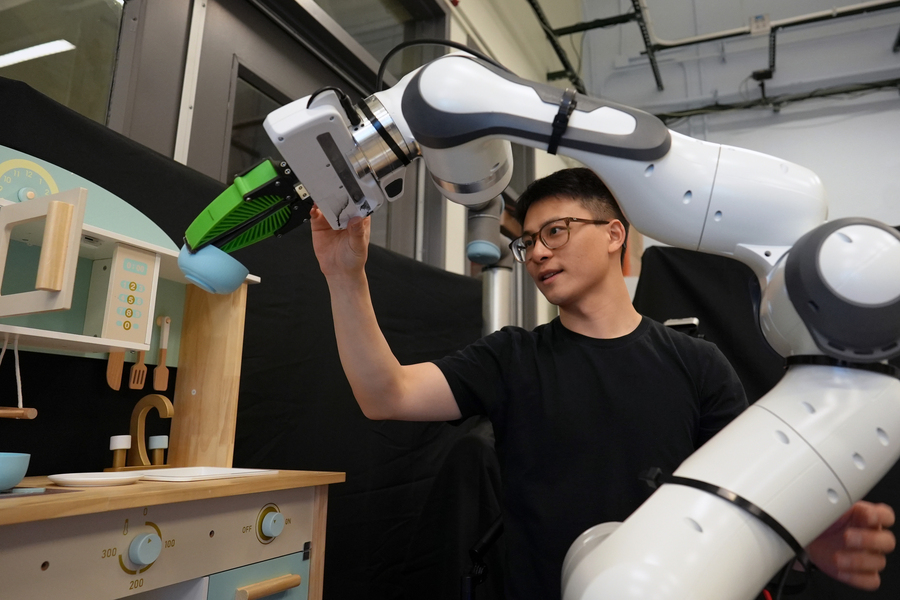
Imagine that a robot is helping you clean the dishes. You ask it to grab a soapy bowl out of the sink, but its gripper slightly misses the mark.

Using a new framework developed by MIT and NVIDIA researchers, you could correct that robot’s behavior with simple interactions. The method would allow you to point to the bowl or trace a trajectory to it on a screen, or simply give the robot’s arm a nudge in the right direction.

Unlike other methods for correcting robot behavior, this technique does not require users to collect new data and retrain the machine-learning model that powers the robot’s brain. It enables a robot to use intuitive, real-time human feedback to choose a feasible action sequence that gets as close as possible to satisfying the user’s intent.

When the researchers tested their framework, its success rate was 21 percent higher than an alternative method that did not leverage human interventions.

In the long run, this framework could enable a user to more easily guide a factory-trained robot to perform a wide variety of household tasks even though the robot has never seen their home or the objects in it.

“We can’t expect laypeople to perform data collection and fine-tune a neural network model. The consumer will expect the robot to work right out of the box, and if it doesn’t, they would want an intuitive mechanism to customize it. That is the challenge we tackled in this work,” says Felix Yanwei Wang, an electrical engineering and computer science (EECS) graduate student and lead author of a paper on this method.

His co-authors include Lirui Wang PhD ’24 and Yilun Du PhD ’24; senior author Julie Shah, an MIT professor of aeronautics and astronautics and the director of the Interactive Robotics Group in the Computer Science and Artificial Intelligence Laboratory (CSAIL); as well as Balakumar Sundaralingam, Xuning Yang, Yu-Wei Chao, Claudia Perez-D’Arpino PhD ’19, and Dieter Fox of NVIDIA. The research will be presented at the International Conference on Robots and Automation.

Mitigating misalignment

Recently, researchers have begun using pre-trained generative AI models to learn a “policy,” or a set of rules, that a robot follows to complete an action. Generative models can solve multiple complex tasks.

During training, the model only sees feasible robot motions, so it learns to generate valid trajectories for the robot to follow.

While these trajectories are valid, that doesn’t mean they always align with a user’s intent in the real world. The robot might have been trained to grab boxes off a shelf without knocking them over, but it could fail to reach the box on top of someone’s bookshelf if the shelf is oriented differently than those it saw in training.

To overcome these failures, engineers typically collect data demonstrating the new task and re-train the generative model, a costly and time-consuming process that requires machine-learning expertise.

Instead, the MIT researchers wanted to allow users to steer the robot’s behavior during deployment when it makes a mistake.

But if a human interacts with the robot to correct its behavior, that could inadvertently cause the generative model to choose an invalid action. It might reach the box the user wants, but knock books off the shelf in the process.

“We want to allow the user to interact with the robot without introducing those kinds of mistakes, so we get a behavior that is much more aligned with user intent during deployment, but that is also valid and feasible,” Wang says.

Their framework accomplishes this by providing the user with three intuitive ways to correct the robot’s behavior, each of which offers certain advantages.

First, the user can point to the object they want the robot to manipulate in an interface that shows its camera view. Second, they can trace a trajectory in that interface, allowing them to specify how they want the robot to reach the object. Third, they can physically move the robot’s arm in the direction they want it to follow.

“When you are mapping a 2D image of the environment to actions in a 3D space, some information is lost. Physically nudging the robot is the most direct way to specifying user intent without losing any of the information,” says Wang.

Sampling for success

To ensure these interactions don’t cause the robot to choose an invalid action, such as colliding with other objects, the researchers use a specific sampling procedure. This technique lets the model choose an action from the set of valid actions that most closely aligns with the user’s goal.

“Rather than just imposing the user’s will, we give the robot an idea of what the user intends but let the sampling procedure oscillate around its own set of learned behaviors,” Wang explains.

This sampling method enabled the researchers’ framework to outperform the other methods they compared it to during simulations and experiments with a real robot arm in a toy kitchen.

While their method might not always complete the task right away, it offers users the advantage of being able to immediately correct the robot if they see it doing something wrong, rather than waiting for it to finish and then giving it new instructions.

Moreover, after a user nudges the robot a few times until it picks up the correct bowl, it could log that corrective action and incorporate it into its behavior through future training. Then, the next day, the robot could pick up the correct bowl without needing a nudge.

“But the key to that continuous improvement is having a way for the user to interact with the robot, which is what we have shown here,” Wang says.

In the future, the researchers want to boost the speed of the sampling procedure while maintaining or improving its performance. They also want to experiment with robot policy generation in novel environments.

Collaborating to advance research and innovation on essential chips for AI

The following is a joint announcement from the MIT Microsystems Technology Laboratories and GlobalFoundries. 

MIT and GlobalFoundries (GF), a leading manufacturer of essential semiconductors, have announced a new research agreement to jointly pursue advancements and innovations for enhancing the performance and efficiency of critical semiconductor technologies. The collaboration will be led by MIT’s Microsystems Technology Laboratories (MTL) and GF’s research and development team, GF Labs.

With an initial research focus on artificial intelligence and other applications, the first projects are expected to leverage GF’s differentiated silicon photonics technology, which monolithically integrates radio frequency silicon-on-insulator (RF SOI), CMOS (complementary metal-oxide semiconductor), and optical features on a single chip to realize power efficiencies for data centers, and GF’s 22FDX platform, which delivers ultra-low power consumption for intelligent devices at the edge.

“The collaboration between MIT MTL and GF exemplifies the power of academia-industry cooperation in tackling the most pressing challenges in semiconductor research,” says Tomás Palacios, MTL director and the Clarence J. LeBel Professor of Electrical Engineering and Computer Science. Palacios will serve as the MIT faculty lead for this research initiative.

“By bringing together MIT’s world-renowned capabilities with GF’s leading semiconductor platforms, we are positioned to drive significant research advancements in GF’s essential chip technologies for AI,” says Gregg Bartlett, chief technology officer at GF. “This collaboration underscores our commitment to innovation and highlights our dedication to developing the next generation of talent in the semiconductor industry. Together, we will research transformative solutions in the industry.”

“Integrated circuit technologies are the core driving a broad spectrum of applications ranging from mobile computing and communication devices to automotive, energy, and cloud computing,” says Anantha P. Chandrakasan, dean of MIT’s School of Engineering, chief innovation and strategy officer, and the Vannevar Bush Professor of Electrical Engineering and Computer Science. “This collaboration allows MIT’s exceptional research community to leverage GlobalFoundries’ wide range of industry domain experts and advanced process technologies to drive exciting innovations in microelectronics across domains — while preparing our students to take on leading roles in the workforce of the future.”

The new research agreement was formalized at a signing ceremony on campus at MIT. It builds upon GF’s successful past and ongoing engagements with the university. GF serves on MTL’s Microsystems Industrial Group, which brings together industry and academia to engage in research. MIT faculty are active participants in GF’s University Partnership Program focused on joint semiconductor research and prototyping. Additionally, GF and MIT collaborate on several workforce development initiatives, including through the Northeast Microelectronics Coalition, a U.S. Department of Defense Microelectronics Commons Hub.

MIT faculty, alumni named 2025 Sloan Research Fellows

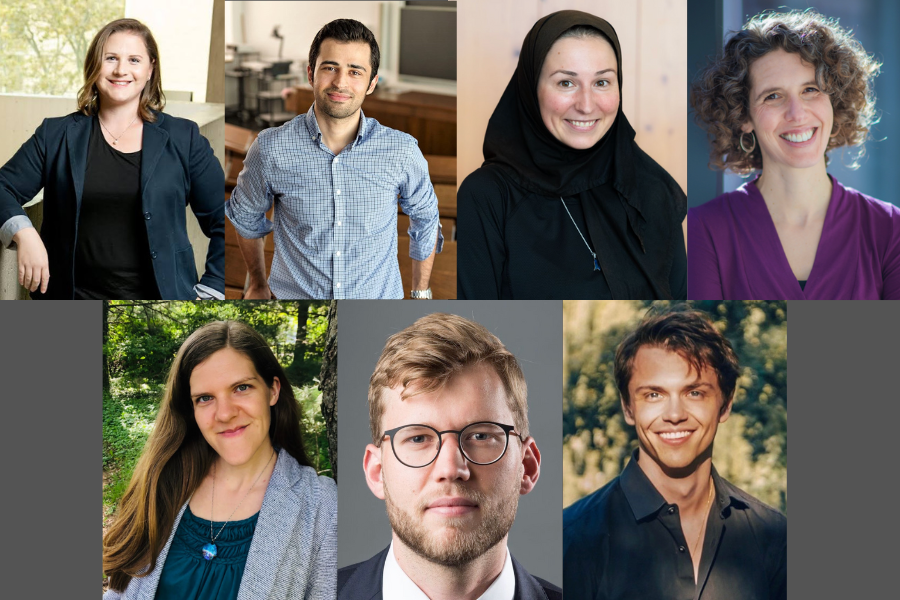
Seven MIT faculty and 21 additional MIT alumni are among 126 early-career researchers honored with 2025 Sloan Research Fellowships by the Alfred P. Sloan Foundation.

The recipients represent the MIT departments of Biology; Chemical Engineering; Chemistry; Civil and Environmental Engineering; Earth, Atmospheric and Planetary Sciences; Economics; Electrical Engineering and Computer Science; Mathematics; and Physics as well as the Music and Theater Arts Section and the MIT Sloan School of Management.

The fellowships honor exceptional researchers at U.S. and Canadian educational institutions, whose creativity, innovation, and research accomplishments make them stand out as the next generation of leaders. Winners receive a two-year, $75,000 fellowship that can be used flexibly to advance the fellow’s research.

“The Sloan Research Fellows represent the very best of early-career science, embodying the creativity, ambition, and rigor that drive discovery forward,” says Adam F. Falk, president of the Alfred P. Sloan Foundation. “These extraordinary scholars are already making significant contributions, and we are confident they will shape the future of their fields in remarkable ways.”

Including this year’s recipients, a total of 333 MIT faculty have received Sloan Research Fellowships since the program’s inception in 1955. MIT and Northwestern University are tied for having the most faculty in the 2025 cohort of fellows, each with seven. The MIT recipients are: 

Ariel L. Furst is the Paul M. Cook Career Development Professor of Chemical Engineering at MIT. Her lab combines biological, chemical, and materials engineering to solve challenges in human health and environmental sustainability, with lab members developing technologies for implementation in low-resource settings to ensure equitable access to technology. Furst completed her PhD in the lab of Professor Jacqueline K. Barton at Caltech developing new cancer diagnostic strategies based on DNA charge transport. She was then an A.O. Beckman Postdoctoral Fellow in the lab of Professor Matthew Francis at the University of California at Berkeley, developing sensors to monitor environmental pollutants. She is the recipient of the NIH New Innovator Award, the NSF CAREER Award, and the Dreyfus Teacher-Scholar Award. She is passionate about STEM outreach and increasing participation of underrepresented groups in engineering.

Mohsen Ghaffari SM ’13, PhD ’17 is an associate professor in the Department of Electrical Engineering and Computer Science (EECS) as well as the Computer Science and Artificial Intelligence Laboratory (CSAIL). His research explores the theory of distributed and parallel computation, and he has had influential work on a range of algorithmic problems, including generic derandomization methods for distributed computing and parallel computing (which resolved several decades-old open problems), improved distributed algorithms for graph problems, sublinear algorithms derived via distributed techniques, and algorithmic and impossibility results for massively parallel computation. His work has been recognized with best paper awards at the IEEE Symposium on Foundations of Computer Science (FOCS), ACM-SIAM Symposium on Discrete Algorithms (SODA), ACM Symposium on Parallelism in Algorithms and Architectures (SPAA), the ACM Symposium on Principles of Distributed Computing (PODC), and the International Symposium on Distributed Computing (DISC), the European Research Council’s Starting Grant, and a Google Faculty Research Award, among others.

Marzyeh Ghassemi PhD ’17 is an associate professor within EECS and the Institute for Medical Engineering and Science (IMES). Ghassemi earned two bachelor’s degrees in computer science and electrical engineering from New Mexico State University as a Goldwater Scholar; her MS in biomedical engineering from Oxford University as a Marshall Scholar; and her PhD in computer science from MIT. Following stints as a visiting researcher with Alphabet’s Verily and an assistant professor at University of Toronto, Ghassemi joined EECS and IMES as an assistant professor in July 2021. (IMES is the home of the Harvard-MIT Program in Health Sciences and Technology.) She is affiliated with the Laboratory for Information and Decision Systems (LIDS), the MIT-IBM Watson AI Lab, the Abdul Latif Jameel Clinic for Machine Learning in Health, the Institute for Data, Systems, and Society (IDSS), and CSAIL. Ghassemi’s research in the Healthy ML Group creates a rigorous quantitative framework in which to design, develop, and place machine learning models in a way that is robust and useful, focusing on health settings. Her contributions range from socially-aware model construction to improving subgroup- and shift-robust learning methods to identifying important insights in model deployment scenarios that have implications in policy, health practice, and equity. Among other awards, Ghassemi has been named one of MIT Technology Review’s 35 Innovators Under 35 and an AI2050 Fellow, as well as receiving the 2018 Seth J. Teller Award, the 2023 MIT Prize for Open Data, a 2024 NSF CAREER Award, and the Google Research Scholar Award. She founded the nonprofit Association for Health, Inference and Learning (AHLI) and her work has been featured in popular press such as ForbesFortuneMIT News, and The Huffington Post.

Darcy McRose is the Thomas D. and Virginia W. Cabot Career Development Assistant Professor of Civil and Environmental Engineering. She is an environmental microbiologist who draws on techniques from genetics, chemistry, and geosciences to understand the ways microbes control nutrient cycling and plant health. Her laboratory uses small molecules, or “secondary metabolites,” made by plants and microbes as tractable experiments tools to study microbial activity in complex environments like soils and sediments. In the long term, this work aims to uncover fundamental controls on microbial physiology and community assembly that can be used to promote agricultural sustainability, ecosystem health, and human prosperity.

Sarah Millholland, an assistant professor of physics at MIT and member of the Kavli Institute for Astrophysics and Space Research, is a theoretical astrophysicist who studies extrasolar planets, including their formation and evolution, orbital dynamics, and interiors/atmospheres. She studies patterns in the observed planetary orbital architectures, referring to properties like the spacings, eccentricities, inclinations, axial tilts, and planetary size relationships. She specializes in investigating how gravitational interactions such as tides, resonances, and spin dynamics sculpt observable exoplanet properties. She is the 2024 recipient of the Vera Rubin Early Career Award for her contributions to the formation and dynamics of extrasolar planetary systems. She plans to use her Sloan Fellowship to explore how tidal physics shape the diversity of orbits and interiors of exoplanets orbiting close to their stars.

Emil Verner is the Albert F. (1942) and Jeanne P. Clear Career Development Associate Professor of Global Management and an associate professor of finance at the MIT Sloan School of Management. His research lies at the intersection of finance and macroeconomics, with a particular focus on understanding the causes and consequences of financial crises over the past 150 years. Verner’s recent work examines the drivers of bank runs and insolvency during banking crises, the role of debt booms in amplifying macroeconomic fluctuations, the effectiveness of debt relief policies during crises, and how financial crises impact political polarization and support for populist parties. Before joining MIT, he earned a PhD in economics from Princeton University.

Christian Wolf, the Rudi Dornbusch Career Development Assistant Professor of Economics and a faculty research fellow at the National Bureau of Economic Research, works in macroeconomics, monetary economics, and time series econometrics. His work focuses on the development and application of new empirical methods to address classic macroeconomic questions and to evaluate how robust the answers are to a range of common modeling assumptions. His research has provided path-breaking insights on monetary transmission mechanisms and fiscal policy. In a separate strand of work, Wolf has substantially deepened our understanding of the appropriate methods macroeconomists should use to estimate impulse response functions — how key economic variables respond to policy changes or unexpected shocks.

The following MIT alumni also received fellowships: 

Jason Altschuler SM ’18, PhD ’22
David Bau III PhD ’21 
Rene Boiteau PhD ’16 
Lynne Chantranupong PhD ’17
Lydia B. Chilton ’06, ’07, MNG ’09 
Jordan Cotler ’15 
Alexander Ji PhD ’17 
Sarah B. King ’10
Allison Z. Koenecke ’14 
Eric Larson PhD ’18
Chen Lian ’15, PhD ’20
Huanqian Loh ’06 
Ian J. Moult PhD ’16
Lisa Olshansky PhD ’15
Andrew Owens SM ’13, PhD ’16 
Matthew Rognlie PhD ’16
David Rolnick ’12, PhD ’18 
Shreya Saxena PhD ’17
Mark Sellke ’18
Amy X. Zhang PhD ’19 
Aleksandr V. Zhukhovitskiy PhD ’16