A new way to integrate data with physical objects

To get a sense of what StructCode is all about, says Mustafa Doğa Doğan, think of Superman. Not the “faster than a speeding bullet” and “more powerful than a locomotive” version, but a Superman, or Superwoman, who sees the world differently from ordinary mortals — someone who can look around a room and glean all kinds of information about ordinary objects that is not apparent to people with less penetrating faculties.

That, in a nutshell, is “the high-level idea behind StructCode,” explains Doğan, a PhD student in electrical engineering and computer science at MIT and an affiliate of the MIT Computer Science and Artificial Intelligence Laboratory (CSAIL). “The goal is to change the way we interact with objects” — to make those interactions more meaningful and more meaning-laden — “by embedding information into objects in ways that can be readily accessed.”

StructCode grew out of an effort called InfraredTags, which Doğan and other colleagues introduced in 2022. That work, as well as the current project, was carried out in the laboratory of MIT Associate Professor Stefanie Mueller — Doğan’s advisor, who has taken part in both projects. In last year’s approach, “invisible” tags — that can only be seen with cameras capable of detecting infrared light — were used to reveal information about physical objects. The drawback there was that many cameras cannot perceive infrared light. Moreover, the method for fabricating these objects and affixing the tags to their surfaces relied on 3D printers, which tend to be very slow and often can only make objects that are small.

StructCode, at least in its original version, relies on objects produced with laser-cutting techniques that can be manufactured within minutes, rather than the hours it might take on a 3D printer. Information can be extracted from these objects, moreover, with the RGB cameras that are commonly found in smartphones; the ability to operate in the infrared range of the spectrum is not required.

In their initial demonstrations of the idea, the MIT-led team decided to construct their objects out of wood, making pieces such as furniture, picture frames, flowerpots, or toys that are well suited to laser-cut fabrication. A key question that had to be resolved was this: How can information be stored in a way that is unobtrusive and durable, as compared to externally-attached bar codes and QR codes, and also will not undermine an object’s structural integrity?

The solution that the team has come up with, for now, is to rely on joints, which are ubiquitous in wooden objects made out of more than one component. Perhaps the most familiar is the finger joint, which has a kind of zigzag pattern whereby two wooden pieces adjoin at right angles such that every protruding “finger” along the joint of the first piece fits into a corresponding “gap” in the joint of the second piece and, similarly, every gap in the joint of the first piece is filled with a finger from the second.

“Joints have these repeating features, which are like repeating bits,” Dogan says. To create a code, the researchers slightly vary the length of the gaps or fingers. A standard size length is accorded a 1. A slightly shorter length is assigned a 0, and a slightly longer length is assigned a 2. The encoding scheme is based on the sequence of these numbers, or bits, that can be observed along a joint. For every string of four bits, there are 81 (34) possible variations.

The team also demonstrated ways of encoding messages in “living hinges” — a kind of joint that is made by taking a flat, rigid piece of material and making it bendable by cutting a series of parallel, vertical lines. As with the finger joints, the distance between these lines can be varied: 1 being the standard length, 0 being a slightly shorter length, and 2 being slightly longer. And in this way, a code can be assembled from an object that contains a living hinge.

The idea is described in a paper, “StructCode: Leveraging Fabrication Artifacts to Store Data in Laser-Cut Objects,” that was presented this month at the 2023 ACM Symposium on Computational Fabrication in New York City. Doğan, the paper’s first author, is joined by Mueller and four coauthors — recent MIT alumna Grace Tang ’23, MNG ’23; MIT undergraduate Richard Qi; University of California at Berkeley graduate student Vivian Hsinyueh Chan; and Cornell University Assistant Professor Thijs Roumen.

“In the realm of materials and design, there is often an inclination to associate novelty and innovation with entirely new materials or manufacturing techniques,” notes Elvin Karana, a professor of materials innovation and design at the Delft University of Technology. One of the things that impresses Karana most about StructCode is that it provides a novel means of storing data by “applying a commonly used technique like laser cutting and a material as ubiquitous as wood.”

The idea for StructCode, adds University of Colorado computer scientist Ellen Yi-Luen Do, “is “simple, elegant, and totally makes sense. It’s like having the Rosetta Stone to help decipher Egyptian hieroglyphs.”

Patrick Baudisch, a computer scientist at the Hasso Plattner Institute in Germany, views StructCode as “a great step forward for personal fabrication. It takes a key piece of functionality that’s only offered today for mass-produced goods and brings it to custom objects.”

Here, in brief, is how it works: First, a laser cutter — guided by a model created via StructCode — fabricates an object into which encoded information has been embedded. After downloading a StructCode app, an user can decode the hidden message by pointing a cellphone camera at the object, which can (aided by StructCode software) detect subtle variations in length found in an object’s outward-facing joints or living hinges.

The process is even easier if the user is equipped with augmented reality glasses, Doğan says. “In that case, you don’t need to point a camera. The information comes up automatically.” And that can give people more of the “superpowers” that the designers of StructCode hope to confer.

“The object doesn’t need to contain a lot of information,” Doğan adds. “Just enough — in the form of, say, URLs — to direct people to places they can find out what they need to know.”
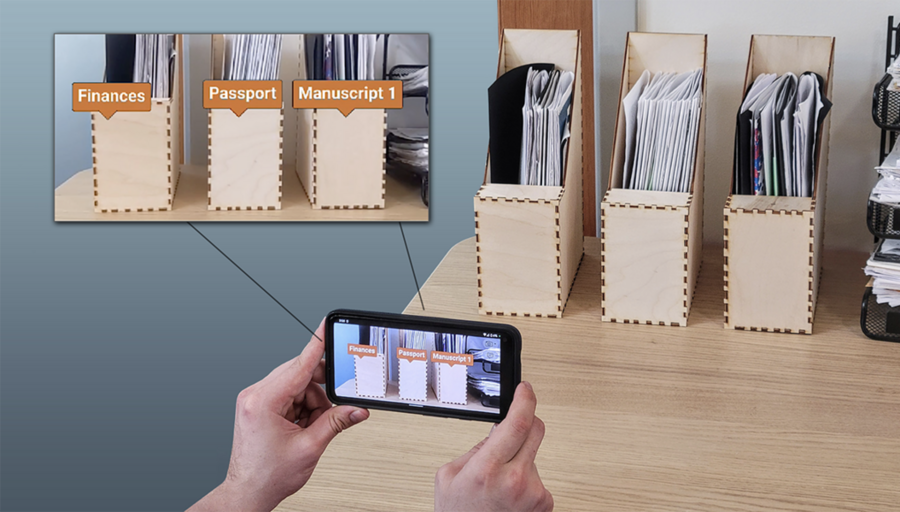
“The goal is to change the way we interact with objects,” says MIT PhD student Mustafa Doğa Doğan, “by embedding information into objects in ways that can be readily accessed.” Image courtesy of the researchers / MIT CSAIL.

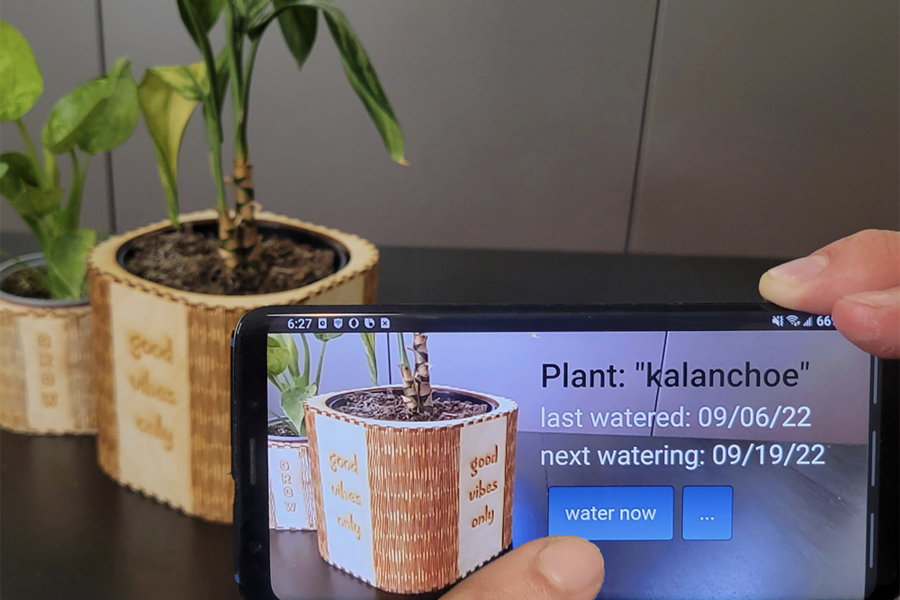
Users might be sent to a website where they can obtain information about the object — how to care for it, and perhaps eventually how to disassemble it and recycle (or safely dispose of) its contents. A flowerpot that was made with living hinges might inform a user, based on records that are maintained online, as to when the plant inside the pot was last watered and when it needs to be watered again. Children examining a toy crocodile could, through StructCode, learn scientific details about various parts of the animal’s anatomy. A picture frame made with finger joints modified by StructCode could help people find out about the painting inside the frame and about the person (or persons) who created the artwork — perhaps linking to a video of an artist talking about this work directly.

“This technique could pave the way for new applications, such as interactive museum exhibits,” says Raf Ramakers, a computer scientist at Hasselt University in Belgium. “It holds the potential for broadening the scope of how we perceive and interact with everyday objects” — which is precisely the goal that motivates the work of Doğan and his colleagues.

But StructCode is not the end of the line, as far as Doğan and his collaborators are concerned. The same general approach could be adapted to other manufacturing techniques besides laser cutting, and information storage doesn’t have to be confined to the joints of wooden objects. Data could be represented, for instance, in the texture of leather, within the pattern of woven or knitted pieces, or concealed by other means within an image. Doğan is excited by the breadth of available options and by the fact that their “explorations into this new realm of possibilities, designed to make objects and our world more interactive, are just beginning.”
10 Years Later: SuperUROP Scholars Look Back

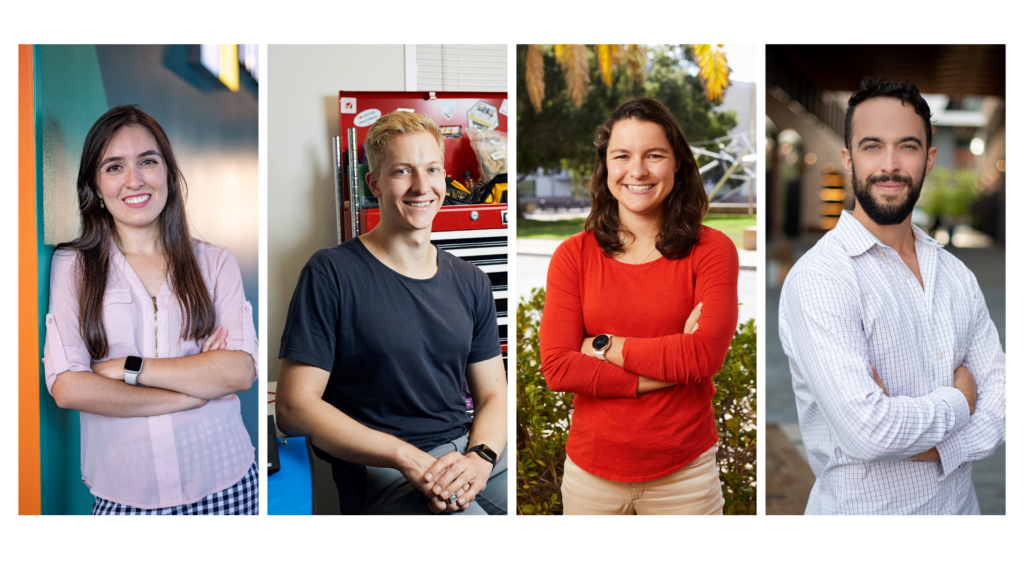
From left to right: Jennifer Madiedo (photo credit: Randall Garnick); Eric Dahlseng (photo credit: Vero Kherian); Chelsea Finn (photo credit: Vero Kherian); Luis Voloch (photo credit: Wilmer Jael).

The Advanced Undergraduate Research Opportunities Program, or SuperUROP, is celebrating a significant milestone: ten years of setting careers in motion.  

Originally mapped out by Dean Anantha Chandrakasan (at that time, the department head of EECS), SuperUROP is designed to act as a launching pad for careers in research and industry, allowing juniors and seniors to experience an authentic–and authentically challenging–research experience. Students begin their year-long effort by identifying a project and building a relationship with a faculty member or senior research scientist, before spending many hours per week engaged in closely focused research on a specific question; writing a high-quality research paper and bringing it through the review process; and finally, presenting their findings in a scientific poster conference attended by key stakeholders, including faculty, peers, and generous supporters of the program. 

Unlike most homework or exams, which usually have a highly structured result, SuperUROP research is frequently very open-ended, morphing into graduate theses, startup plans, or industry positions as students continue their work well past the semester’s close.

“Research, especially as an undergraduate, is always very challenging,” says Chelsea Finn, an alum of SuperUROP, now an assistant professor at Stanford working on robotic interaction. “Doing research as an undergraduate student is the best way to get a flavor of the ambiguity, challenge, and thrill that comes from trying to solve problems that no one has solved before. SuperUROP is super useful for figuring out if a career in research is a good fit.”

“I’ve also found that the process of putting a research project into words helps me to get more clarity on the problem and our solution,” says Chelsea Finn, an assistant professor at Stanford. “It forces me to find the best hypothesis and explanation for what I have learned, leading to a greater understanding of the research.” Photo credit: Veronique Kherian.

Students come to SuperUROP to get ahead not only on research skills, but on the entrepreneurial skills they’ll need for careers in startups and industry. A SuperUROP scholar in 2015-16, Eric Dahlseng went on to co-found Empo Health, a medical device company. “At its core, I think the SuperUROP program teaches undergraduates how to create things that don’t exist (whether that be processes, ideas, technologies, etc.) and share those creations with the world effectively,” says Dahlseng, whose company has pioneered a device used to remotely monitor patients at risk of dangerous diabetic complications. “This is an important set of skills for research and academia, but also an immensely important set of skills for entrepreneurship.”

Eric Dahlseng, the co-founder of Empo Health, found SuperUROP to be a rewarding puzzle. “Like research, the path of entrepreneurship is incredibly uncertain, riddled with twists and turns and unexpected learnings, and often leads in a different direction than imagined at the outset.” Photo credit: Veronique Kherian.

Dahlseng also found that SuperUROP stretched his communications abilities; “I took the communication portion of my SuperUROP very seriously,” recalls the entrepreneur, who received the Ilona Karmel Writing & Humanistic Studies Prize for Engineering Writing award for the paper portion of his project. “As I advance in my career, and especially as Empo Health grows, the importance of good scientific communication is only expanding. I find my role focusing more and more on the communication pieces as I work on growing the team and establishing strong collaboration amongst everyone, sharing our learnings with key stakeholders, and highlighting what we’re creating for end customers and users.” 

Luis Voloch can also testify to the power of SuperUROP to transform strong students into strong scientific communicators. When Voloch was enrolled in SuperUROP, in 2012-13, he investigated how sources of information, including viruses, can be concealed or revealed in computer networks. He is now the cofounder of Immunai, an AI-driven cancer immunotherapy biotech company based in New York City which employs over 140 people and develops technologies at the intersection of AI, genomics, big data, and immunology. In addition to his career at Immunai, Voloch lectures within the Stanford Graduate School of Business on management and entrepreneurship topics in data science and AI-heavy companies. In both roles, the communications skills he acquired during his SuperUROP experience help him connect with students. “In my SuperUROP I started to learn how to do better scientific communications, which I built up further during my graduate research work and beyond. Communicating clearly is a core professional and research skill, and I’m thankful we got started with it that early.” 

Luis Voloch, the cofounder of Immunai, credits his experience with SuperUROP with honing the skills to tackle the kinds of open-ended problems and challenges which entrepreneurs face every day. “I remember during my SuperUROP research having very challenging times, where I felt stuck, and there was no one to give me answers,” Voloch explains. “In a startup, it’s like an open-ended research problem: you need to have a vision, carve out your own path, learn from others and collaborate, but always you need to find your own answers to succeed.” Photo credit: Wilmer Jael.

As careers change and grow, those core skills can flex to meet new challenges. Jennifer Madiedo, a senior software engineer in Industry Solutions Engineering (ISE) at Microsoft, credits her SuperUROP experience with developing her skills in scientific communication and storytelling. “How do you introduce your work to someone who may understand the overarching concepts of your field but not all the details? How do you figure out what background work is relevant and pull it into a cohesive backstory? How do you explain your methodology without losing your reader in too many details? It’s all about the communication; learning to communicate deeply technical ideas in a way peers can understand was a whole new challenge I hadn’t really encountered before at MIT.” 

Madiedo started her career in a half-engineering, half-research NLP team at Microsoft, and now works directly with customers and their engineering teams to solve multifaceted problems. “I’m completely out of a lab setting now, but the skills I learned in undergraduate research truly form the bedrock of how I communicate with my teammates and peers.”

Jennifer Madiedo, a senior software engineer in Industry Solutions Engineering (ISE) at Microsoft, credits SuperUROP with teaching her how to present nuanced information in a scaffolded way. “Nowhere else were we learning those skills and SuperUROP provided the perfect place for it.” Photo credit: Randall Garnick

Again and again, the alumni of SuperUROP stress that communication–often regarded as a “soft” skill–was one of the most important abilities to be tested and developed by the program. “Communication is important in many areas, but is truly an essential part of science,” says Chelsea Finn, who balances her research and teaching responsibilities at Stanford with a role on the Google Brain team. “The ultimate outcome of science is knowledge, and that knowledge is not very useful if it is not communicated to others!” Finn credits much of her passion for science communication to the “infectious passion” of her SuperUROP advisor, the late Seth Teller: “Seth instilled in me the importance of conveying enthusiasm for things that I am excited about, especially when talking to students and mentees.”

With ten years of enthusiastic alumni now engaged in groundbreaking work across many fields, that legacy of enthusiasm continues to pull new scientists into the lab, and new students into a productive year of critical thinking, communicating, and creating through SuperUROP. 

If you’d like to donate in support of SuperUROP at MIT, you can do so here.

Twelve with MIT ties elected to the National Academy of Medicine for 2023

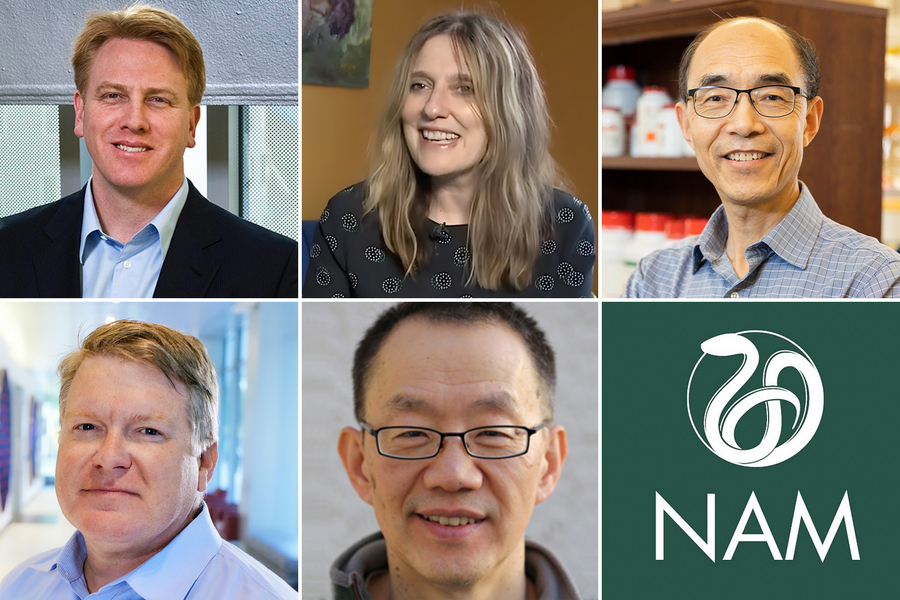
The National Academy of Medicine announced the election of 100 new members to join their esteemed ranks in 2023, among them five MIT faculty members and seven additional affiliates.

MIT professors Daniel Anderson, Regina Barzilay, Guoping Feng, Darrell Irvine, and Morgen Sheng were among the new members. Justin Hanes PhD ’96, Said Ibrahim MBA ’16, and Jennifer West ’92, along with three former students in the Harvard-MIT Program in Health Sciences and Technology (HST) — Michael Chiang, Siddhartha Mukherjee, and Robert Vonderheide — were also elected, as was Yi Zhang, an associate member of The Broad Institute of MIT and Harvard.

Election to the academy is considered one of the highest honors in the fields of health and medicine and recognizes individuals who have demonstrated outstanding professional achievement and commitment to service, the academy noted in announcing the election of its new members.

MIT faculty

Daniel G. Anderson, professor in the Department of Chemical Engineering and the Institute for Medical Engineering and Science, was elected “for pioneering the area of non-viral gene therapy and cellular delivery. His work has resulted in fundamental scientific advances; over 500 papers, patents, and patent applications; and the creation of companies, products, and technologies that are now in the clinic.” Anderson is an affiliate of the Broad Institute of MIT and Harvard and of the Ragon Institute at MGH, MIT and Harvard.

Regina Barzilay, the School of Engineering Distinguished Professor for AI and Health within the Department of Electrical Engineering and Computer Science at MIT, was elected “for the development of machine learning tools that have been transformational for breast cancer screening and risk assessment, and for the development of molecular design tools broadly utilized for drug discovery.” Barzilay is the AI faculty lead within the MIT Abdul Latif Jameel Clinic for Machine Learning in Health and an affiliate of the Computer Science and Artificial Intelligence Laboratory and Institute for Medical Engineering and Science.

Guoping Feng, the associate director of the McGovern Institute for Brain Research, James W. (1963) and Patricia T. Professor of Neuroscience in MIT’s Department of Brain and Cognitive Sciences, and an affiliate of the Broad Institute of MIT and Harvard, was elected “for his breakthrough discoveries regarding the pathological mechanisms of neurodevelopmental and psychiatric disorders, providing foundational knowledges and molecular targets for developing effective therapeutics for mental illness such as OCD, ASD, and ADHD.”

Darrell J. Irvine ’00, the Underwood-Prescott Professor of Biological Engineering and Materials Science at MIT and a member of the Koch Institute for Integrative Cancer Research, was elected “for the development of novel methods for delivery of immunotherapies and vaccines for cancer and infectious diseases.”
 
Morgan Sheng, professor of neuroscience in the Department of Brain and Cognitive Sciences, with affiliations in the McGovern Institute and The Picower Institute for Learning and Memory at MIT, as well as the Broad Institute of MIT and Harvard, was elected “for transforming the understanding of excitatory synapses. He revealed the postsynaptic density as a protein network controlling synaptic signaling and morphology; established the paradigm of signaling complexes organized by PDZ scaffolds; and pioneered the concept of localized regulation of mitochondria, apoptosis, and complement for targeted synapse elimination.”

Additional MIT affiliates

Michael F. Chiang, a former student in the Harvard-MIT Program in Health Sciences and Technology (HST) who is now director of the National Eye Institute of the National Institutes of Health, was honored “for pioneering applications of biomedical informatics to ophthalmology in artificial intelligence, telehealth, pediatric retinal disease, electronic health records, and data science, including methodological and diagnostic advances in AI for pediatric retinopathy of prematurity, and for contributions to developing and implementing the largest ambulatory care registry in the United States.”

Justin Hanes PhD ’96, who earned his PhD from the MIT Department of Chemical Engineering and is now a professor at Johns Hopkins University, was honored “for pioneering discoveries and inventions of innovative drug delivery technologies, especially mucosal, ocular, and central nervous system drug delivery systems; and for international leadership in research and education at the interface of engineering, medicine, and entrepreneurship, leading to clinical translation of drug delivery technologies.”

Said Ibrahim MBA ’16, a graduate of the MIT Sloan School of Management who is now a senior vice president and chair of the Department of Medicine at the Zucker School of Medicine at Hofstra/Northwell, was honored for influential “health services research on racial disparities in elective joint replacement that has provided a national model for advancing health equity research beyond the identification of inequities and toward their remediation, and for his research that has been leveraged to engage diverse and innovative emerging scholars.”

Siddhartha Mukherjee, a former student in HST who is now an associate professor of medicine at Columbia University School of Medicine, was honored “for contributing important research in the immunotherapy of myeloid malignancies, such as acute myeloid leukemia, for establishing international centers for immunotherapy for childhood cancers, and for the discovery of tissue-resident stem cells.”

Robert H. Vonderheide, a former student in HST who is now a professor and vice dean at the Perelman School of Medicine and vice president of cancer programs at the University of Pennsylvania Health System, was honored “for developing immune combination therapies for patients with pancreatic cancer by driving proof-of-concept from lab to clinic, then leading national, randomized clinical trials for therapy, maintenance, and interception; and for improving access of minority individuals to clinical trials while directing an NCI comprehensive cancer center.”

Jennifer West ’92, a graduate of the MIT Department of Chemical Engineering who is now a professor of biomedical engineering and dean of the School of Engineering and Applied Science at the University of Virginia at Charlottesville, was honored “for the invention, development, and translation of novel biomaterials including bioactive, photopolymerizable hydrogels and theranostic nanoparticles.”

Yi Zhang, associate member of the Broad Institute, was honored “for making fundamental contributions to the epigenetics field through systematic identification and characterization of chromatin modifying enzymes, including EZH2, JmjC, and Tet. His proof-of-principle work on EZH2 inhibitors led to the founding of Epizyme and eventual making of tazemetostat, a drug approved for epithelioid sarcoma and follicular lymphoma.”

“It is my honor to welcome this truly exceptional class of new members to the National Academy of Medicine,” said NAM President Victor J. Dzau. “Their contributions to health and medicine are unparalleled, and their leadership and expertise will be essential to helping the NAM tackle today’s urgent health challenges, inform the future of health care, and ensure health equity for the benefit of all around the globe.”

2023-24 EECS Student Award Roundup

decorative image

This ongoing listing of awards and recognitions won by our students is added to all year, beginning in September.

Tanner Andrulis won the Best Paper Award at ISPASS 2024 for his paper, “CiMLoop: A Fast, Flexible, and Accurate Compute-In-Memory Modeling Framework”.

Kiril Bangachev was named a 2024 Siebel Scholar by the Thomas and Stacey Siebel Foundation.

Angie Boggust was named an Apple Scholar in AIML for 2024 by Apple.

Charles Spencer Comiter was named a 2024 Siebel Scholar by the Thomas and Stacey Siebel Foundation.

Alexander Htet Kyaw was named a 2024 MAD Design Fellow by the Morningside Academy of Design.

Sadhana Lolla was named a Gates Cambridge Scholar by the Gates Cambridge Foundation.

Srinath Mahankali was named a 2024-25 Goldwater Scholar.

Abhishek Mukherjee was named a 2024 Siebel Scholar by the Thomas and Stacey Siebel Foundation.

Keith Murray was named a recipient of the Fulbright Fellowship.

Chanwoo Park was named a 2024 Siebel Scholar by the Thomas and Stacey Siebel Foundation.

Charlotte Park was named a 2024 Siebel Scholar by the Thomas and Stacey Siebel Foundation.

Maxine Perroni-Scharf was named a 2024 MAD Design Fellow by the Morningside Academy of Design.

Maaya Prasad was named a recipient of the Fulbright Fellowship.

Charvi Sharma was named a recipient of the Fulbright Fellowship.

Vinith M. Suriyakumar was named a winner of the 2023 MIT Prize for Open Data by the MIT School of Science and the MIT Libraries.

Mohamed Suufi was named a Voyager Scholar by the Obama Foundation for the cohort of 2023-25.

MIT announces 2023 Bose Grants for daring new research

MIT Provost Cynthia Barnhart has announced three Professor Amar G. Bose Research Grants to support bold research projects across diverse areas of study including engineering, animal behavior, and human movement.

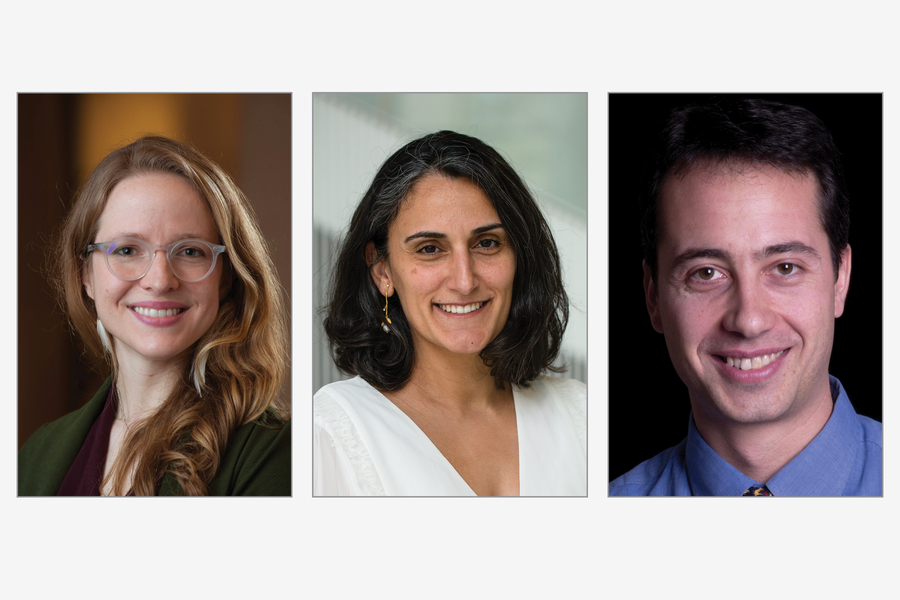
This year’s recipients are Kaitlyn Becker, assistant professor of mechanical engineering and the d’Arbeloff Career Development Professor in Mechanical Engineering; Canan Dagdeviren, associate professor and the LG Career Development Professor of Media Arts and Sciences; and Luca Daniel, professor of electrical engineering and computer science.

“Creativity and a willingness to take risks drive discovery and innovation, an approach that honors Amar Bose’s legacy of work,” says Barnhart. “These talented faculty members have the opportunity to push the boundaries of their fields of research thanks to the support of this program, which seeks to fund daring projects and ideas.”

The program was named for the visionary founder of the Bose Corp. and MIT alumnus, Amar G. Bose ’51, SM ’52, ScD ’56. After gaining admission to MIT, Bose became a top math student and a Fulbright Scholarship recipient. He spent 46 years as a professor at MIT, led innovations in sound design, and founded the Bose Corp. in 1964. MIT launched the program 11 years ago to provide funding over a three-year period to MIT faculty who propose original, cross-disciplinary, and often risky research projects that would likely not be funded by conventional sources.

Swapping stones for glass

Hundreds of millions of tons of material from construction and demolition — mostly concrete — make their way into landfills each year. To reduce this waste and turn to more renewable sources of building materials, Becker is making an unexpected suggestion: why not build out of glass?

Her proposal, “Ditching Stones for Glass Houses,” envisions design space and manufacturing technologies to produce strong, versatile, and recyclable glass structural blocks. Becker hopes that this research could even be expanded to serve future space missions by offering a way to turn the moon’s rubble-like ground cover directly into building materials on the lunar surface.

“While my research and publication history are predominantly in soft robotics, my expertise and research interest is more broadly the design and manufacturing of novel systems that leverage unique material properties, which often come with highly constrained design and manufacturing spaces,” she explains.

Becker’s interest in glass began in 2006 when she was a first-year student working in the MIT glass lab, and she is excited to combine that artisanal interest with her professional expertise. “This will be the most substantial project I’ve undertaken, with the greatest potential for positive environmental and societal impact.”

What’s the buzz?

The wearable sensors that Dagdeviren and students in her Conformable Decoders research group at the MIT Media Lab have been developing to track human health are getting a new purpose: to study the behavior of individual honeybees and how those behaviors add up to swarm intelligence.

In her proposal, “Conformable surface acoustic wave sensors to study swarm intelligence in honeybees,” Dagdeviren explains how she will work with material scientists, electronics engineers, and data visualization experts to develop a tiny and flexible sensor tag for each bee. They will also develop the hardware on the tag to allow its signals to be sent wirelessly and design the software to collect and combine data from the tagged bees.

The findings could help researchers document how climate change is impacting communication among bees, she notes. A better understanding of swarm intelligence could also provide new insights into how humans interact socially in individual-centered and multifaceted societies.

“While we have successfully deployed piezoelectric-based sensors for targeted medical interventions involving the human brain, heart, stomach, and limbs, designing wearable sensors for bees … is a new challenge for us, which makes it unattractive to traditional grant sources,” Dagdeviren says.

Excellence in human movement

Picture a shortstop perfectly slinging a ball to first base, a ballroom dancer stepping through the intricacies of the Viennese waltz, or a karate black belt moving effortless through a kata. Are there some fundamental principles behind all of these organized movements — no matter how they’re practiced?

That’s a question that Daniel hopes to answer with his proposal, “Investigating the Elements of Organized Human Movement.” He was intrigued by the question in part due to his own experiences as part of the U.S. and Italian national teams for ballroom dancing and the bocce world championships, and will be working with Armin Kappacher, head of the MIT ballroom dancing team.

The study will relate the properties of joints to more expansive properties such as “elegance of movement,” says Daniel. The goal is to propose a basis for composing organized human movement where external force is distributed efficiently throughout the body’s rigid bones and elastic connective tissues.

“Imagine now that human beings manage to understand the core principles behind organized movement and distill them to provide general education toward healthy movement,” he notes. “This kind of healthy movement education will not only protect us from injuries, but will also keep our brain and body more functional with age, thus improving the quality of human life, while reducing health-care burden.”

2023-24 EECS Faculty Award Roundup

This ongoing listing of awards and recognitions won by our faculty is added to all year, beginning in September.

Pulkit Agrawal, Assistant Professor, was awarded the 2024 Early Academic Career Award in Robotics and Automation by IEEE Robotics and Automation Society.

Jacob Andreas, Associate Professor, was named a 2024 Sloan Research Fellow by the Alfred P. Sloan Foundation.

Marc Baldo, the Dugald C. Jackson Professor in Electrical Engineering and director of the Research Laboratory of Electronics, was elected to the National Academy of Engineering (NAE).

Regina Barzilay, School of Engineering Distinguished Professor for AI and Health and AI lead at the Jameel Clinic for Machine Learning and Health, was elected to the National Academy of Medicine for “the development of machine learning tools that have been transformational for breast cancer screening and risk assessment, and for the development of molecular design tools broadly utilized for drug discovery.”

Adam Belay, Associate Professor, received the Google Research Scholar Award for his work, “Making Kernel Bypass Practical for the Cloud”.

Adam Belay, Associate Professor, was named a 2024 Sloan Research Fellow by the Alfred P. Sloan Foundation.

Karl Berggren, the Joseph F. and Nancy P. Keithley Professor in Electrical Engineering, was named a 2024 MacVicar Faculty Fellow.

Sangeeta Bhatia, John and Dorothy Wilson Professor of Electrical Engineering and Computer Science, was elected a Foreign Fellow of the ATSE (Australian Academy of Technological Sciences & Engineering) for her work in nanotechnologies for medical innovation.

Tamara Broderick, Associate Professor of EECS, was elected to the 2024 class of IMS Fellows “for theoretical leadership in Bayesian statistics and probability theory, especially in the context of scalability, robustness, and nonparametrics.”

Vincent Chan, Joan and Irwin M. (1957) Jacobs Professor, was awarded the IEEE Edison Medal for “pioneering technical contributions and leadership in the fields of space and terrestrial optical communications and networks.”

Yufeng Kevin Chen, Assistant Professor, was awarded the 2023 Bioinspiration & Biomimetics Steven Vogel Young Investigator Award.

Luca Daniel, Professor of EECS, was awarded the one of the 2023 Professor Amar G. Bose Research Grants for his research proposal, “Investigating the Elements of Organized Human Movement.”

Jesus del Alamo, Donner Professor of Science, was awarded the 2023 Intel Outstanding Researcher Award, alongside postdoctoral researcher Yanjie Shao, for their project, “Exploring the Limits of Vertical-Nanowire Tunnel Field-Effect Transistors in the Nanoscale“.

Priya Donti, Assistant Professor, was named an AI2050 Early Career Fellow by Schmidt Futures.

Joel Emer, Professor of Practice in EECS, was awarded the 2023 B. Ramakrishna Rau Award by the IEEE Computer Society “for pioneering contributions to microarchitectural analysis, microarchitecture features, and for bringing clarity to the field with fundamental concepts and terminology.”

Dirk Englund, Associate Professor of EECS, was elected a Fellow of the IEEE “for contributions to semiconductor quantum photonics and machine learning”.

Gabriele Farina, X-Window Consortium Professor and Assistant Professor, was awarded the 2023 Doctoral Dissertation Award by ACM SIGecom for his dissertation entitled, “Game-Theoretic Decision Making in Imperfect-Information Games: Learning Dynamics, Equilibrium Computation, and Complexity”.

James Fujimoto, Elihu Thomson Professor in Electrical Engineering, was awarded the 2023 Lasker-DeBakey Clinical Medical Research Award alongside fellow winners Eric Swanson and David Huang, “for the invention of optical coherence tomography, a technology that revolutionized ophthalmology—allowing rapid detection of diseases of the retina that impair vision.”

James Fujimoto, Elihu Thomson Professor in Electrical Engineering, was a co-recipient of the National Medal of Technology and Innovation along with Eric Swanson SM ’84, a research affiliate at RLE and mentor for the MIT Deshpande Center for Technological Innovation, and David Huang ’85, SM ’89, PhD ’93, professor of ophthalmology at Oregon Health and Science University. The National Medal of Technology and Innovation is the nation’s highest award for technological achievement.

Marzyeh Ghassemi, Hermann L. F. von Helmholtz Professor, Assistant Professor, received an NSF Career Award for her project, “Ethical Machine Learning in Health: Robustness in Data, Learning and Deployment”.

Marzyeh Ghassemi, Hermann L. F. von Helmholtz Professor, Assistant Professor, was named a winner of the 2023 MIT Prize for Open Data by the MIT School of Science and the MIT Libraries.

Marzyeh Ghassemi, Hermann L. F. von Helmholtz Professor, Assistant Professor, received the Google Research Scholar Award for her work, “Addressing Intersectional Clinical Fairness with Unknown Demographic Attributes”.

Marija Ilic, Adjunct Professor, received the 2024 IEEE PES Prabha S. Kundur Power System Dynamics and Control Award from the IEEE Power & Energy Society “for pioneering contributions to hierarchical and distributed modeling and control of large power systems.”

Piotr Indyk, the Thomas D. and Virginia W. Cabot Professor of EECS, was elected to the National Academy of Sciences.

Wojciech Matusik, the Joan and Irwin M. (1957) Jacobs Professor of EECS, was awarded the Humboldt Research Award from the Alexander von Humboldt Foundation.

Samuel Madden, Distinguished College of Computing Professor, received the Edgar F. Codd Innovations Award from the ACM’s Special Interest Group on Management of Data (SIGMOD)

Farnaz Niroui, Assistant Professor, was awarded the Junior Bose Award by the MIT School of Engineering.

Jelena Notaros, Robert J. Shillman (1974) Career Development Professor in Electrical Engineering and Computer Science and Assistant Professor, was the co-recipient of the 2024 Optica CLEO Highlighted Talk Award.

Jelena Notaros, Robert J. Shillman (1974) Career Development Professor in Electrical Engineering and Computer Science and Assistant Professor, was, along with her graduate student team, the recipient of the 2023 SRC JUMP 2.0 CogniSense Best Demo Award.

Jelena Notaros, Robert J. Shillman (1974) Career Development Professor in Electrical Engineering and Computer Science and Assistant Professor, was, along with her graduate student team, the recipient of the 2023 SRC JUMP 2.0 CogniSense Best Poster Award.

Jelena Notaros, Robert J. Shillman (1974) Career Development Professor in Electrical Engineering and Computer Science and Assistant Professor, was the recipient of the 2023 Optica Frontiers in Optics (FiO) Postdeadline Paper (as co-author).

Kevin O’Brien, Associate Professor, was awarded a Air Force Office of Scientific Research (AFOSR) Young Investigator Program (YIP) Award for 2024.

William Oliver, Henry Ellis Warren (1894) Professor and Associate Director of the RLE, was elected to the 2023 class of AAAS Fellows.

Yury Polyanskiy, Education Officer for AI+D and Professor of EECS, was elected a Fellow of the IEEE for “contributions to information measures and finite-blocklength information theory”.

Manish Raghavan, Drew Houston (2005) Professor and Assistant Professor, received the Google Research Scholar Award for his work, “Synthetic Data Generation from Aggregate Data with Applications to Privacy and the US Census”.

Daniela Rus, the Andrew (1956) and Erna Viterbi Professor; Director of CSAIL; and MIT Schwarzman College of Computing Deputy Dean of Research, was elected to the National Academy of Sciences.

Arvind Satyanarayan, Associate Professor, was named a 2024 Sloan Research Fellow by the Alfred P. Sloan Foundation.

Gerald Sussman, Panasonic Professor, received the 2024 Taylor L. Booth Education Award from the IEEE Computer Society.

Julian Shun, Associate Professor, received the 2023 ACM Paris Kanellakis Theory and Practice Award alongside his collaborators Guy Blelloch (Carnegie Mellon University) and Laxman Dhulipala (University of Maryland).

Caroline Uhler, Professor of EECS and in IDSS, was elected to the 2024 class of IMS Fellows “for interdisciplinary excellence, merging mathematical statistics and computational biology in innovative and impactful ways.”

Vinod Vaikuntanathan, Professor, was named a 2023 Simons Investigator in Theoretical Computer Science.

Vinod Vaikuntanathan, Professor, was named a 2024 MacVicar Faculty Fellow.

Martin Wainwright, Cecil H. Green Professor and Professor of Mathematics, was awarded a 2024 Guggenheim Fellowship.

Virginia Vassilevska Williams, Professor, was named a 2023 Simons Investigator in Theoretical Computer Science.

Ryan Williams, Professor, was awarded the 2024 Gödel Prize for his paper, Non-Uniform ACC Circuit Lower Bounds. Computational Complexity Conference (CCC) 2011

Ashia Wilson, Lister Brothers (Gordon K. ’30 and Donald K. ’34) Professor, Assistant Professor, was named a winner of the 2023 MIT Prize for Open Data by the MIT School of Science and the MIT Libraries.

Ashia Wilson, Lister Brothers (Gordon K. ’30 and Donald K. ’34) Professor, Assistant Professor, won the “Best Paper Award” at the ACM Conference on Fairness, Accountability, and Transparency (ACM FAccT) 2024, for her paper entitled “Algorithmic Pluralism: A Structural Approach To Equal Opportunity”, coauthored with Shomik Jain (MIT), Vinith Suriyakumar (MIT), and Kathleen Creel (Northeastern University).

School of Engineering welcomes Songyee Yoon PhD ’00 as visiting innovation scholar

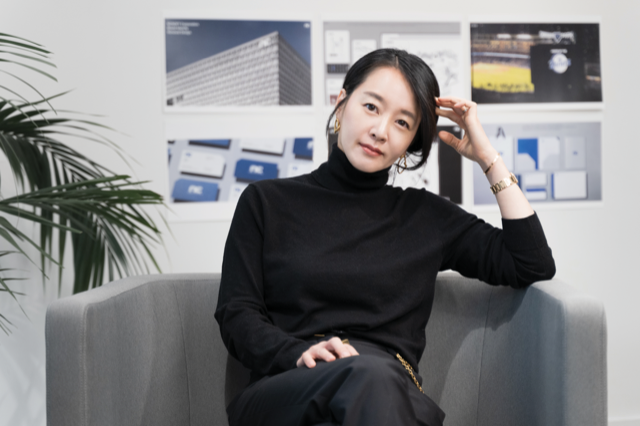
Songyee Yoon PhD ’00, an entrepreneur, innovator, investor, and leader in AI and the gaming industry, has been appointed as a School of Engineering visiting innovation scholar for the 2023-24 academic year.

Yoon, who is as a member of the MIT Corporation, serves as president and chief strategic officer of NCSOFT, a world leader in game publishing and digital entertainment. Under her leadership, NCSOFT has expanded to include locations in seven countries on three continents. She played a pivotal role in founding the NCSOFT AI Center, a state-of-the-art AI research facility that has helped the company develop and integrate the latest AI and machine learning technologies into their products.   

In 2021, Yoon founded Chamaeleon, an early-stage venture capital firm. As a managing partner at the firm, Yoon focuses on consumer software, content and media, and deep and frontier tech. She particularly supports entrepreneurs working at the intersection of AI, entertainment, and social platforms.   

As a visiting innovation scholar, Yoon will engage in a variety of activities with faculty, students, and staff across MIT’s School of Engineering. She will provide guidance to the dean of engineering on strategic initiatives, cutting-edge programs, and the entrepreneurial ecosystem within the school.

“I am both humbled and excited to embark on my journey as an innovation scholar, where I will champion entrepreneurship and empower female engineers to flourish within diverse career paths,” says Yoon.

A central theme throughout Yoon’s career and many philanthropic pursuits has been a passion for promoting inclusivity and supporting future leaders.

“As technology continues to transform our world, there is a growing need for inclusive innovation. Throughout my career, I’ve seen firsthand how amplifying all voices fosters more creativity and adds richness to building,” adds Yoon. “I am honored to help the School of Engineering bridge the gap between inspiration and realization, and nurture the next generation of trailblazing leaders who will shape the world with their brilliance.”

Yoon received a bachelor’s degree in electrical and electronics engineering at Korea Advanced Institute of Science and Technology and a PhD in computational neuroscience from MIT. She also received a juris doctor from Santa Clara University School of Law and is a graduate of Stanford University’s Executive Program.

After receiving her PhD, Yoon worked at McKinsey and Co., then served as vice president of communications intelligence at wireless service provider SK Telecom, where she used AI technologies to develop a smart, personalized data services platform. In 2008, she joined NCSOFT.

As a member of the MIT Corporation, Yoon has served on several visiting committees at MIT and is the current chair of the Governance and Nominations Committee. She serves on a number of advisory boards, including the EECS Thriving Stars advisory board. She is an inaugural member of the Advisory Council of Stanford University’s Human-Centered AI Center and a board of trustees of Carnegie Endowment for International Peace.

Yoon is chair and founder of the NCSOFT Cultural Foundation, a nonprofit that promotes corporate social responsibility and supports the socially disadvantaged. In an effort to support working parents, Yoon personally oversaw the development of the “Laughing Peanut,” a 400-child daycare facility located at the NCSOFT R&D center, and “Projectory,” for nurturing and fostering creativity.

Yoon has received a number of awards and accolades for her contributions to technology and business. She is a member of the National Academy of Engineering of Korea, was named one of the 50 Women to Watch in Business by The Wall Street Journal, and was named a Young Global Leader by the World Economic Forum.

“Dr. Yoon is a true visionary. Her extensive experience in AI technologies, coupled with her passion for supporting entrepreneurs and championing diversity in engineering, make her an ideal fit as visiting innovation scholar,” says Anantha Chandrakasan, dean of the MIT School of Engineering and the Vannevar Bush Professor of Electrical Engineering and Computer Science. “The faculty, students, and staff in the School of Engineering will all benefit from her expertise and vision.”

Team including MIT electrical engineer James Fujimoto wins Lasker Award

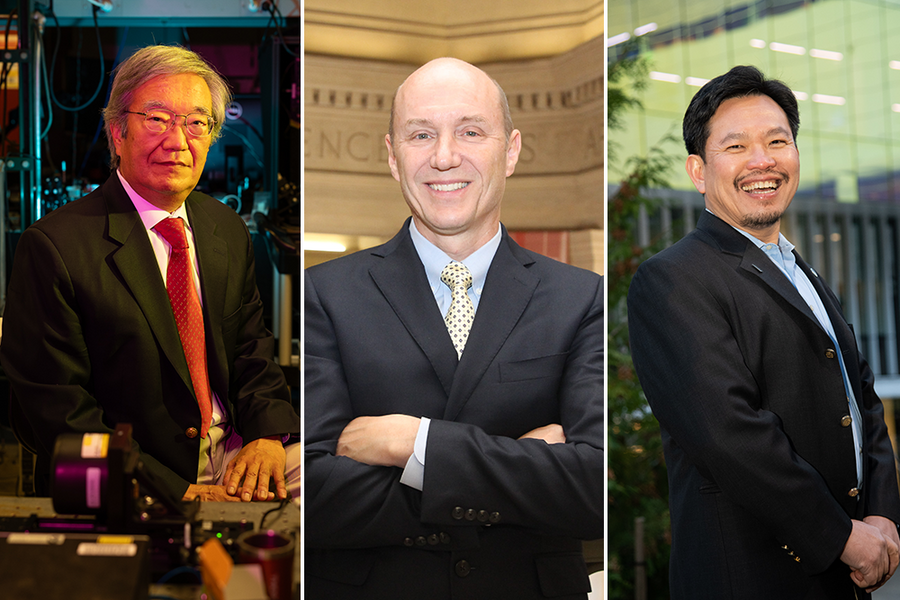
The Lasker Foundation has named James Fujimoto ’79, SM ’81, PhD ’84, the Elihu Thomson Professor in Electrical Engineering and principal investigator in the Research Laboratory of Electronics (RLE), a recipient of the 2023 Lasker-DeBakey Clinical Medical Research Award for his groundbreaking work on optical coherence tomography. Fujimoto shares the award with Eric Swanson SM ’84, a research affiliate at MIT’s Research Laboratory of Electronics and mentor for the MIT Deshpande Center for Technological Innovation, and David Huang MD ‘93 PhD ’93, professor of ophthalmology at Oregon Health and Science University and alumnus of the Harvard-MIT Program in Health Sciences and Technology.

Considered one of the most prestigious prizes for biomedical research, the Lasker Awards celebrate individuals who have “made major advances in the understanding, diagnosis, treatment, cure, and prevention of human disease.” A large percentage of Lasker Award recipients have gone on to win a Nobel Prize.  

According to the Lasker Foundation citation, Fujimoto, Huang, and Swanson are being honored “for the invention of optical coherence tomography (OCT), a technology that revolutionized ophthalmology — allowing rapid detection of diseases of the retina that impair vision.” An animated video describing the work is available here.

“I am honored to be included among the recipients of this award,” says Fujimoto. “OCT represents the decades-long effort of a multidisciplinary partnership involving scientists, engineers, the clinical community, and industry. We are grateful for the opportunity to help to improve patient care and sincerely thank the Lasker Foundation.”

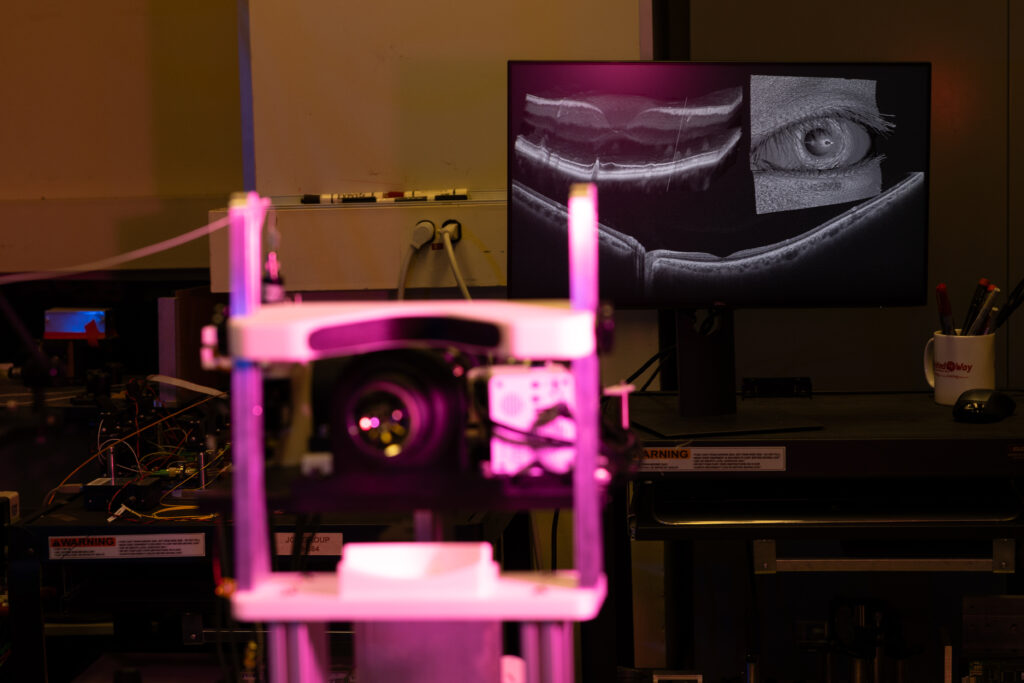
Prior to the invention of OCT, the standard methods of diagnosing ophthalmic disease were limited. In the early 1990s, Fujimoto, an electrical engineer and expert in advanced laser technologies, collaborated with satellite communications engineer Swanson — then at MIT Lincoln Laboratory — and MD-PhD student Huang to devise a better way to diagnose diseases. Using an optical technique known as interferometry, they developed a technology that could image the three dimensional microscopic structure of the living retina for the first time.  

Their work, published in 1991 in the journal Science, revolutionized the field of ophthalmology and enabled a more precise way to detect disease and monitor treatment. Additional co-authors on this paper are Charles P. Lin, Joel S. Schuman, William G. Stinson, Warren Chang, Michael R. Hee, Thomas Flotte, Kenton Gregory, and Carmen A. Puliafito.

Retinal imaging is currently the largest application of OCT; in ophthalmology, OCT is now considered the standard of care for diagnosing and monitoring eye disease. Photo credit: Jake Belcher

Revolutionizing ophthalmology with echoes of light

To understand how optical coherence tomography works, it’s useful to consider other imaging methods which use echoes. “OCT is an optical analogue of ultrasound or radar,” explains Fujimoto. “Instead of sound, it measures echo delays of reflected or scattered light in order to image the subsurface microstructure in tissues or materials in situ.”

The short wavelength of light allows for microscopic resolution of the images generated by OCT, but using light — as opposed to sound, which travels slower and has longer wavelengths — introduces thorny technological problems.

“The speed of light is extremely fast,” notes Fujimoto. “Light from the moon travels to earth in 1.3 seconds. So, in order to measure echo time delay over the very small dimensions in biological tissues, you need extremely high-resolution measurement technology.” 

Here, Fujimoto, Swanson, and Huang found that their differing backgrounds enhanced their problem-solving capabilities. 

“OCT uses many of the advances that were developed in high-speed optical communications,” explains Fujimoto. One of the team’s realizations was that infrared light provided good penetration of human tissues and interferometry could achieve the required high resolution and sensitivity. This made it possible to measure the “echo time” of reflected or scattered infrared light waves, thus creating a microscopic-resolution, three-dimensional image of subsurface structures inside tissues.

Performing Optical Biopsy

Importantly, the technology is not a substitute for ultrasound, CT or MRI, but rather a different tool with unique and complementary strengths. MRI, CT and ultrasound can penetrate deep into the body to create a full-body image, but have limited resolution. OCT can perform “optical biopsy,” imaging subsurface structure with microscopic resolution, without the need to excise and process specimens. OCT has limited imaging depth in tissues other than the eye, but can be combined with other optical instruments to image inside the body.

OCT could not have been developed without interdisciplinary collaboration with clinician scientists. Carmen Puliafito and Joel Schuman, then at the New England Eye Center and Tufts University School of Medicine respectively, led the first clinical studies developing OCT in diabetic retinopathy, age related macular degeneration and glaucoma. These studies helped define the future clinical applications of OCT and commercialization in ophthalmology.

Retinal imaging became the largest application of OCT; in ophthalmologists’ offices worldwide, it is now considered the standard of care for diagnosing and monitoring eye disease. OCT has also helped improve understanding of disease mechanisms and accelerated development of new pharmaceutical treatments.

Many ophthalmologists say that OCT allows the non-specialist to detect disease with the sensitivity approaching that of a specialist. Diseases such as diabetic retinopathy, age-related macular degeneration, and glaucoma which may not produce noticeable symptoms at an early stage, can be detected and treated before there is irreversible vision loss.  

Now, applications of OCT are being developed for even broader public usage outside of ophthalmology clinics. “In the future it will be possible to screen for diseases by having an automated OCT exam in local drug stores. The eye is a window on health – in addition to vision impairing eye diseases, OCT can enable detection of systemic disease such as diabetes and neurological conditions. The impact on public health could be immense,” explains Fujimoto.

OCT also has applications far beyond ophthalmology. The team quickly realized that fiber optics could be used to extend OCT’s reach into deeper areas of the body, imaging through catheters, endoscopes, and laparoscopes.

Intravascular imaging is the second largest application of OCT and was developed in collaboration with Mark Brezinski, a cardiologist at the Massachusetts General Hospital and Harvard Medical School. Brezinski demonstrated that OCT could detect unstable atherosclerotic plaques which cause heart attacks and led many of the first studies demonstrating OCT for optical biopsy.

“There are tissues that are not typically biopsied, such as retina, coronary arteries, nerves, and brain where OCT can provide information on pathology in situ and in real-time,” says Fujimoto. “Another application is surgical guidance — you can see beneath the tissue surface to avoid sensitive nerves and blood vessels before making an incision.”

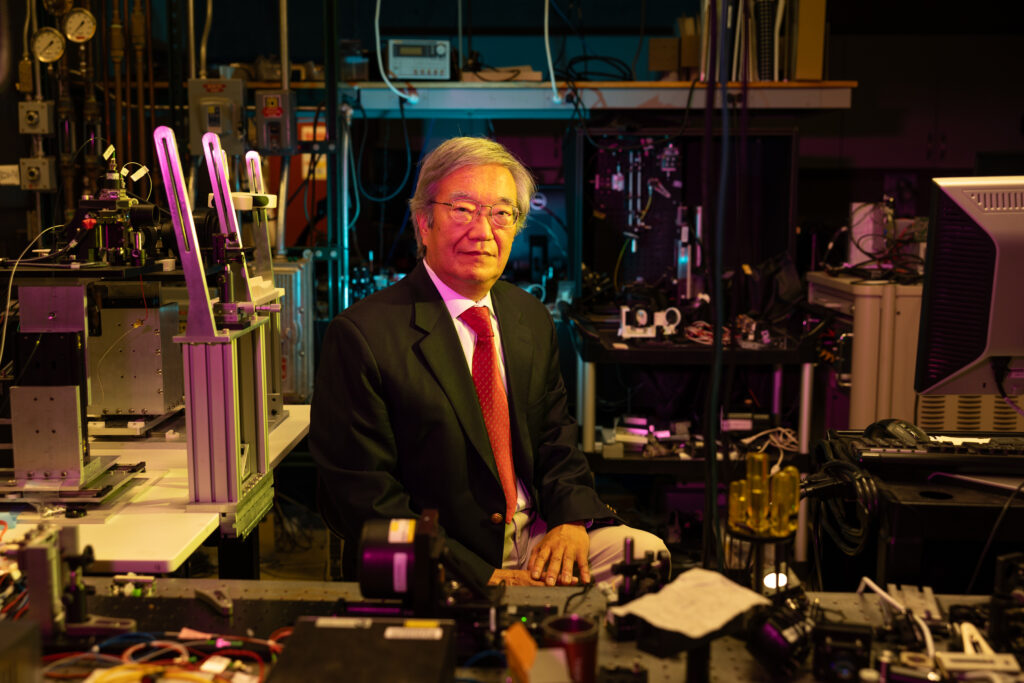
Prof. Fujimoto joined the MIT EECS faculty in 1985. Photo credit: Jake Belcher.

With many research groups and clinics developing technology and applications, OCT stands as a shining example of the potential of interdisciplinary, and international, scientific cooperation. “Interdisciplinary collaboration is very popular now, but it was relatively uncommon in the 1990s, when OCT was first developed,” explains Fujimoto.

The success of OCT and its growing list of applications, is, for Fujimoto, a powerful reminder of the importance of cross-disciplinary work. “In medicine, as well as in many other fields, there is increasing use of technologies, including advanced hardware and analysis technologies as well as AI. Modern medicine can draw upon these technologies to advance patient care and reduce mortality.”

MIT named No. 2 university by U.S. News for 2023-24

MIT has placed second in U.S. News and World Report’s annual rankings of the nation’s best colleges and universities, announced today.

As in past years, MIT’s engineering program continues to lead the list of undergraduate engineering programs at a doctoral institution. The Institute also placed first in five out of 10 engineering disciplines.

U.S. News also placed MIT first in its evaluation of undergraduate computer science programs. The Institute placed first in four out of 10 computer science disciplines.

MIT remains the No. 2 undergraduate business program, a ranking it shares this year with the University of California at Berkeley. Among business subfields, MIT is ranked first in three out of nine specialties.

Within the magazine’s rankings of “academic programs to look for,” MIT topped the list in the category of undergraduate research and creative projects. The Institute also ranks as the third most innovative national university, according to the U.S. News peer assessment survey of top academics.

MIT placed first in five engineering specialties: aerospace/aeronautical/astronautical engineering; chemical engineering; electrical/electronic/communication engineering; materials engineering; and mechanical engineering. It placed within the top five in four other engineering areas: bioengineering/biomedical engineering, computer engineering; civil engineering, and environmental/environmental health engineering.

Other schools in the top five overall for undergraduate engineering programs are Stanford University, Georgia Tech, UC Berkeley, and Caltech.

In computer science, MIT placed first in four specialties: biocomputing/bioinformatics/biotechnology; computer systems; programming languages; and theory. It placed in the top five of five disciplines: artificial intelligence; cybersecurity (shared with Carnegie Mellon University); data analytics/science; mobile/web applications; and software engineering (shared with Stanford and UC Berkeley).

Other schools in the top five overall for undergraduate computer science programs are Carnegie Mellon, Stanford, UC Berkeley, and the University of Illinois at Urbana-Champaign.

Among undergraduate business specialties, the MIT Sloan School of Management leads in analytics; production/operations management; and quantitative analysis/methods. It also placed within the top five in three other categories: entrepreneurship; finance; and supply chain management.

The No. 1-ranked undergraduate business program overall is at the University of Pennsylvania; other schools ranking in the top five include UC Berkeley, the University of Michigan at Ann Arbor, New York University, and the University of Texas at Austin.


Five MIT faculty members named 2023 Simons Investigators

Five MIT professors have been selected to receive the 2023 Simons Investigators awards. Virginia Vassilevska Williams and Vinod Vaikuntanathan are both professors in MIT’s Department of Electrical Engineering and Computer Science and principal investigators in MIT’s Computer Science and Artificial Intelligence Laboratory (CSAIL). Aram Harrow and Leonid Mirny are professors in the Department of Physics, and Davesh Maulik PD ’08 is a professor for the Department of Mathematics.

The Simons Investigator program supports “outstanding theoretical scientists who receive a stable base of research support from the foundation, enabling them to undertake the long-term study of fundamental questions.”

Aram Harrow ’01, PhD ’05, Professor of Physics, studies theoretical quantum information science in order to understand the capabilities of   quantum computers and quantum communication devices. Harrow has developed quantum algorithms for solving large systems of linear equations and hybrid classical-quantum algorithms for machine learning, and has also contributed to the intersection of quantum information and many-body physics, with work on thermalization, random quantum dynamics and the “monogamy” property of quantum entanglement.  He was a lecturer at the University of Bristol and a research assistant professor at the University of Washington until joining MIT in 2013. His awards include the NSF CAREER award, several best paper awards, an APS Outstanding Referee Award, and the APS Rolf Landauer and Charles H Bennett Award in Quantum Computing.

Davesh Maulik joined the Department of Mathematics at MIT in 2015.  He works in algebraic geometry, with an emphasis on the geometry of moduli spaces. In many cases, this involves using ideas from neighboring fields such as representation theory, symplectic geometry, and number theory. His most recent work has focused on moduli spaces of Higgs bundles and various conjectures regarding their structure. In the past, he has received a Clay Mathematics Research Fellowship and the Compositio Mathematica Prize with coauthors for an outstanding research publication.

Leonid Mirny, the Richard J. Cohen (1976) Professor in Medicine and Biomedical Physics, is a core faculty member at the Institute for Medical Engineering and Science (IMES), and is faculty at the Department of Physics. His work combines biophysical modeling with analysis of large genomics data to address fundamental problems in biology. Mirny aims to understand how exceedingly long molecules of DNA are folded in 3D, and how this 3D folding of the genome influences gene expression and execution of genetic programs in health and disease. His prediction that the genome is folded by a new class of motors that act by “loop extrusion” was experimentally confirmed leading a paradigm shift in chromosome biology. Broadly, Mirny is interested in unraveling physical mechanisms that underlie reading, writing, and transmission of genetic and epigenetic information. He was awarded the 2019 Blaise Pascal International Chair of Excellence and was named a Fellow of the American Physical Society. He received his M.Sc. in chemistry from the Weizmann Institute of Science, and his PhD in biophysics from Harvard University, where he also served as a Junior Fellow at Harvard Society of Fellows.

Vinod Vaikuntanathan is a professor of computer science at MIT. The co-inventor of modern fully homomorphic encryption systems and many other lattice-based (and post-quantum secure) cryptographic primitives, Vaikuntanathan’s work has been recognized with a George M. Sprowls PhD thesis award, an IBM Josef Raviv Fellowship, a Sloan Faculty Fellowship, a Microsoft Faculty Fellowship, an NSF CAREER Award, a DARPA Young Faculty Award, a Harold E. Edgerton Faculty Award, Test of Time awards from IEEE FOCS and CRYPTO conferences, and a Gödel prize. Vaikuntanathan earned his SM and PhD degrees from MIT, and a BTech degree from the Indian Institute of Technology Madras.


Virginia Vassilevska Williams is a professor of computer science at MIT EECS. Williams’ research focuses on algorithm design and analysis of fundamental problems involving graphs, matrices and more, seeking to determine the precise (asymptotic) time complexity of these problems. She has designed the fastest algorithm for matrix multiplication and is widely regarded as the leading expert on Fine-Grained Complexity. Among her many awards, she has received an NSF CAREER award; a Sloan Research Fellowship; a Google Faculty Research Award, a Thornton Family Faculty Research Innovation Fellowship (FRIF), and was an invited speaker at the International Congress of Mathematicians in 2018. Williams earned her MS and PhD degrees at CMU, and her BS degree at Caltech.