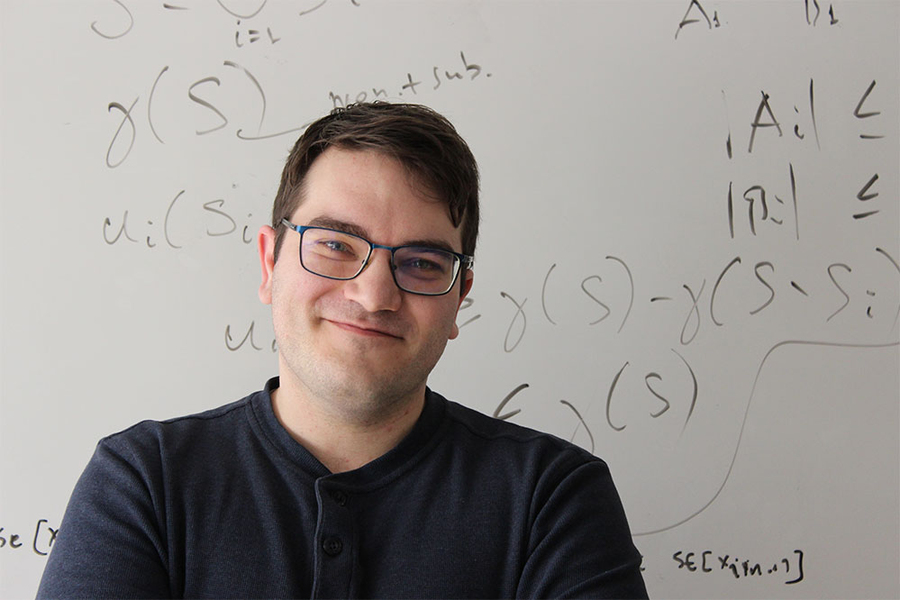
Student Spotlight: Isabel Duran

Student Isabel Duran stands in a partially dry riverbed inside a majestic canyon.

This interview is part of a series of short interviews from the Department of EECS, called Student Spotlights. Each Spotlight features a student answering their choice of questions about themselves and life at MIT. 

Isabel Duran, a sophomore majoring in 6-5, Electrical Engineering With Computing, keeps a packed schedule: you may spot her giving tours around campus for MIT Admissions, but she’s also co-lead for Engineers Without Borders Farm and Irrigation, Treasurer for the MIT chapter of the Society of Hispanic Professional Engineers, Secretary for MIT LUCHA, and an active member of Alpha Chi Omega. We sat down with her to learn more.

Tell me about one teacher from your past—here at MIT, at your high school, or even earlier, who had an influence on the person you’ve become.

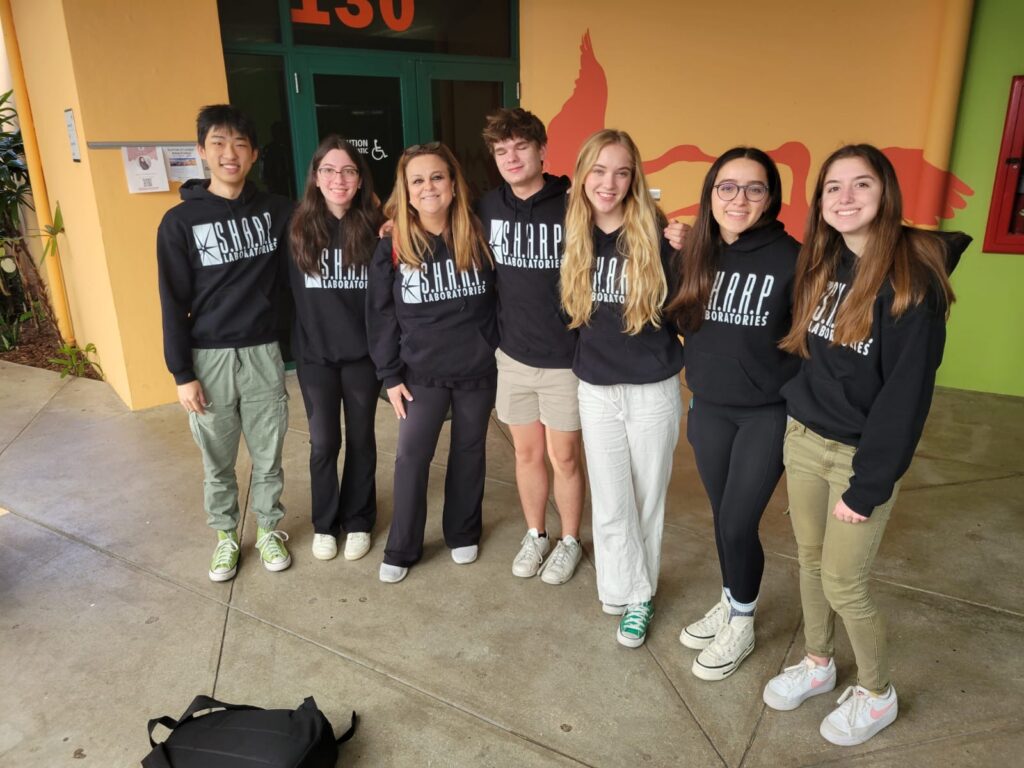
My high school chemistry teacher, Dr. Sharp, changed my life. She was funny and freakishly all-knowing (both about school gossip and complex science), and her class was one of my first introductions to what I would consider serious science. Beyond being my role model, she encouraged me to get involved in STEM competitions and introduced me to an incredible support system that I still consider close friends. Without her, I would not have even applied to MIT!

Duran at the regional Science Olympiad competition with her teammates, wearing the hoodie she designed for the science competition club run by her chemistry teacher, Dr. Sharp. From left to right: Luke Yang, Sabina Khizroev, Dr. Yuria Sharp, Lucas Hudson, Ruby Tenbroek, Isabel Duran, Alexa Fein.

Who’s your favorite artist?

This past summer, I had the opportunity to see Natalia Lafourcade live. The entire concert was acoustic, some parts even acapella, and the rhythm, melodies, and lyrics felt like home. She’s a Mexican folk artist, and I grew up listening to her music. In addition to the absolute genius of her songs, they’re deeply woven with a lot of my core memories.

What is your favorite obscure, endangered, or unpopular animal?

I have a little bit of a quokka obsession. Quokkas are derpy marsupials inhabiting Western Australia. Something about their eyes indicates innocent mischief, and I think they’re my spirit animals.

Duran was part of an Engineers Without Borders trip to Tanzania, where her team carried out the first phase of implementation for their project. Duran explains, “The MIT EWB Farm and Irrigation team is currently collaborating with a primary school in the Mkutani region of Tanzania to design an irrigated vegetable garden for the school. The project is challenging because very few components of the project can be completed in parallel. For example, the team must first identify and test the water source to get a sense of our irrigation capacity. The project has also been challenging in the personal aspect: Tanzania is experiencing political turmoil, which has slowed down progress. This photograph was taken 15 minutes out from the village MIT EWB is working with. Pictured are Celestina Pint (EWB Treasurer), Barbara Piper (professional engineer and advisor to MIT EWB), and Isabel Duran (EWB Co-lead). The photograph was taken by Josiah Shimandle (MIT EWB President).”

What is the best bad movie? (You get to decide for yourself what the subjectives “best” and “bad” mean.)

“A California Christmas” is the best bad movie. My whole family has grown to enjoy a Hallmark-esque masterpiece around the holidays, and this was one of the first ones we watched.

If you suddenly won the lottery, what would you spend some of the money on?

A hotel-type pancake machine.

If you had to teach a really in-depth class about one niche topic, what would you pick?

Ever since physics class in high school, I’ve really loved magnets. I find them cool from a conceptual perspective (the math and physics of them are fascinating, even if mysterious) and an applications perspective (maglev trains??? Huge magnets for fusion??? Tiny magnets for killing cancer??? epic). I would love to teach a class about magnets, and I would really enjoy learning more too.

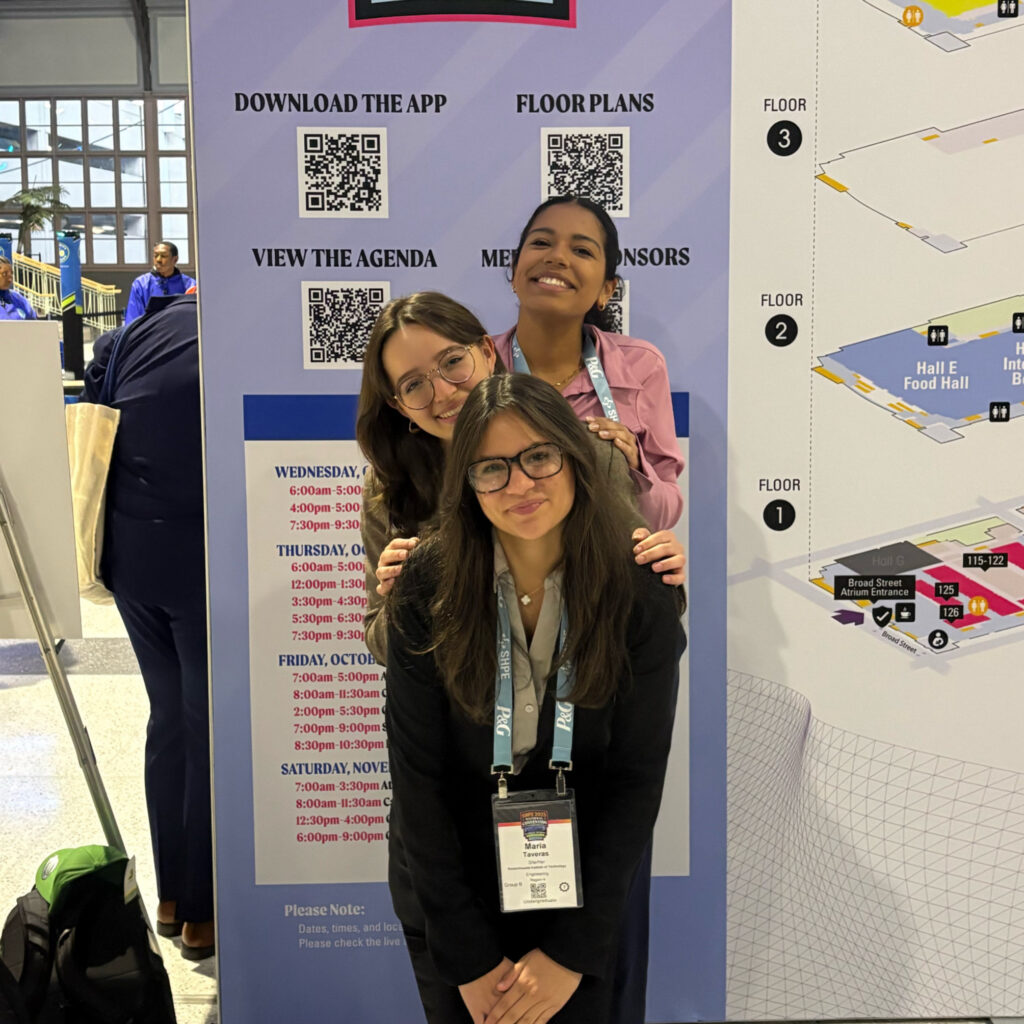
Here, Duran appears with friends at the national convention for the Society for Hispanic Professional Engineers. Duran credits her membership in the professional development organization, saying, “SHPE @ MIT has…. given me an incredible support system and great friendships as I navigate my career. I love my SHPE familia!” Photo credit: Courtesy of Isabel Duran

Building AI models that understand chemical principles

Among all of the possible chemical compounds, it’s estimated that between 1020 and 1060 may hold potential as small-molecule drugs.

Evaluating each of those compounds experimentally would be far too time-consuming for chemists. So, in recent years, researchers have begun using artificial intelligence to help identify compounds that could make good drug candidates. 

One of those researchers is MIT Associate Professor Connor Coley PhD ’19, the Class of 1957 Career Development Associate Professor with shared appointments in the departments of Chemical Engineering and Electrical Engineering and Computer Science and the MIT Schwarzman College of Computing. His research straddles the line between chemical engineering and computer science, as he develops and deploys computational models to analyze vast numbers of possible chemical compounds, design new compounds, and predict reaction pathways that could generate those compounds. 

“It’s a very general approach that could be applied to any application of organic molecules, but the primary application that we think about is small-molecule drug discovery,” he says.

The intersection of AI and science

Coley’s interest in science runs in the family. In fact, he says, his family includes more scientists than non-scientists, including his father, a radiologist; his mother, who earned a degree in molecular biophysics and biochemistry before going to the MIT Sloan School of Management; and his grandmother, a math professor.

As a high school student in Dublin, Ohio, Coley participated in Science Olympiad competitions and graduated from high school at the age of 16. He then headed to Caltech, where he chose chemical engineering as a major because it offered a way to combine his interests in science and math.

During his undergraduate years, he also pursued an interest in computer science, working in a structural biology lab using the Fortran programming language to help solve the crystal structure of proteins. After graduating from Caltech, he decided to keep going in chemical engineering and came to MIT in 2014 to start a PhD.

Advised by professors Klavs Jensen and William Green, Coley worked on ways to optimize automated chemical reactions. His work focused on combining machine learning and cheminformatics — the application of computation methods to analyze chemical data — to plan reaction pathways that could make new drug molecules. He also worked on designing hardware that could be used to perform those reactions automatically. 

Part of that work was done through a DARPA-funded program called Make-It, which was focused on using machine learning and data science to improve the synthesis of medicines and other useful compounds from simple building blocks.

“That was my real entry point into thinking about cheminformatics, thinking about machine learning, and thinking about how we can use models to understand how different chemicals can be made and what reactions are possible,” Coley says.

Coley began applying for faculty jobs while still a graduate student, and accepted an offer from MIT at age 25. He received a mix of advice for and against taking a job at the same school where he went to graduate school, and eventually decided that a position at MIT was too enticing to turn down.

“MIT is a very special place in terms of the resources and the fluidity across departments. MIT seemed to be doing a really good job supporting the intersection of AI and science, and it was a vibrant ecosystem to stay in,” he says. “The caliber of students, the enthusiasm of the students, and just the incredible strength of collaborations definitely outweighed any potential concerns of staying in the same place.”

Chemistry intuition

Coley deferred the faculty position for one year to do a postdoc at the Broad Institute, where he sought more experience in chemical biology and drug discovery. There, he worked on ways to identify small molecules, from billions of candidates in DNA-encoded libraries, that might have binding interactions with mutated proteins associated with diseases.

After returning to MIT in 2020, he built his lab group with the mission of deploying AI not only to synthesize existing compounds with therapeutic potential, but also to design new molecules with desirable properties and new ways to make them. Over the past few years, his lab has developed a variety of computational approaches to tackle those goals. 

“We try to think about how to best pair a challenge in chemistry with a potential computational solution. And often that pairing motivates the development of new methods,” Coley says. One model his lab has developed, known as ShEPhERD, was trained to evaluate potential new drug molecules based on how they will interact with target proteins, based on the drug molecules’ three-dimensional shapes. This model is now being used by pharmaceutical companies to help them discover new drugs.

“We’re trying to give more of a medicinal chemistry intuition to the generative model, so the model is aware of the right criteria and considerations,” Coley says.

In another project, Coley’s lab developed a generative AI model called FlowER, which can be used to predict the reaction products that will result from combining different chemical inputs. 

In designing that model, the researchers built in an understanding of fundamental physical principles, such as the law of conservation of mass. They also compelled the model to consider the feasibility of the intermediate steps that need to take place on the pathway from reactants to products. These constraints, the researchers found, improved the accuracy of the model’s predictions.

“Thinking about those intermediate steps, the mechanisms involved, and how the reaction evolves is something that chemists do very naturally. It’s how chemistry is taught, but it’s not something that models inherently think about,” Coley says. “We’ve spent a lot of time thinking about how to make sure that our machine-learning models are grounded in an understanding of reaction mechanisms, in the same way an expert chemist would be.”

Students in his lab also work on many different areas related to the optimization of chemical reactions, including computer-aided structure elucidation, laboratory automation, and optimal experimental design.

“Through these many different research threads, we hope to advance the frontier of AI in chemistry,” Coley says.

Improving the reliability of circuits for quantum computers

Quantum computers could someday solve pressing problems that are too convoluted for classical computers, such as modeling complex molecular interactions to streamline drug discovery and materials development. 

But to build a superconducting quantum computer that is large and resilient enough for real-world applications, scientists must precisely engineer thousands of quantum circuits so they perform operations with the lowest possible error rate.

To help scientists design more predictable circuits, researchers from MIT and Lincoln Laboratory developed a technique to measure a property that can unexpectedly cause a superconducting quantum circuit to deviate from its expected behavior. Their analysis revealed the source of these distortions, known as second-order harmonic corrections, leading to underperforming circuit architectures.

The MIT researchers fabricated a device to detect second-order harmonic corrections, identify their origin, and precisely measure their strength. This technique could help scientists deliberately design quantum circuits that can counteract the effects of these deviations.

This is especially important in larger and more complicated quantum circuits, where the negative impact of second-order harmonic corrections can be amplified. 

“As we make our quantum computers bigger and we want to have more precise control over the parameters of these devices, identifying and measuring these effects is going to be important for us to have a precise understanding of how these systems are constructed. It is always important to keep diving down into the circuit to see if there is an effect you didn’t expect, which impacts how your device is performing,” says Max Hays, a research scientist in the Engineering Quantum Systems (EQuS) group of the Research Laboratory of Electronics (RLE) and co-lead author of a paper on this research.

Hays is joined on the paper by co-lead author Junghyun Kim, an electrical engineering and computer science (EECS) graduate student in the EQuS group; senior author William D. Oliver, the Henry Ellis Warren (1894) Professor of EECS and professor of physics, leader of the EQuS group, director of the Center for Quantum Engineering, and associate director of RLE; as well as others at MIT and Lincoln Laboratory. The research appears today in Nature Physics.

A pair-wise problem

In a quantum computer that utilizes superconducting circuits, which is one of many potential computing platforms, Josephson junctions are critical elements that enable the transfer and manipulation of information. These devices utilize two superconducting wires that are brought very close together, with a nanometer-scale barrier between them. Like a traditional circuit, the electric charge in Josephson junctions is carried by electrons. 

But in a superconducting circuit, charge-carrying electrons pair up, forming what are called Cooper pairs. These Cooper pairs can “quantum tunnel” through the barrier between the two wires, transporting current from one wire to the other.

Cooper pairs can usually only tunnel one pair at a time, which is a key property that makes quantum computation possible. 

“If you try to force more Cooper pairs through, it just doesn’t work. This non-linear effect is extremely important for all our circuits. If we didn’t have that effect, then we wouldn’t be able to control or manipulate any quantum information that we store in these circuits,” Hays explains.

But sometimes, Cooper pairs can unexpectedly squeeze through the barrier two at a time, an effect that is known as a second-order harmonic correction. This effect limits the performance of a quantum circuit that has been configured to only allow single-pair tunneling.

“If two Cooper pairs tunnel at the same time, then the assumption we used to build our circuit doesn’t apply anymore. We need to fix the circuit so it can handle that,” Kim says.

But before they can fix the circuit, scientists need to know the source and strength of these distortions.

To obtain this information, the MIT researchers fabricated a quantum circuit so it would be very sensitive to these effects. Essentially, the device is designed to suppress the quantum tunneling process of single Cooper pairs, while allowing the two-pair tunneling process to continue. 

In this way, they can detect the presence of second-order harmonic corrections and precisely measure their strength. 

Straight to the source

They can also use this circuit to pinpoint the source of these harmonics, which helps researchers identify the best way to correct for them. 

There are two potential sources of second-order harmonics — one source is intrinsic to the dynamics of the Josephson junction and the other is caused by the wires connecting the junction to other circuit elements. 

While prior research had indicated the second-order harmonics could be due to the dynamics of the junction, the MIT researchers found that additional inductance — the tendency to oppose changes in the flow of electric current —from wires in the circuit was the actual source in their devices. 

“This is important because, if we know where the second-order harmonic correction is coming from, we can predict how strong it is likely to be, and use that information to engineer more predictable circuits that will hopefully perform better,” Hays says.

In the future, the researchers want to design experiments that more accurately predict how a device will perform when second-order harmonic corrections occur. They also want to study other sources of second-order harmonic corrections and whether those sources could have negative impacts on a circuit under different fabrication conditions.

This work is funded, in part, by the U.S. Department of Energy, the U.S. Co-design Center for Quantum Advantage, the U.S. Air Force, the Korea Foundation for Advanced Studies, and the Intelligence Community Postdoctoral Research Fellowship Program at MIT. 

Justin Solomon appointed associate dean of engineering education

Justin Solomon, associate professor in the Department of Electrical Engineering and Computer Science (EECS), has been appointed associate dean of engineering education in the MIT School of Engineering, effective July 1, 2026.

In this new role, Solomon will focus on advancing innovation in engineering education across the School. He will help shape new pedagogical approaches in the context of an AI-enabled world and will explore experiential, hands-on, and other modes of learning. Working closely with academic departments, Solomon will serve as a thought partner in integrating AI into curricula and will help facilitate interdisciplinary and shared teaching opportunities across departments and other schools. He will also play a key role in helping the School implement relevant recommendations from the Committee on AI Use in Teaching, Learning, and Research Training.

Solomon will explore opportunities to build industry collaborations, including new models for internships and industry-engaged learning on campus. Collaborating with department heads and the School of Engineering leadership team, he will also support faculty in designing new courses and evolving existing programs to meet emerging opportunities in engineering.

“Justin’s interdisciplinary approach will be especially valuable as we continue to evolve engineering education to meet new opportunities and challenges. His extensive experience applying AI across a wide range of domains will help each academic department thoughtfully integrate AI and new educational models into their curricula,” says Paula T. Hammond, dean of the School of Engineering and Institute Professor. “I look forward to the vision and perspective he will bring to the School’s leadership team.”

A dedicated educator, Solomon has played a central role in shaping computing education at MIT. He is a key contributor to the Common Ground for Computing, where he co-teaches the core subject “Modeling with Machine Learning: From Algorithms to Applications” (6.C01) with Regina Barzilay, the Delta Electronics Professor in the MIT Department of Electrical Engineering and Computer Science and affiliate faculty member at IMES. Within EECS, he teaches “Numerical Algorithms for Computing and Machine Learning” (6.7350) as well as “Shape Analysis” (6.8410). He is also the founder of the Summer Geometry Initiative, a six-week program that introduces students to geometry processing through intensive training, collaboration, and research experiences.

Solomon’s dedication to teaching and helping students has been honored with various awards, including the EECS Outstanding Educator Award and the Burgess (1952) and Elizabeth Jamieson Prize for Excellence in Teaching. He is the author of Numerical Algorithms, a textbook that presents a modern approach to numerical analysis for computer science students.

Solomon is a principal investigator at MIT’s Computer Science and Artificial Intelligence Laboratory (CSAIL), where he leads the Geometric Data Processing Group. His research sits at the intersection of geometry and computation, with applications spanning computer graphics, autonomous navigation, political redistricting, physical simulation, 3D modeling, and medical imaging. He is also a core faculty member of the MIT-IBM Watson AI Lab, contributing to research that advances the foundations and applications of artificial intelligence.

His scholarly contributions have been recognized with numerous distinctions, including the 2023 Harold E. Edgerton Faculty Achievement Award for exceptional contributions in teaching, research, and service. In 2025, he was named a Schmidt Polymath, supporting interdisciplinary research across areas such as acoustics and climate that rely on large-scale simulation of physical systems. Solomon joined the MIT faculty in 2016. He previously held an NSF Mathematical Sciences Postdoctoral Research Fellowship in Princeton University’s Program in Applied and Computational Mathematics. He earned his bachelor’s, master’s, and doctoral degrees from Stanford University. While studying at Stanford, he also worked as a research assistant at Pixar Animation Studios.

MIT student Jack Carson named 2026 Udall Scholar

Jack Carson, a second-year undergraduate at MIT majoring in electrical engineering and computer science, has been named a 2026 Udall Scholar, one of up to 65 undergraduates nationally to receive the prestigious $7,500 award. 

The Udall Scholarship honors students who have demonstrated a commitment to the environment, Indigenous health care, or tribal public policy. Carson is only the third MIT student to win this award, and the first to win for tribal policy.

Carson, a member of the Cherokee Nation and resident of Oklahoma, exemplifies the multidisciplinary approach to problem-solving that the Udall Scholarship seeks to honor. His work spans artificial intelligence, biomedical research, Indigenous community development, and ethics.

“Jack is the type of leader the Udall Foundation exists to support,” says Kim Benard, associate dean for distinguished fellowships. “He’s not only conducting cutting-edge research, but he’s actively creating opportunities for Indigenous students to enter tech fields.”

At MIT’s Computer Science and Artificial Intelligence Laboratory (CSAIL), Carson works in the Barzilay Lab, developing multiomics models for personalized therapeutic target identification. His work on deep learning and statistical physics has resulted in a sole-author paper published at the International Conference on Machine Learning (ICML).

Carson founded Code.Tulsa, a summer technology program designed to introduce Indigenous high school students to computer science and tech careers. The initiative addresses a significant gap: Indigenous communities remain highly underrepresented in technology fields, despite the potential for tech to advance tribal sovereignty and economic development.

This year, Carson won the Elie Wiesel Prize in Ethics Essay Contest. He is an accomplished musician who has performed at Carnegie Hall and with the National Opera, a motorcycle racer, and a self-described philosopher deeply committed to questions of justice and responsibility.

It took 40 years for technology to catch up to this zipper design

In 1985, the Innovative Design Fund placed an ad in Scientific American offering up to $10,000 to support clever prototypes for clothing, home decor, and textiles. William Freeman PhD ’92, then an electrical engineer at Polaroid and now an MIT professor, saw it and submitted a novel idea: a three-sided zipper. Instead of fastening pants, it’d be like a switch that seamlessly flips chairs, tents, and purses between soft and rigid states, making them easier to pack and put together.

Freeman’s blueprint was much like a regular zipper, except triangular. On each side, he nailed a belt to connect narrow wooden “teeth” together. A slider wrapping around the device could be moved up to fasten the three strips into place, straightening them into a triangular tube. His proposal was rejected, but Freeman patented his prototype and stored it in his garage in the hopes it might come in handy one day.

Nearly 40 years later, MIT Computer Science and Artificial Intelligence Laboratory (CSAIL) researchers wanted to revive the project to create items with “tunable stiffness.” Prior attempts to adjust that weren’t easily reversible or required manual assembly, so CSAIL built an automated design tool and adaptable fastener called the “Y-zipper.” The scientists’ software program helps users customize three-sided zippers, which it then builds on its own in a 3D printer using plastics. These devices can be attached or embedded into camping equipment, medical gear, robots, and art installations for more convenient assembly.

“A regular zipper is great for closing up flat objects, like a jacket, but Freeman ideated something more dynamic. Using current fabrication technology, his mechanism can transform more complex items,” says MIT postdoc and CSAIL researcher Jiaji Li, who is a lead author on an open-access paper presenting the project. “We’ve developed a process that builds objects you can rapidly shift from flexible to rigid, and you can be confident they’ll work in the real world.”

Y-Zipper: 3D Printing Flexible-Rigid Transitions in One Click

Why zippers?

Users can customize how the fasteners look when they’re zipped up in CSAIL’s software program; they can select the length of each strip, as well as the direction and angle at which they’ll bend. They can also choose from one of four motion “primitives” to select how the zipper will appear when it’s zipped up: straight, bent (similar to an arch), coiled (resembling a spring), or twisted (looks like screws).

The Y-zipper that results will appear to “shape-shift” in the real world. When unzipped, it can look like a squid with three sprawling tentacles, and when you close it up, it becomes a more compact structure (like a rod, for instance). This flexibility could be useful when you’re traveling — take pitching a tent, for example. The process can take up to six minutes to do alone, but with the Y-zipper’s help, it can be done in one minute and 20 seconds. You simply attach each arm to a side of the tent, supporting the structure from the top so that the zipper seemingly pops the canopy into place. 

This seamless transition could also unlock more flexible wearables, often useful in medical scenarios. The team wrapped the Y-zipper around a wrist cast, so that a user could loosen it during the day, and zip it up at night to prevent further injuries. In turn, a seemingly stiff device can be made more comfortable, adjusting to a patient’s needs.

The system can also aid users in crafting technology that moves at the push of a button. One can attach a motor to the Y-zipper after fabrication to automate the zipping process, which helps build things like an adaptive robotic quadruped. The robot could potentially change the size of its legs, tightening up into taller limbs and unzipping when it needs to be lower to the ground. Eventually, such rapid adjustments could help the robot explore the uneven terrain of places like canyons or forests. Actuated Y-zippers can also build dynamic art installations — for example, the team created a long, winding flower that “bloomed” thanks to a static motor zipping up the device.

Mastering the material

While Li and his colleagues saw the creative potential of the Y-zipper, it wasn’t yet clear how durable it would be. Could they sustain daily use?

The team ran a series of stress tests to find out. First, they evaluated the strength and flexibility of polylactic acid (PLA) and thermoplastic polyurethane (TPU), two plastics commonly used in 3D printing. Using a machine that bent the Y-zippers down, they found that PLA could handle heavier loads, while TPU was more pliable.

In another experiment, CSAIL researchers used an actuator to continuously open and close the Y-zipper to see how long it’d take to snap. Some 18,000 cycles of zipping and unzipping later, they finally broke. Y-zipper’s secret to durability, according to 3D simulations: its elastic structure, which helps distribute the stress of heavy loads.

Despite these findings, Li envisions an even more durable three-sided zipper using stronger materials, like metal. They may also make the zippers bigger for larger-scale projects, but that’s not yet possible with their current 3D printing platform.

Jiaji also notes that some applications remain unexplored, like space exploration, wherein Y-zipper’s tentacles could be built into a spacecraft to grab nearby rock samples. Likewise, the zippers could be embedded into structures that can be assembled rapidly, helping relief workers quickly set up shelters or medical tents during natural disasters and rescues.

“Reimagining an everyday zipper to tackle 3D morphological transitions is a brilliant approach to dynamic assembly,” says Zhejiang University assistant professor Guanyun Wang, who wasn’t involved in the paper. “More importantly, it effectively bridges the gap between soft and rigid states, offering a highly scalable and innovative fabrication approach that will greatly benefit the future design of embodied intelligence.”

Li and Freeman wrote the paper with Tianjin University PhD student Xiang Chang and MIT CSAIL colleagues: PhD student Maxine Perroni-Scharf; undergraduate Dingning Cao; recent visiting researchers Mingming Li (Zhejiang University), Jeremy Mrzyglocki (Technical University of Munich), and Takumi Yamamoto (Keio University); and MIT Associate Professor Stefanie Mueller, who is a CSAIL principal investigator and senior author on the work. Their research was supported, in part, by a postdoctoral research fellowship from Zhejiang University and the MIT-GIST Program.

The researchers’ work was presented at the ACM’s ​​Computer-Human Interaction (CHI) conference on Human Factors in Computing Systems in April.

Method for stress-testing cloud computing algorithms helps avoid network failures

Researchers from MIT and elsewhere have developed a more user-friendly and efficient method to help networking engineers identify potential system failures before they cause major problems, like a cloud service outage that leaves millions of users unable to access applications. 

The technique uncovers hidden blind spots that might cause a shortcut algorithm to fail unexpectedly when it is deployed. 

This new approach can identify worse-case scenarios that an engineer might miss if they use a traditional method that compares an algorithm against a set of human-designed past test cases. It is also less labor-intensive than other verification tools that require engineers to rewrite an algorithm in a complex mathematical code each time they want to test it.

Instead of needing a mathematical reformulation, the new method reads the algorithm’s source code directly and automatically searches for worse-case scenarios that lead to the highest level of underperformance.

By helping engineers quickly and easily stress-test a networking algorithm before deployment, the method could catch failure modes that might otherwise only appear in a real outage. The technique could also be used to analyze the risks of deploying AI-generated code.

“We need to have good tools to measure the worse-case scenario performance of our algorithms so we know what could happen before we put them into production. This is an easy-to-use tool that can be plugged into current systems so we can find the best algorithm to use and ensure the worse-case scenarios are identified in advance,” says Pantea Karimi, an electrical engineering and computer science (EECS) graduate student and lead author of a paper on this new technique. 

She is joined on the paper by senior authors Mohammad Alizadeh, an associate professor of EECS and a member of the Computer Science and Artificial Intelligence Laboratory (CSAIL); and Behnaz Arzani, a principal researcher at Microsoft Research; along with Ryan Beckett, Siva Kesava Reddy Karkarla, and Pooria Namyar, researchers at Microsoft Research; and Santiago Segarra, a professor at Rice University. The research will be presented at the USENIX Symposium on Networked Systems Design and Implementation. 

Assessing algorithms

In large systems like cloud servers, the tried-and-true algorithms that route data from one place to another or are often too computationally intensive to run in a feasible amount of time. 

So, engineers and researchers develop suboptimal algorithms called heuristics that can run much faster. However, there could be unexpected but plausible circumstances that will cause a heuristic to underperform or fail when deployed.

A heuristic can route millions of data requests across a cloud network in seconds, but under the wrong conditions — like an unusual traffic pattern or a sudden spike in demand — the shortcut can break down in ways the designer never anticipated.

When these problems occur, a company may have no choice but to drop some requests that can’t be processed. 

The firm could also deliberately allocate more resources in advance to head-off a potential disaster, leading to higher overall costs and wasted electricity from underutilization.

“This is really bad for a company because, either way, they are going to lose a lot of money. If this particular scenario hasn’t happened before and was never tested, how would a developer know in advance before it happens?” Karimi says.

Stress-testing heuristics typically involves running a new algorithm in simulation using a set of human-designed test cases and manually comparing the performance with a previous algorithm. But this is time-consuming and can leave blind spots if an engineer doesn’t know to test for certain situations.

Alternatively, engineers could use a verification tool to evaluate the performance of their heuristic more systematically. However, these tools require the engineer to encode the algorithm into a complex, mathematical formula that can take days to flesh out. The process, which doesn’t work for every type of heuristic, must be repeated each time the engineer changes the code.

Instead, the researchers developed a more user-friendly and efficient verification tool, called MetaEase, that analyzes the heuristic’s existing implementation code directly to identify the biggest risks of deploying it.

“This would reduce the friction of using these heuristic analysis tools,” Karimi says.

She began this work during an internship at Microsoft Research, where the team previously developed MetaOpt, a heuristic analyzer that requires engineers to rewrite their algorithms as formal optimization models. MetaEase grew out of the desire to remove that barrier.

Maximizing the gap

MetaEase is driven by two key innovations. First, it uses a technique called symbolic execution to map out the different decision points in the heuristic’s code. These are places where the algorithm might behave differently depending on the input.

This technique produces a set of representative starting points, each corresponding to a distinct behavior the heuristic could exhibit.

Second, from these starting points, MetaEase utilizes a guided search to systematically move toward inputs that make the heuristic perform as poorly as possible, compared to the optimal algorithm.

In machine learning, for instance, an input could be a set of user queries to an AI chatbot at a given time.

“In this way, we have exploited every possible heuristic behavior and used special techniques to move in the direction where we think the performance gap is going to increase,” Karimi explains.

In the end, MetaEase identifies the input that maximizes the performance gap between the heuristic and an optimal benchmark.

With this information, a heuristic developer could inspect the input to understand what went wrong and incorporate safeguards that will prevent the problem from happening during deployment.

In simulated experiments, MetaEase often identified inputs with larger performance gaps than traditional methods — pinpointing more catastrophic worse-case scenarios. And it did so much more efficiently. 

It was also able to analyze a recent networking heuristic that no state-of-the-art method could handle.

In the future, the researchers want to enhance MetaEase so it can process additional types of types of data, like categorical inputs. They also want to improve the scalability of their method and adapt MetaEase to evaluate more complex heuristics.

“Reasoning about the worst-case performance of deployed heuristics is a hard and longstanding problem. MetaEase makes tangible progress by analyzing heuristics directly from source code, eliminating the need for formal models that have historically limited who can use such analysis tools. I was pleasantly surprised that it handles non-convex and randomized heuristics by combining symbolic execution with gradient-based search in a practical and effective way,” says Ratul Mahajan of the University of Washington Paul G. Allen School of Computer Science and Engineering, who was not involved with this research.

This research was funded, in part, by a Microsoft Research internship and the U.S. National Science Foundation (NSF).

Games people — and machines — play: Untangling strategic reasoning to advance AI

Gabriele Farina grew up in a small town in a hilly winemaking region of northern Italy. Neither of his parents had college degrees, and although both were convinced they “didn’t understand math,” Farina says, they bought him the technical books he wanted and didn’t discourage him from attending the science-oriented, rather than the classical, high school.

By around age 14, Farina had focused on an idea that would prove foundational to his career.

“I was fascinated very early by the idea that a machine could make predictions or decisions so much better than humans,” he says. “The fact that human-made mathematics and algorithms could create systems that, in some sense, outperform their creators, all while building on simple building blocks, has always been a major source of awe for me.”

At age 16, Farina wrote code to solve a board game he played with his 13-year-old sister.

“I used game after game to compute the optimal move and prove to my sister that she had already lost long before either of us could see it ourselves,” Farina says, adding that his sister was less enthralled with his new system.

Now an assistant professor in MIT’s Department of Electrical Engineering and Computer Science (EECS) and a principal investigator at the Laboratory for Information and Decision Systems (LIDS), Farina combines concepts from game theory with such tools as machine learning, optimization, and statistics to advance theoretical and algorithmic foundations for decision-making.

Enrolling at Politecnico di Milano for college, Farina studied automation and control engineering. Over time, however, he realized that what activated his interest was not “just applying known techniques, but understanding and extending their foundations,” he says. “I gradually shifted more and more toward theory, while still caring deeply about demonstrating concrete applications of that theory.”

Farina’s advisor at Politecnico di Milano, Nicola Gatti, professor and researcher in computer science and engineering, introduced Farina to research questions in computational game theory and encouraged him to apply for a PhD. At the time, being the first in his immediate family to earn a college degree and living in Italy, where doctoral degrees are handled differently, Farina says he didn’t even know what a PhD was.

Nevertheless, one month after graduating with his undergraduate degree, Farina began a doctoral degree in computer science at Carnegie Mellon University. There, he won distinctions for his research and dissertation, as well as a Facebook Fellowship in Economics and Computation.

As he was finishing his doctorate, Farina worked for a year as a research scientist in Meta’s Fundamental AI Research Labs. One of his major projects was helping to develop Cicero, an AI that was able to beat human players in a game that involves forming alliances, negotiating, and detecting when other players are bluffing.

Farina says, “when we built Cicero, we designed it so that it would not agree to form an alliance if it was not in its interest, and it likewise understood whether a player was likely lying, because for them to do as they proposed would be against their own incentives.”

A 2022 article in the MIT Technology Review said Cicero could represent advancement toward AIs that can solve complex problems requiring compromise.

After his year at Meta, Farina joined the MIT faculty. In 2025, he was distinguished with the National Science Foundation CAREER Award. His work — based on game theory and its mathematical language describing what happens when different parties have different objectives, and then quantifying the “equilibrium” where no one has a reason to change their strategy — aims to simplify massive, complex real-world scenarios where calculating such an equilibrium could take a billion years.

“I research how we can use optimization and algorithms to actually find these stable points efficiently,” he says. “Our work tries to shed new light on the mathematical underpinnings of the theory, better control and predict these complex dynamical systems, and uses these ideas to compute good solutions to large multi-agent interactions.”

Farina is especially interested in settings with “imperfect information,” which means that some agents have information that is unknown to other participants. In such scenarios, information has value, and participants must be strategic about acting on the information they possess so as not to reveal it and reduce its value. An everyday example occurs in the game of poker, where players bluff in order to conceal information about their cards.

According to Farina, “we now live in a world in which machines are far better at bluffing than humans.”

A situation with “massive amounts of imperfect information,” has brought Farina back to his board-game beginnings. Stratego is a military strategy game that has inspired research efforts costing millions of dollars to produce systems capable of beating human players. Requiring complex risk calculation and misdirection, or bluffing, it was possibly the only classical game for which major efforts had failed to produce superhuman performance, Farina says.

With new algorithms and training costing less than $10,000, rather than millions, Farina and his research team were able to beat the best player of all time — with 15 wins, four draws, and one loss. Farina says he is thrilled to have produced such results so economically, and he hopes “these new techniques will be incorporated into future pipelines,” he says.

“We have seen constant progress towards constructing algorithms that can reason strategically and make sound decisions despite large action spaces or imperfect information. I am excited about seeing these algorithms incorporated into the broader AI revolution that’s happening around us.”

Photonics advance could enable compact, high-performance lidar sensors

Lidar systems use pulses of infrared light to measure distance and map a 3D scene with high resolution, allowing autonomous vehicles to rapidly react to obstacles that appear in their path. But traditional lidar sensors are expensive, bulky systems with many moving parts that degrade over time, limiting how the sensors can be deployed.

A new study from MIT researchers could help to enable next-generation lidar sensors that are compact, durable, and have no moving parts. The key advance is a novel design for a silicon-photonics chip, which is a semiconductor device that manipulates light rather than electricity. 

Typically, such silicon-photonics chip-based systems have a restricted field of view, so a silicon-photonics-based lidar would not be able to scan angles in the periphery. Existing workarounds to this problem increase noise and hamper precision.

To avoid these drawbacks, the MIT researchers designed and demonstrated an array of integrated antennas that minimizes unwanted crosstalk between the antennas. Their innovation allows a lidar chip to scan a wider field of view while maintaining low-noise operation compared to other silicon-photonics-based approaches.

This novel demonstration could fuel the development of advanced lidar sensors for demanding applications like autonomous vehicle navigation, aerial surveying, and construction site monitoring.

“The functionality we demonstrated in this work solves a fundamental problem for integrated optical-phased-array technology, enabling future lidar sensors that can achieve significantly higher performance than we could demonstrate previously,” says Jelena Notaros, the Robert J. Shillman Career Development Associate Professor of Electrical Engineering and Computer Science (EECS) at MIT, a member of the Research Laboratory of Electronics, and senior author of a paper on this innovation.

She is joined on the paper by lead author and EECS graduate student Henry Crawford-Eng as well as EECS graduate students Andres Garcia Coleto, Benjamin M. Mazur, Daniel M. DeSantis, and Tal Sneh. The research appears today in Nature Communications.

Adjusting an antenna array

Many traditional lidar systems map a scene using a bulky box that spins to send pulses of light in multiple directions. The light bounces off nearby objects and returns to the sensor, providing data that are used to reconstruct the environment. 

Instead, silicon-photonics-based lidar sensors systematically scan an emitted light beam in multiple directions non-mechanically using a system called an integrated optical phased array (OPA).

Key to an OPA is an array of integrated antennas that have tiny perturbations placed periodically along their length. These corrugations allow the antenna to scatter light from an input source up and out of the photonic chip.

By adjusting the phase of light routed to each antenna, the researchers can change the angle at which the light is emitted out of the array. In this way, they can steer the beam with no moving parts.

But if engineers place the antennas too close together, the antennas will couple with each other and the light they emit will get jumbled. To avoid this, scientists typically space the antennas farther apart, but this also has downsides.

If the antennas are spaced too far apart, the array will emit multiple copies of the light beam at different angles. The researchers can only steer the primary beam so far in either direction until it is undiscernible from its neighboring copies.

“This limits our field of view, so the autonomous vehicle now only knows what is in front of it for a certain angular range,” Garcia Coleto explains.

These beam copies, known as grating lobes, can cause false positives by confusing the sensor. They also waste power.

The MIT researchers solved this problem by designing a set of reduced-crosstalk antennas that can be placed close together without causing a significant coupling effect.

In a standard OPA, all the antennas have the same design, meaning the same arrangement of corrugations. These identical antennas couple very strongly when placed close together.

To address this fundamental roadblock, the MIT researchers designed a set of three antennas with different geometries, varying the width of each antenna and the size and arrangement of corrugations. With varied geometries, each antenna has a different propagation coefficient, which determines how light travels down the antenna.

“Because the antennas have very different propagation coefficients, when we put them close together, essentially each antenna doesn’t ‘see’ the antenna next to it. Therefore, it won’t couple with its neighbor,” Garcia Coleto says. 

A photonic balancing act

But even though the antennas have different propagation coefficients, the researchers still need them to emit light in the same way. 

They achieved this by carefully designing the antennas to meet three parameters. 

First, each antenna must emit the same amount of light. Second, each antenna must emit a beam at the same angle for the same wavelength of light. Third, the emission angle must change uniformly across the array as the researchers steer it.

“We have this challenge where we require the antennas to have different geometries to reduce the crosstalk, but we need to simultaneously design the antennas to have the same emission characteristics. While it is possible to engineer this, it is extremely difficult because, typically, when antennas are designed with different geometries, they tend to behave differently,” Crawford-Eng says.

The researchers first developed the fundamental electromagnetic theory behind how radiative modes couple. They used that theory as a guide to design and simulate their antennas.

Building on those analyses, they fabricated the OPA with reduced-crosstalk antennas spaced significantly closer than they would be in a traditional OPA, then experimentally tested the system.

While a typical OPA would have coupling of about 100 percent in this experiment, their OPA reduced coupling to about 1 percent while generating a single, precise beam. Using this design, they demonstrated accurate beam steering across a wide field of view without any grating lobes. 

In the future, the researchers plan to further improve their technique to enable an even wider field of view. In addition, they are exploring a new potential solution to wide field-of-view functionality that they discovered while developing the underlying theory.

“This work addresses a longstanding challenge in integrated optical phased arrays: simultaneously achieving both a wide field of view, which requires dense antenna spacing, and high beam quality, which requires low crosstalk between neighboring antennas. The authors solve this problem with an elegant antenna design. Their innovation is an important step forward for chip-scale, solid-state beam-steering technology,” says Joyce Poon, professor of electrical and computer engineering at the University of Toronto and director of the Max Planck Institute of Microstructure Physics, who was not involved with this work.

This research was supported, in part, by the Semiconductor Research Corporation, the National Science Foundation, an MIT MathWorks Fellowship, the U.S. Department of War, and the MIT Rolf G. Locher Endowed Fellowship.


Solving the “Whac-a-mole dilemma”: A smarter way to debias AI vision models

In today’s hospitals and clinics, a dermatologist may use an artificial intelligence model for classifying skin lesions to assess if the lesion is at risk of developing into a cancer or if it is benign. But if the model is biased toward certain skin tones, it could fail to identify a high-risk patient.

Perhaps one of the best known and most persistent challenges that AI research continues to reckon with is bias. Bias is often discussed in relation to training data, but model architecture can also contain and amplify bias, negatively influencing model performance in real-world settings. In high-stakes medical scenarios, the very real consequences of poor performance have made bias into a quintessential safety issue.

A new paper from researchers at MIT, Worcester Polytechnic Institute, and Google that was accepted to the 2026 International Conference for Learning Representations proposes a novel debiasing approach called “Weighted Rotational DebiasING” (i.e., WRING) that can be applied to vision language models (VLMs), like OpenAI’s OpenCLIP.

VLMs are multi-modal models that can understand and interpret different data modalities like video, image, and text simultaneously. While debiasing approaches for VLMs do exist, the most commonly used approach is known as “projection debiasing,” which leads to what has been termed the “Whac-A-Mole dilemma”, an empirical observation that was formally introduced to AI research in 2023.

Projection debiasing is a post-processing approach that removes the undesirable, biased information from model embeddings by “projecting” the subspace out of a representation space of relationships, thereby cutting out the bias. But this approach has its drawbacks.

“When you do that, you inadvertently squish everything around,” says Walter Gerych, the paper’s first author, who conducted this research last year as a postdoc at MIT. “All the other relationships that the model learns change when you do that.”

Gerych, who is now an assistant professor of computer science at Worcester Polytechnic Institute, is joined on the paper by MIT graduate students Cassandra Parent and Quinn Perian; Google’s Rafiya Javed; and MIT associate professors of electrical engineering Justin Solomon and Marzyeh Ghassemi, who is an affiliate of the Abdul Latif Jameel Clinic for Machine Learning and Health and the Laboratory for Information and Decision Systems. 

While projection debiasing stops the model from acting upon the bias that’s been projected out of the subspace, it can end up amplifying and creating other biases, hence the Whac-A-Mole dilemma. According to Ghassemi, the unintended amplification of model biases is “both a technical and practical challenge. For instance, when debiasing a VLM that retrieves images of clinical staff — if racial bias is removed — it could have the unintended consequence of amplifying gender bias.” 

WRING works by moving certain coordinates within the high-dimensional space of a model — the ones that appear to be responsible for bias — to a different angle, so the model can no longer distinguish between different groups within a certain concept. This changes the representation within a specific space while leaving the model’s other relationships intact. And like projection debiasing, WRING is a post-processing approach, which means it can be applied “on the fly” to a pre-trained VLM. 

“People already spent a lot of resources, a lot of money, training these huge models, and we don’t really want to go in and modify something during training because then you have to start from scratch,” Gerych explains. “[WRING is] very efficient. It doesn’t require more training of the model and it’s minimally invasive.”

In their results, the researchers found that WRING significantly reduced bias for a target concept without increasing bias in other areas. But for now, the approach is somewhat limited to Contrastive Language-Image Pre-training (CLIP) models, a type of VLM that connects images to language for search or classification.

“Extending this for ChatGPT-style, generative language models, is the reasonable next step for us,” says Gerych.

This work was supported, in part, by a National Science Foundation CAREER Award, AI2050 Award Early Career Fellowship, Sloan Research Fellow Award, the Gordon and Betty Moore Foundation Award, and MIT-Google Computing Innovation Award.