Studies in empathy and analytics

Upon the advice of one of his soccer teammates, James Simon enrolled in 14.73 (The Challenge of World Poverty) as a first-year student to fulfill a humanities requirement. He went from knowing nothing about economics to learning about the subject from Nobel laureates.

The lessons created by professors Esther Duflo and Abhijit Banerjee revealed to Simon an entirely new way to use science to help humanity. One of the projects Simon learned about in this class assessed an area of India with a low vaccination rate and created a randomized, controlled trial to figure out the best way to fix this problem.

“What was really cool about the class was that it talked about huge problems in the world, like poverty, hunger, and lack of vaccinations, and it talked about how you could break them down using experiments and quantify the best way to solve them,” he says.

Galvanized by this experience, Simon joined a research project in the economics department and committed to a blended major in computer science, economics, and data. He began working on a research project with Senior Lecturer Sara Ellison in 2021 and has since contributed to multiple research papers published by the group, many concerning developmental economic issues. One of his most memorable projects explored the question of whether internet access helps bridge the gap between poor and wealthy countries. Simon collected data, conducted interviews, and did statistical analysis to develop answers to the group’s questions. Their paper was published in Competition Policy International in 2021.

Further bridging his economics studies with real-world efforts, Simon has become involved with the Guatemalan charity Project Somos, which is dedicated to challenging poverty through access to food and education. Through MIT’s Global Research and Consulting Group, he led a team of seven students to analyze the program’s data, measure its impact in the community, and provide the organization with easy-to-use data analytics tools. He has continued working with Project Somos through his undergraduate years and has joined its board of directors.

Simon hopes to quantify the most effective approaches to solutions for the people and groups he works with. “The charity I work for says ‘Use your head and your heart.’ If you can approach the problems in the world with empathy and analytics, I think that is a really important way to help a lot of people” he says.

Simon’s desire to positively impact his community is threaded through other areas of his life at MIT. He is a member of the varsity soccer team and the Phi Beta Epsilon fraternity, and has volunteered for the MIT Little Beavers Special Needs Running Club.

On the field, court, and trail

Athletics are a major part of Simon’s life, year-round. Soccer has long been his main sport; he joined the varsity soccer team as a first-year and has played ever since. In his second year with the team, Simon was recognized as an Academic All-American. He also earned the honor of NEWMAC First Team All-Conference in 2021.

Despite the long hours of practice, Simon says he is most relaxed when it’s game season. “It’s a nice, competitive outlet to have every day. You’re working with people that you like spending time with, to win games and have fun and practice to get better. Everything going on kind of fades away, and you’re just focused on playing your sport,” he explains.

Simon has also used his time at MIT to try new sports. In winter 2023, he joined the wrestling club. “I thought, ‘I’ve never done anything like this before. But maybe I’ll try it out,’” he says. “And so I tried it out knowing nothing. They were super welcoming and there were people with all experience levels, and I just really fell in love with it.” Simon also joined the MIT basketball team as a walk-on his senior year.

When not competing, Simon enjoys hiking. He recalls one of his favorite memories from the past four years being a trip to Yosemite National Park he took with friends while interning in San Francisco. There, he hiked upward of 20 miles each day. Simon also embarks on hiking trips with friends closer to campus in New Hampshire and Acadia National Park.

Social impact

Simon believes his philanthropic work has been pivotal to his experience at MIT. Through the MIT Global Research and Consulting Group, which he served as a case leader for, he has connected with charity groups around the world, including in Guatemala and South Africa.

On campus, Simon has worked to build social connections within both his school and city-wide community. During his sophomore year, he spent his Sundays with the Little Beavers Running Team, a program that pairs children from the Boston area who are on the autism spectrum with an MIT student to practice running and other sports activities. “Throughout the course of a semester when you’re working with a kid, you’re able to see their confidence and social skills improve. That’s really rewarding to me,” Simon says.

Simon is also a member of the Phi Beta Epsilon fraternity. He joined the group in his first year at MIT and has lived with the other members of the fraternity since his sophomore year. He appreciates the group’s strong focus on supporting the social and professional skills of its members. Simon served as the chapter’s president for one semester and describes his experience as “very impactful.”

“There’s something really cool about having 40 of your friends all live in a house together,” he says. “A lot of my good memories from college are of sitting around in our common rooms late at night and just talking about random stuff.”

Technical projects and helping others

Next fall, Simon will continue his studies at MIT, pursuing a master’s degree in economicsFollowing this, he plans to move to New York to work in finance. In the summer of 2023 he interned at BlackRock, a large finance company, where he worked on a team that invested on behalf of people looking to grow their retirement funds. Simon says, “I thought it was cool that I was able to apply things I learned in school to have an impact on a ton of different people around the country by helping them prepare for retirement.”

Simon has done similar work in past internships. In the summer after his first year at MIT, he worked for Surge Employment Solutions, a startup that connected formerly incarcerated people to jobs. His responsibility was to quantify the social impacts of the startup, which was shown to help the unemployment rate of formerly incarcerated individuals and help high-turnover businesses save money by retaining employees.

On his community work, Simon says, “There’s always a lot more similarities between people than differences. So, I think getting to know people and being able to use what I learned to help people make their lives even a little bit better is cool. You think maybe as a college student, you wouldn’t be able to do a lot to make an impact around the world. But I think even with just the computer science and economics skills that I’ve learned in college, it’s always kind of surprising to me how much of an impact you can make on people if you just put in the effort to seek out opportunities.”

Natural language boosts LLM performance in coding, planning, and robotics

Large language models (LLMs) are becoming increasingly useful for programming and robotics tasks, but for more complicated reasoning problems, the gap between these systems and humans looms large. Without the ability to learn new concepts like humans do, these systems fail to form good abstractions — essentially, high-level representations of complex concepts that skip less-important details — and thus sputter when asked to do more sophisticated tasks.

Luckily, MIT Computer Science and Artificial Intelligence Laboratory (CSAIL) researchers have found a treasure trove of abstractions within natural language. In three papers to be presented at the International Conference on Learning Representations this month, the group shows how our everyday words are a rich source of context for language models, helping them build better overarching representations for code synthesis, AI planning, and robotic navigation and manipulation.

The three separate frameworks build libraries of abstractions for their given task: LILO (library induction from language observations) can synthesize, compress, and document code; Ada (action domain acquisition) explores sequential decision-making for artificial intelligence agents; and LGA (language-guided abstraction) helps robots better understand their environments to develop more feasible plans. Each system is a neurosymbolic method, a type of AI that blends human-like neural networks and program-like logical components.

LILO: A neurosymbolic framework that codes

Large language models can be used to quickly write solutions to small-scale coding tasks, but cannot yet architect entire software libraries like the ones written by human software engineers. To take their software development capabilities further, AI models need to refactor (cut down and combine) code into libraries of succinct, readable, and reusable programs.

Refactoring tools like the previously developed MIT-led Stitch algorithm can automatically identify abstractions, so, in a nod to the Disney movie “Lilo & Stitch,” CSAIL researchers combined these algorithmic refactoring approaches with LLMs. Their neurosymbolic method LILO uses a standard LLM to write code, then pairs it with Stitch to find abstractions that are comprehensively documented in a library.

LILO’s unique emphasis on natural language allows the system to do tasks that require human-like commonsense knowledge, such as identifying and removing all vowels from a string of code and drawing a snowflake. In both cases, the CSAIL system outperformed standalone LLMs, as well as a previous library learning algorithm from MIT called DreamCoder, indicating its ability to build a deeper understanding of the words within prompts. These encouraging results point to how LILO could assist with things like writing programs to manipulate documents like Excel spreadsheets, helping AI answer questions about visuals, and drawing 2D graphics.

“Language models prefer to work with functions that are named in natural language,” says Gabe Grand SM ’23, an MIT PhD student in electrical engineering and computer science, CSAIL affiliate, and lead author on the research. “Our work creates more straightforward abstractions for language models and assigns natural language names and documentation to each one, leading to more interpretable code for programmers and improved system performance.”

When prompted on a programming task, LILO first uses an LLM to quickly propose solutions based on data it was trained on, and then the system slowly searches more exhaustively for outside solutions. Next, Stitch efficiently identifies common structures within the code and pulls out useful abstractions. These are then automatically named and documented by LILO, resulting in simplified programs that can be used by the system to solve more complex tasks.

The MIT framework writes programs in domain-specific programming languages, like Logo, a language developed at MIT in the 1970s to teach children about programming. Scaling up automated refactoring algorithms to handle more general programming languages like Python will be a focus for future research. Still, their work represents a step forward for how language models can facilitate increasingly elaborate coding activities.

Ada: Natural language guides AI task planning

Just like in programming, AI models that automate multi-step tasks in households and command-based video games lack abstractions. Imagine you’re cooking breakfast and ask your roommate to bring a hot egg to the table — they’ll intuitively abstract their background knowledge about cooking in your kitchen into a sequence of actions. In contrast, an LLM trained on similar information will still struggle to reason about what they need to build a flexible plan.

Named after the famed mathematician Ada Lovelace, who many consider the world’s first programmer, the CSAIL-led “Ada” framework makes headway on this issue by developing libraries of useful plans for virtual kitchen chores and gaming. The method trains on potential tasks and their natural language descriptions, then a language model proposes action abstractions from this dataset. A human operator scores and filters the best plans into a library, so that the best possible actions can be implemented into hierarchical plans for different tasks.

“Traditionally, large language models have struggled with more complex tasks because of problems like reasoning about abstractions,” says Ada lead researcher Lio Wong, an MIT graduate student in brain and cognitive sciences, CSAIL affiliate, and LILO coauthor. “But we can combine the tools that software engineers and roboticists use with LLMs to solve hard problems, such as decision-making in virtual environments.”

When the researchers incorporated the widely-used large language model GPT-4 into Ada, the system completed more tasks in a kitchen simulator and Mini Minecraft than the AI decision-making baseline “Code as Policies.” Ada used the background information hidden within natural language to understand how to place chilled wine in a cabinet and craft a bed. The results indicated a staggering 59 and 89 percent task accuracy improvement, respectively.

With this success, the researchers hope to generalize their work to real-world homes, with the hopes that Ada could assist with other household tasks and aid multiple robots in a kitchen. For now, its key limitation is that it uses a generic LLM, so the CSAIL team wants to apply a more powerful, fine-tuned language model that could assist with more extensive planning. Wong and her colleagues are also considering combining Ada with a robotic manipulation framework fresh out of CSAIL: LGA (language-guided abstraction).

Language-guided abstraction: Representations for robotic tasks

Andi Peng SM ’23, an MIT graduate student in electrical engineering and computer science and CSAIL affiliate, and her coauthors designed a method to help machines interpret their surroundings more like humans, cutting out unnecessary details in a complex environment like a factory or kitchen. Just like LILO and Ada, LGA has a novel focus on how natural language leads us to those better abstractions.

In these more unstructured environments, a robot will need some common sense about what it’s tasked with, even with basic training beforehand. Ask a robot to hand you a bowl, for instance, and the machine will need a general understanding of which features are important within its surroundings. From there, it can reason about how to give you the item you want. 

In LGA’s case, humans first provide a pre-trained language model with a general task description using natural language, like “bring me my hat.” Then, the model translates this information into abstractions about the essential elements needed to perform this task. Finally, an imitation policy trained on a few demonstrations can implement these abstractions to guide a robot to grab the desired item.

Previous work required a person to take extensive notes on different manipulation tasks to pre-train a robot, which can be expensive. Remarkably, LGA guides language models to produce abstractions similar to those of a human annotator, but in less time. To illustrate this, LGA developed robotic policies to help Boston Dynamics’ Spot quadruped pick up fruits and throw drinks in a recycling bin. These experiments show how the MIT-developed method can scan the world and develop effective plans in unstructured environments, potentially guiding autonomous vehicles on the road and robots working in factories and kitchens.

“In robotics, a truth we often disregard is how much we need to refine our data to make a robot useful in the real world,” says Peng. “Beyond simply memorizing what’s in an image for training robots to perform tasks, we wanted to leverage computer vision and captioning models in conjunction with language. By producing text captions from what a robot sees, we show that language models can essentially build important world knowledge for a robot.”

The challenge for LGA is that some behaviors can’t be explained in language, making certain tasks underspecified. To expand how they represent features in an environment, Peng and her colleagues are considering incorporating multimodal visualization interfaces into their work. In the meantime, LGA provides a way for robots to gain a better feel for their surroundings when giving humans a helping hand. 

An “exciting frontier” in AI

“Library learning represents one of the most exciting frontiers in artificial intelligence, offering a path towards discovering and reasoning over compositional abstractions,” says assistant professor at the University of Wisconsin-Madison Robert Hawkins, who was not involved with the papers. Hawkins notes that previous techniques exploring this subject have been “too computationally expensive to use at scale” and have an issue with the lambdas, or keywords used to describe new functions in many languages, that they generate. “They tend to produce opaque ‘lambda salads,’ big piles of hard-to-interpret functions. These recent papers demonstrate a compelling way forward by placing large language models in an interactive loop with symbolic search, compression, and planning algorithms. This work enables the rapid acquisition of more interpretable and adaptive libraries for the task at hand.”

By building libraries of high-quality code abstractions using natural language, the three neurosymbolic methods make it easier for language models to tackle more elaborate problems and environments in the future. This deeper understanding of the precise keywords within a prompt presents a path forward in developing more human-like AI models.

MIT CSAIL members are senior authors for each paper: Joshua Tenenbaum, a professor of brain and cognitive sciences, for both LILO and Ada; Julie Shah, head of the Department of Aeronautics and Astronautics, for LGA; and Jacob Andreas, associate professor of electrical engineering and computer science, for all three. The additional MIT authors are all PhD students: Maddy Bowers and Theo X. Olausson for LILO, Jiayuan Mao and Pratyusha Sharma for Ada, and Belinda Z. Li for LGA. Muxin Liu of Harvey Mudd College was a coauthor on LILO; Zachary Siegel of Princeton University, Jaihai Feng of the University of California at Berkeley, and Noa Korneev of Microsoft were coauthors on Ada; and Ilia Sucholutsky, Theodore R. Sumers, and Thomas L. Griffiths of Princeton were coauthors on LGA. 

LILO and Ada were supported, in part, by ​​MIT Quest for Intelligence, the MIT-IBM Watson AI Lab, Intel, U.S. Air Force Office of Scientific Research, the U.S. Defense Advanced Research Projects Agency, and the U.S. Office of Naval Research, with the latter project also receiving funding from the Center for Brains, Minds and Machines. LGA received funding from the U.S. National Science Foundation, Open Philanthropy, the Natural Sciences and Engineering Research Council of Canada, and the U.S. Department of Defense.

Two from MIT awarded 2024 Paul and Daisy Soros Fellowships for New Americans

MIT graduate student Riyam Al Msari and alumna Francisca Vasconcelos ’20 are among the 30 recipients of this year’s Paul and Daisy Soros Fellowships for New Americans. In addition, two Soros winners will begin PhD studies at MIT in the fall: Zijian (William) Niu in computational and systems biology and Russell Legate-Yang in economics.

The P.D. Soros Fellowships for New Americans program recognizes the potential of immigrants to make significant contributions to U.S. society, culture, and academia by providing $90,000 in graduate school financial support over two years.

Riyam Al Msari

Riyam Al Msari, born in Baghdad, Iraq, faced a turbulent childhood shaped by the 2003 war. At age 8, her life took a traumatic turn when her home was bombed in 2006, leading to her family’s displacement to Iraqi Kurdistan. Despite experiencing educational and ethnic discriminatory challenges, Al Msari remained undeterred, wholeheartedly embracing her education.

Soon after her father immigrated to the United States to seek political asylum in 2016, Al Msari’s mother was diagnosed with head and neck cancer, leaving Al Msari, at just 18, as her mother’s primary caregiver. Despite her mother’s survival, Al Msari witnessed the limitations and collateral damage caused by standardized cancer therapies, which left her mother in a compromised state. This realization invigorated her determination to pioneer translational cancer-targeted therapies.

In 2018, when Al Msari was 20, she came to the United States and reunited with her father and the rest of her family, who arrived later with significant help from then-senator Kamala Harris’s office. Despite her Iraqi university credits not transferring, Al Msari persevered and continued her education at Houston Community College as a Louis Stokes Alliances for Minority Participation (LSAMP) scholar, and then graduated magna cum laude as a Regents Scholar from the University of California at San Diego’s bioengineering program, where she focused on lymphatic-preserving neoadjuvant immunotherapies for head and neck cancers.

As a PhD student in the MIT Department of Biological Engineering, Al Masri conducts research in the Irvine and Wittrup labs to employ engineering strategies for localized immune targeting of cancers. She aspires to establish a startup that bridges preclinical and clinical oncology research, specializing in the development of innovative protein and biomaterial-based translational cancer immunotherapies.

Francisca Vasconcelos ’20

In the early 1990s, Francisca Vasconcelos’s parents emigrated from Portugal to the United States in pursuit of world-class scientific research opportunities. Vasconcelos was born in Boston while her parents were PhD students at MIT and Harvard University. When she was 5, her family relocated to San Diego, when her parents began working at the University of California at San Diego.

Vasconcelos graduated from MIT in 2020 with a BS in electrical engineering, computer science, and physics. As an undergraduate, she performed substantial research involving machine learning and data analysis for quantum computers in the MIT Engineering Quantum Systems Group, under the guidance of Professor William Oliver. Drawing upon her teaching and research experience at MIT, Vasconcelos became the founding academic director of The Coding School nonprofit’s Qubit x Qubit initiative, where she taught thousands of students from different backgrounds about the fundamentals of quantum computation.

In 2020, Vasconcelos was awarded a Rhodes Scholarship to the University of Oxford, where she pursued an MSc in statistical sciences and an MSt in philosophy of physics. At Oxford, she performed substantial research on uncertainty quantification of machine learning models for medical imaging in the OxCSML group. She also played for Oxford’s Women’s Blues Football team. 

Now a computer science PhD student and NSF Graduate Research Fellow at the University of California at Berkeley, Vasconcelos is a member of both the Berkeley Artificial Intelligence Research Lab and CS Theory Group. Her research interests lie at the intersection of quantum computation and machine learning. She is especially interested in developing efficient classical algorithms to learn about quantum systems, as well as quantum algorithms to improve simulations of quantum processes. In doing so, she hopes to find meaningful ways in which quantum computers can outperform classical computers.

The P.D. Soros Fellowship attracts more than 1,800 applicants annually. MIT students interested in applying may contact Kim Benard, associate dean of distinguished fellowships in Career Advising and Professional Development.

Three from MIT awarded 2024 Guggenheim Fellowships

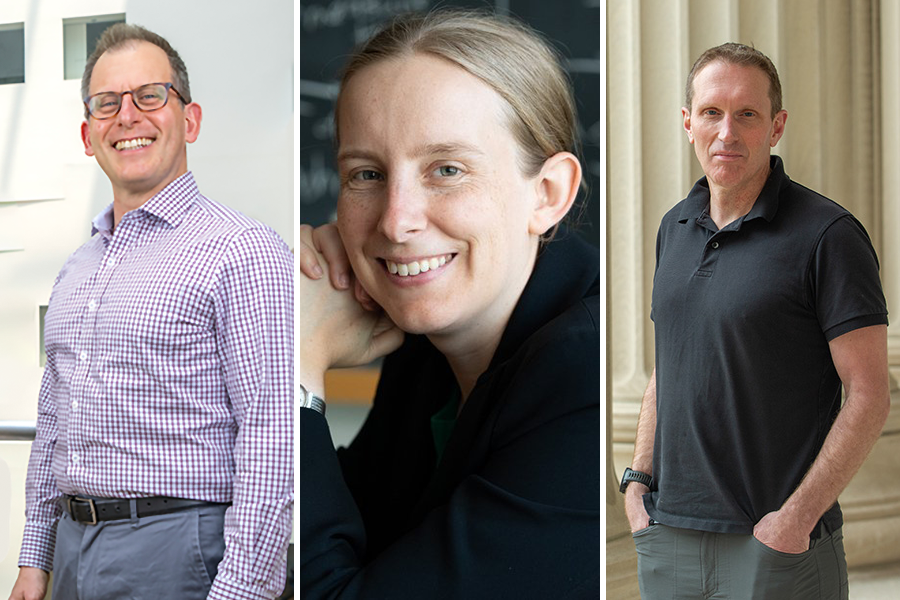
MIT faculty members Roger Levy, Tracy Slatyer, and Martin Wainwright are among 188 scientists, artists, and scholars awarded 2024 fellowships from the John Simon Guggenheim Memorial Foundation. Working across 52 disciplines, the fellows were selected from almost 3,000 applicants for “prior career achievement and exceptional promise.”

Each fellow receives a monetary stipend to pursue independent work at the highest level. Since its founding in 1925, the Guggenheim Foundation has awarded over $400 million in fellowships to more than 19,000 fellows. This year, MIT professors were recognized in the categories of neuroscience, physics, and data science.

Roger Levy is a professor in the Department of Brain and Cognitive Sciences. Combining computational modeling of large datasets with psycholinguistic experimentation, his work furthers our understanding of the cognitive underpinning of language processing, and helps to design models and algorithms that will allow machines to process human language. He is a recipient of the Alfred P. Sloan Research Fellowship, the NSF Faculty Early Career Development (CAREER) Award, and a fellowship at the Center for Advanced Study in the Behavioral Sciences.

Tracy Slatyer is a professor in the Department of Physics as well as the Center for Theoretical Physics in the MIT Laboratory for Nuclear Science and the MIT Kavli Institute for Astrophysics and Space Research. Her research focuses on dark matter — novel theoretical models, predicting observable signals, and analysis of astrophysical and cosmological datasets. She was a co-discoverer of the giant gamma-ray structures known as the “Fermi Bubbles” erupting from the center of the Milky Way, for which she received the New Horizons in Physics Prize in 2021. She is also a recipient of a Simons Investigator Award and Presidential Early Career Awards for Scientists and Engineers.

Martin Wainwright is the Cecil H. Green Professor in Electrical Engineering and Computer Science and Mathematics, and affiliated with the Laboratory for Information and Decision Systems and Statistics and Data Science Center. He is interested in statistics, machine learning, information theory, and optimization. Wainwright has been recognized with an Alfred P. Sloan Foundation Fellowship, the Medallion Lectureship and Award from the Institute of Mathematical Statistics, and the COPSS Presidents’ Award from the Joint Statistical Societies. Wainwright has also co-authored books on graphical and statistical modeling, and solo-authored a book on high dimensional statistics.

“Humanity faces some profound existential challenges,” says Edward Hirsch, president of the foundation. “The Guggenheim Fellowship is a life-changing recognition. It’s a celebrated investment into the lives and careers of distinguished artists, scholars, scientists, writers and other cultural visionaries who are meeting these challenges head-on and generating new possibilities and pathways across the broader culture as they do so.”

MIT scientists tune the entanglement structure in an array of qubits

Entanglement is a form of correlation between quantum objects, such as particles at the atomic scale. This uniquely quantum phenomenon cannot be explained by the laws of classical physics, yet it is one of the properties that explains the macroscopic behavior of quantum systems.

Because entanglement is central to the way quantum systems work, understanding it better could give scientists a deeper sense of how information is stored and processed efficiently in such systems.

Qubits, or quantum bits, are the building blocks of a quantum computer. However, it is extremely difficult to make specific entangled states in many-qubit systems, let alone investigate them. There are also a variety of entangled states, and telling them apart can be challenging.

Now, MIT researchers have demonstrated a technique to efficiently generate entanglement among an array of superconducting qubits that exhibit a specific type of behavior.

Over the past years, the researchers at the Engineering Quantum Systems (EQuS) group have developed techniques using microwave technology to precisely control a quantum processor composed of superconducting circuits. In addition to these control techniques, the methods introduced in this work enable the processor to efficiently generate highly entangled states and shift those states from one type of entanglement to another — including between types that are more likely to support quantum speed-up and those that are not.

“Here, we are demonstrating that we can utilize the emerging quantum processors as a tool to further our understanding of physics. While everything we did in this experiment was on a scale which can still be simulated on a classical computer, we have a good roadmap for scaling this technology and methodology beyond the reach of classical computing,” says Amir H. Karamlou ’18, MEng ’18, PhD ’23, the lead author of the paper.

The senior author is William D. Oliver, the Henry Ellis Warren professor of electrical engineering and computer science and of physics, director of the Center for Quantum Engineering, leader of the EQuS group, and associate director of the Research Laboratory of Electronics. Karamlou and Oliver are joined by Research Scientist Jeff Grover, postdoc Ilan Rosen, and others in the departments of Electrical Engineering and Computer Science and of Physics at MIT, at MIT Lincoln Laboratory, and at Wellesley College and the University of Maryland. The research appears today in Nature.

Assessing entanglement

In a large quantum system comprising many interconnected qubits, one can think about entanglement as the amount of quantum information shared between a given subsystem of qubits and the rest of the larger system.

The entanglement within a quantum system can be categorized as area-law or volume-law, based on how this shared information scales with the geometry of subsystems. In volume-law entanglement, the amount of entanglement between a subsystem of qubits and the rest of the system grows proportionally with the total size of the subsystem.

On the other hand, area-law entanglement depends on how many shared connections exist between a subsystem of qubits and the larger system. As the subsystem expands, the amount of entanglement only grows along the boundary between the subsystem and the larger system.

In theory, the formation of volume-law entanglement is related to what makes quantum computing so powerful.

“While have not yet fully abstracted the role that entanglement plays in quantum algorithms, we do know that generating volume-law entanglement is a key ingredient to realizing a quantum advantage,” says Oliver.

However, volume-law entanglement is also more complex than area-law entanglement and practically prohibitive at scale to simulate using a classical computer.

“As you increase the complexity of your quantum system, it becomes increasingly difficult to simulate it with conventional computers. If I am trying to fully keep track of a system with 80 qubits, for instance, then I would need to store more information than what we have stored throughout the history of humanity,” Karamlou says.

The researchers created a quantum processor and control protocol that enable them to efficiently generate and probe both types of entanglement.

Their processor comprises superconducting circuits, which are used to engineer artificial atoms. The artificial atoms are utilized as qubits, which can be controlled and read out with high accuracy using microwave signals.

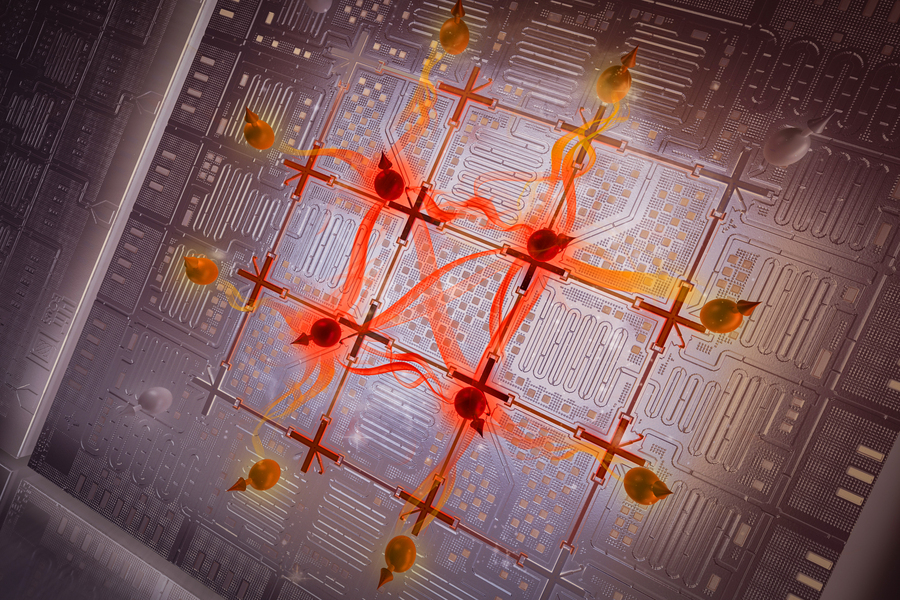
The device used for this experiment contained 16 qubits, arranged in a two-dimensional grid. The researchers carefully tuned the processor so all 16 qubits have the same transition frequency. Then, they applied an additional microwave drive to all of the qubits simultaneously.

If this microwave drive has the same frequency as the qubits, it generates quantum states that exhibit volume-law entanglement. However, as the microwave frequency increases or decreases, the qubits exhibit less volume-law entanglement, eventually crossing over to entangled states that increasingly follow an area-law scaling.

Careful control

“Our experiment is a tour de force of the capabilities of superconducting quantum processors. In one experiment, we operated the processor both as an analog simulation device, enabling us to efficiently prepare states with different entanglement structures, and as a digital computing device, needed to measure the ensuing entanglement scaling,” says Rosen.

To enable that control, the team put years of work into carefully building up the infrastructure around the quantum processor.

By demonstrating the crossover from volume-law to area-law entanglement, the researchers experimentally confirmed what theoretical studies had predicted. More importantly, this method can be used to determine whether the entanglement in a generic quantum processor is area-law or volume-law.

“The MIT experiment underscores the distinction between area-law and volume-law entanglement in two-dimensional quantum simulations using superconducting qubits. This beautifully complements our work on entanglement Hamiltonian tomography with trapped ions in a parallel publication published in Nature in 2023,” says Peter Zoller, a professor of theoretical physics at the University of Innsbruck, who was not involved with this work.

“Quantifying entanglement in large quantum systems is a challenging task for classical computers but a good example of where quantum simulation could help,” says Pedram Roushan of Google, who also was not involved in the study. “Using a 2D array of superconducting qubits, Karamlou and colleagues were able to measure entanglement entropy of various subsystems of various sizes. They measure the volume-law and area-law contributions to entropy, revealing crossover behavior as the system’s quantum state energy is tuned. It powerfully demonstrates the unique insights quantum simulators can offer.”

In the future, scientists could utilize this technique to study the thermodynamic behavior of complex quantum systems, which is too complex to be studied using current analytical methods and practically prohibitive to simulate on even the world’s most powerful supercomputers.

“The experiments we did in this work can be used to characterize or benchmark larger-scale quantum systems, and we may also learn something more about the nature of entanglement in these many-body systems,” says Karamlou.

Additional co-authors of the study are Sarah E. Muschinske, Cora N. Barrett, Agustin Di Paolo, Leon Ding, Patrick M. Harrington, Max Hays, Rabindra Das, David K. Kim, Bethany M. Niedzielski, Meghan Schuldt, Kyle Serniak, Mollie E. Schwartz, Jonilyn L. Yoder, Simon Gustavsson, and Yariv Yanay.

This research is funded, in part, by the U.S. Department of Energy, the U.S. Defense Advanced Research Projects Agency, the U.S. Army Research Office, the National Science Foundation, the STC Center for Integrated Quantum Materials, the Wellesley College Samuel and Hilda Levitt Fellowship, NASA, and the Oak Ridge Institute for Science and Education.

This tiny chip can safeguard user data while enabling efficient computing on a smartphone

Health-monitoring apps can help people manage chronic diseases or stay on track with fitness goals, using nothing more than a smartphone. However, these apps can be slow and energy-inefficient because the vast machine-learning models that power them must be shuttled between a smartphone and a central memory server.

Engineers often speed things up using hardware that reduces the need to move so much data back and forth. While these machine-learning accelerators can streamline computation, they are susceptible to attackers who can steal secret information.

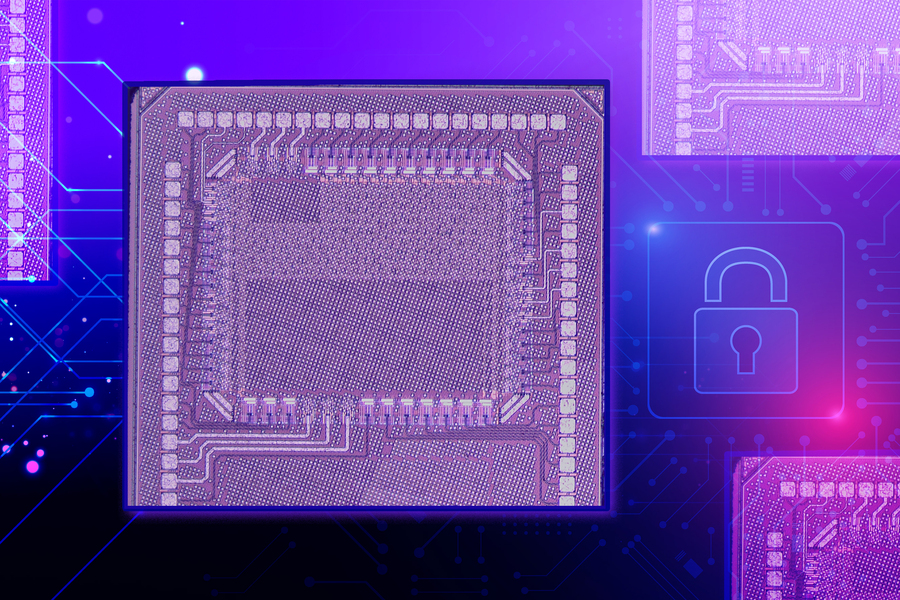
To reduce this vulnerability, researchers from MIT and the MIT-IBM Watson AI Lab created a machine-learning accelerator that is resistant to the two most common types of attacks. Their chip can keep a user’s health records, financial information, or other sensitive data private while still enabling huge AI models to run efficiently on devices.

The team developed several optimizations that enable strong security while only slightly slowing the device. Moreover, the added security does not impact the accuracy of computations. This machine-learning accelerator could be particularly beneficial for demanding AI applications like augmented and virtual reality or autonomous driving.

While implementing the chip would make a device slightly more expensive and less energy-efficient, that is sometimes a worthwhile price to pay for security, says lead author Maitreyi Ashok, an electrical engineering and computer science (EECS) graduate student at MIT.

“It is important to design with security in mind from the ground up. If you are trying to add even a minimal amount of security after a system has been designed, it is prohibitively expensive. We were able to effectively balance a lot of these tradeoffs during the design phase,” says Ashok.

Her co-authors include Saurav Maji, an EECS graduate student; Xin Zhang and John Cohn of the MIT-IBM Watson AI Lab; and senior author Anantha Chandrakasan, MIT’s chief innovation and strategy officer, dean of the School of Engineering, and the Vannevar Bush Professor of EECS. The research will be presented at the IEEE Custom Integrated Circuits Conference.

Side-channel susceptibility

The researchers targeted a type of machine-learning accelerator called digital in-memory compute. A digital IMC chip performs computations inside a device’s memory, where pieces of a machine-learning model are stored after being moved over from a central server.

The entire model is too big to store on the device, but by breaking it into pieces and reusing those pieces as much as possible, IMC chips reduce the amount of data that must be moved back and forth.

But IMC chips can be susceptible to hackers. In a side-channel attack, a hacker monitors the chip’s power consumption and uses statistical techniques to reverse-engineer data as the chip computes. In a bus-probing attack, the hacker can steal bits of the model and dataset by probing the communication between the accelerator and the off-chip memory.

Digital IMC speeds computation by performing millions of operations at once, but this complexity makes it tough to prevent attacks using traditional security measures, Ashok says.

She and her collaborators took a three-pronged approach to blocking side-channel and bus-probing attacks.

First, they employed a security measure where data in the IMC are split into random pieces. For instance, a bit zero might be split into three bits that still equal zero after a logical operation. The IMC never computes with all pieces in the same operation, so a side-channel attack could never reconstruct the real information.

But for this technique to work, random bits must be added to split the data. Because digital IMC performs millions of operations at once, generating so many random bits would involve too much computing. For their chip, the researchers found a way to simplify computations, making it easier to effectively split data while eliminating the need for random bits.

Second, they prevented bus-probing attacks using a lightweight cipher that encrypts the model stored in off-chip memory. This lightweight cipher only requires simple computations. In addition, they only decrypted the pieces of the model stored on the chip when necessary.

Third, to improve security, they generated the key that decrypts the cipher directly on the chip, rather than moving it back and forth with the model. They generated this unique key from random variations in the chip that are introduced during manufacturing, using what is known as a physically unclonable function.

“Maybe one wire is going to be a little bit thicker than another. We can use these variations to get zeros and ones out of a circuit. For every chip, we can get a random key that should be consistent because these random properties shouldn’t change significantly over time,” Ashok explains.

They reused the memory cells on the chip, leveraging the imperfections in these cells to generate the key. This requires less computation than generating a key from scratch.

“As security has become a critical issue in the design of edge devices, there is a need to develop a complete system stack focusing on secure operation. This work focuses on security for machine-learning workloads and describes a digital processor that uses cross-cutting optimization. It incorporates encrypted data access between memory and processor, approaches to preventing side-channel attacks using randomization, and exploiting variability to generate unique codes. Such designs are going to be critical in future mobile devices,” says Chandrakasan.

Safety testing

To test their chip, the researchers took on the role of hackers and tried to steal secret information using side-channel and bus-probing attacks.

Even after making millions of attempts, they couldn’t reconstruct any real information or extract pieces of the model or dataset. The cipher also remained unbreakable. By contrast, it took only about 5,000 samples to steal information from an unprotected chip.

The addition of security did reduce the energy efficiency of the accelerator, and it also required a larger chip area, which would make it more expensive to fabricate.

The team is planning to explore methods that could reduce the energy consumption and size of their chip in the future, which would make it easier to implement at scale.

“As it becomes too expensive, it becomes harder to convince someone that security is critical. Future work could explore these tradeoffs. Maybe we could make it a little less secure but easier to implement and less expensive,” Ashok says.

The research is funded, in part, by the MIT-IBM Watson AI Lab, the National Science Foundation, and a Mathworks Engineering Fellowship.

Francis Fan Lee, former MIT EECS professor and interdisciplinary speech processing inventor, dies at 97.

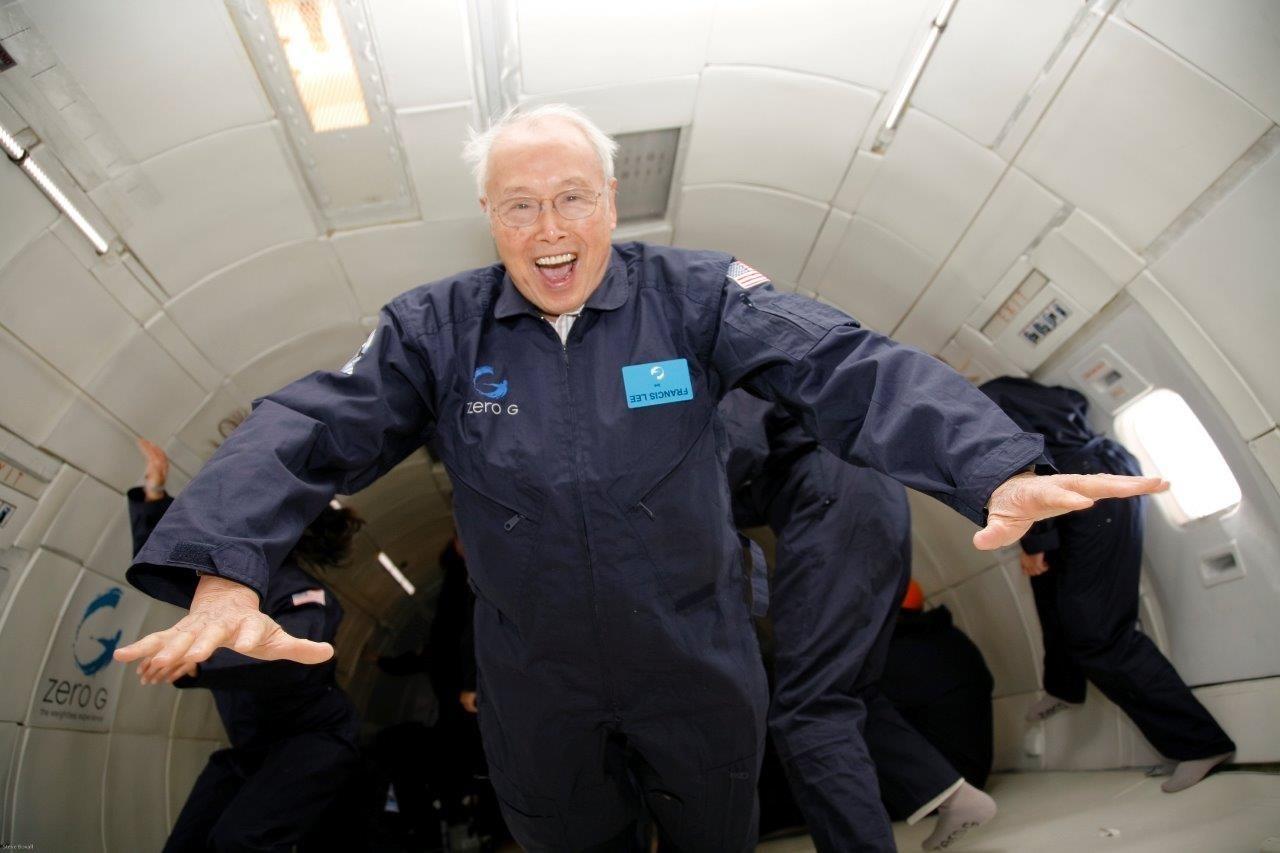
Francis Fan Lee, a former professor of MIT’s Department of Electrical Engineering and Computer Science, died on Jan. 12, 2024. He was approximately 97 years old. Born in 1927 in Nanjing, China, to educators Prof. Li Rumian and Zhou Huizhan, Lee learned English from his father, a member of the English department’s faculty at the University of Wuhan. Lee’s mastery of the language led to an interpreter position at the US Office of Strategic Services, and eventually a passport and permission from the Chinese Government to study in the United States. Lee left China via steamship in 1948 to pursue his undergraduate education at MIT. He earned his Bachelor’s and his Master’s degree in electrical engineering in 1950 and 1951, respectively, before going into industry. Around this time, he became reacquainted with a friend he’d known in China, who had since emigrated; he married Teresa Jen Lee, and the two welcomed children Franklin, Elizabeth, Gloria, and Roberta over the next decade. During his ten-year industrial career, Lee distinguished himself in roles at Ultrasonic (where he worked on instrument type servomechanisms, circuit design, and a missile simulator), R.C.A. Camden (where he worked on an experimental time-shared digital processor for department store point-of-sale interactions), and Univac (where he held a variety of roles, culminating in a stint planning next-generation computing systems in Philadelphia.) 

Lee returned to MIT to earn his PhD in 1966, after which he joined the then-Department of Electrical Engineering as an Associate Professor with Tenure, affiliated with the Research Laboratory of Electronics (RLE). There, he pursued the subject of his doctoral research: the development of a machine that would read printed text, outloud–a tremendously ambitious and complex goal for the time. 

Work on the “RLE reading machine”, as it was called, was inherently interdisciplinary, and Lee drew upon the influences of multiple contemporaries, including linguists Morris Halle and Noam Chomsky, and engineer Kenneth Stevens (whose quantal theory of speech production and recognition broke down human speech into discrete, and limited, combinations of sound.) One of Lee’s greatest contributions to the machine, which he co-built with Donald Troxel, was a clever and efficient storage system which used root words, prefixes, and suffixes to make the real-time synthesis of half a million English words possible, while only requiring about 32,000 words’ worth of storage. The solution was emblematic of Lee’s creative approach to solving complex research problems, an approach which earned him respect and admiration from his colleagues and contemporaries.

In reflection of Lee’s remarkable accomplishments in both industry and building the reading machine, he was promoted to full Professor in 1969, a mere 3 years after he earned his PhD. Many awards and other recognitions followed, including the IEEE Fellowship in 1971 and the Audio Engineering Society Best Paper Award in 1972. Additionally, Lee occupied several important roles within the department, including over a decade spent as the Undergraduate Advisor. He consistently supported and advocated for more funding to go to ongoing professional education for faculty members, especially those who were no longer junior faculty, identifying ongoing development as an important, but often-overlooked, priority. 

Lee’s research work continued to straddle both novel inquiry and practical, commercial application–in 1969, together with Charles Bagnaschi, he founded American Data Sciences, later changing the company’s name to Lexicon, Inc. The company specialized in producing devices which expanded on Lee’s work in digital signal compression and expansion: for example, the first commercially available speech compressor and pitch shifter, which was marketed as an educational tool for blind students and those with speech processing disorders. The device, called Varispeech, allowed students to speed up written material without losing pitch–much as modern audiobook listeners speed up their chapters to absorb books at their preferred rate. Later innovations of Lee’s included the Time Compressor Model 1200, which added a film and video component to the speeding-up process, allowing television producers to subtly speed up a movie, sitcom, or advertisement to precisely fill a limited timeslot, without having to resort to making cuts. For this work, he received an Emmy Award for technical contributions to editing. 

In the mid-to-late 1980’s, Lee’s influential academic career was brought to a close by a series of deeply personal tragedies, including the 1984 murder of his daughter Roberta, and the subsequent and sudden deaths of his wife, Theresa, and his son, Franklin. Reeling from his losses, Lee ultimately decided to take an early retirement, dedicating his energy to healing. For the next two decades, he would explore the world extensively, a nomadic second chapter that included multiple road trips across the United States in a VW camper van. He eventually settled in California, where he met his last wife Ellen, and where his lively intellectual life persisted despite diagnoses of deafness and dementia; as his family recalled, he enjoyed playing games of Scrabble until his final weeks. He is survived by his wife Ellen Li; his daughters Elizabeth Lee (David Goya) and Gloria Lee (Matthew Lynaugh); his grandsons Alex, Benjamin, Mason and Sam; his sister Li Zhong (Lei Tongshen); and family friend Angelique Agbigay. His family have asked that gifts honoring Francis Fan Lee’s life be directed to the Hertz Foundation.

Student Spotlight: Maggie Slowikowski

This interview is part of a series of short interviews from the Department of EECS, called Student Spotlights. Each Spotlight features a student answering their choice of questions about themselves and life at MIT. Today’s interviewee, Maggie Slowikowski, is a sophomore majoring in 6-9: Computation and Cognition. An undergraduate researcher in the Bioelectronics Research Group led by Prof. Polina Anikeeva, Slowikowski took time out of her schedule to answer a few questions about her experience at MIT.

What’s your favorite room within MIT, and what’s special about it to you? Relatedly, where’s your favorite place to study?

My favorite room within MIT would have to be the reading terrace in Building 46! It’s quiet and calming with ample space, many large leafy plants, and a nice view of Stata. The reading terrace is a great place to study with friends, or relax after a stressful day!

My favorite place to study at MIT is the third floor of Building 12. There is plenty of space to study including a large table and spacious couch. My favorite part of studying in Building 12 are the televisions mounted on the walls displaying future seminars and current research being done at MIT. You can learn so much about what work is being done on campus simply by hanging out at MIT.nano!

Tell me about one interest or hobby you’ve discovered since you came to MIT. (It doesn’t have to be academic!)

One hobby I have developed over my time at MIT is embroidery. I love learning new patterns and stitches. I’m currently working on embroidering my own, unique MIT tote bag!

What’s your favorite food found on, or near, campus?

My favorite food found near campus is the Chang Foods food truck on main street. I recommend their ginger scallion chicken and braised pork!

Tell me about one teacher from your past—here at MIT, at your high school, or even earlier, who had an influence on the person you’ve become.

I do not think I would be who I am today without the influence of my 8th grade science teacher, Mr. Adams. He was the first person to introduce me to topics like chemistry and physics, sparking my interest in science and encouraging me to consider a career in STEM.

What are you looking forward to about life after graduation? What do you think you’ll miss about MIT?

I still have a few years before I graduate, however, I am excited to see what adventures I embark on after MIT, whether that be pursuing graduate school or landing a job in the biotechnology industry! I think what I’ll miss the most about MIT are the people I have met here–friends, mentors, acquaintances, and everyone in between! The people at MIT are some of the most supportive and kindest I have ever met, always willing to both challenge you and help you when the need arises.

Women in STEM — A celebration of excellence and curiosity

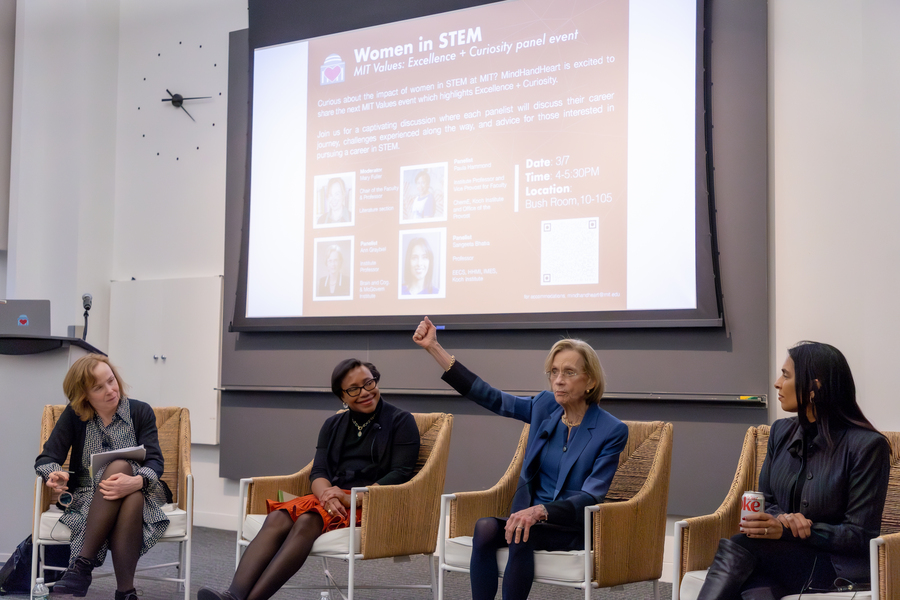
What better way to commemorate Women’s History Month and International Women’s Day than to give  three of the world’s most accomplished scientists an opportunity to talk about their careers? On March 7, MindHandHeart invited professors Paula Hammond, Ann Graybiel, and Sangeeta Bhatia to share their career journeys, from the progress they have witnessed to the challenges they have faced as women in STEM. Their conversation was moderated by Mary Fuller, chair of the faculty and professor of literature. 

Hammond, an Institute professor with appointments in the Department of Chemical Engineering and the Koch Institute for Integrative Cancer Research, reflected on the strides made by women faculty at MIT, while acknowledging ongoing challenges. “I think that we have advanced a great deal in the last few decades in terms of the numbers of women who are present, although we still have a long way to go,” Hammond noted in her opening. “We’ve seen a remarkable increase over the past couple of decades in our undergraduate population here at MIT, and now we’re beginning to see it in the graduate population, which is really exciting.” Hammond was recently appointed to the role of vice provost for faculty.

Ann Graybiel, also an Institute professor, who has appointments in the Department of Brain and Cognitive Sciences and the McGovern Institute for Brain Research, described growing up in the Deep South. “Girls can’t do science,” she remembers being told in school, and they “can’t do research.” Yet her father, a physician scientist, often took her with him to work and had her assist from a young age, eventually encouraging her directly to pursue a career in science. Graybiel, who first came to MIT in 1973, noted that she continued to face barriers and rejection throughout her career long after leaving the South, but that individual gestures of inspiration, generosity, or simple statements of “You can do it” from her peers helped her power through and continue in her scientific pursuits. 

Sangeeta Bhatia, the John and Dorothy Wilson Professor of Health Sciences and Technology and Electrical Engineering and Computer Science, director of the Marble Center for Cancer Nanomedicine at the Koch Institute for Integrative Cancer Research, and a member of the Institute for Medical Engineering and Science, is also the mother of two teenage girls. She shared her perspective on balancing career and family life: “I wanted to pick up my kids from school and I wanted to know their friends. … I had a vision for the life that I wanted.” Setting boundaries at work, she noted, empowered her to achieve both personal and professional goals. Bhatia also described her collaboration with President Emerita Susan Hockfield and MIT Amgen Professor of Biology Emerita Nancy Hopkins to spearhead the Future Founders Initiative, which aims to boost the representation of female faculty members pursuing biotechnology ventures.

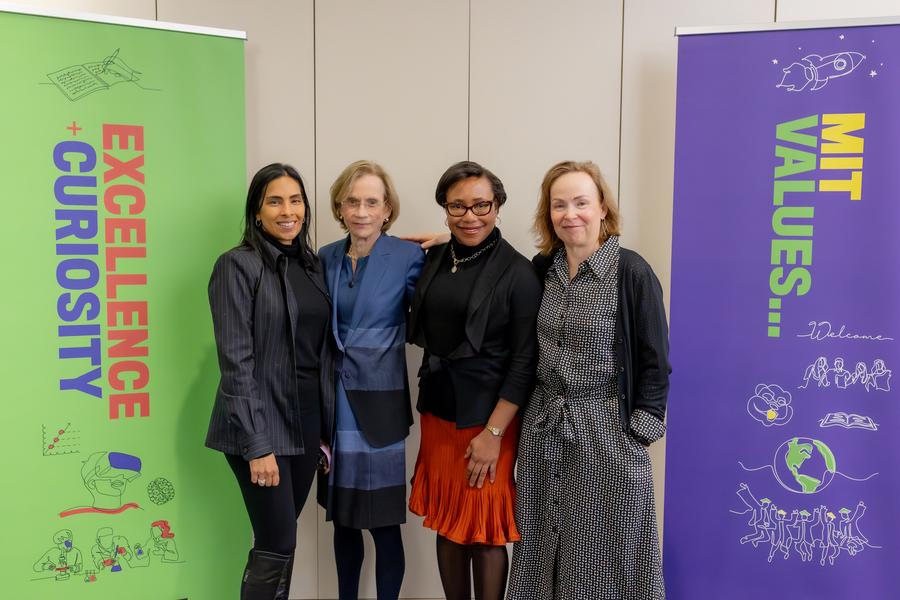
(From left to right): Professors Sangeeta Bhatia, Ann Graybiel, Paula Hammond, and Mary Fuller. Photo: Safia Benyettou

A video of the full panel discussion is available on the MindHandHeart YouTube channel.

A blueprint for making quantum computers easier to program

When MIT professor and now Computer Science and Artificial Intelligence Laboratory (CSAIL) member Peter Shor first demonstrated the potential of quantum computers to solve problems faster than classical ones, he inspired scientists to imagine countless possibilities for the emerging technology. Thirty years later, though, the quantum edge remains a peak not yet reached.

Unfortunately, the technology of quantum computing isn’t fully operational yet. One major challenge lies in translating quantum algorithms from abstract mathematical concepts into concrete code that can run on a quantum computer. Whereas programmers for regular computers have access to myriad languages such as Python and C++ with constructs that align with standard classical computing abstractions, quantum programmers have no such luxury; few quantum programming languages exist today, and they are comparatively difficult to use because quantum computing abstractions are still in flux. In their recent work, MIT researchers highlight that this disparity exists because quantum computers don’t follow the same rules for how to complete each step of a program in order — an essential process for all computers called control flow — and present a new abstract model for a quantum computer that could be easier to program.

In a paper soon to be presented at the ACM Conference on Object-oriented Programming, Systems, Languages, and Applications, the group outlines a new conceptual model for a quantum computer, called a quantum control machine, that could bring us closer to making programs as easy to write as those for regular classical computers. Such an achievement would help turbocharge tasks that are impossible for regular computers to efficiently complete, like factoring large numbers, retrieving information in databases, and simulating how molecules interact for drug discoveries.

“Our work presents the principles that govern how you can and cannot correctly program a quantum computer,” says lead author and CSAIL PhD student Charles Yuan SM ’22. “One of these laws implies that if you try to program a quantum computer using the same basic instructions as a regular classical computer, you’ll end up turning that quantum computer into a classical computer and lose its performance advantage. These laws explain why quantum programming languages are tricky to design and point us to a way to make them better.”

Old school vs. new school computing

One reason why classical computers are relatively easier to program today is that their control flow is fairly straightforward. The basic ingredients of a classical computer are simple: binary digits or bits, a simple collection of zeros and ones. These ingredients assemble into the instructions and components of the computer’s architecture. One important component is the program counter, which locates the next instruction in a program much like a chef following a recipe, by recalling the next direction from memory. As the algorithm sequentially navigates through the program, a control flow instruction called a conditional jump updates the program counter to make the computer either advance forward to the next instruction or deviate from its current steps.

By contrast, the basic ingredient of a quantum computer is a qubit, which is a quantum version of a bit. This quantum data exists in a state of zero and one at the same time, known as a superposition. Building on this idea, a quantum algorithm can choose to execute a superposition of two instructions at the same time — a concept called quantum control flow.

The problem is that existing designs of quantum computers don’t include an equivalent of the program counter or a conditional jump. In practice, that means programmers typically implement control flow by manually arranging logical gates that describe the computer’s hardware, which is a tedious and error-prone procedure. To provide these features and close the gap with classical computers, Yuan and his coauthors created the quantum control machine — an instruction set for a quantum computer that works like the classical idea of a virtual machine. In their paper, the researchers envision how programmers could use this instruction set to implement quantum algorithms for problems such as factoring numbers and simulating chemical interactions.

As the technical crux of this work, the researchers prove that a quantum computer cannot support the same conditional jump instruction as a classical computer, and show how to modify it to work correctly on a quantum computer. Specifically, the quantum control machine features instructions that are all reversible — they can run both forward and backward in time. A quantum algorithm needs all instructions, including those for control flow, to be reversible so that it can process quantum information without accidentally destroying its superposition and producing a wrong answer.

The hidden simplicity of quantum computers

According to Yuan, you don’t need to be a physicist or mathematician to understand how this  futuristic technology works. Quantum computers don’t necessarily have to be arcane machines, he says, that require scary equations to understand. With the quantum control machine, the CSAIL team aims to lower the barrier to entry for people to interact with a quantum computer by raising the unfamiliar concept of quantum control flow to a level that mirrors the familiar concept of control flow in classical computers. By highlighting the dos and don’ts of building and programming quantum computers, they hope to educate people outside of the field about the power of quantum technology and its ultimate limits.

Still, the researchers caution that as is the case for many other designs, it’s not yet possible to directly turn their work into a practical hardware quantum computer due to the limitations of today’s qubit technology. Their goal is to develop ways of implementing more kinds of quantum algorithms as programs that make efficient use of a limited number of qubits and logic gates. Doing so would bring us closer to running these algorithms on the quantum computers that could come online in the near future.

“The fundamental capabilities of models of quantum computation has been a central discussion in quantum computation theory since its inception,” says MIT-IBM Watson AI Lab researcher Patrick Rall, who was not involved in the paper. “Among the earliest of these models are quantum Turing machines which are capable of quantum control flow. However, the field has largely moved on to the simpler and more convenient circuit model, for which quantum lacks control flow. Yuan, Villanyi, and Carbin successfully capture the underlying reason for this transition using the perspective of programming languages. While control flow is central to our understanding of classical computation, quantum is completely different! I expect this observation to be critical for the design of modern quantum software frameworks as hardware platforms become more mature.”

The paper lists two additional CSAIL members as authors: PhD student Ági Villányi ’21 and Associate Professor Michael Carbin. Their work was supported, in part, by the National Science Foundation and the Sloan Foundation.