School of Engineering welcomes new faculty

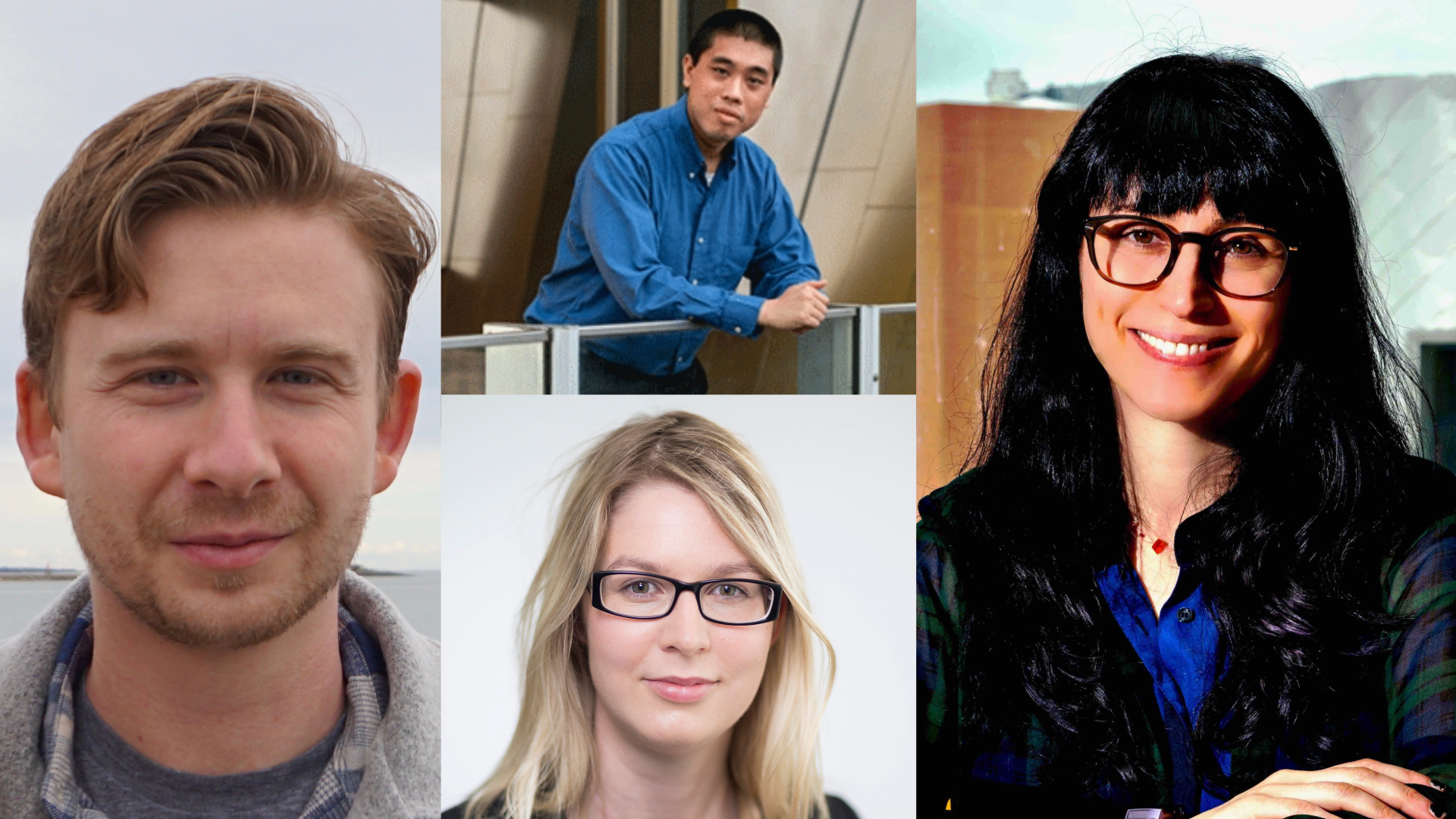
The School of Engineering welcomes 15 new faculty members across six of its academic departments. This new cohort of faculty members, who have either recently started their roles at MIT or will start within the next year, conduct research across a diverse range of disciplines.

Many of these new faculty specialize in research that intersects with multiple fields. In addition to positions in the School of Engineering, a number of these faculty have positions at other units across MIT. Faculty with appointments in the Department of Electrical Engineering and Computer Science (EECS) report into both the School of Engineering and the MIT Stephen A. Schwarzman College of Computing. This year, new faculty also have joint appointments between the School of Engineering and the School of Humanities, Arts, and Social Sciences and the School of Science.

“I am delighted to welcome this cohort of talented new faculty to the School of Engineering,” says Anantha Chandrakasan, chief innovation and strategy officer, dean of engineering, and Vannevar Bush Professor of Electrical Engineering and Computer Science. “I am particularly struck by the interdisciplinary approach many of these new faculty take in their research. They are working in areas that are poised to have tremendous impact. I look forward to seeing them grow as researchers and educators.”

The new engineering faculty include:

Stephen Bates joined the Department of Electrical Engineering and Computer Science as an assistant professor in September 2023. He is also a member of the Laboratory for Information and Decision Systems (LIDS). Bates uses data and AI for reliable decision-making in the presence of uncertainty. In particular, he develops tools for statistical inference with AI models, data impacted by strategic behavior, and settings with distribution shift. Bates also works on applications in life sciences and sustainability. He previously worked as a postdoc in the Statistics and EECS departments at the University of California at Berkeley (UC Berkeley). Bates received a BS in statistics and mathematics at Harvard University and a PhD from Stanford University.

Abigail Bodner joined the Department of EECS and Department of Earth, Atmospheric and Planetary Sciences as an assistant professor in January. She is also a member of the LIDS. Bodner’s research interests span climate, physical oceanography, geophysical fluid dynamics, and turbulence. Previously, she worked as a Simons Junior Fellow at the Courant Institute of Mathematical Sciences at New York University. Bodner received her BS in geophysics and mathematics and MS in geophysics from Tel Aviv University, and her SM in applied mathematics and PhD from Brown University.

Andreea Bobu ’17 will join the Department of Aeronautics and Astronautics as an assistant professor in July. Her research sits at the intersection of robotics, mathematical human modeling, and deep learning. Previously, she was a research scientist at the Boston Dynamics AI Institute, focusing on how robots and humans can efficiently arrive at shared representations of their tasks for more seamless and reliable interactions. Bobu earned a BS in computer science and engineering from MIT and a PhD in electrical engineering and computer science from UC Berkeley.

Suraj Cheema will join the Department of Materials Science and Engineering, with a joint appointment in the Department of EECS, as an assistant professor in July. His research explores atomic-scale engineering of electronic materials to tackle challenges related to energy consumption, storage, and generation, aiming for more sustainable microelectronics. This spans computing and energy technologies via integrated ferroelectric devices. He previously worked as a postdoc at UC Berkeley. Cheema earned a BS in applied physics and applied mathematics from Columbia University and a PhD in materials science and engineering from UC Berkeley.

Samantha Coday joins the Department of EECS as an assistant professor in July. She will also be a member of the MIT Research Laboratory of Electronics. Her research interests include ultra-dense power converters enabling renewable energy integration, hybrid electric aircraft and future space exploration. To enable high-performance converters for these critical applications her research focuses on the optimization, design, and control of hybrid switched-capacitor converters. Coday earned a BS in electrical engineering and mathematics from Southern Methodist University and an MS and a PhD in electrical engineering and computer science from UC Berkeley.

Mitchell Gordon will join the Department of EECS as an assistant professor in July. He will also be a member of the MIT Computer Science and Artificial Intelligence Laboratory. In his research, Gordon designs interactive systems and evaluation approaches that bridge principles of human-computer interaction with the realities of machine learning. He currently works as a postdoc at the University of Washington. Gordon received a BS from the University of Rochester, and MS and PhD from Stanford University, all in computer science.

Kaiming He joined the Department of EECS as an associate professor in February. He will also be a member of the MIT Computer Science and Artificial Intelligence Laboratory (CSAIL). His research interests cover a wide range of topics in computer vision and deep learning. He is currently focused on building computer models that can learn representations and develop intelligence from and for the complex world. Long term, he hopes to augment human intelligence with improved artificial intelligence. Before joining MIT, He was a research scientist at Facebook AI. He earned a BS from Tsinghua University and a PhD from the Chinese University of Hong Kong.

Anna Huang SM ’08 will join the departments of EECS and Music and Theater Arts as assistant professor in September. She will help develop graduate programming focused on music technology. Previously, she spent eight years with Magenta at Google Brain and DeepMind, spearheading efforts in generative modeling, reinforcement learning, and human-computer interaction to support human-AI partnerships in music-making. She is the creator of Music Transformer and Coconet (which powered the Bach Google Doodle). She was a judge and organizer for the AI Song Contest. Anna holds a Canada CIFAR AI Chair at Mila, a BM in music composition, and BS in computer science from the University of Southern California, an MS from the MIT Media Lab, and a PhD from Harvard University.

Yael Kalai PhD ’06 will join the Department of EECS as a professor in September. She is also a member of CSAIL. Her research interests include cryptography, the theory of computation, and security and privacy. Kalai currently focuses on both the theoretical and real-world applications of cryptography, including work on succinct and easily verifiable non-interactive proofs. She received her bachelor’s degree from the Hebrew University of Jerusalem, a master’s degree at the Weizmann Institute of Science, and a PhD from MIT.

Sendhil Mullainathan will join the departments of EECS and Economics as a professor in July. His research uses machine learning to understand complex problems in human behavior, social policy, and medicine. Previously, Mullainathan spent five years at MIT before joining the faculty at Harvard in 2004, and then the University of Chicago in 2018. He received his BA in computer science, mathematics, and economics from Cornell University and his PhD from Harvard University.

Alex Rives will join the Department of EECS as an assistant professor in September, with a core membership in the Broad Institute of MIT and Harvard. In his research, Rives is focused on AI for scientific understanding, discovery, and design for biology. Rives worked with Meta as a New York University graduate student, where he founded and led the Evolutionary Scale Modeling team that developed large language models for proteins. Rives received his BS in philosophy and biology from Yale University and is completing his PhD in computer science at NYU.

Sungho Shin will join the Department of Chemical Engineering as an assistant professor in July. His research interests include control theory, optimization algorithms, high-performance computing, and their applications to decision-making in complex systems, such as energy infrastructures. Shin is a postdoc at the Mathematics and Computer Science Division at Argonne National Laboratory. He received a BS in mathematics and chemical engineering from Seoul National University and a PhD in chemical engineering from the University of Wisconsin-Madison.

Jessica Stark joined the Department of Biological Engineering as an assistant professor in January. In her research, Stark is developing technologies to realize the largely untapped potential of cell-surface sugars, called glycans, for immunological discovery and immunotherapy. Previously, Stark was an American Cancer Society postdoc at Stanford University. She earned a BS in chemical and biomolecular engineering from Cornell University and a PhD in chemical and biological engineering at Northwestern University.

Thomas John “T.J.” Wallin joined the Department of Materials Science and Engineering as an assistant professor in January. As a researcher, Wallin’s interests lay in advanced manufacturing of functional soft matter, with an emphasis on soft wearable technologies and their applications in human-computer interfaces. Previously, he was a research scientist at Meta’s Reality Labs Research working in their haptic interaction team. Wallin earned a BS in physics and chemistry from the College of William and Mary, and an MS and PhD in materials science and engineering from Cornell University.

Gioele Zardini joined the Department of Civil and Environmental Engineering as an assistant professor in September. He will also join LIDS and the Institute for Data, Systems, and Society. Driven by societal challenges, Zardini’s research interests include the co-design of sociotechnical systems, compositionality in engineering, applied category theory, decision and control, optimization, and game theory, with society-critical applications to intelligent transportation systems, autonomy, and complex networks and infrastructures. He received his BS, MS, and PhD in mechanical engineering with a focus on robotics, systems, and control from ETH Zurich, and spent time at MIT, Stanford University, and Motional.
Caroline Uhler named IMS Fellow

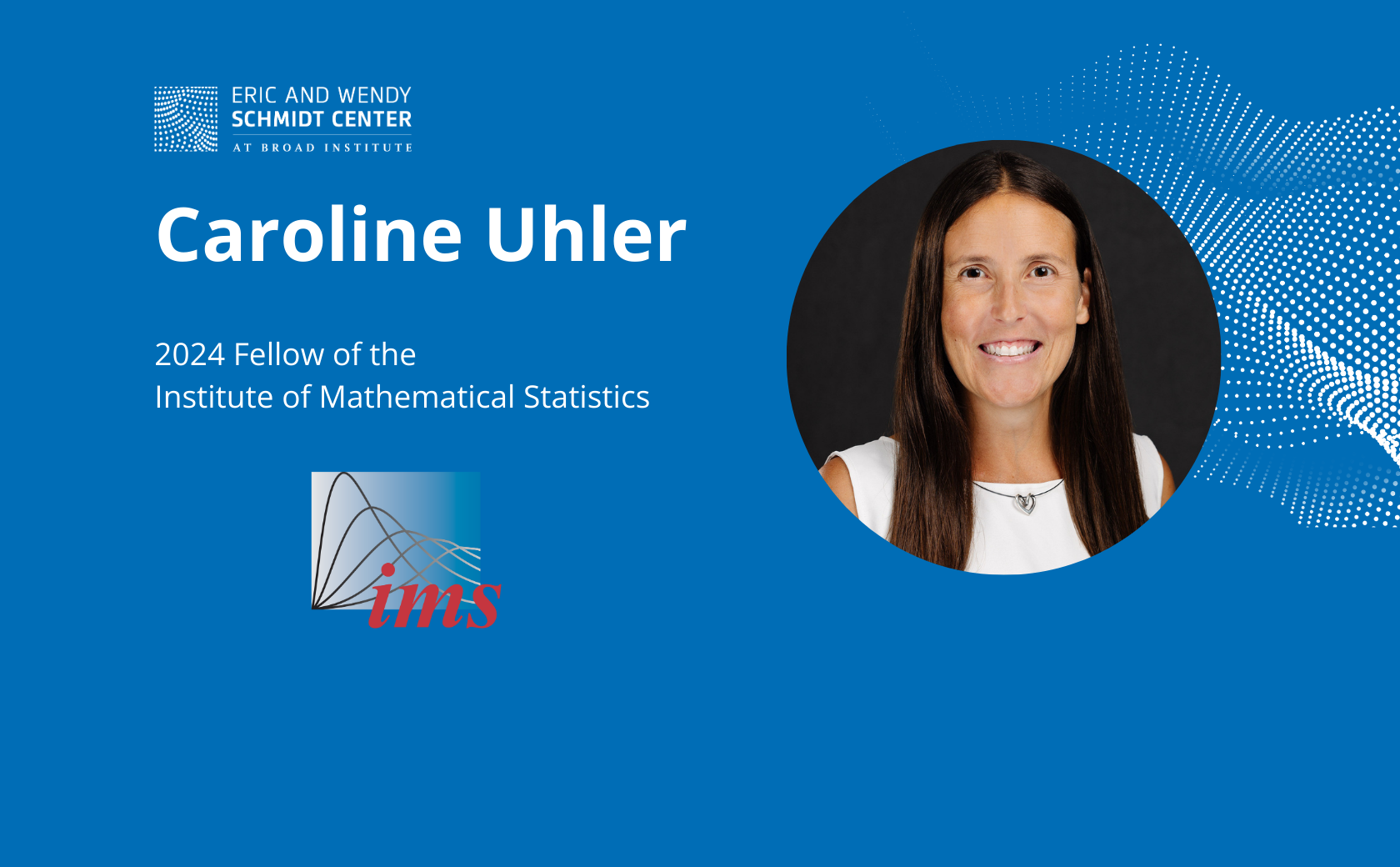
The Eric and Wendy Schmidt Center at the Broad Institute of MIT and Harvard is pleased to share that Center Director Caroline Uhler has been elected Fellow of the Institute of Mathematical Statistics (IMS). Uhler received the award for interdisciplinary excellence and for merging mathematical statistics and computational biology in innovative and impactful ways. 

Uhler is a core institute member of the Broad Institute and a professor in the Department of Electrical Engineering and Computer Science (EECS) and the Institute for Data, Systems, and Society (IDSS) at MIT. She is also a SIAM Fellow, a Sloan Research Fellow, and an elected member of the International Statistical Institute. 

Uhler’s research lies at the intersection of machine learning, statistics, and genomics, with a particular focus on causal inference, representation learning, and gene regulation. Her use of probabilistic graphical models and development of scalable algorithms with healthcare applications has enabled her research group to gain insights into causal relationships hidden within massive amounts of data, such as those generated during gene knockout or knockdown experiments.

For almost 90 years, the title of IMS Fellow has represented a prestigious honor. Evaluated by a committee of peers, each Fellow has exhibited exceptional mastery in statistical or probabilistic research and/or has showcased remarkable leadership that has left a lasting impact on the field.

Established in 1935, the IMS is a member organization that fosters the development and dissemination of the theory and applications of statistics and probability. The IMS has over 4,700 active members throughout the world, with approximately 10% of the current IMS members earning the fellowship status. The announcement of the 2024 class of IMS Fellows can be viewed here.

Uhler will be honored among the new IMS Fellows at the IMS Presidential Address and Awards Ceremony at the Bernoulli-IMS 11th World Congress in Probability and Statistics on August 12-16, 2024 in Bochum, Germany.

Eleven from MIT awarded 2024 Fulbright fellowships

Eleven MIT undergraduates, graduate students, and alumni have won Fulbright grants to embark on projects overseas in the 2024-25 grant cycle. Two other students were offered awards but declined them to pursue other opportunities.

Funded by the U.S. Department of State, the Fulbright U.S. Student Program offers year-long opportunities for American citizen students and recent alumni to conduct independent research, pursue graduate studies, or teach English in over 140 countries.

MIT has been a Fulbright Top-Producing Institution for five years in a row. MIT students and alumni interested in applying to the Fulbright U.S. Student Program should contact Julia Mongo, MIT Fulbright program advisor, in the Office of Distinguished Fellowships in Career Advising and Professional Development.

April Cheng is a junior studying physics with a minor in mathematics and is fast-tracked to graduate this spring. They will take their Fulbright research grant to the Max Planck Institute for Gravitational Physics in Potsdam, Germany, where they will study different statistical techniques to infer the expansion rate of the universe from gravitational waves. They first developed an interest in gravitational waves and black holes at the MIT LIGO and Caltech LIGO labs, but their research spans a wide range of topics in astrophysics, including cosmology and fast radio bursts. Cheng is passionate about physics education and is heavily involved in developing educational materials for high school Science Olympiads. At MIT, they are a member of the Physics Values Committee, the physics mentorship program, and the MIT Lion Dance team. After Fulbright, Cheng will pursue a PhD in astrophysics at Princeton University, where they have received the President’s Fellowship.

Grace McMillan is a senior majoring in literature and mechanical engineering with a concentration in Russian language. As a Fulbright English Teaching Assistant Award recipient, she will teach at a university in Kazakhstan. McMillan’s interest in Central Asia was sparked by a Russian language immersion program she participated in during her sophomore summer in Bishkek, Kyrgyzstan, funded by MIT International Science and Technology Initiatives (MISTI). She is excited to help her students learn English to foster integration into the global academic community. During her time at MIT, McMillan has conducted research with faculty in nuclear science; earth, atmospheric, and planetary sciences; and the Digital Humanities Lab. Outside of academics, she has been an active member of her sorority, Sigma Kappa, and has served on the MIT Health Consumers’ Advisory Council for two years. After Fulbright, McMillan hopes to attend law school, focusing on education reform.

Ryan McTigue will graduate this spring with a BS in physics and mathematics and a concentration in Spanish. With a Fulbright award to Spain, he will do research at the University of Valencia’s Institute of Molecular Science focusing on the physics of two-dimensional multiferroic nanodevices. He is looking forward to improving his Spanish and getting the opportunity to live abroad. At MIT, McTigue became interested in condensed matter physics research with the Checkelsky group, where he focused on engineering materials with flat bands that exhibited correlated electron effects. Outside of research, McTigue has been a mentor in the physics department’s mentoring program and a member of the heavyweight men’s crew team. After his Fulbright grant, McTigue will begin a PhD in physics at Princeton University.

Keith Murray ’22 graduated from MIT with a BS in computation and cognition and linguistics and philosophy. He will receive his MEng degree in computation and cognition this spring. As a Fulbright Hungary research grantee at the HUN-REN Wigner Research Centre for Physics, Murray will design generative AI models inspired by the primary visual cortex with the goal of making AI models more interpretable. At MIT, Murray’s research experiences spanned from training mice to perform navigation tasks in virtual reality to theorizing about how neurons might compute modular arithmetic. He was also a member of the men’s heavyweight crew team and the Phi Delta Theta fraternity. After Fulbright, Murray will pursue a PhD in neuroscience at Princeton University.

Maaya Prasad ’22 completed her undergraduate education at MIT with degrees in both electrical engineering and creative writing and will graduate this month with an MS in mechanical and ocean engineering. Her thesis research focuses on microplastic detection using optical sensing. Prasad’s Fulbright fellowship will take her to Mauritius, an East African island country located in the Indian Ocean. Here, she will continue her master’s research at the University of Mauritius and will work with local researchers to implement a microplastic survey system. While at MIT, Prasad joined the varsity sailing team with no prior experience. Her time spent on the water led her to pursue marine research at MIT Sea Grant, and she eventually earned an honorable mention to the 2023 All-American Sailing Team. After Fulbright, Prasad hopes to pursue a PhD in applied ocean engineering.

Anusha Puri is a senior majoring in biological engineering. Her Fulbright award will take her to Lausanne, Switzerland, where she will conduct cancer immunology research at the Swiss Institute for Experimental Cancer Research. At MIT, Puri’s work in the Weinberg Lab focused on understanding mechanisms that drive resistance of breast cancer to immunotherapy. On campus, she founded and serves as president of MIT’s premiere stand-up comedy group, Stand-Up CoMITy, leads MIT’s Bhangra dance team, and is the editor-in-chief of the MIT Undergraduate Research Journal. She looks forward to engaging with teaching outreach and practicing her French in Switzerland. After her Fulbright grant, she plans to pursue a PhD in biomedical science.

Olivia Rosenstein will graduate this spring with a BS in physics and a minor in French. Her Fulbright will take her to ENS Paris-Saclay in Palaiseau, France, where she’ll deepen her education in atomic, molecular, and optical (AMO) physics. At MIT, Rosenstein has worked in Professor Mark Vogelsberger’s group researching models of galaxy formation and the early universe, and in Professor Richard Fletcher’s group on an erbium-lithium experiment to investigate quantum many-body dynamics in a degenerate mixture. In France, she will expand on the skills she developed in Fletcher’s lab by contributing to a project using optical tweezer arrays to study dipolar interactions. After Fulbright, Rosenstein plans to return to the United States to pursue a PhD in experimental AMO at Caltech.

Jennifer Schug will receive this spring an MEng degree in the Climate, Environment, and Sustainability track within the MIT Department of Civil and Environmental Engineering. During her Fulbright year in Italy, she will conduct research on carbon storage in the Venice lagoon at the University of Padua. Schug is excited to build upon her research with the Terrer Lab at MIT, where she is currently investigating the effectiveness of forestation as a carbon sequestration strategy. She also looks forward to improving her Italian language skills and learning about Italian history and culture. Before beginning Fulbright this fall, Schug will study ecological preservation in Sicily this summer through an MIT-Italy collaboration with the University of Catania. After Fulbright, she hopes to continue researching nature-based solutions as climate change mitigation strategies.

Vaibhavi Shah ’21 earned a BS in biological engineering and in science, technology, and society at MIT, where she was named a Goldwater Scholar. She is now a medical student at Stanford University. As a Fulbright-Fogarty Fellow in Public Health, Shah will use both her computational and humanities backgrounds to investigate sociocultural factors underlying traumatic surgical injuries in Nepal. While at MIT, she was on the executive board of GlobeMed and the Society of Women Engineers, and she hopes to use those experiences to amplify diverse voices in medicine while on her journey to becoming a neurosurgeon-scientist. After Fulbright, Shah will complete her final year of medical school.

Charvi Sharma is a senior studying computer science and molecular biology with a minor in theater arts. As a Fulbright English teaching assistant in Spain, she is excited to engage in cross-cultural exchange while furthering her skills as a teacher and as a leader. In addition to teaching, Sharma looks forward to immersing herself in the country’s vibrant traditions, improving her Spanish proficiency, and delving into the local arts and dance scene. At MIT, through Global Teaching Labs Spain and her roles as a dynaMIT mentor, an associate advisor, and a captain and president of her dance teams Mirchi and Nritya, Sharma has served as a teacher of both STEM and dance. Her passion for making a difference in her community is also evident through her work with Boston Medical Center’s Autism Program through the PKG Public Service Center and as an undergraduate cancer researcher in the Yaffe Lab. After Fulbright, Sharma plans to pursue an MD and, ultimately, a career as a clinician-scientist.

Isabella Witham is a senior majoring in biological engineering. As a recipient of the Fulbright U.S.-Korea Presidential STEM Initiative Award, she will conduct research at Seoul National University’s Biomimetic Materials and Stem Cell Engineering Lab. Her work will involve creating biomimetic scaffolds for pancreatic cell transplantation to treat type I diabetes. While in South Korea, Witham aims to improve her language skills and explore cultural sites and cities. At MIT, she worked in the Belcher Lab on nanoparticle formulations, was a tutor for MIT’s Women’s Technology Program, and volunteered as a Medlink. After her Fulbright fellowship, she plans to pursue a PhD in biological engineering.

New tool empowers users to fight online misinformation

Most people agree that the spread of online misinformation is a serious problem. But there is much less consensus on what to do about it.

Many proposed solutions focus on how social media platforms can or should moderate content their users post, to prevent misinformation from spreading.

“But this approach puts a critical social decision in the hands of for-profit companies. It limits the ability of users to decide who they trust. And having platforms in charge does nothing to combat misinformation users come across from other online sources,” says Farnaz Jahanbakhsh SM ’21, PhD ’23, who is currently a postdoc at Stanford University.

She and MIT Professor David Karger have proposed an alternate strategy. They built a web browser extension that empowers individuals to flag misinformation and identify others they trust to assess online content.

Their decentralized approach, called the Trustnet browser extension, puts the power to decide what constitutes misinformation into the hands of individual users rather than a central authority. Importantly, the universal browser extension works for any content on any website, including posts on social media sites, articles on news aggregators, and videos on streaming platforms.

Through a two-week study, the researchers found that untrained individuals could use the tool to effectively assess misinformation. Participants said having the ability to assess content, and see assessments from others they trust, helped them think critically about it.

“In today’s world, it’s trivial for bad actors to create unlimited amounts of misinformation that looks accurate, well-sourced, and carefully argued. The only way to protect ourselves from this flood will be to rely on information that has been verified by trustworthy sources. Trustnet presents a vision of how that future could look,” says Karger.

Jahanbakhsh, who conducted this research while she was an electrical engineering and computer science (EECS) graduate student at MIT, and Karger, a professor of EECS and a member of the Computer Science and Artificial Intelligence Laboratory (CSAIL), detail their findings in a paper presented this week at the ACM Conference on Human Factors in Computing Systems.

Fighting misinformation

This new paper builds off their prior work about fighting online misinformation. The researchers built a social media platform called Trustnet, which enabled users to assess content accuracy and specify trusted users whose assessments they want to see.

But in the real world, few people would likely migrate to a new social media platform, especially when they already have friends and followers on other platforms. On the other hand, calling on social media companies to give users content-assessment abilities would be an uphill battle that may require legislation. Even if regulations existed, they would do little to stop misinformation elsewhere on the web.

Instead, the researchers sought a platform-agnostic solution, which led them to build the Trustnet browser extension.

Extension users click a button to assess content, which opens a side panel where they label it as accurate, inaccurate, or question its accuracy. They can provide details or explain their rationale in an accompanying text box.

Users can also identify others they trust to provide assessments. Then, when the user visits a website that contains assessments from these trusted sources, the side panel automatically pops up to show them.

In addition, users can choose to follow others beyond their trusted assessors. They can opt to see content assessments from those they follow on a case-by-case basis. They can also use the side panel to respond to questions about content accuracy.

“But most content we come across on the web is embedded in a social media feed or shown as a link on an aggregator page, like the front page of a news website. Plus, something we know from prior work is that users typically don’t even click on links when they share them,” Jahanbakhsh says.

To get around those issues, the researchers designed the Trustnet Extension to check all links on the page a user is reading. If trusted sources have assessed content on any linked pages, the extension places indictors next to those links and will fade the text of links to content deemed inaccurate.

One of the biggest technical challenges the researchers faced was enabling the link-checking functionality since links typically go through multiple redirections. They were also challenged to make design decisions that would suit a variety of users.

Differing assessments

To see how individuals would utilize the Trustnet Extension, they conducted a two-week study where 32 individuals were tasked with assessing two pieces of content per day.

The researchers were surprised to see that the content these untrained users chose to assess, such as home improvement tips or celebrity gossip, was often different from content assessed by professionals, like news articles. Users also said they would value assessments from people who were not professional fact-checkers, such as having doctors assess medical content or immigrants assess content related to foreign affairs.

“I think this shows that what users need and the kinds of content they consider important to assess doesn’t exactly align with what is being delivered to them. A decentralized approach is more scalable, so more content could be assessed,” Jahanbakhsh says.

However, the researchers caution that letting users choose whom to trust could cause them to become trapped in their own bubble and only see content that agrees with their views.

This issue could be mitigated by identifying trust relationships in a more structured way, perhaps by suggesting a user follow certain trusted assessors, like the FDA.

In the future, Jahanbakhsh wants to further study structured trust relationships and the broader implications of decentralizing the fight against misinformation. She also wants to extend this framework beyond misinformation. For instance, one could use the tool to filter out content that is not sympathetic to a certain protected group.

“Less attention has been paid to decentralized approaches because some people think individuals can’t assess content,” she says. “Our studies have shown that is not true. But users shouldn’t just be left helpless to figure things out on their own. We can make fact-checking available to them, but in a way that lets them choose the content they want to see.”

Department of EECS Announces 2024 Promotions

The Department of Electrical Engineering and Computer Science (EECS) is proud to announce the following promotions to associate professor with tenure. All will be effective July 1, 2024:

Adam Belay earned his BS and MEng at MIT in 2008 and 2011, respectively, and his PhD at Stanford in 2016. He spent a year as a Software Engineer at Google before joining MIT in July 2017.  A principal investigator in CSAIL, Belay’s research focuses on operating systems and networking, with an interest in developing practical and efficient methods for microsecond-scale computing. This has many applications pertaining to efficiency and performance in data centers. For example, his work on Caladan significantly speeds up server resource allocation, unlocking the ability to maintain both high CPU utilization and low tail latency. Additionally, Belay has worked on storage virtualization at VMware and has contributed substantial code to the Linux Kernel.

Among other honors, Belay has served on multiple program committees, including OSDI (2021-4), NSDI (2023-4), SOSP (2021, 2023), Eurosys (2019, 2022), and USENIX ATC 2019, and has received the OSDI Jay Lepreau Best Paper Award, a Sloan Research Fellowship, and multiple research awards from Google and Meta.

Manya Ghobadi earned her bachelor’s degree from the Sharif University of Technology in 2005, followed by her M.Sc. from the University of Victoria in 2007, and her PhD from the University of Toronto in 2013. She then worked at Google as a software engineer and at Microsoft as a researcher, before joining EECS as an Assistant Professor in October 2018. A principal investigator within CSAIL, Ghobadi’s current research interests are centered on building efficient network infrastructures that optimize resource use, energy consumption, and high availability. She is considered the leading expert in networks with reconfigurable physical-layer, and many of the networks she has helped develop are part of real-world systems at Microsoft and Google.

Her work has been recognized by the Sloan Fellowship in Computer Science, ACM SIGCOMM Rising Star award, ACM-W Rising Star Award, NSF CAREER award, a Sloan Fellowship in Computer Science, the first Optica Simmons Memorial Speakership award, and best paper awards at the Conference on Machine Learning and Systems (MLSys) and ACM Internet Measurement Conference (IMC).

Stefanie Mueller earned her Bachelor’s degree from the University of Applied Science Harz in 2010, and her MSc and her PhD from the Hasso Plattner Institute, in 2013 and 2016, respectively, before joining MIT EECS, joint with MIT MechE. Mueller is the lead of the Human Computer Interaction (HCI) Engineering group at MIT CSAIL; in her research, she develops novel hardware and software systems that leverage innovations in hardware, materials, and computational algorithms to give objects new capabilities. Among other applications, her lab creates prototype health sensing devices and electronic sensing devices for curved surfaces; embedded sensors; fabrication techniques that are trackable via invisible marker; and objects with reprogrammable and interactive appearances. 

Among many other honors, Mueller has been recognized with the MIT Technology Review ‘Innovators Under 35’ 2022, Microsoft Research Faculty Fellowship and Alfred P. Sloan Research Fellowship, an NSF Career Award, and the Forbes 30 Under 30 in Science. 

Julian Shun earned his BA at UC Berkeley in 2008, and his MS and PhD from Carnegie Mellon in 2012 and 2015, respectively. After a postdoctoral stint at UC Berkeley, he joined MIT EECS as an Assistant Professor in 2017. A principal investigator in CSAIL, Shun’s research focuses on the theory and practice of parallel and high-performance computing, including designing algorithms and high-level programming frameworks for graphs, spatial data, and dynamic problems.

Among many other honors, Shun has been awarded the DOE Early Career Award, the NSF Career Award, the Google Faculty Research Award and Google Research Scholar Award, the SoE Ruth and Joel Spira Award for Excellence in Teaching, and the Allen Newell Award for Research Excellence.

Five MIT faculty elected to the National Academy of Sciences for 2024

The National Academy of Sciences has elected 120 members and 24 international members, including five faculty members from MIT. Guoping Feng, Piotr Indyk, Daniel J. Kleitman, Daniela Rus, and Senthil Todadri were elected in recognition of their “distinguished and continuing achievements in original research.” Membership to the National Academy of Sciences is one of the highest honors a scientist can receive in their career.

Among the new members added this year are also nine MIT alumni, including Zvi Bern ’82; Harold Hwang ’93, SM ’93; Leonard Kleinrock SM ’59, PhD ’63; Jeffrey C. Lagarias ’71, SM ’72, PhD ’74; Ann Pearson PhD ’00; Robin Pemantle PhD ’88; Jonas C. Peters PhD ’98; Lynn Talley PhD ’82; and Peter T. Wolczanski ’76. Those elected this year bring the total number of active members to 2,617, with 537 international members.

The National Academy of Sciences is a private, nonprofit institution that was established under a congressional charter signed by President Abraham Lincoln in 1863. It recognizes achievement in science by election to membership, and — with the National Academy of Engineering and the National Academy of Medicine — provides science, engineering, and health policy advice to the federal government and other organizations.

Guoping Feng

Guoping Feng is the James W. (1963) and Patricia T. Poitras Professor in the Department of Brain and Cognitive Sciences. He is also associate director and investigator in the McGovern Institute for Brain Research, a member of the Broad Institute of MIT and Harvard, and director of the Hock E. Tan and K. Lisa Yang Center for Autism Research.

His research focuses on understanding the molecular mechanisms that regulate the development and function of synapses, the places in the brain where neurons connect and communicate. He’s interested in how defects in the synapses can contribute to psychiatric and neurodevelopmental disorders. By understanding the fundamental mechanisms behind these disorders, he’s producing foundational knowledge that may guide the development of new treatments for conditions like obsessive-compulsive disorder and schizophrenia.

Feng received his medical training at Zhejiang University Medical School in Hangzhou, China, and his PhD in molecular genetics from the State University of New York at Buffalo. He did his postdoctoral training at Washington University at St. Louis and was on the faculty at Duke University School of Medicine before coming to MIT in 2010. He is a member of the American Academy of Arts and Sciences, a fellow of the American Association for the Advancement of Science, and was elected to the National Academy of Medicine in 2023.

Piotr Indyk

Piotr Indyk is the Thomas D. and Virginia W. Cabot Professor of Electrical Engineering and Computer Science. He received his magister degree from the University of Warsaw and his PhD from Stanford University before coming to MIT in 2000.

Indyk’s research focuses on building efficient, sublinear, and streaming algorithms. He’s developed, for example, algorithms that can use limited time and space to navigate massive data streams, that can separate signals into individual frequencies faster than other methods, and can address the “nearest neighbor” problem by finding highly similar data points without needing to scan an entire database. His work has applications on everything from machine learning to data mining.

He has been named a Simons Investigator and a fellow of the Association for Computer Machinery. In 2023, he was elected to the American Academy of Arts and Sciences.

Daniel J. Kleitman

Daniel Kleitman, a professor emeritus of applied mathematics, has been at MIT since 1966. He received his undergraduate degree from Cornell University and his master’s and PhD in physics from Harvard University before doing postdoctoral work at Harvard and the Niels Bohr Institute in Copenhagen, Denmark.

Kleitman’s research interests include operations research, genomics, graph theory, and combinatorics, the area of math concerned with counting. He was actually a professor of physics at Brandeis University before changing his field to math, encouraged by the prolific mathematician Paul Erdős. In fact, Kleitman has the rare distinction of having an Erdős number of just one. The number is a measure of the “collaborative distance” between a mathematician and Erdős in terms of authorship of papers, and studies have shown that leading mathematicians have particularly low numbers.

He’s a member of the American Academy of Arts and Sciences and has made important contributions to the MIT community throughout his career. He was head of the Department of Mathematics and served on a number of committees, including the Applied Mathematics Committee. He also helped create web-based technology and an online textbook for several of the department’s core undergraduate courses. He was even a math advisor for the MIT-based film “Good Will Hunting.”

Daniela Rus

Daniela Rus, the Andrew (1956) and Erna Viterbi Professor of Electrical Engineering and Computer Science, is the director of the Computer Science and Artificial Intelligence Laboratory (CSAIL). She also serves as director of the Toyota-CSAIL Joint Research Center.

Her research on robotics, artificial intelligence, and data science is geared toward understanding the science and engineering of autonomy. Her ultimate goal is to create a future where machines are seamlessly integrated into daily life to support people with cognitive and physical tasks, and deployed in way that ensures they benefit humanity. She’s working to increase the ability of machines to reason, learn, and adapt to complex tasks in human-centered environments with applications for agriculture, manufacturing, medicine, construction, and other industries. She’s also interested in creating new tools for designing and fabricating robots and in improving the interfaces between robots and people, and she’s done collaborative projects at the intersection of technology and artistic performance.

Rus received her undergraduate degree from the University of Iowa and her PhD in computer science from Cornell University. She was a professor of computer science at Dartmouth College before coming to MIT in 2004. She is part of the Class of 2002 MacArthur Fellows; was elected to the National Academy of Engineering and the American Academy of Arts and Sciences; and is a fellow of the Association for Computer Machinery, the Institute of Electrical and Electronics Engineers, and the Association for the Advancement of Artificial Intelligence.

Senthil Todadri

Senthil Todadri, a professor of physics, came to MIT in 2001. He received his undergraduate degree from the Indian Institute of Technology in Kanpur and his PhD from Yale University before working as a postdoc at the Kavli Institute for Theoretical Physics in Santa Barbara, California.

Todadri’s research focuses on condensed matter theory. He’s interested in novel phases and phase transitions of quantum matter that expand beyond existing paradigms. Combining modeling experiments and abstract methods, he’s working to develop a theoretical framework for describing the physics of these systems. Much of that work involves understanding the phenomena that arise because of impurities or strong interactions between electrons in solids that don’t conform with conventional physical theories. He also pioneered the theory of deconfined quantum criticality, which describes a class of phase transitions, and he discovered the dualities of quantum field theories in two dimensional superconducting states, which has important applications to many problems in the field.

Todadri has been named a Simons Investigator, a Sloan Research Fellow, and a fellow of the American Physical Society. In 2023, he was elected to the American Academy of Arts and Sciences.

Elaine Liu: Charging ahead

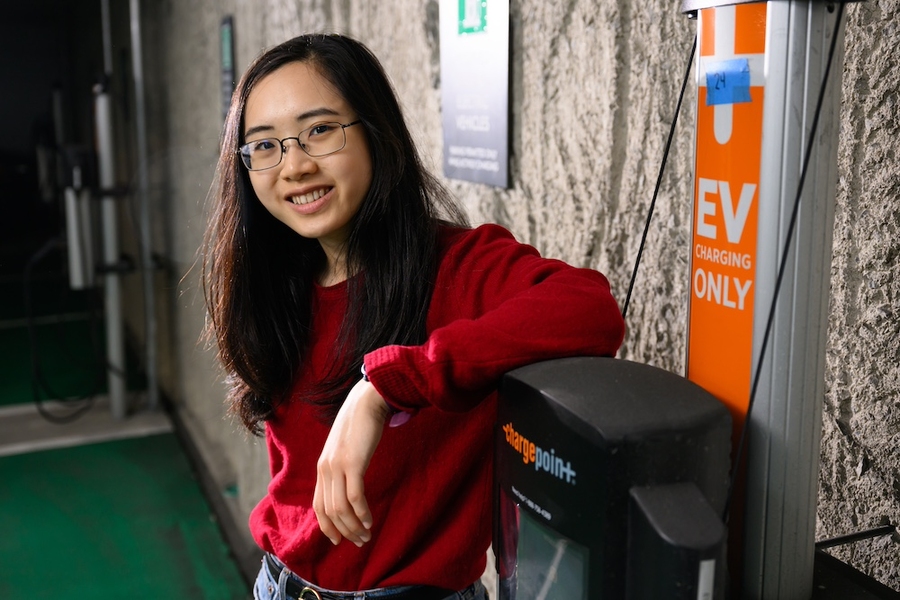
MIT senior Elaine Siyu Liu doesn’t own an electric car, or any car. But she sees the impact of electric vehicles (EVs) and renewables on the grid as two pieces of an energy puzzle she wants to solve.

The U.S. Department of Energy reports that the number of public and private EV charging ports nearly doubled in the past three years, and many more are in the works. Users expect to plug in at their convenience, charge up, and drive away. But what if the grid can’t handle it?

Electricity demand, long stagnant in the United States, has spiked due to EVs, data centers that drive artificial intelligence, and industry. Grid planners forecast an increase of 2.6 percent to 4.7 percent in electricity demand over the next five years, according to data reported to federal regulators. Everyone from EV charging-station operators to utility-system operators needs help navigating a system in flux.

That’s where Liu’s work comes in.

Liu, who is studying mathematics and electrical engineering and computer science (EECS), is interested in distribution — how to get electricity from a centralized location to consumers. “I see power systems as a good venue for theoretical research as an application tool,” she says. “I’m interested in it because I’m familiar with the optimization and probability techniques used to map this level of problem.”

Liu grew up in Beijing, then after middle school moved with her parents to Canada and enrolled in a prep school in Oakville, Ontario, 30 miles outside Toronto.

Liu stumbled upon an opportunity to take part in a regional math competition and eventually started a math club, but at the time, the school’s culture surrounding math surprised her. Being exposed to what seemed to be some students’ aversion to math, she says, “I don’t think my feelings about math changed. I think my feelings about how people feel about math changed.”

Liu brought her passion for math to MIT. The summer after her sophomore year, she took on the first of the two Undergraduate Research Opportunity Program projects she completed with electric power system expert Marija Ilić, a joint adjunct professor in EECS and a senior research scientist at the MIT Laboratory for Information and Decision Systems.

Predicting the grid

Since 2022, with the help of funding from the MIT Energy Initiative (MITEI), Liu has been working with Ilić on identifying ways in which the grid is challenged.

One factor is the addition of renewables to the energy pipeline. A gap in wind or sun might cause a lag in power generation. If this lag occurs during peak demand, it could mean trouble for a grid already taxed by extreme weather and other unforeseen events.

If you think of the grid as a network of dozens of interconnected parts, once an element in the network fails — say, a tree downs a transmission line — the electricity that used to go through that line needs to be rerouted. This may overload other lines, creating what’s known as a cascade failure.

“This all happens really quickly and has very large downstream effects,” Liu says. “Millions of people will have instant blackouts.”

Even if the system can handle a single downed line, Liu notes that “the nuance is that there are now a lot of renewables, and renewables are less predictable. You can’t predict a gap in wind or sun. When such things happen, there’s suddenly not enough generation and too much demand. So the same kind of failure would happen, but on a larger and more uncontrollable scale.”

Renewables’ varying output has the added complication of causing voltage fluctuations. “We plug in our devices expecting a voltage of 110, but because of oscillations, you will never get exactly 110,” Liu says. “So even when you can deliver enough electricity, if you can’t deliver it at the specific voltage level that is required, that’s a problem.”

Liu and Ilić are building a model to predict how and when the grid might fail. Lacking access to privatized data, Liu runs her models with European industry data and test cases made available to universities. “I have a fake power grid that I run my experiments on,” she says. “You can take the same tool and run it on the real power grid.”

Liu’s model predicts cascade failures as they evolve. Supply from a wind generator, for example, might drop precipitously over the course of an hour. The model analyzes which substations and which households will be affected. “After we know we need to do something, this prediction tool can enable system operators to strategically intervene ahead of time,” Liu says.

Dictating price and power

Last year, Liu turned her attention to EVs, which provide a different kind of challenge than renewables.

In 2022, S&P Global reported that lawmakers argued that the U.S. Federal Energy Regulatory Commission’s (FERC) wholesale power rate structure was unfair for EV charging station operators.

In addition to operators paying by the kilowatt-hour, some also pay more for electricity during peak demand hours. Only a few EVs charging up during those hours could result in higher costs for the operator even if their overall energy use is low.

Anticipating how much power EVs will need is more complex than predicting energy needed for, say, heating and cooling. Unlike buildings, EVs move around, making it difficult to predict energy consumption at any given time. “If users don’t like the price at one charging station or how long the line is, they’ll go somewhere else,” Liu says. “Where to allocate EV chargers is a problem that a lot of people are dealing with right now.”

One approach would be for FERC to dictate to EV users when and where to charge and what price they’ll pay. To Liu, this isn’t an attractive option. “No one likes to be told what to do,” she says.

Liu is looking at optimizing a market-based solution that would be acceptable to top-level energy producers — wind and solar farms and nuclear plants — all the way down to the municipal aggregators that secure electricity at competitive rates and oversee distribution to the consumer.

Analyzing the location, movement, and behavior patterns of all the EVs driven daily in Boston and other major energy hubs, she notes, could help demand aggregators determine where to place EV chargers and how much to charge consumers, akin to Walmart deciding how much to mark up wholesale eggs in different markets.

Last year, Liu presented the work at MITEI’s annual research conference. This spring, Liu and Ilić are submitting a paper on the market optimization analysis to a journal of the Institute of Electrical and Electronics Engineers.

Liu has come to terms with her early introduction to attitudes toward STEM that struck her as markedly different from those in China. She says, “I think the (prep) school had a very strong ‘math is for nerds’ vibe, especially for girls. There was a ‘why are you giving yourself more work?’ kind of mentality. But over time, I just learned to disregard that.”

After graduation, Liu, the only undergraduate researcher in Ilić’s MIT Electric Energy Systems Group, plans to apply to fellowships and graduate programs in EECS, applied math, and operations research.

Based on her analysis, Liu says that the market could effectively determine the price and availability of charging stations. Offering incentives for EV owners to charge during the day instead of at night when demand is high could help avoid grid overload and prevent extra costs to operators. “People would still retain the ability to go to a different charging station if they chose to,” she says. “I’m arguing that this works.”

A better way to control shape-shifting soft robots

Imagine a slime-like robot that can seamlessly change its shape to squeeze through narrow spaces, which could be deployed inside the human body to remove an unwanted item.

While such a robot does not yet exist outside a laboratory, researchers are working to develop reconfigurable soft robots for applications in health care, wearable devices, and industrial systems.

But how can one control a squishy robot that doesn’t have joints, limbs, or fingers that can be manipulated, and instead can drastically alter its entire shape at will? MIT researchers are working to answer that question.

They developed a control algorithm that can autonomously learn how to move, stretch, and shape a reconfigurable robot to complete a specific task, even when that task requires the robot to change its morphology multiple times. The team also built a simulator to test control algorithms for deformable soft robots on a series of challenging, shape-changing tasks.

Their method completed each of the eight tasks they evaluated while outperforming other algorithms. The technique worked especially well on multifaceted tasks. For instance, in one test, the robot had to reduce its height while growing two tiny legs to squeeze through a narrow pipe, and then un-grow those legs and extend its torso to open the pipe’s lid.

While reconfigurable soft robots are still in their infancy, such a technique could someday enable general-purpose robots that can adapt their shapes to accomplish diverse tasks.

“When people think about soft robots, they tend to think about robots that are elastic, but return to their original shape. Our robot is like slime and can actually change its morphology. It is very striking that our method worked so well because we are dealing with something very new,” says Boyuan Chen, an electrical engineering and computer science (EECS) graduate student and co-author of a paper on this approach.

Chen’s co-authors include lead author Suning Huang, an undergraduate student at Tsinghua University in China who completed this work while a visiting student at MIT; Huazhe Xu, an assistant professor at Tsinghua University; and senior author Vincent Sitzmann, an assistant professor of EECS at MIT who leads the Scene Representation Group in the Computer Science and Artificial Intelligence Laboratory. The research will be presented at the International Conference on Learning Representations.

Controlling dynamic motion

Scientists often teach robots to complete tasks using a machine-learning approach known as reinforcement learning, which is a trial-and-error process in which the robot is rewarded for actions that move it closer to a goal.

This can be effective when the robot’s moving parts are consistent and well-defined, like a gripper with three fingers. With a robotic gripper, a reinforcement learning algorithm might move one finger slightly, learning by trial and error whether that motion earns it a reward. Then it would move on to the next finger, and so on.

But shape-shifting robots, which are controlled by magnetic fields, can dynamically squish, bend, or elongate their entire bodies.

The researchers built a simulator to test control algorithms for deformable soft robots on a series of challenging, shape-changing tasks. Here, a reconfigurable robot learns to elongate and curve its soft body to weave around obstacles and reach a target.

Image: Courtesy of the researchers

“Such a robot could have thousands of small pieces of muscle to control, so it is very hard to learn in a traditional way,” says Chen.

To solve this problem, he and his collaborators had to think about it differently. Rather than moving each tiny muscle individually, their reinforcement learning algorithm begins by learning to control groups of adjacent muscles that work together.

Then, after the algorithm has explored the space of possible actions by focusing on groups of muscles, it drills down into finer detail to optimize the policy, or action plan, it has learned. In this way, the control algorithm follows a coarse-to-fine methodology.

“Coarse-to-fine means that when you take a random action, that random action is likely to make a difference. The change in the outcome is likely very significant because you coarsely control several muscles at the same time,” Sitzmann says.

To enable this, the researchers treat a robot’s action space, or how it can move in a certain area, like an image.

Their machine-learning model uses images of the robot’s environment to generate a 2D action space, which includes the robot and the area around it. They simulate robot motion using what is known as the material-point-method, where the action space is covered by points, like image pixels, and overlayed with a grid.

The same way nearby pixels in an image are related (like the pixels that form a tree in a photo), they built their algorithm to understand that nearby action points have stronger correlations. Points around the robot’s “shoulder” will move similarly when it changes shape, while points on the robot’s “leg” will also move similarly, but in a different way than those on the “shoulder.”

In addition, the researchers use the same machine-learning model to look at the environment and predict the actions the robot should take, which makes it more efficient.

Building a simulator

After developing this approach, the researchers needed a way to test it, so they created a simulation environment called DittoGym.

DittoGym features eight tasks that evaluate a reconfigurable robot’s ability to dynamically change shape. In one, the robot must elongate and curve its body so it can weave around obstacles to reach a target point. In another, it must change its shape to mimic letters of the alphabet.

In this simulation, the reconfigurable soft robot, trained using the researchers’ control algorithm, must change its shape to mimic objects, like stars, and the letters M-I-T.

Image: Courtesy of the researchers

“Our task selection in DittoGym follows both generic reinforcement learning benchmark design principles and the specific needs of reconfigurable robots. Each task is designed to represent certain properties that we deem important, such as the capability to navigate through long-horizon explorations, the ability to analyze the environment, and interact with external objects,” Huang says. “We believe they together can give users a comprehensive understanding of the flexibility of reconfigurable robots and the effectiveness of our reinforcement learning scheme.”

Their algorithm outperformed baseline methods and was the only technique suitable for completing multistage tasks that required several shape changes.

“We have a stronger correlation between action points that are closer to each other, and I think that is key to making this work so well,” says Chen.

While it may be many years before shape-shifting robots are deployed in the real world, Chen and his collaborators hope their work inspires other scientists not only to study reconfigurable soft robots but also to think about leveraging 2D action spaces for other complex control problems.

The power of App Inventor: Democratizing possibilities for mobile applications

In June 2007, Apple unveiled the first iPhone. But the company made a strategic decision about iPhone software: its new App Store would be a walled garden. An iPhone user wouldn’t be able to install applications that Apple itself hadn’t vetted, at least not without breaking Apple’s terms of service.

That business decision, however, left educators out in the cold. They had no way to bring mobile software development — about to become part of everyday life — into the classroom. How could a young student code, futz with, and share apps if they couldn’t get it into the App Store?

MIT professor Hal Abelson was on sabbatical at Google at the time, when the company was deciding how to respond to Apple’s gambit to corner the mobile hardware and software market. Abelson recognized the restrictions Apple was placing on young developers; Google recognized the market need for an open-source alternative operating system — what became Android. Both saw the opportunity that became App Inventor.

“Google started the Android project sort of in reaction to the iPhone,” Abelson says. “And I was there, looking at what we did at MIT with education-focused software like Logo and Scratch, and said ‘what a cool thing it would be if kids could make mobile apps also.’”

Google software engineer Mark Friedman volunteered to work with Abelson on what became “Young Android,” soon renamed Google App Inventor. Like Scratch, App Inventor is a block-based language, allowing programmers to visually snap together pre-made “blocks” of code rather than need to learn specialized programming syntax.

Friedman describes it as novel for the time, particularly for mobile development, to make it as easy as possible to build simple mobile apps. “That meant a web-based app,” he says, “where everything was online and no external tools were required, with a simple programming model, drag-and-drop user interface designing, and blocks-based visual programming.” Thus an app someone programmed in a web interface could be installed on an Android device.

App Inventor scratched an itch. Boosted by the explosion in smartphone adoption and the fact App Inventor is free (and eventually open source), soon more than 70,000 teachers were using it with hundreds of thousands of students, with Google providing the backend infrastructure to keep it going.

“I remember answering a question from my manager at Google who asked how many users I thought we’d get in the first year,” Friedman says. “I thought it would be about 15,000 — and I remember thinking that might be too optimistic. I was ultimately off by a factor of 10–20.” Friedman was quick to credit more than their choices about the app. “I think that it’s fair to say that while some of that growth was due to the quality of the tool, I don’t think you can discount the effect of it being from Google and of the effect of Hal Abelson’s reputation and network.”

Some early apps took App Inventor in ambitious, unexpected directions, such as “Discardious,” developed by teenage girls in Nigeria. Discardious helped business owners and individuals dispose of waste in communities where disposal was unreliable or too cumbersome.

But even before apps like Discardious came along, the team knew Google’s support wouldn’t be open-ended. No one wanted to cut teachers off from a tool they were thriving with, so around 2010, Google and Abelson agreed to transfer App Inventor to MIT. The transition meant major staff contributions to recreate App Inventor without Google’s proprietary software but MIT needing to work with Google to continue to provide the network resources to keep App Inventor free for the world.

With such a large user base, however, that left Abelson “worried the whole thing was going to collapse” without Google’s direct participation.

Friedman agrees. “I would have to say that I had my fears. App Inventor has a pretty complicated technical implementation, involving multiple programming languages, libraries and frameworks, and by the end of its time at Google we had a team of about 10 people working on it.”

Yet not only did Google provide significant funding to aid the transfer, but, Friedman says of the transfer’s ultimate success, “Hal would be in charge and he had fairly extensive knowledge of the system and, of course, had great passion for the vision and the product.”

MIT enterprise architect Jeffrey Schiller, who built the Institute’s computer network and became its manager in 1984, was another key part in sustaining App Inventor after its transition, helping introduce technical features fundamental to its accessibility and long-term success. He led the integration of the platform into web browsers, the addition of WiFi support rather than needing to connect phones and computers via USB, and the laying of groundwork for technical support of older phones because, as Schiller says, “many of our users cannot rush out and purchase the latest and most expensive devices.”

These collaborations and contributions over time resulted in App Inventor’s greatest resource: its user base. As it grew, and with support from community managers, volunteer know-how grew with it. Now, more than a decade since its launch, App Inventor recently crossed several major milestones, the most remarkable being the creation of its 100 millionth project and registration of its 20 millionth user. Young developers continue to make incredible applications, boosted now by the advantages of AI. College students created “Brazilian XôDengue” as a way for users to use phone cameras to identify mosquito larvae that may be carrying the dengue virus. High school students recently developed “Calmify,” a journaling app that uses AI for emotion detection. And a mother in Kuwait wanted something to help manage the often-overwhelming experience of new motherhood when returning to work, so she built the chatbot “PAM (Personal Advisor to Mothers)” as a non-judgmental space to talk through the challenges.

App Inventor’s long-term sustainability now rests with the App Inventor Foundation, created in 2022 to grow its resources and further drive its adoption. It is led by executive director Natalie Lao.

In a letter to the App Inventor community, Lao highlighted the foundation’s commitment to equitable access to educational resources, which for App Inventor required a rapid shift toward AI education — but in a way that upholds App Inventor’s core values to be “a free, open-source, easy-to-use platform” for mobile devices. “Our mission is to not only democratize access to technology,” Lao wrote, “but also foster a culture of innovation and digital literacy.”

Within MIT, App Inventor today falls under the umbrella of the MIT RAISE Initiative — Responsible AI for Social Empowerment and Education, run by Dean for Digital Learning Cynthia Breazeal, Professor Eric Klopfer, and Abelson. Together they are able to integrate App Inventor into ever-broader communities, events, and funding streams, leading to opportunities like this summer’s inaugural AI and Education Summit on July 24-26. The summit will include awards for winners of a Global AI Hackathon, whose roughly 180 submissions used App Inventor to create AI tools in two tracks: Climate & Sustainability and Health & Wellness. Tying together another of RAISE’s major projects, participants were encouraged to draw from Day of AI curricula, including its newest courses on data science and climate change.

“Over the past year, there’s been an enormous mushrooming in the possibilities for mobile apps through the integration of AI,” says Abelson. “The opportunity for App Inventor and MIT is to democratize those new possibilities for young people — and for everyone — as an enhanced source of power and creativity.”

Yanjie Shao and Jesús del Alamo receive Intel’s 2023 Outstanding Researcher Award

In April 2024, Intel announced its 2023 Outstanding Researcher Awards. We are pleased to report that Dr. Yanjie Shao and Professor Jesús del Alamo were among the fifteen leading academic researchers to receive this award. The annual award program recognizes the exceptional contributions made through Intel university-sponsored research that help further Intel’s mission of creating world-changing technology that improves the lives of everyone on the planet.

Yanjie Shao, a Postdoctoral Researcher at MIT, and Jesús del Alamo, Donner Professor and Professor of Electrical Engineering at MIT were selected for this award for their work on “Exploring the Limits of Vertical-Nanowire Tunnel Field-Effect Transistors in the Nanoscale.” This was the topic of research of Shao’s PhD thesis at MIT.

In their work, Shao and del Alamo demonstrated vertical nanowire tunnel field-effect transistors (TFETs) with characteristics that greatly push the current state of the art. The team showed record on-state performance among TFETs reported in the literature and improved subthreshold slope in broken-band systems. The team also demonstrated a performance boost over state-of-the-art metal-oxide-semiconductor FETs at the targeted operating voltage of 0.3 V, which has long been pursued for TFETs. Ultra-low voltage transistor operation is critical for future high energy efficient electronic systems.

“This is an outstanding achievement by both Dr. Shao and Professor del Alamo,” says Tomás Palacios, MTL Director. “To add to the impressive nature of this award, it should be noted that Dr. Shao is one of the very few non-professor honorees in the entire history of the award.”

“I would like to thank Intel for their generous funding on this project, and the mentorship they provided us throughout the whole process,” says Dr. Shao. “I also want to thank MIT.nano and MTL for the device fabrication and material characterization support.”

Congratulations Dr. Shao and Professor del Alamo!