Researchers demonstrate the first chip-based 3D printer

Imagine a portable 3D printer you could hold in the palm of your hand. The tiny device could enable a user to rapidly create customized, low-cost objects on the go, like a fastener to repair a wobbly bicycle wheel or a component for a critical medical operation.

Researchers from MIT and the University of Texas at Austin took a major step toward making this idea a reality by demonstrating the first chip-based 3D printer. Their proof-of-concept device consists of a single, millimeter-scale photonic chip that emits reconfigurable beams of light into a well of resin that cures into a solid shape when light strikes it.

The prototype chip has no moving parts, instead relying on an array of tiny optical antennas to steer a beam of light. The beam projects up into a liquid resin that has been designed to rapidly cure when exposed to the beam’s wavelength of visible light.

By combining silicon photonics and photochemistry, the interdisciplinary research team was able to demonstrate a chip that can steer light beams to 3D print arbitrary two-dimensional patterns, including the letters M-I-T. Shapes can be fully formed in a matter of seconds.

In the long run, they envision a system where a photonic chip sits at the bottom of a well of resin and emits a 3D hologram of visible light, rapidly curing an entire object in a single step.

This type of portable 3D printer could have many applications, such as enabling clinicians to create tailor-made medical device components or allowing engineers to make rapid prototypes at a job site.

“This system is completely rethinking what a 3D printer is. It is no longer a big box sitting on a bench in a lab creating objects, but something that is handheld and portable. It is exciting to think about the new applications that could come out of this and how the field of 3D printing could change,” says senior author Jelena Notaros, the Robert J. Shillman Career Development Professor in Electrical Engineering and Computer Science (EECS), and a member of the Research Laboratory of Electronics.

Joining Notaros on the paper are Sabrina Corsetti, lead author and EECS graduate student; Milica Notaros PhD ’23; Tal Sneh, an EECS graduate student; Alex Safford, a recent graduate of the University of Texas at Austin; and Zak Page, an assistant professor in the Department of Chemical Engineering at UT Austin. The research appears today in Nature Light Science and Applications.

Printing with a chip

Experts in silicon photonics, the Notaros group previously developed integrated optical-phased-array systems that steer beams of light using a series of microscale antennas fabricated on a chip using semiconductor manufacturing processes. By speeding up or delaying the optical signal on either side of the antenna array, they can move the beam of emitted light in a certain direction.

Such systems are key for lidar sensors, which map their surroundings by emitting infrared light beams that bounce off nearby objects. Recently, the group has focused on systems that emit and steer visible light for augmented-reality applications.

They wondered if such a device could be used for a chip-based 3D printer.

At about the same time they started brainstorming, the Page Group at UT Austin demonstrated specialized resins that can be rapidly cured using wavelengths of visible light for the first time. This was the missing piece that pushed the chip-based 3D printer into reality.

“With photocurable resins, it is very hard to get them to cure all the way up at infrared wavelengths, which is where integrated optical-phased-array systems were operating in the past for lidar,” Corsetti says. “Here, we are meeting in the middle between standard photochemistry and silicon photonics by using visible-light-curable resins and visible-light-emitting chips to create this chip-based 3D printer. You have this merging of two technologies into a completely new idea.”

Their prototype consists of a single photonic chip containing an array of 160-nanometer-thick optical antennas. (A sheet of paper is about 100,000 nanometers thick.) The entire chip fits onto a U.S. quarter.

When powered by an off-chip laser, the antennas emit a steerable beam of visible light into the well of photocurable resin. The chip sits below a clear slide, like those used in microscopes, which contains a shallow indentation that holds the resin. The researchers use electrical signals to nonmechanically steer the light beam, causing the resin to solidify wherever the beam strikes it.

A collaborative approach

But effectively modulating visible-wavelength light, which involves modifying its amplitude and phase, is especially tricky. One common method requires heating the chip, but this is inefficient and takes a large amount of physical space.

Instead, the researchers used liquid crystal to fashion compact modulators they integrate onto the chip. The material’s unique optical properties enable the modulators to be extremely efficient and only about 20 microns in length.

A single waveguide on the chip holds the light from the off-chip laser. Running along the waveguide are tiny taps which tap off a little bit of light to each of the antennas.

The researchers actively tune the modulators using an electric field, which reorients the liquid crystal molecules in a certain direction. In this way, they can precisely control the amplitude and phase of light being routed to the antennas.

But forming and steering the beam is only half the battle. Interfacing with a novel photocurable resin was a completely different challenge.

The Page Group at UT Austin worked closely with the Notaros Group at MIT, carefully adjusting the chemical combinations and concentrations to zero-in on a formula that provided a long shelf-life and rapid curing.

In the end, the group used their prototype to 3D print arbitrary two-dimensional shapes within seconds.

Building off this prototype, they want to move toward developing a system like the one they originally conceptualized — a chip that emits a hologram of visible light in a resin well to enable volumetric 3D printing in only one step.

“To be able to do that, we need a completely new silicon-photonics chip design. We already laid out a lot of what that final system would look like in this paper. And, now, we are excited to continue working towards this ultimate demonstration,” Jelena Notaros says.

This work was funded, in part, by the U.S. National Science Foundation, the U.S. Defense Advanced Research Projects Agency, the Robert A. Welch Foundation, the MIT Rolf G. Locher Endowed Fellowship, and the MIT Frederick and Barbara Cronin Fellowship.

A technique for more effective multipurpose robots

Let’s say you want to train a robot so it understands how to use tools and can then quickly learn to make repairs around your house with a hammer, wrench, and screwdriver. To do that, you would need an enormous amount of data demonstrating tool use.

Existing robotic datasets vary widely in modality — some include color images while others are composed of tactile imprints, for instance. Data could also be collected in different domains, like simulation or human demos. And each dataset may capture a unique task and environment.

It is difficult to efficiently incorporate data from so many sources in one machine-learning model, so many methods use just one type of data to train a robot. But robots trained this way, with a relatively small amount of task-specific data, are often unable to perform new tasks in unfamiliar environments.

In an effort to train better multipurpose robots, MIT researchers developed a technique to combine multiple sources of data across domains, modalities, and tasks using a type of generative AI known as diffusion models.

They train a separate diffusion model to learn a strategy, or policy, for completing one task using one specific dataset. Then they combine the policies learned by the diffusion models into a general policy that enables a robot to perform multiple tasks in various settings.

In simulations and real-world experiments, this training approach enabled a robot to perform multiple tool-use tasks and adapt to new tasks it did not see during training. The method, known as Policy Composition (PoCo), led to a 20 percent improvement in task performance when compared to baseline techniques.

“Addressing heterogeneity in robotic datasets is like a chicken-egg problem. If we want to use a lot of data to train general robot policies, then we first need deployable robots to get all this data. I think that leveraging all the heterogeneous data available, similar to what researchers have done with ChatGPT, is an important step for the robotics field,” says Lirui Wang, an electrical engineering and computer science (EECS) graduate student and lead author of a paper on PoCo.     

Wang’s coauthors include Jialiang Zhao, a mechanical engineering graduate student; Yilun Du, an EECS graduate student; Edward Adelson, the John and Dorothy Wilson Professor of Vision Science in the Department of Brain and Cognitive Sciences and a member of the Computer Science and Artificial Intelligence Laboratory (CSAIL); and senior author Russ Tedrake, the Toyota Professor of EECS, Aeronautics and Astronautics, and Mechanical Engineering, and a member of CSAIL. The research will be presented at the Robotics: Science and Systems Conference.

Combining disparate datasets

A robotic policy is a machine-learning model that takes inputs and uses them to perform an action. One way to think about a policy is as a strategy. In the case of a robotic arm, that strategy might be a trajectory, or a series of poses that move the arm so it picks up a hammer and uses it to pound a nail.

Datasets used to learn robotic policies are typically small and focused on one particular task and environment, like packing items into boxes in a warehouse.

“Every single robotic warehouse is generating terabytes of data, but it only belongs to that specific robot installation working on those packages. It is not ideal if you want to use all of these data to train a general machine,” Wang says.

The MIT researchers developed a technique that can take a series of smaller datasets, like those gathered from many robotic warehouses, learn separate policies from each one, and combine the policies in a way that enables a robot to generalize to many tasks.

They represent each policy using a type of generative AI model known as a diffusion model. Diffusion models, often used for image generation, learn to create new data samples that resemble samples in a training dataset by iteratively refining their output.

But rather than teaching a diffusion model to generate images, the researchers teach it to generate a trajectory for a robot. They do this by adding noise to the trajectories in a training dataset. The diffusion model gradually removes the noise and refines its output into a trajectory.

This technique, known as Diffusion Policy, was previously introduced by researchers at MIT, Columbia University, and the Toyota Research Institute. PoCo builds off this Diffusion Policy work. 

The team trains each diffusion model with a different type of dataset, such as one with human video demonstrations and another gleaned from teleoperation of a robotic arm.

Then the researchers perform a weighted combination of the individual policies learned by all the diffusion models, iteratively refining the output so the combined policy satisfies the objectives of each individual policy.

Greater than the sum of its parts

“One of the benefits of this approach is that we can combine policies to get the best of both worlds. For instance, a policy trained on real-world data might be able to achieve more dexterity, while a policy trained on simulation might be able to achieve more generalization,” Wang says.

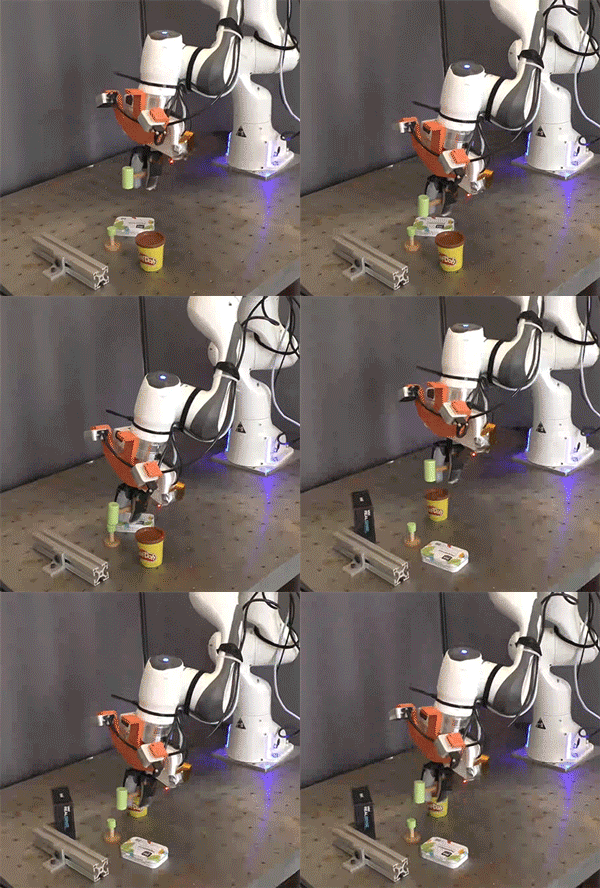
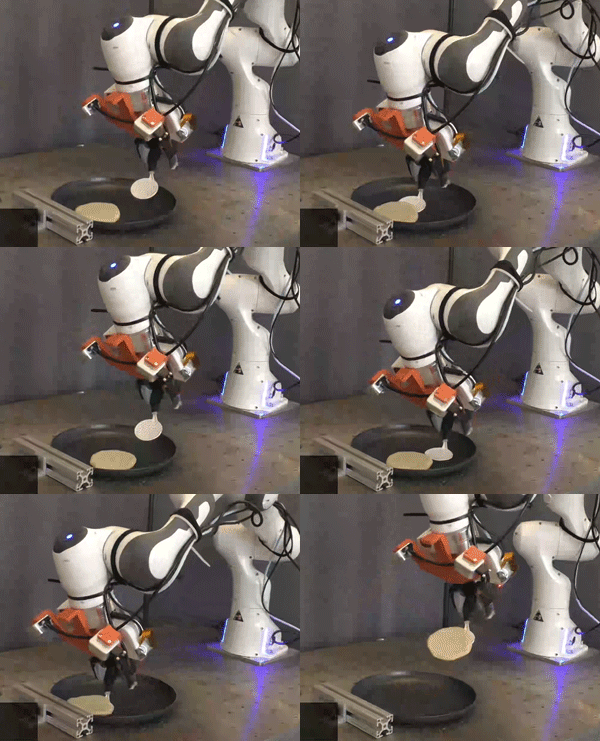
Animation of robot arm using a spatula to lift toy pancake
With policy composition, researchers are able to combine datasets from multiple sources so they can teach a robot to effectively use a wide range of tools, like a hammer, screwdriver, or this spatula.

Image: Courtesy of the researchers

Because the policies are trained separately, one could mix and match diffusion policies to achieve better results for a certain task. A user could also add data in a new modality or domain by training an additional Diffusion Policy with that dataset, rather than starting the entire process from scratch.

Animation of robot arm using toy hammer as objects are being placed randomly next around it.
The policy composition technique the researchers developed can be used to effectively teach a robot to use tools even when objects are placed around it to try and distract it from its task, as seen here.

Image: Courtesy of the researchers

The researchers tested PoCo in simulation and on real robotic arms that performed a variety of tools tasks, such as using a hammer to pound a nail and flipping an object with a spatula. PoCo led to a 20 percent improvement in task performance compared to baseline methods.

“The striking thing was that when we finished tuning and visualized it, we can clearly see that the composed trajectory looks much better than either one of them individually,” Wang says.

In the future, the researchers want to apply this technique to long-horizon tasks where a robot would pick up one tool, use it, then switch to another tool. They also want to incorporate larger robotics datasets to improve performance.

“We will need all three kinds of data to succeed for robotics: internet data, simulation data, and real robot data. How to combine them effectively will be the million-dollar question. PoCo is a solid step on the right track,” says Jim Fan, senior research scientist at NVIDIA and leader of the AI Agents Initiative, who was not involved with this work.

This research is funded, in part, by Amazon, the Singapore Defense Science and Technology Agency, the U.S. National Science Foundation, and the Toyota Research Institute.

Turning up the heat on next-generation semiconductors

The scorching surface of Venus, where temperatures can climb to 480 degrees Celsius (hot enough to melt lead), is an inhospitable place for humans and machines alike. One reason scientists have not yet been able to send a rover to the planet’s surface is because silicon-based electronics can’t operate in such extreme temperatures for an extended period of time.

For high-temperature applications like Venus exploration, researchers have recently turned to gallium nitride, a unique material that can withstand temperatures of 500 degrees or more.

The material is already used in some terrestrial electronics, like phone chargers and cell phone towers, but scientists don’t have a good grasp of how gallium nitride devices would behave at temperatures beyond 300 degrees, which is the operational limit of conventional silicon electronics.

In a new paper published in Applied Physics Letterswhich is part of a multiyear research effort, a team of scientists from MIT and elsewhere sought to answer key questions about the material’s properties and performance at extremely high temperatures.  

They studied the impact of temperature on the ohmic contacts in a gallium nitride device. Ohmic contacts are key components that connect a semiconductor device with the outside world.

The researchers found that extreme temperatures didn’t cause significant degradation to the gallium nitride material or contacts. They were surprised to see that the contacts remained structurally intact even when held at 500 degrees Celsius for 48 hours.

Understanding how contacts perform at extreme temperatures is an important step toward the group’s next goal of developing high-performance transistors that could operate on the surface of Venus. Such transistors could also be used on Earth in electronics for applications like extracting geothermal energy or monitoring the inside of jet engines.

“Transistors are the heart of most modern electronics, but we didn’t want to jump straight to making a gallium nitride transistor because so much could go wrong. We first wanted to make sure the material and contacts could survive, and figure out how much they change as you increase the temperature. We’ll design our transistor from these basic material building blocks,” says John Niroula, an electrical engineering and computer science (EECS) graduate student and lead author of the paper.

His co-authors include Qingyun Xie PhD ’24; Mengyang Yuan PhD ’22; EECS graduate students Patrick K. Darmawi-Iskandar and Pradyot Yadav; Gillian K. Micale, a graduate student in the Department of Materials Science and Engineering; senior author Tomás Palacios, the Clarence J. LeBel Professor of EECS, director of the Microsystems Technology Laboratories, and a member of the Research Laboratory of Electronics; as well as collaborators Nitul S. Rajput of the Technology Innovation Institute of the United Arab Emirates; Siddharth Rajan of Ohio State University; Yuji Zhao of Rice University; and Nadim Chowdhury of Bangladesh University of Engineering and Technology.

Turning up the heat

While gallium nitride has recently attracted much attention, the material is still decades behind silicon when it comes to scientists’ understanding of how its properties change under different conditions. One such property is resistance, the flow of electrical current through a material.

A device’s overall resistance is inversely proportional to its size. But devices like semiconductors have contacts that connect them to other electronics. Contact resistance, which is caused by these electrical connections, remains fixed no matter the size of the device. Too much contact resistance can lead to higher power dissipation and slower operating frequencies for electronic circuits.

“Especially when you go to smaller dimensions, a device’s performance often ends up being limited by contact resistance. People have a relatively good understanding of contact resistance at room temperature, but no one has really studied what happens when you go all the way up to 500 degrees,” Niroula says.

For their study, the researchers used facilities at MIT.nano to build gallium nitride devices known as transfer length method structures, which are composed of a series of resistors. These devices enable them to measure the resistance of both the material and the contacts.

They added ohmic contacts to these devices using the two most common methods. The first involves depositing metal onto gallium nitride and heating it to 825 degrees Celsius for about 30 seconds, a process called annealing.

The second method involves removing chunks of gallium nitride and using a high-temperature technology to regrow highly doped gallium nitride in its place, a process led by Rajan and his team at Ohio State. The highly doped material contains extra electrons that can contribute to current conduction.

“The regrowth method typically leads to lower contact resistance at room temperature, but we wanted to see if these methods still work well at high temperatures,” Niroula says.

A comprehensive approach

They tested devices in two ways. Their collaborators at Rice University, led by Zhao, conducted short-term tests by placing devices on a hot chuck that reached 500 degrees Celsius and taking immediate resistance measurements.

At MIT, they conducted longer-term experiments by placing devices into a specialized furnace the group previously developed. They left devices inside for up to 72 hours to measure how resistance changes as a function of temperature and time.

Microscopy experts at MIT.nano (Aubrey N. Penn) and the Technology Innovation Institute (Nitul S. Rajput) used state-of-the-art transmission electron microscopes to see how such high temperatures affect gallium nitride and the ohmic contacts at the atomic level.

“We went in thinking the contacts or the gallium nitride material itself would degrade significantly, but we found the opposite. Contacts made with both methods seemed to be remarkably stable,” says Niroula.

While it is difficult to measure resistance at such high temperatures, their results indicate that contact resistance seems to remain constant even at temperatures of 500 degrees, for around 48 hours. And just like at room temperature, the regrowth process led to better performance.

The material did start to degrade after being in the furnace for 48 hours, but the researchers are already working to boost long-term performance. One strategy involves adding protective insulators to keep the material from being directly exposed to the high-temperature environment.

Moving forward, the researchers plan to use what they learned in these experiments to develop high-temperature gallium nitride transistors.

“In our group, we focus on innovative, device-level research to advance the frontiers of microelectronics, while adopting a systematic approach across the hierarchy, from the material level to the circuit level. Here, we have gone all the way down to the material level to understand things in depth. In other words, we have translated device-level advancements to circuit-level impact for high-temperature electronics, through design, modeling and complex fabrication. We are also immensely fortunate to have forged close partnerships with our longtime collaborators in this journey,” Xie says.

This work was funded, in part, by the U.S. Air Force Office of Scientific Research, Lockheed Martin Corporation, the Semiconductor Research Corporation through the U.S. Defense Advanced Research Projects Agency, the U.S. Department of Energy, Intel Corporation, and the Bangladesh University of Engineering and Technology.

Fabrication and microscopy were conducted at MIT.nano, the Semiconductor Epitaxy and Analysis Laboratory at Ohio State University, the Center for Advanced Materials Characterization at the University of Oregon, and the Technology Innovation Institute of the United Arab Emirates.

QS ranks MIT the world’s No. 1 university for 2024-25

MIT has again been named the world’s top university by the QS World University Rankings, which were announced today. This is the 13th year in a row MIT has received this distinction.

The full 2025 edition of the rankings — published by Quacquarelli Symonds, an organization specializing in education and study abroad — can be found at TopUniversities.com. The QS rankings are based on factors including academic reputation, employer reputation, citations per faculty, student-to-faculty ratio, proportion of international faculty, and proportion of international students.

MIT was also ranked the world’s top university in 11 of the subject areas ranked by QS, as announced in April of this year.

The Institute received a No. 1 ranking in the following QS subject areas: Chemical Engineering; Civil and Structural Engineering; Computer Science and Information Systems; Data Science and Artificial Intelligence; Electrical and Electronic Engineering; Linguistics; Materials Science; Mechanical, Aeronautical, and Manufacturing Engineering; Mathematics; Physics and Astronomy; and Statistics and Operational Research.

MIT also placed second in five subject areas: Accounting and Finance; Architecture/Built Environment; Biological Sciences; Chemistry; and Economics and Econometrics.

Student spotlight: Donavon Clay

Donavon Clay appears on a hike, wearing a blue rock-climbing helmet.

Donavon Clay is a junior majoring in 6-2 Electrical Engineering and Computer Science. A native Texan, the Zeta Psi member enjoys the proximity of his FSILG to Beantown Taqueria–but when he’s on campus, you’re likely to find him in the outlet-rich EECS Lab in building 34, which Clay calls “a very productive space for me.” Clay shared his thoughts on gaming, hiking, and the importance of living deliberately. 

Tell us about your favorite game!

Dance Central on the Xbox 360: my sister and I used to play that and The Michael Jackson Experience (Wii version) all the time growing up. I still remember a lot of the choreography.

What’s one trend you wish would disappear, and one you wish would come back?

What needs to disappear: the increasing number of vehicles with the blueish-white LED headlights. I’m tired of being blinded by oncoming traffic or a Ford F-150 that’s tailgating me.

What should come back: Online computer games, such as Club Penguin and Poptropica.

Do you have a bucket list? If so, share one or two of the items on it!

Building my own tiny house would be sick. I used to have an obsession with them back in high school. The level of creativity and intricacy that goes into maximizing the use of space without making it too crowded while also making it look aesthetically pleasing is insane. Tiny houses also have a reduced impact on the environment and offer the added benefit of being mobile. 

My second bucket list item would be visiting all of the U.S. National Parks. After taking a trip to Yosemite (and some subsequent hikes) this past summer with some other interns, I’ve realized how nice it is to just have a stroll through the beautiful scenery nature has to offer.

Tell me about one teacher from your past—here at MIT, at your high school, or even earlier, who had an influence on the person you’ve become.

While I was a typical STEM student who dreaded essay writing, I actually came to look forward to my 11th grade English teacher’s class. My favorite lesson of hers came from the time we were reading Thoreau’s Walden and discussed the concept of ‘living deliberately.’ I take that phrase to mean making choices that allow you to live your life to the fullest, in a way that makes you happy, rather than blindly following the opinions of others or society. Though it might’ve meant disconnecting from society and living in a cabin in the woods for Thoreau, for me right now, that could be something as little as dropping the class that everyone considers a “must-take” for the major or not pursuing a FAANG internship in favor of something more fun to me. It might also include delaying an early graduation and stepping out of my comfort zone to study abroad in London for the year. This idea of being more intentional with choosing my own adventure is something I’ve come to be more aware of over the past few years, and I look forward to seeing how I’ll grow and where I’ll go from here. So thanks, Mrs. Mumme 🙂

School of Engineering welcomes new faculty

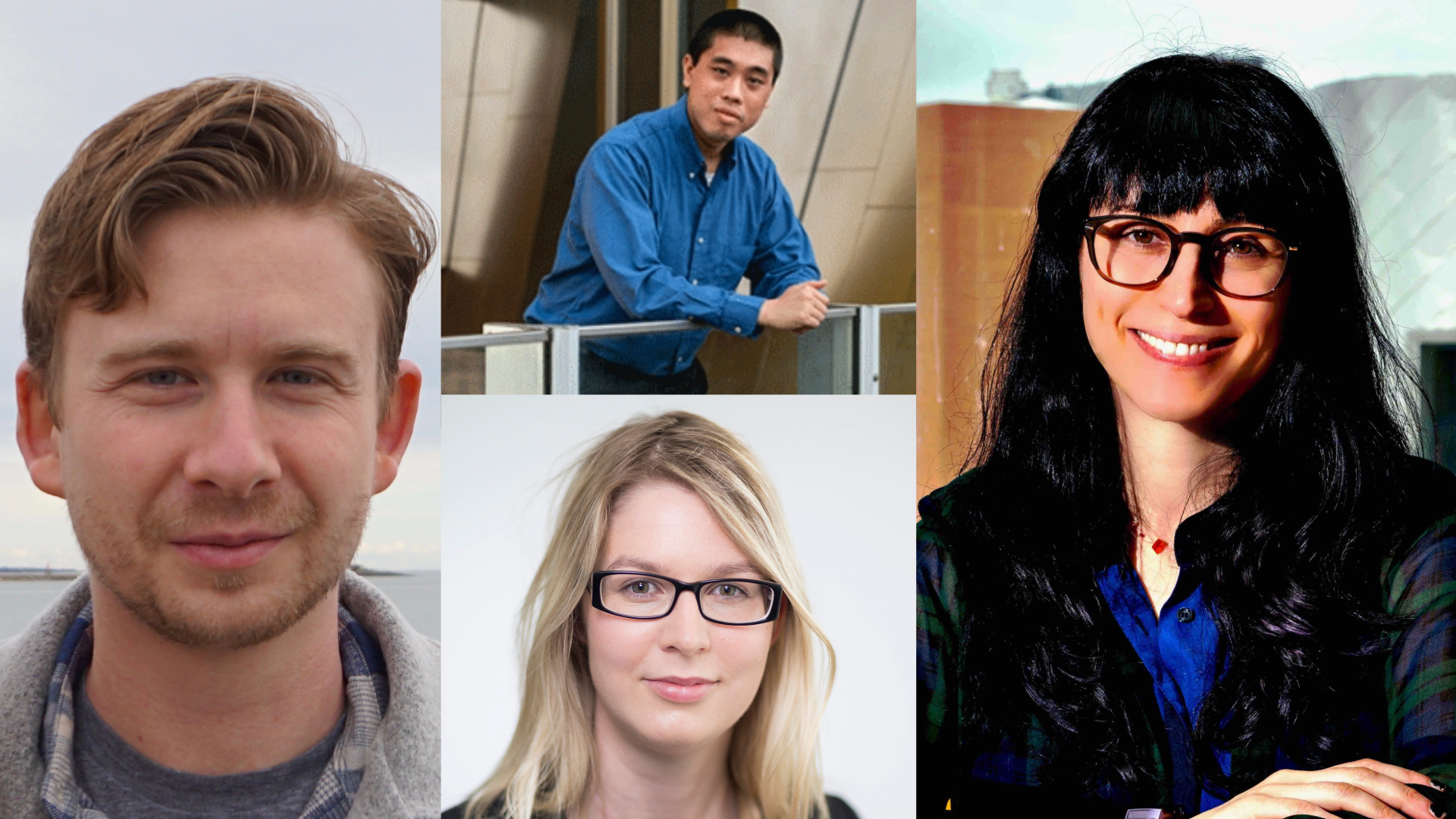
The School of Engineering welcomes 15 new faculty members across six of its academic departments. This new cohort of faculty members, who have either recently started their roles at MIT or will start within the next year, conduct research across a diverse range of disciplines.

Many of these new faculty specialize in research that intersects with multiple fields. In addition to positions in the School of Engineering, a number of these faculty have positions at other units across MIT. Faculty with appointments in the Department of Electrical Engineering and Computer Science (EECS) report into both the School of Engineering and the MIT Stephen A. Schwarzman College of Computing. This year, new faculty also have joint appointments between the School of Engineering and the School of Humanities, Arts, and Social Sciences and the School of Science.

“I am delighted to welcome this cohort of talented new faculty to the School of Engineering,” says Anantha Chandrakasan, chief innovation and strategy officer, dean of engineering, and Vannevar Bush Professor of Electrical Engineering and Computer Science. “I am particularly struck by the interdisciplinary approach many of these new faculty take in their research. They are working in areas that are poised to have tremendous impact. I look forward to seeing them grow as researchers and educators.”

The new engineering faculty include:

Stephen Bates joined the Department of Electrical Engineering and Computer Science as an assistant professor in September 2023. He is also a member of the Laboratory for Information and Decision Systems (LIDS). Bates uses data and AI for reliable decision-making in the presence of uncertainty. In particular, he develops tools for statistical inference with AI models, data impacted by strategic behavior, and settings with distribution shift. Bates also works on applications in life sciences and sustainability. He previously worked as a postdoc in the Statistics and EECS departments at the University of California at Berkeley (UC Berkeley). Bates received a BS in statistics and mathematics at Harvard University and a PhD from Stanford University.

Abigail Bodner joined the Department of EECS and Department of Earth, Atmospheric and Planetary Sciences as an assistant professor in January. She is also a member of the LIDS. Bodner’s research interests span climate, physical oceanography, geophysical fluid dynamics, and turbulence. Previously, she worked as a Simons Junior Fellow at the Courant Institute of Mathematical Sciences at New York University. Bodner received her BS in geophysics and mathematics and MS in geophysics from Tel Aviv University, and her SM in applied mathematics and PhD from Brown University.

Andreea Bobu ’17 will join the Department of Aeronautics and Astronautics as an assistant professor in July. Her research sits at the intersection of robotics, mathematical human modeling, and deep learning. Previously, she was a research scientist at the Boston Dynamics AI Institute, focusing on how robots and humans can efficiently arrive at shared representations of their tasks for more seamless and reliable interactions. Bobu earned a BS in computer science and engineering from MIT and a PhD in electrical engineering and computer science from UC Berkeley.

Suraj Cheema will join the Department of Materials Science and Engineering, with a joint appointment in the Department of EECS, as an assistant professor in July. His research explores atomic-scale engineering of electronic materials to tackle challenges related to energy consumption, storage, and generation, aiming for more sustainable microelectronics. This spans computing and energy technologies via integrated ferroelectric devices. He previously worked as a postdoc at UC Berkeley. Cheema earned a BS in applied physics and applied mathematics from Columbia University and a PhD in materials science and engineering from UC Berkeley.

Samantha Coday joins the Department of EECS as an assistant professor in July. She will also be a member of the MIT Research Laboratory of Electronics. Her research interests include ultra-dense power converters enabling renewable energy integration, hybrid electric aircraft and future space exploration. To enable high-performance converters for these critical applications her research focuses on the optimization, design, and control of hybrid switched-capacitor converters. Coday earned a BS in electrical engineering and mathematics from Southern Methodist University and an MS and a PhD in electrical engineering and computer science from UC Berkeley.

Mitchell Gordon will join the Department of EECS as an assistant professor in July. He will also be a member of the MIT Computer Science and Artificial Intelligence Laboratory. In his research, Gordon designs interactive systems and evaluation approaches that bridge principles of human-computer interaction with the realities of machine learning. He currently works as a postdoc at the University of Washington. Gordon received a BS from the University of Rochester, and MS and PhD from Stanford University, all in computer science.

Kaiming He joined the Department of EECS as an associate professor in February. He will also be a member of the MIT Computer Science and Artificial Intelligence Laboratory (CSAIL). His research interests cover a wide range of topics in computer vision and deep learning. He is currently focused on building computer models that can learn representations and develop intelligence from and for the complex world. Long term, he hopes to augment human intelligence with improved artificial intelligence. Before joining MIT, He was a research scientist at Facebook AI. He earned a BS from Tsinghua University and a PhD from the Chinese University of Hong Kong.

Anna Huang SM ’08 will join the departments of EECS and Music and Theater Arts as assistant professor in September. She will help develop graduate programming focused on music technology. Previously, she spent eight years with Magenta at Google Brain and DeepMind, spearheading efforts in generative modeling, reinforcement learning, and human-computer interaction to support human-AI partnerships in music-making. She is the creator of Music Transformer and Coconet (which powered the Bach Google Doodle). She was a judge and organizer for the AI Song Contest. Anna holds a Canada CIFAR AI Chair at Mila, a BM in music composition, and BS in computer science from the University of Southern California, an MS from the MIT Media Lab, and a PhD from Harvard University.

Yael Kalai PhD ’06 will join the Department of EECS as a professor in September. She is also a member of CSAIL. Her research interests include cryptography, the theory of computation, and security and privacy. Kalai currently focuses on both the theoretical and real-world applications of cryptography, including work on succinct and easily verifiable non-interactive proofs. She received her bachelor’s degree from the Hebrew University of Jerusalem, a master’s degree at the Weizmann Institute of Science, and a PhD from MIT.

Sendhil Mullainathan will join the departments of EECS and Economics as a professor in July. His research uses machine learning to understand complex problems in human behavior, social policy, and medicine. Previously, Mullainathan spent five years at MIT before joining the faculty at Harvard in 2004, and then the University of Chicago in 2018. He received his BA in computer science, mathematics, and economics from Cornell University and his PhD from Harvard University.

Alex Rives will join the Department of EECS as an assistant professor in September, with a core membership in the Broad Institute of MIT and Harvard. In his research, Rives is focused on AI for scientific understanding, discovery, and design for biology. Rives worked with Meta as a New York University graduate student, where he founded and led the Evolutionary Scale Modeling team that developed large language models for proteins. Rives received his BS in philosophy and biology from Yale University and is completing his PhD in computer science at NYU.

Sungho Shin will join the Department of Chemical Engineering as an assistant professor in July. His research interests include control theory, optimization algorithms, high-performance computing, and their applications to decision-making in complex systems, such as energy infrastructures. Shin is a postdoc at the Mathematics and Computer Science Division at Argonne National Laboratory. He received a BS in mathematics and chemical engineering from Seoul National University and a PhD in chemical engineering from the University of Wisconsin-Madison.

Jessica Stark joined the Department of Biological Engineering as an assistant professor in January. In her research, Stark is developing technologies to realize the largely untapped potential of cell-surface sugars, called glycans, for immunological discovery and immunotherapy. Previously, Stark was an American Cancer Society postdoc at Stanford University. She earned a BS in chemical and biomolecular engineering from Cornell University and a PhD in chemical and biological engineering at Northwestern University.

Thomas John “T.J.” Wallin joined the Department of Materials Science and Engineering as an assistant professor in January. As a researcher, Wallin’s interests lay in advanced manufacturing of functional soft matter, with an emphasis on soft wearable technologies and their applications in human-computer interfaces. Previously, he was a research scientist at Meta’s Reality Labs Research working in their haptic interaction team. Wallin earned a BS in physics and chemistry from the College of William and Mary, and an MS and PhD in materials science and engineering from Cornell University.

Gioele Zardini joined the Department of Civil and Environmental Engineering as an assistant professor in September. He will also join LIDS and the Institute for Data, Systems, and Society. Driven by societal challenges, Zardini’s research interests include the co-design of sociotechnical systems, compositionality in engineering, applied category theory, decision and control, optimization, and game theory, with society-critical applications to intelligent transportation systems, autonomy, and complex networks and infrastructures. He received his BS, MS, and PhD in mechanical engineering with a focus on robotics, systems, and control from ETH Zurich, and spent time at MIT, Stanford University, and Motional.

Caroline Uhler named IMS Fellow

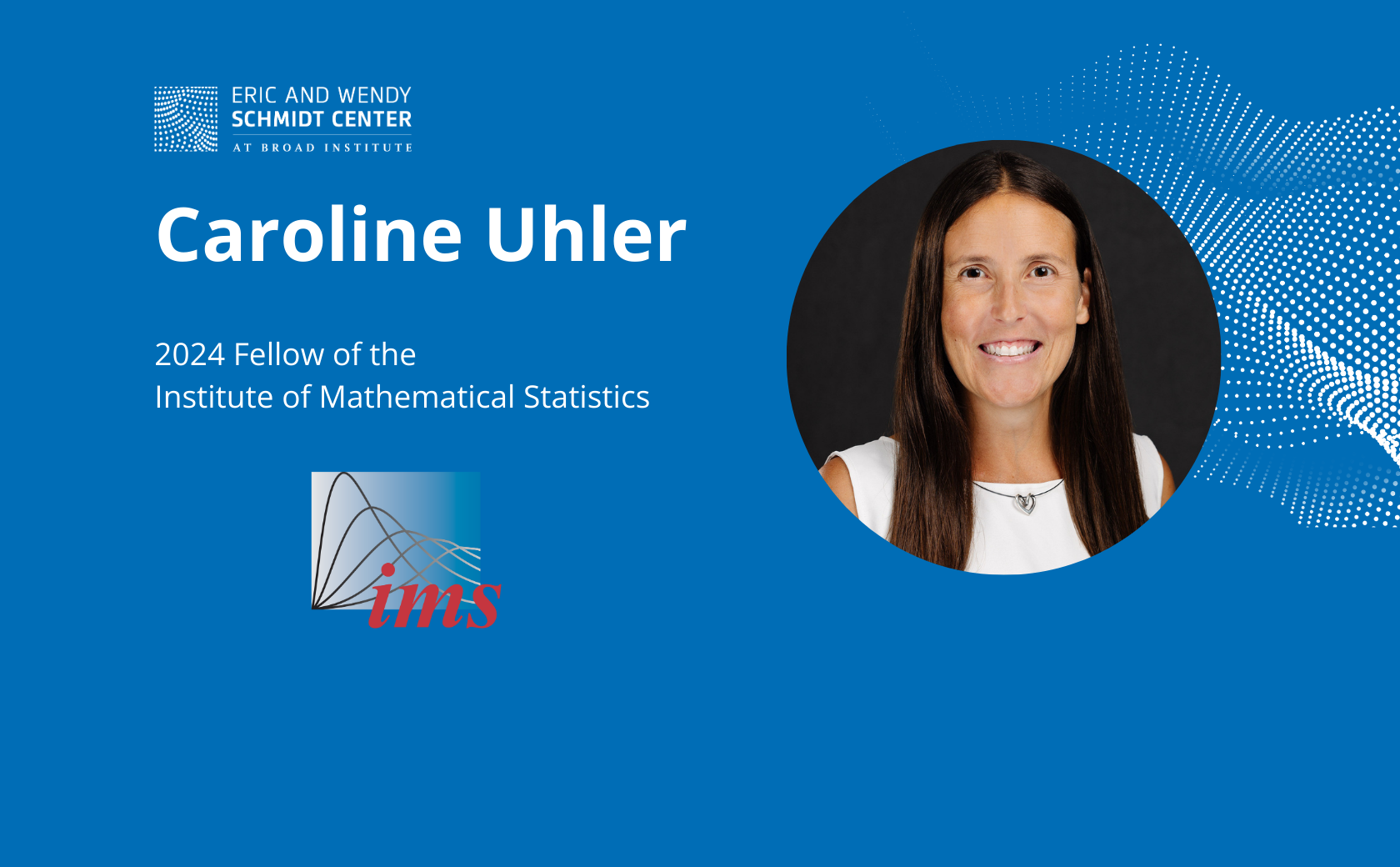
The Eric and Wendy Schmidt Center at the Broad Institute of MIT and Harvard is pleased to share that Center Director Caroline Uhler has been elected Fellow of the Institute of Mathematical Statistics (IMS). Uhler received the award for interdisciplinary excellence and for merging mathematical statistics and computational biology in innovative and impactful ways. 

Uhler is a core institute member of the Broad Institute and a professor in the Department of Electrical Engineering and Computer Science (EECS) and the Institute for Data, Systems, and Society (IDSS) at MIT. She is also a SIAM Fellow, a Sloan Research Fellow, and an elected member of the International Statistical Institute. 

Uhler’s research lies at the intersection of machine learning, statistics, and genomics, with a particular focus on causal inference, representation learning, and gene regulation. Her use of probabilistic graphical models and development of scalable algorithms with healthcare applications has enabled her research group to gain insights into causal relationships hidden within massive amounts of data, such as those generated during gene knockout or knockdown experiments.

For almost 90 years, the title of IMS Fellow has represented a prestigious honor. Evaluated by a committee of peers, each Fellow has exhibited exceptional mastery in statistical or probabilistic research and/or has showcased remarkable leadership that has left a lasting impact on the field.

Established in 1935, the IMS is a member organization that fosters the development and dissemination of the theory and applications of statistics and probability. The IMS has over 4,700 active members throughout the world, with approximately 10% of the current IMS members earning the fellowship status. The announcement of the 2024 class of IMS Fellows can be viewed here.

Uhler will be honored among the new IMS Fellows at the IMS Presidential Address and Awards Ceremony at the Bernoulli-IMS 11th World Congress in Probability and Statistics on August 12-16, 2024 in Bochum, Germany.

Eleven from MIT awarded 2024 Fulbright fellowships

Eleven MIT undergraduates, graduate students, and alumni have won Fulbright grants to embark on projects overseas in the 2024-25 grant cycle. Two other students were offered awards but declined them to pursue other opportunities.

Funded by the U.S. Department of State, the Fulbright U.S. Student Program offers year-long opportunities for American citizen students and recent alumni to conduct independent research, pursue graduate studies, or teach English in over 140 countries.

MIT has been a Fulbright Top-Producing Institution for five years in a row. MIT students and alumni interested in applying to the Fulbright U.S. Student Program should contact Julia Mongo, MIT Fulbright program advisor, in the Office of Distinguished Fellowships in Career Advising and Professional Development.

April Cheng is a junior studying physics with a minor in mathematics and is fast-tracked to graduate this spring. They will take their Fulbright research grant to the Max Planck Institute for Gravitational Physics in Potsdam, Germany, where they will study different statistical techniques to infer the expansion rate of the universe from gravitational waves. They first developed an interest in gravitational waves and black holes at the MIT LIGO and Caltech LIGO labs, but their research spans a wide range of topics in astrophysics, including cosmology and fast radio bursts. Cheng is passionate about physics education and is heavily involved in developing educational materials for high school Science Olympiads. At MIT, they are a member of the Physics Values Committee, the physics mentorship program, and the MIT Lion Dance team. After Fulbright, Cheng will pursue a PhD in astrophysics at Princeton University, where they have received the President’s Fellowship.

Grace McMillan is a senior majoring in literature and mechanical engineering with a concentration in Russian language. As a Fulbright English Teaching Assistant Award recipient, she will teach at a university in Kazakhstan. McMillan’s interest in Central Asia was sparked by a Russian language immersion program she participated in during her sophomore summer in Bishkek, Kyrgyzstan, funded by MIT International Science and Technology Initiatives (MISTI). She is excited to help her students learn English to foster integration into the global academic community. During her time at MIT, McMillan has conducted research with faculty in nuclear science; earth, atmospheric, and planetary sciences; and the Digital Humanities Lab. Outside of academics, she has been an active member of her sorority, Sigma Kappa, and has served on the MIT Health Consumers’ Advisory Council for two years. After Fulbright, McMillan hopes to attend law school, focusing on education reform.

Ryan McTigue will graduate this spring with a BS in physics and mathematics and a concentration in Spanish. With a Fulbright award to Spain, he will do research at the University of Valencia’s Institute of Molecular Science focusing on the physics of two-dimensional multiferroic nanodevices. He is looking forward to improving his Spanish and getting the opportunity to live abroad. At MIT, McTigue became interested in condensed matter physics research with the Checkelsky group, where he focused on engineering materials with flat bands that exhibited correlated electron effects. Outside of research, McTigue has been a mentor in the physics department’s mentoring program and a member of the heavyweight men’s crew team. After his Fulbright grant, McTigue will begin a PhD in physics at Princeton University.

Keith Murray ’22 graduated from MIT with a BS in computation and cognition and linguistics and philosophy. He will receive his MEng degree in computation and cognition this spring. As a Fulbright Hungary research grantee at the HUN-REN Wigner Research Centre for Physics, Murray will design generative AI models inspired by the primary visual cortex with the goal of making AI models more interpretable. At MIT, Murray’s research experiences spanned from training mice to perform navigation tasks in virtual reality to theorizing about how neurons might compute modular arithmetic. He was also a member of the men’s heavyweight crew team and the Phi Delta Theta fraternity. After Fulbright, Murray will pursue a PhD in neuroscience at Princeton University.

Maaya Prasad ’22 completed her undergraduate education at MIT with degrees in both electrical engineering and creative writing and will graduate this month with an MS in mechanical and ocean engineering. Her thesis research focuses on microplastic detection using optical sensing. Prasad’s Fulbright fellowship will take her to Mauritius, an East African island country located in the Indian Ocean. Here, she will continue her master’s research at the University of Mauritius and will work with local researchers to implement a microplastic survey system. While at MIT, Prasad joined the varsity sailing team with no prior experience. Her time spent on the water led her to pursue marine research at MIT Sea Grant, and she eventually earned an honorable mention to the 2023 All-American Sailing Team. After Fulbright, Prasad hopes to pursue a PhD in applied ocean engineering.

Anusha Puri is a senior majoring in biological engineering. Her Fulbright award will take her to Lausanne, Switzerland, where she will conduct cancer immunology research at the Swiss Institute for Experimental Cancer Research. At MIT, Puri’s work in the Weinberg Lab focused on understanding mechanisms that drive resistance of breast cancer to immunotherapy. On campus, she founded and serves as president of MIT’s premiere stand-up comedy group, Stand-Up CoMITy, leads MIT’s Bhangra dance team, and is the editor-in-chief of the MIT Undergraduate Research Journal. She looks forward to engaging with teaching outreach and practicing her French in Switzerland. After her Fulbright grant, she plans to pursue a PhD in biomedical science.

Olivia Rosenstein will graduate this spring with a BS in physics and a minor in French. Her Fulbright will take her to ENS Paris-Saclay in Palaiseau, France, where she’ll deepen her education in atomic, molecular, and optical (AMO) physics. At MIT, Rosenstein has worked in Professor Mark Vogelsberger’s group researching models of galaxy formation and the early universe, and in Professor Richard Fletcher’s group on an erbium-lithium experiment to investigate quantum many-body dynamics in a degenerate mixture. In France, she will expand on the skills she developed in Fletcher’s lab by contributing to a project using optical tweezer arrays to study dipolar interactions. After Fulbright, Rosenstein plans to return to the United States to pursue a PhD in experimental AMO at Caltech.

Jennifer Schug will receive this spring an MEng degree in the Climate, Environment, and Sustainability track within the MIT Department of Civil and Environmental Engineering. During her Fulbright year in Italy, she will conduct research on carbon storage in the Venice lagoon at the University of Padua. Schug is excited to build upon her research with the Terrer Lab at MIT, where she is currently investigating the effectiveness of forestation as a carbon sequestration strategy. She also looks forward to improving her Italian language skills and learning about Italian history and culture. Before beginning Fulbright this fall, Schug will study ecological preservation in Sicily this summer through an MIT-Italy collaboration with the University of Catania. After Fulbright, she hopes to continue researching nature-based solutions as climate change mitigation strategies.

Vaibhavi Shah ’21 earned a BS in biological engineering and in science, technology, and society at MIT, where she was named a Goldwater Scholar. She is now a medical student at Stanford University. As a Fulbright-Fogarty Fellow in Public Health, Shah will use both her computational and humanities backgrounds to investigate sociocultural factors underlying traumatic surgical injuries in Nepal. While at MIT, she was on the executive board of GlobeMed and the Society of Women Engineers, and she hopes to use those experiences to amplify diverse voices in medicine while on her journey to becoming a neurosurgeon-scientist. After Fulbright, Shah will complete her final year of medical school.

Charvi Sharma is a senior studying computer science and molecular biology with a minor in theater arts. As a Fulbright English teaching assistant in Spain, she is excited to engage in cross-cultural exchange while furthering her skills as a teacher and as a leader. In addition to teaching, Sharma looks forward to immersing herself in the country’s vibrant traditions, improving her Spanish proficiency, and delving into the local arts and dance scene. At MIT, through Global Teaching Labs Spain and her roles as a dynaMIT mentor, an associate advisor, and a captain and president of her dance teams Mirchi and Nritya, Sharma has served as a teacher of both STEM and dance. Her passion for making a difference in her community is also evident through her work with Boston Medical Center’s Autism Program through the PKG Public Service Center and as an undergraduate cancer researcher in the Yaffe Lab. After Fulbright, Sharma plans to pursue an MD and, ultimately, a career as a clinician-scientist.

Isabella Witham is a senior majoring in biological engineering. As a recipient of the Fulbright U.S.-Korea Presidential STEM Initiative Award, she will conduct research at Seoul National University’s Biomimetic Materials and Stem Cell Engineering Lab. Her work will involve creating biomimetic scaffolds for pancreatic cell transplantation to treat type I diabetes. While in South Korea, Witham aims to improve her language skills and explore cultural sites and cities. At MIT, she worked in the Belcher Lab on nanoparticle formulations, was a tutor for MIT’s Women’s Technology Program, and volunteered as a Medlink. After her Fulbright fellowship, she plans to pursue a PhD in biological engineering.

New tool empowers users to fight online misinformation

Most people agree that the spread of online misinformation is a serious problem. But there is much less consensus on what to do about it.

Many proposed solutions focus on how social media platforms can or should moderate content their users post, to prevent misinformation from spreading.

“But this approach puts a critical social decision in the hands of for-profit companies. It limits the ability of users to decide who they trust. And having platforms in charge does nothing to combat misinformation users come across from other online sources,” says Farnaz Jahanbakhsh SM ’21, PhD ’23, who is currently a postdoc at Stanford University.

She and MIT Professor David Karger have proposed an alternate strategy. They built a web browser extension that empowers individuals to flag misinformation and identify others they trust to assess online content.

Their decentralized approach, called the Trustnet browser extension, puts the power to decide what constitutes misinformation into the hands of individual users rather than a central authority. Importantly, the universal browser extension works for any content on any website, including posts on social media sites, articles on news aggregators, and videos on streaming platforms.

Through a two-week study, the researchers found that untrained individuals could use the tool to effectively assess misinformation. Participants said having the ability to assess content, and see assessments from others they trust, helped them think critically about it.

“In today’s world, it’s trivial for bad actors to create unlimited amounts of misinformation that looks accurate, well-sourced, and carefully argued. The only way to protect ourselves from this flood will be to rely on information that has been verified by trustworthy sources. Trustnet presents a vision of how that future could look,” says Karger.

Jahanbakhsh, who conducted this research while she was an electrical engineering and computer science (EECS) graduate student at MIT, and Karger, a professor of EECS and a member of the Computer Science and Artificial Intelligence Laboratory (CSAIL), detail their findings in a paper presented this week at the ACM Conference on Human Factors in Computing Systems.

Fighting misinformation

This new paper builds off their prior work about fighting online misinformation. The researchers built a social media platform called Trustnet, which enabled users to assess content accuracy and specify trusted users whose assessments they want to see.

But in the real world, few people would likely migrate to a new social media platform, especially when they already have friends and followers on other platforms. On the other hand, calling on social media companies to give users content-assessment abilities would be an uphill battle that may require legislation. Even if regulations existed, they would do little to stop misinformation elsewhere on the web.

Instead, the researchers sought a platform-agnostic solution, which led them to build the Trustnet browser extension.

Extension users click a button to assess content, which opens a side panel where they label it as accurate, inaccurate, or question its accuracy. They can provide details or explain their rationale in an accompanying text box.

Users can also identify others they trust to provide assessments. Then, when the user visits a website that contains assessments from these trusted sources, the side panel automatically pops up to show them.

In addition, users can choose to follow others beyond their trusted assessors. They can opt to see content assessments from those they follow on a case-by-case basis. They can also use the side panel to respond to questions about content accuracy.

“But most content we come across on the web is embedded in a social media feed or shown as a link on an aggregator page, like the front page of a news website. Plus, something we know from prior work is that users typically don’t even click on links when they share them,” Jahanbakhsh says.

To get around those issues, the researchers designed the Trustnet Extension to check all links on the page a user is reading. If trusted sources have assessed content on any linked pages, the extension places indictors next to those links and will fade the text of links to content deemed inaccurate.

One of the biggest technical challenges the researchers faced was enabling the link-checking functionality since links typically go through multiple redirections. They were also challenged to make design decisions that would suit a variety of users.

Differing assessments

To see how individuals would utilize the Trustnet Extension, they conducted a two-week study where 32 individuals were tasked with assessing two pieces of content per day.

The researchers were surprised to see that the content these untrained users chose to assess, such as home improvement tips or celebrity gossip, was often different from content assessed by professionals, like news articles. Users also said they would value assessments from people who were not professional fact-checkers, such as having doctors assess medical content or immigrants assess content related to foreign affairs.

“I think this shows that what users need and the kinds of content they consider important to assess doesn’t exactly align with what is being delivered to them. A decentralized approach is more scalable, so more content could be assessed,” Jahanbakhsh says.

However, the researchers caution that letting users choose whom to trust could cause them to become trapped in their own bubble and only see content that agrees with their views.

This issue could be mitigated by identifying trust relationships in a more structured way, perhaps by suggesting a user follow certain trusted assessors, like the FDA.

In the future, Jahanbakhsh wants to further study structured trust relationships and the broader implications of decentralizing the fight against misinformation. She also wants to extend this framework beyond misinformation. For instance, one could use the tool to filter out content that is not sympathetic to a certain protected group.

“Less attention has been paid to decentralized approaches because some people think individuals can’t assess content,” she says. “Our studies have shown that is not true. But users shouldn’t just be left helpless to figure things out on their own. We can make fact-checking available to them, but in a way that lets them choose the content they want to see.”

Department of EECS Announces 2024 Promotions

The Department of Electrical Engineering and Computer Science (EECS) is proud to announce the following promotions to associate professor with tenure. All will be effective July 1, 2024:

Adam Belay earned his BS and MEng at MIT in 2008 and 2011, respectively, and his PhD at Stanford in 2016. He spent a year as a Software Engineer at Google before joining MIT in July 2017.  A principal investigator in CSAIL, Belay’s research focuses on operating systems and networking, with an interest in developing practical and efficient methods for microsecond-scale computing. This has many applications pertaining to efficiency and performance in data centers. For example, his work on Caladan significantly speeds up server resource allocation, unlocking the ability to maintain both high CPU utilization and low tail latency. Additionally, Belay has worked on storage virtualization at VMware and has contributed substantial code to the Linux Kernel.

Among other honors, Belay has served on multiple program committees, including OSDI (2021-4), NSDI (2023-4), SOSP (2021, 2023), Eurosys (2019, 2022), and USENIX ATC 2019, and has received the OSDI Jay Lepreau Best Paper Award, a Sloan Research Fellowship, and multiple research awards from Google and Meta.

Manya Ghobadi earned her bachelor’s degree from the Sharif University of Technology in 2005, followed by her M.Sc. from the University of Victoria in 2007, and her PhD from the University of Toronto in 2013. She then worked at Google as a software engineer and at Microsoft as a researcher, before joining EECS as an Assistant Professor in October 2018. A principal investigator within CSAIL, Ghobadi’s current research interests are centered on building efficient network infrastructures that optimize resource use, energy consumption, and high availability. She is considered the leading expert in networks with reconfigurable physical-layer, and many of the networks she has helped develop are part of real-world systems at Microsoft and Google.

Her work has been recognized by the Sloan Fellowship in Computer Science, ACM SIGCOMM Rising Star award, ACM-W Rising Star Award, NSF CAREER award, a Sloan Fellowship in Computer Science, the first Optica Simmons Memorial Speakership award, and best paper awards at the Conference on Machine Learning and Systems (MLSys) and ACM Internet Measurement Conference (IMC).

Stefanie Mueller earned her Bachelor’s degree from the University of Applied Science Harz in 2010, and her MSc and her PhD from the Hasso Plattner Institute, in 2013 and 2016, respectively, before joining MIT EECS, joint with MIT MechE. Mueller is the lead of the Human Computer Interaction (HCI) Engineering group at MIT CSAIL; in her research, she develops novel hardware and software systems that leverage innovations in hardware, materials, and computational algorithms to give objects new capabilities. Among other applications, her lab creates prototype health sensing devices and electronic sensing devices for curved surfaces; embedded sensors; fabrication techniques that are trackable via invisible marker; and objects with reprogrammable and interactive appearances. 

Among many other honors, Mueller has been recognized with the MIT Technology Review ‘Innovators Under 35’ 2022, Microsoft Research Faculty Fellowship and Alfred P. Sloan Research Fellowship, an NSF Career Award, and the Forbes 30 Under 30 in Science. 

Julian Shun earned his BA at UC Berkeley in 2008, and his MS and PhD from Carnegie Mellon in 2012 and 2015, respectively. After a postdoctoral stint at UC Berkeley, he joined MIT EECS as an Assistant Professor in 2017. A principal investigator in CSAIL, Shun’s research focuses on the theory and practice of parallel and high-performance computing, including designing algorithms and high-level programming frameworks for graphs, spatial data, and dynamic problems.

Among many other honors, Shun has been awarded the DOE Early Career Award, the NSF Career Award, the Google Faculty Research Award and Google Research Scholar Award, the SoE Ruth and Joel Spira Award for Excellence in Teaching, and the Allen Newell Award for Research Excellence.