Generative AI tool helps 3D print personal items that sustain daily use

Generative artificial intelligence models have left such an indelible impact on digital content creation that it’s getting harder to recall what the internet was like before it. You can call on these AI tools for clever projects such as videos and photos — but their flair for the creative hasn’t quite crossed over into the physical world just yet.

So why haven’t we seen generative AI-enabled personalized objects, such as phone cases and pots, in places like homes, offices, and stores yet? According to MIT Computer Science and Artificial Intelligence Laboratory (CSAIL) researchers, a key issue is the mechanical integrity of the 3D model.

While AI can help generate personalized 3D models that you can fabricate, those systems don’t often consider the physical properties of the 3D model. MIT Department of Electrical Engineering and Computer Science (EECS) PhD student and CSAIL engineer Faraz Faruqi has explored this trade-off, creating generative AI-based systems that can make aesthetic changes to designs while preserving functionality, and another that modifies structures with the desired tactile properties users want to feel.

Making it real 

Together with researchers at Google, Stability AI, and Northeastern University, Faruqi has now found a way to make real-world objects with AI, creating items that are both durable and exhibit the user’s intended appearance and texture. With the AI-powered “MechStyle” system, users simply upload a 3D model or select a preset asset of things like vases and hooks, and prompt the tool using images or text to create a personalized version. A generative AI model then modifies the 3D geometry, while MechStyle simulates how those changes will impact particular parts, ensuring vulnerable areas remain structurally sound. When you’re happy with this AI-enhanced blueprint, you can 3D print it and use it in the real world.

You could select a model of, say, a wall hook, and the material you’ll be printing it with (for example, plastics like polylactic acid). Then, you can prompt the system to create a personalized version, with directions like, “generate a cactus-like hook.” The AI model will work in tandem with the simulation module and generate a 3D model resembling a cactus while also having the structural properties of a hook. This green, ridged accessory can then be used to hang up mugs, coats, and backpacks. Such creations are possible thanks, in part, to a stylization process, where the system changes a model’s geometry based on its understanding of the text prompt, and working with the feedback received from the simulation module.

According to CSAIL researchers, 3D stylization used to come with unintended consequences. Their formative study revealed that only about 26 percent of 3D models remained structurally viable after they were modified, meaning that the AI system didn’t understand the physics of the models it was modifying.

“We want to use AI to create models that you can actually fabricate and use in the real world,” says Faruqi, who is a lead author on a paper presenting the project. “So MechStyle actually simulates how GenAI-based changes will impact a structure. Our system allows you to personalize the tactile experience for your item, incorporating your personal style into it while ensuring the object can sustain everyday use.”

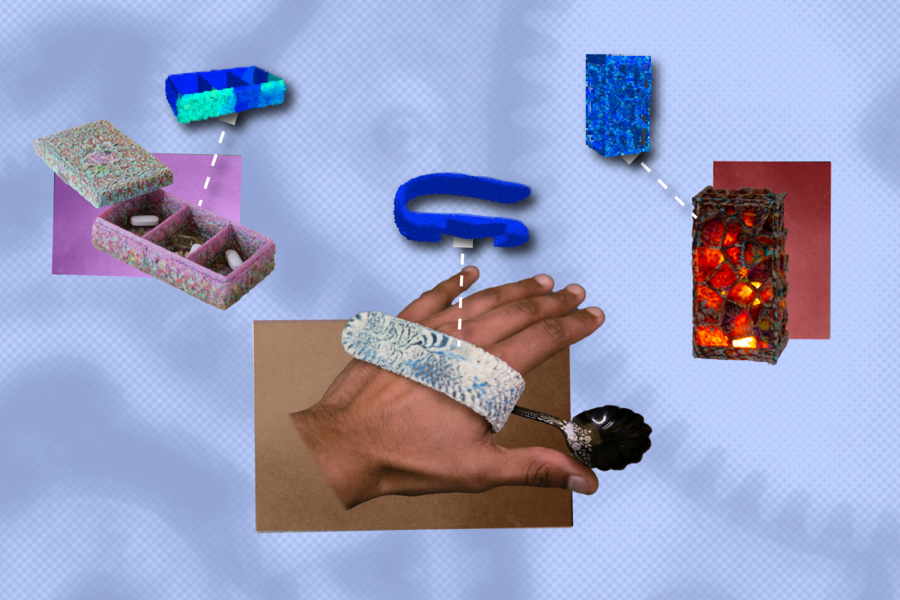
This computational thoroughness could eventually help users personalize their belongings, creating a unique pair of glasses with speckled blue and beige dots resembling fish scales, for example. It also produced a pillbox with a rocky texture that’s checkered with pink and aqua spots. The system’s potential extends to crafting unique home and office decor, like a lampshade resembling red magma. It can even design assistive technology fit to users’ specifications, such as finger splints to aid with dexterous injuries and utensil grips to aid with motor impairments.

In the future, MechStyle could also be useful in creating prototypes for accessories and other handheld products you might sell in a toy shop, hardware store, or craft boutique. The goal, CSAIL researchers say, is for both expert and novice designers to spend more time brainstorming and testing out different 3D designs, instead of assembling and customizing items by hand.

Staying strong

To ensure MechStyle’s creations could withstand daily use, the researchers augmented their generative AI technology with a type of physics simulation called a finite element analysis (FEA). You can imagine a 3D model of an item, such as a pair of glasses, with a sort of heat map indicating which regions are structurally viable under a realistic amount of weight, and which ones aren’t. As AI refines this model, the physics simulations highlight which parts of the model are getting weaker and prevent further changes.

Faruqi adds that running these simulations every time a change is made drastically slows down the AI process, so MechStyle is designed to know when and where to do additional structural analyses. “MechStyle’s adaptive scheduling strategy keeps track of what changes are happening in specific points in the model. When the genAI system makes tweaks that endanger certain regions of the model, our approach simulates the physics of the design again. MechStyle will make subsequent modifications to make sure the model doesn’t break after fabrication.”

Combining the FEA process with adaptive scheduling allowed MechStyle to generate objects that were as high as 100 percent structurally viable. Testing out 30 different 3D models with styles resembling things like bricks, stones, and cacti, the team found that the most efficient way to create structurally viable objects was to dynamically identify weak regions and tweak the generative AI process to mitigate its effect. In these scenarios, the researchers found that they could either stop stylization completely when a particular stress threshold was reached, or gradually make smaller refinements to prevent at-risk areas from approaching that mark.

The system also offers two different modes: a freestyle feature that allows AI to quickly visualize different styles on your 3D model, and a MechStyle one that carefully analyzes the structural impacts of your tweaks. You can explore different ideas, then try the MechStyle mode to see how those artistic flourishes will affect the durability of particular regions of the model.

CSAIL researchers add that while their model can ensure your model remains structurally sound before being 3D printed, it’s not yet able to improve 3D models that weren’t viable to begin with. If you upload such a file to MechStyle, you’ll receive an error message, but Faruqi and his colleagues intend to improve the durability of those faulty models in the future.

What’s more, the team hopes to use generative AI to create 3D models for users, instead of stylizing presets and user-uploaded designs. This would make the system even more user-friendly, so that those who are less familiar with 3D models, or can’t find their design online, can simply generate it from scratch. Let’s say you wanted to fabricate a unique type of bowl, and that 3D model wasn’t available in a repository; AI could create it for you instead.

“While style-transfer for 2D images works incredibly well, not many works have explored how this transfer to 3D,” says Google Research Scientist Fabian Manhardt, who wasn’t involved in the paper. “Essentially, 3D is a much more difficult task, as training data is scarce and changing the object’s geometry can harm its structure, rendering it unusable in the real world. MechStyle helps solve this problem, allowing for 3D stylization without breaking the object’s structural integrity via simulation. This gives people the power to be creative and better express themselves through products that are tailored towards them.”

Farqui wrote the paper with senior author Stefanie Mueller, who is an MIT associate professor and CSAIL principal investigator, and two other CSAIL colleagues: researcher Leandra Tejedor SM ’24, and postdoc Jiaji Li. Their co-authors are Amira Abdel-Rahman PhD ’25, now an assistant professor at Cornell University, and Martin Nisser SM ’19, PhD ’24; Google researcher Vrushank Phadnis; Stability AI Vice President of Research Varun Jampani; MIT Professor and Center for Bits and Atoms Director Neil Gershenfeld; and Northeastern University Assistant Professor Megan Hofmann.

Their work was supported by the MIT-Google Program for Computing Innovation. It was presented at the Association for Computing Machinery’s Symposium on Computational Fabrication in November.

Eighteen MIT faculty honored as “Committed to Caring” for 2025-27

At MIT, a strong spirit of mentorship shapes how students learn, collaborate, and imagine the future. In a time of accelerating change — from breakthroughs in artificial intelligence to the evolving realities of global research and work — guidance for technical challenges and personal growth is more important than ever. 

The Committed to Caring (C2C) program recognizes the outstanding professors who extend this dedication beyond the classroom, nurturing resilience, curiosity, and compassion in a new generation of innovators. The latest cohort of C2C honorees exemplify these values, demonstrating the lasting impact that faculty can have on students’ academic and personal journeys.

The Committed to Caring program is a student-driven initiative that has celebrated exceptional mentorship since 2014. In this cycle, 18 MIT professors have been selected as recipients of the C2C award for 2025-27, joining the ranks of nearly 100 previous honorees. 

The following faculty members comprise the 2025-27 Committed to Caring cohort:

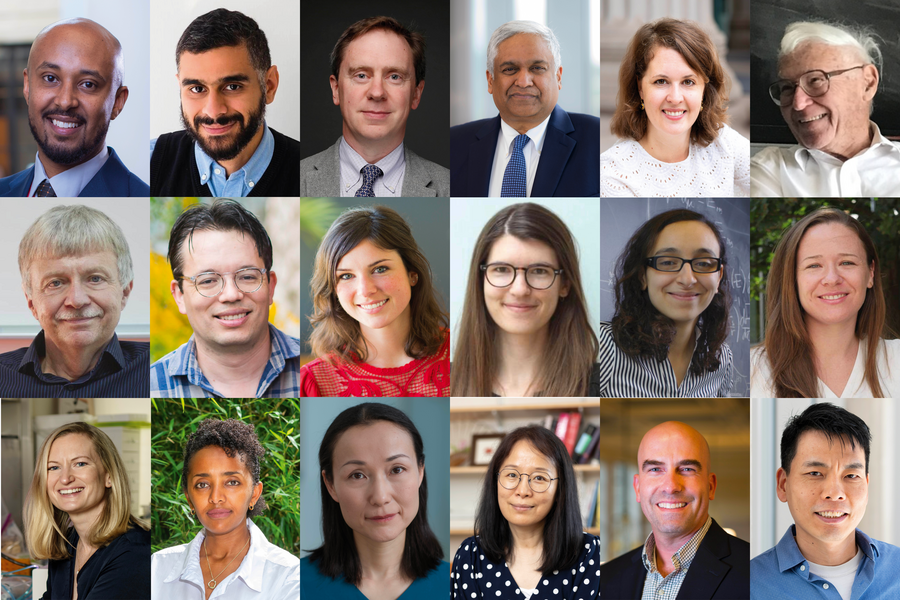
  • Iwnetim Abate, Department of Materials Science and Engineering
  • Abdullah Almaatouq, MIT Sloan School of Management
  • Marc A. Baldo, Department of Electrical Engineering and Computer Science
  • Anantha P. Chandrakasan, Department of Electrical Engineering and Computer Science
  • Anna-Christina Eilers, Department of Physics
  • Herbert Einstein, Department of Civil and Environment Engineering
  • Dennis M. Freeman, Department of Electrical Engineering and Computer Science
  • Daniel Hidalgo, Department of Political Science
  • Erin Kara, Department of Physics
  • Laura Lewis, Department of Electrical Engineering and Computer Science
  • Lina Necib, Department of Physics
  • Sara Prescott, Department of Biology
  • Ellen Roche, Department of Mechanical Engineering
  • Loza Tadesse, Department of Mechanical Engineering
  • Haruko Murakami Wainwright, Department of Nuclear Science
  • Fan Wang, Department of Brain and Cognitive Sciences
  • Forest White, Department of Biological Engineering
  • Bin Zhang, Department of Chemistry

Since its launch, the C2C program has placed students at the heart of its nomination process. Graduate students across all departments are invited to share letters recognizing faculty whose mentorship has made a lasting impact on their academic and personal journeys. A selection committee, consisting of both graduate students and staff, reviews nominations to identify those who have meaningfully strengthened the graduate community at MIT.

The selection committee this year included: Zoë Wright (Office of Graduate Education, or OGE), Ryan Rideau, Elizabeth Guttenberg (OGE), Beth Marois (OGE), Sharikka Finley-Moise (OGE), Indrani Saha (History, Theory, and Criticism of Art and Architecture, OGE), Chen Liang (graduate student, MIT Sloan School of Management), Jasmine Aloor (grad student, Department of Aeronautics and Astronautics), Leila Hudson (grad student, Department of Electrical Engineering and Computer Science), and Chair Suraiya Baluch (OGE).

“I wanted to be part of this committee after nominating my own professor in the last cycle, and the experience has been incredibly meaningful,” says Aloor. “I was continually amazed by the ways that so many professors show deep care for their students behind the scenes … What stood out to me most was the breadth of ways these faculty members support their students, check in on them, provide mentorship, and cultivate lifelong bonds, despite being successful and pressed for time as leaders at the top Institute in the world.”

Guttenberg agrees, saying, “Even when these gestures appear simple, they leave a profound and lasting impact on students’ lives and help cultivate the thriving academic community we value.”

Nomination letters illustrate how the efforts of these MIT faculty reflect a deep and enduring commitment to their students’ growth, well-being, and sense of purpose. Their advisees praise these educators for their consistent impact beyond lectures and labs, and for fostering inclusion, support, and genuine connection. Their care and guidance cultivates spaces where students are encouraged not only to excel academically, but also to develop confidence, balance, and a clearer vision of their goals.

Liang underlined that the selection experience “has shown me how many faculty at MIT … help students grow into thoughtful, independent researchers and, just as importantly, into fuller versions of themselves in the world.”

In the months ahead, a series of articles will showcase the honorees in pairs, with a reception this April to recognize their lasting impact. By highlighting these faculty, the Committed to Caring program continues to celebrate and strengthen MIT’s culture of mentorship, respect, and collaboration. 

3 Questions: How AI could optimize the power grid

Artificial intelligence has captured headlines recently for its rapidly growing energy demands, and particularly the surging electricity usage of data centers that enable the training and deployment of the latest generative AI models. But it’s not all bad news — some AI tools have the potential to reduce some forms of energy consumption and enable cleaner grids.

One of the most promising applications is using AI to optimize the power grid, which would improve efficiency, increase resilience to extreme weather, and enable the integration of more renewable energy. To learn more, MIT News spoke with Priya Donti, the Silverman Family Career Development Professor in the MIT Department of Electrical Engineering and Computer Science (EECS) and a principal investigator at the Laboratory for Information and Decision Systems (LIDS), whose work focuses on applying machine learning to optimize the power grid.

Q: Why does the power grid need to be optimized in the first place?

A: We need to maintain an exact balance between the amount of power that is put into the grid and the amount that comes out at every moment in time. But on the demand side, we have some uncertainty. Power companies don’t ask customers to pre-register the amount of energy they are going to use ahead of time, so some estimation and prediction must be done.

Then, on the supply side, there is typically some variation in costs and fuel availability that grid managers need to be responsive to. That has become an even bigger issue because of the integration of energy from time-varying renewable sources, like solar and wind, where uncertainty in the weather can have a major impact on how much power is available. Then, at the same time, depending on how power is flowing in the grid, there is some power lost through resistive heat on the power lines. So, as a grid operator, how do you make sure all that is working all the time? That is where optimization comes in.

Q: How can AI be most useful in power grid optimization?

A: One way AI can be helpful is to use a combination of historical and real-time data to make more precise predictions about how much renewable energy will be available at a certain time. This could lead to a cleaner power grid by allowing us to handle and better utilize these resources.

AI could also help tackle the complex optimization problems that power grid operators must solve to balance supply and demand in a way that also reduces costs. These optimization problems are used to determine which power generators should produce power, how much they should produce, and when they should produce it, as well as when batteries should be charged and discharged, and whether we can leverage flexibility in power loads. These optimization problems are so computationally expensive that operators use approximations so they can solve them in a feasible amount of time. But these approximations are often wrong, and when we integrate more renewable energy into the grid, they are thrown off even farther. AI can help by providing more accurate approximations in a faster manner, which can be deployed in real-time to help grid operators responsively and proactively manage the grid.

AI could also be useful in the planning of next-generation power grids. Planning for power grids requires one to use huge simulation models, so AI can play a big role in running those models more efficiently. The technology can also help with predictive maintenance by detecting where anomalous behavior on the grid is likely to happen, reducing inefficiencies that come from outages. More broadly, AI could also be applied to accelerate experimentation aimed at creating better batteries, which would allow the integration of more energy from renewable sources into the grid.

Q: How should we think about the pros and cons of AI, from an energy sector perspective?

A: One important thing to remember is that AI refers to a heterogeneous set of technologies. There are different types and sizes of models that are used, and different ways that models are used. If you are using a model that is trained on a smaller amount of data with a smaller number of parameters, that is going to consume much less energy than a large, general-purpose model.

In the context of the energy sector, there are a lot of places where, if you use these application-specific AI models for the applications they are intended for, the cost-benefit tradeoff works out in your favor. In these cases, the applications are enabling benefits from a sustainability perspective — like incorporating more renewables into the grid and supporting decarbonization strategies.

Overall, it’s important to think about whether the types of investments we are making into AI are actually matched with the benefits we want from AI. On a societal level, I think the answer to that question right now is “no.” There is a lot of development and expansion of a particular subset of AI technologies, and these are not the technologies that will have the biggest benefits across energy and climate applications. I’m not saying these technologies are useless, but they are incredibly resource-intensive, while also not being responsible for the lion’s share of the benefits that could be felt in the energy sector.

I’m excited to develop AI algorithms that respect the physical constraints of the power grid so that we can credibly deploy them. This is a hard problem to solve. If an LLM says something that is slightly incorrect, as humans, we can usually correct for that in our heads. But if you make the same magnitude of a mistake when you are optimizing a power grid, that can cause a large-scale blackout. We need to build models differently, but this also provides an opportunity to benefit from our knowledge of how the physics of the power grid works.

And more broadly, I think it’s critical that those of us in the technical community put our efforts toward fostering a more democratized system of AI development and deployment, and that it’s done in a way that is aligned with the needs of on-the-ground applications.

MIT researchers “speak objects into existence” using AI and robotics

Generative AI and robotics are moving us ever closer to the day when we can ask for an object and have it created within a few minutes. In fact, MIT researchers have developed a speech-to-reality system, an AI-driven workflow that allows them to provide input to a robotic arm and “speak objects into existence,” creating things like furniture in as little as five minutes.  

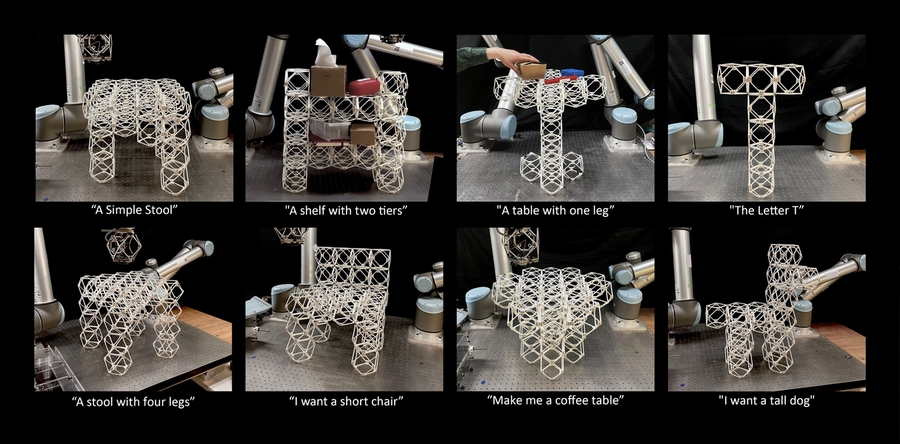
With the speech-to-reality system, a robotic arm mounted on a table is able to receive spoken input from a human, such as “I want a simple stool,” and then construct the objects out of modular components. To date, the researchers have used the system to create stools, shelves, chairs, a small table, and even decorative items such as a dog statue.

“We’re connecting natural language processing, 3D generative AI, and robotic assembly,” says Alexander Htet Kyaw, an MIT graduate student and Morningside Academy for Design (MAD) fellow. “These are rapidly advancing areas of research that haven’t been brought together before in a way that you can actually make physical objects just from a simple speech prompt.”  

The idea started when Kyaw — a graduate student in the departments of Architecture and Electrical Engineering and Computer Science — took Professor Neil Gershenfeld’s course, “How to Make Almost Anything.” In that class, he built the speech-to-reality system. He continued working on the project at the MIT Center for Bits and Atoms (CBA), directed by Gershenfeld, collaborating with graduate students Se Hwan Jeon of the Department of Mechanical Engineering and Miana Smith of CBA.

The speech-to-reality system begins with speech recognition that processes the user’s request using a large language model, followed by 3D generative AI that creates a digital mesh representation of the object, and a voxelization algorithm that breaks down the 3D mesh into assembly components.

Examples of objects — such as stools, tables, and decorative forms — constructed by a robotic arm in response to voice commands like “a shelf with two tiers” and “I want a tall dog.”Images courtesy of Alexander Kyaw and the researchers.

After that, geometric processing modifies the AI-generated assembly to account for fabrication and physical constraints associated with the real world, such as the number of components, overhangs, and connectivity of the geometry. This is followed by creation of a feasible assembly sequence and automated path planning for the robotic arm to assemble physical objects from user prompts.

By leveraging natural language, the system makes design and manufacturing more accessible to people without expertise in 3D modeling or robotic programming. And, unlike 3D printing, which can take hours or days, this system builds within minutes.

“This project is an interface between humans, AI, and robots to co-create the world around us,” Kyaw says. “Imagine a scenario where you say ‘I want a chair,’ and within five minutes a physical chair materializes in front of you.”

The team has immediate plans to improve the weight-bearing capability of the furniture by changing the means of connecting the cubes from magnets to more robust connections. 

“We’ve also developed pipelines for converting voxel structures into feasible assembly sequences for small, distributed mobile robots, which could help translate this work to structures at any size scale,” Smith says.

The purpose of using modular components is to eliminate the waste that goes into making physical objects by disassembling and then reassembling them into something different, for instance turning a sofa into a bed when you no longer need the sofa.

Because Kyaw also has experience using gesture recognition and augmented reality to interact with robots in the fabrication process, he is currently working on incorporating both speech and gestural control into the speech-to-reality system.

Leaning into his memories of the replicator in the “Star Trek” franchise and the robots in the animated film “Big Hero 6,” Kyaw explains his vision.

“I want to increase access for people to make physical objects in a fast, accessible, and sustainable manner,” he says. “I’m working toward a future where the very essence of matter is truly in your control. One where reality can be generated on demand.”

The team presented their paper “Speech to Reality: On-Demand Production using Natural Language, 3D Generative AI, and Discrete Robotic Assembly” at the Association for Computing Machinery (ACM) Symposium on Computational Fabrication (SCF ’25) held at MIT on Nov. 21. 

A new lens on humanity

When the MIT Human Insight Collaborative (MITHIC) launched in fall 2024, it was designed to elevate scholars at the frontiers of human-centered research and education, and to provide them with resources to pursue their most innovative and ambitious ideas. 

At the inaugural MITHIC Annual Event on Nov. 17, 2025, faculty from across the Institute shared the progress and impact of the projects they’ve advanced this past year with support from the presidential initiative. 

In opening remarks, MIT President Sally Kornbluth noted the “incredible range of opportunities for faculty and students to ask new questions and arrive at better, bolder, and more nuanced answers, grounded in the wisdom of the humanities, arts, and social sciences,” that MITHIC has sparked in its first year. 

Kornbluth highlighted the Living Climate Futures Lab as an example of the kind of work MITHIC was designed to support. “The lab works with people in communities from Massachusetts to Mongolia who are grappling with the impacts of climate change on their daily lives — on health and food security, housing, and jobs,” she said. The initiative, which was the focus of a panel discussion during the event, received MITHIC’s inaugural Faculty-Driven Initiative (FDI) seed grant.

“Like all the projects that MITHIC supports, the Living Climate Futures Lab also embodies MIT’s singular brand of excellence: collaborative, hands-on, and is deeply relevant to the world and the people around us,” added Kornbluth. 

MIT Provost Anantha Chandrakasan welcomed the audience, noting that “MITHIC is off to a strong start, advancing work across the Institute that broadens our perspective on global challenges.

“MITHIC is about inspiring our community to think differently and work together in new ways. It is about embedding human-centered thinking throughout our research, innovation, and education,” added Chandrakasan, who serves as co-chair of MITHIC.

Keynote speaker Rick Locke, the John C. Head III Dean of the MIT Sloan School of Management, spoke to the “Human Side of Enterprise,” zeroing in on the challenges and opportunities that will determine the future of management education — and how MIT Sloan can position itself at the forefront. In practice, that means the work of MIT Sloan and MITHIC can shape how new technologies like artificial intelligence will reconfigure industries and careers. 

Of equal importance, Locke said, will be how new enterprises are created and run, how people work and live, how business practices become more sustainable, and how national economies develop and adapt.

“MIT has a history of charting and paving pathways to an exciting and productive future of work that not only includes humans, but makes the most of our humanity. Together we can invent this future,” said Locke, who earned his doctorate in MIT’s Department of Political Science and later served as head of the department.

After his address, Locke joined Agustín Rayo, the Kenan Sahin Dean of the School of Humanities, Arts, and Social Sciences and co-chair of MITHIC, for a fireside chat.

Bringing the classics back to life

In a session exploring innovations in MIT education, Kieran Setiya, the Peter de Florez Professor of Philosophy, detailed what he and his colleagues are calling a “Great Books” initiative. 

As part of a three-year pilot, faculty in the Department of Linguistics and Philosophy have developed a two-semester sequence that focuses on books that reward repeated reading. The courses are loosely integrated and offered as electives, filling what Setiya calls an “urgent need for students to grapple with expansive questions about human nature, human knowledge, ethics, society, and politics” at a time of rapid social and technological change.

As students explore the work of authors like Plato and Aristotle, Homer and Virgil, Virginia Woolf, W.E.B. DuBois, and Simone de Beauvoir, they develop a deeper understanding of history, culture, and social change. These attributes, Setiya says, “will make students better people and better citizens. We’re not just preparing MIT students to land high-paying jobs, but to solve human problems and to make the world a better place.”

AI and its impact

During a session on the use of AI, Esther Duflo, the Abdul Latif Jameel Professor of Poverty Alleviation and Development Economics, shared research she is working on in India with co-project lead Marzyeh Ghassemi, associate professor and the Germeshausen Career Development Professor in the Department of Electrical Engineering and Computer Science (EECS). 

Duflo explained that the team is using AI to identify undiagnosed “silent” heart attacks, aiming to improve diagnosis and treatment of heart disease, the country’s No. 1 cause of death. The research team harnessed the power of a cheap diagnostic tool — a handheld electrocardiogram (ECG) device — to collect data on 6,000 patients who visited local health camps to predict their risk of a heart attack. 

They then paired the initial data with follow-up data from a cardiac ultrasound, which was able to confirm if patients experienced one. The researchers used this paired data and their own novel algorithm to train the ECG devices to more accurately assess a patient’s risk. The results are encouraging: 

“What is remarkable compared to existing tests is that it catches young people who are less likely to have had a silent heart attack, but still have a high risk. Right now, those young people are completely excluded from the current screening, because it’s basically based only on age,” Duflo said.

Reconstructing the music of the past

The day also featured a musical demonstration using three different replicas of an ancient Paracas whistle that a team from MIT recreated in collaboration with the Museum of Fine Arts, Boston (MFA).

It was a practical example of how Mark Rau, an assistant professor in music and theater arts with a shared appointment in EECS, and Benjamin Sabatini, a senior postdoc in the Department of Materials Science and Engineering, are using CT scan technology to create models of ancient instruments, measure their vibrations and acoustic parameters, and produce functional reproductions. 

The team offered a step-by-step overview of the process they’ve used to assess the instruments and create the 3D-printed plaster molds, working alongside Jared Katz, the Pappalardo Curator of Musical Instruments at the MFA, resulting in a playable replica of an instrument used centuries ago. 

“What we’re really excited about is getting these kinds of replicas in the hands of students and musicians, and having experimental engagements. We’re also really excited about the printed replicas that allow the collection to be activated in new ways,” Katz explained.

The event featured Q&A opportunities throughout the day, as well as a reception at the close of the day. MITHIC’s second call for proposals this fall yielded nearly 80 submissions, which are under review for funding in 2026. 

A new call for proposals for the SHASS+ Connectivity Fund will be held in spring 2026. SHASS+ supports projects led by a SHASS scholar and a collaborator from another part of the Institute. Another call for proposals for the next FDI seed grant will also take place in spring 2026. 

AI-generated sensors open new paths for early cancer detection

Detecting cancer in the earliest stages could dramatically reduce cancer deaths because cancers are usually easier to treat when caught early. To help achieve that goal, MIT and Microsoft researchers are using artificial intelligence to design molecular sensors for early detection.

The researchers developed an AI model to design peptides (short proteins) that are targeted by enzymes called proteases, which are overactive in cancer cells. Nanoparticles coated with these peptides can act as sensors that give off a signal if cancer-linked proteases are present anywhere in the body.

Depending on which proteases are detected, doctors would be able to diagnose the particular type of cancer that is present. These signals could be detected using a simple urine test that could even be done at home.

“We’re focused on ultra-sensitive detection in diseases like the early stages of cancer, when the tumor burden is small, or early on in recurrence after surgery,” says Sangeeta Bhatia, the John and Dorothy Wilson Professor of Health Sciences and Technology and of Electrical Engineering and Computer Science at MIT, and a member of MIT’s Koch Institute for Integrative Cancer Research and the Institute for Medical Engineering and Science (IMES).

Bhatia and Ava Amini ’16, a principal researcher at Microsoft Research and a former graduate student in Bhatia’s lab, are the senior authors of the study, which appears today in Nature Communications. Carmen Martin-Alonso PhD ’23, a founding scientist at Amplifyer Bio, and Sarah Alamdari, a senior applied scientist at Microsoft Research, are the paper’s lead authors.

Amplifying cancer signals

More than a decade ago, Bhatia’s lab came up with the idea of using protease activity as a marker of early cancer. The human genome encodes about 600 proteases, which are enzymes that can cut through other proteins, including structural proteins such as collagen. They are often overactive in cancer cells, as they help the cells escape their original locations by cutting through proteins of the extracellular matrix, which normally holds cells in place.

The researchers’ idea was to coat nanoparticles with peptides that can be cleaved by a specific protease. These particles could then be ingested or inhaled. As they traveled through the body, if they encountered any cancer-linked proteases, the peptides on the particles would be cleaved.

Those peptides would be secreted in the urine, where they could be detected using a paper strip similar to a pregnancy test strip. Measuring those signals would reveal the overactivity of proteases deep within the body.

“We have been advancing the idea that if you can make a sensor out of these proteases and multiplex them, then you could find signatures of where these proteases were active in diseases. And since the peptide cleavage is an enzymatic process, it can really amplify a signal,” Bhatia says.

The researchers have used this approach to demonstrate diagnostic sensors for lungovarian, and colon cancers.

However, in those studies, the researchers used a trial-and-error process to identify peptides that would be cleaved by certain proteases. In most cases, the peptides they identified could be cleaved by more than one protease, which meant that the signals that were read could not be attributed to a specific enzyme.

Nonetheless, using “multiplexed” arrays of many different peptides yielded distinctive sensor signatures that were diagnostic in animal models of many different types of cancer, even if the precise identity of the proteases responsible for the cleavage remained unknown.

In their new study, the researchers moved beyond the traditional trial-and-error process by developing a novel AI system, named CleaveNet, to design peptide sequences that could be cleaved efficiently and specifically by target proteases of interest.

Users can prompt CleaveNet with design criteria, and CleaveNet will generate candidate peptides likely to fit those criteria. In this way, CleaveNet enables users to tune the efficiency and specificity of peptides generated by the model, opening a path to improving the sensors’ diagnostic power.

“If we know that a particular protease is really key to a certain cancer, and we can optimize the sensor to be highly sensitive and specific to that protease, then that gives us a great diagnostic signal,” Amini says. “We can leverage the power of computation to try to specifically optimize for these efficiency and selectivity metrics.”

For a peptide that contains 10 amino acids, there are about 10 trillion possible combinations. Using AI to search that immense space allows for prediction, testing, and identification of useful sequences much faster than humans would be able to find them, while also considerably reducing experimental costs.

Predicting enzyme activity

To create CleaveNet, the researchers developed a protein language model to predict the amino acid sequences of peptides, analogous to how large language models can predict sequences of text. For the training data, they used publicly available data on about 20,000 peptides and their interactions with different proteases from a family known as matrix metalloproteinases (MMPs).

Using these data, the researchers trained one model to generate peptide sequences that are predicted to be cleaved by proteases. These sequences could then be fed into another model that predicted how efficiently each peptide would be cleaved by any protease of interest.

To demonstrate this approach, the researchers focused on a protease called MMP13, which cancer cells use to cut through collagen and help them metastasize from their original locations. Prompting CleaveNet with MMP13 as a target allowed the models to design peptides that could be cut by MMP13 with considerable selectivity and efficiency. This cleavage profile is particularly useful for diagnostic and therapeutic applications.

“When we set the model up to generate sequences that would be efficient and selective for MMP13, it actually came up with peptides that had never been observed in training, and yet these novel sequences did turn out to be both efficient and selective,” Martin-Alonso says. “That was very exciting to see.”

This kind of selectivity could help to reduce the number of different peptides needed to diagnose a given type of cancer, to identify novel biomarkers, and to provide insight into specific biological pathways for study and therapeutic testing, the researchers say.

Bhatia’s lab is currently part of an ARPA-H funded project to create reporters for an at-home diagnostic kit that could potentially detect and distinguish between 30 different types of cancer, in early stages of disease, based on measurements of protease activity. These sensors could include detection of not only MMP-mediated cleavage, but other enzymes such as serine proteases and cysteine proteases.

Peptides designed using CleaveNet could also be incorporated into cancer therapeutics such as antibody treatments. Using a specific peptide to attach a therapeutic such as a cytokine or small molecule drug to a targeting antibody could enable the medicine to be released only when the peptides are exposed to proteases in the tumor environment, improving efficacy and reducing side effects.

Beyond direct applications in diagnostics and therapeutics, combining efforts from the ARPA-H work with this modeling framework could enable the creation of a comprehensive “protease activity atlas” that spans multiple protease classes and cancers. Such a resource could further accelerate research in early cancer detection, protease biology, and AI models for peptide design.

The research was funded by La Caixa Foundation, the Ludwig Center at MIT, and the Marble Center for Cancer Nanomedicine.

MIT scientists investigate memorization risk in the age of clinical AI

What is patient privacy for? The Hippocratic Oath, thought to be one of the earliest and most widely known medical ethics texts in the world, reads: “Whatever I see or hear in the lives of my patients, whether in connection with my professional practice or not, which ought not to be spoken of outside, I will keep secret, as considering all such things to be private.” 

As privacy becomes increasingly scarce in the age of data-hungry algorithms and cyberattacks, medicine is one of the few remaining domains where confidentiality remains central to practice, enabling patients to trust their physicians with sensitive information.

But a paper co-authored by MIT researchers investigates how artificial intelligence models trained on de-identified electronic health records (EHRs) can memorize patient-specific information. The work, which was recently presented at the 2025 Conference on Neural Information Processing Systems (NeurIPS), recommends a rigorous testing setup to ensure targeted prompts cannot reveal information, emphasizing that leakage must be evaluated in a health care context to determine whether it meaningfully compromises patient privacy.

Foundation models trained on EHRs should normally generalize knowledge to make better predictions, drawing upon many patient records. But in “memorization,” the model draws upon a singular patient record to deliver its output, potentially violating patient privacy. Notably, foundation models are already known to be prone to data leakage.

“Knowledge in these high-capacity models can be a resource for many communities, but adversarial attackers can prompt a model to extract information on training data,” says Sana Tonekaboni, a postdoc at the Eric and Wendy Schmidt Center at the Broad Institute of MIT and Harvard and first author of the paper. Given the risk that foundation models could also memorize private data, she notes, “this work is a step towards ensuring there are practical evaluation steps our community can take before releasing models.”

To conduct research on the potential risk EHR foundation models could pose in medicine, Tonekaboni approached MIT Associate Professor Marzyeh Ghassemi, who is a principal investigator at the Abdul Latif Jameel Clinic for Machine Learning in Health (Jameel Clinic) and a member of the Computer Science and Artificial Intelligence Lab. Ghassemi, a faculty member in the MIT Department of Electrical Engineering and Computer Science and Institute for Medical Engineering and Science, runs the Healthy ML group, which focuses on robust machine learning in health.

Just how much information does a bad actor need to expose sensitive data, and what are the risks associated with the leaked information? To assess this, the research team developed a series of tests that they hope will lay the groundwork for future privacy evaluations. These tests are designed to measure various types of uncertainty, and assess their practical risk to patients by measuring various tiers of attack possibility.  

“We really tried to emphasize practicality here; if an attacker has to know the date and value of a dozen laboratory tests from your record in order to extract information, there is very little risk of harm. If I already have access to that level of protected source data, why would I need to attack a large foundation model for more?” says Ghassemi. 

With the inevitable digitization of medical records, data breaches have become more commonplace. In the past 24 months, the U.S. Department of Health and Human Services has recorded 747 data breaches of health information affecting more than 500 individuals, with the majority categorized as hacking/IT incidents.

Patients with unique conditions are especially vulnerable, given how easy it is to pick them out. “Even with de-identified data, it depends on what sort of information you leak about the individual,” Tonekaboni says. “Once you identify them, you know a lot more.”

In their structured tests, the researchers found that the more information the attacker has about a particular patient, the more likely the model is to leak information. They demonstrated how to distinguish model generalization cases from patient-level memorization, to properly assess privacy risk. 

The paper also emphasized that some leaks are more harmful than others. For instance, a model revealing a patient’s age or demographics could be characterized as a more benign leakage than the model revealing more sensitive information, like an HIV diagnosis or alcohol abuse. 

The researchers note that patients with unique conditions are especially vulnerable given how easy it is to pick them out, which may require higher levels of protection. “Even with de-identified data, it really depends on what sort of information you leak about the individual,” Tonekaboni says. The researchers plan to expand the work to become more interdisciplinary, adding clinicians and privacy experts as well as legal experts. 

“There’s a reason our health data is private,” Tonekaboni says. “There’s no reason for others to know about it.”

This work supported by the Eric and Wendy Schmidt Center at the Broad Institute of MIT and Harvard, Wallenberg AI, the Knut and Alice Wallenberg Foundation, the U.S. National Science Foundation (NSF), a Gordon and Betty Moore Foundation award, a Google Research Scholar award, and the AI2050 Program at Schmidt Sciences. Resources used in preparing this research were provided, in part, by the Province of Ontario, the Government of Canada through CIFAR, and companies sponsoring the Vector Institute.

One pull of a string is all it takes to deploy these complex structures

MIT researchers have developed a new method for designing 3D structures that can be transformed from a flat configuration into their curved, fully formed shape with only a single pull of a string.

This technique could enable the rapid deployment of a temporary field hospital at the site of a disaster such as a devastating tsunami — a situation where quick medical action is essential to save lives.

The researchers’ approach converts a user-specified 3D structure into a flat shape composed of interconnected tiles. The algorithm uses a two-step method to find the path with minimal friction for a string that can be tightened to smoothly actuate the structure.

The actuation mechanism is easily reversible, and if the string is released, the structure quickly returns to its flat configuration. This could enable complex, 3D structures to be stored and transported more efficiently and with less cost.

In addition, the designs generated by their system are agnostic to the fabrication method, so complete structures can be produced using 3D printing, CNC milling, molding, or other techniques.

This method could enable the creation of transportable medical devices, foldable robots that can flatten to enter hard-to-reach spaces, or even modular space habitats that can be actuated by robots working on the surface of Mars.

“The simplicity of the whole actuation mechanism is a real benefit of our approach. The user just needs to provide their intended design, and then our method optimizes it in such a way that it holds the shape after just one pull on the string, so the structure can be deployed very easily. I hope people will be able to use this method to create a wide variety of different, deployable structures,” says Akib Zaman, an electrical engineering and computer science (EECS) graduate student and lead author of a paper on this new method.

He is joined on the paper by MIT graduate student Jacqueline Aslarus; postdoc Jiaji Li; Associate Professor Stefanie Mueller, leader of the Human-Computer Interaction (HCI) Engineering Group in the Computer Science and Artificial Intelligence Laboratory (CSAIL); and senior author Mina Konaković Luković, an assistant professor and leader of the Algorithmic Design Group in CSAIL. The research was presented at the Association for Computing Machinery’s SIGGRAPH Conference and Exhibition on Computer Graphics and Interactive Techniques in Asia.

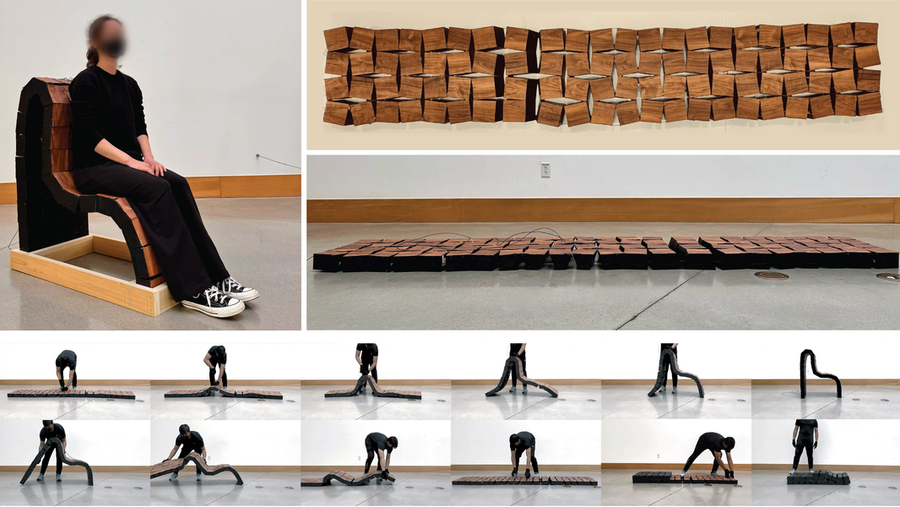
In a series of images, a flat grid of wooden blocks are pulled using a central string into a rough chair shape, which a human then sits in.
Researchers created a human-scale chair, pictured, that could be assembled and disassembled by one person. Images courtesy of the researchers.

From ancient art to an algorithm

Creating deployable structures from flat pieces simplifies on-site assembly and could be especially useful in constructing emergency shelters after natural disasters. On a smaller scale, items like foldable bike helmets could improve the safety of riders who would otherwise be unable to carry a bulky helmet.

But converting flat, deployable objects into their 3D shape often requires specialized equipment or multiple steps, and the actuation mechanism is typically difficult to reverse.

“Because of these challenges, deployable structures tend to be manually designed and quite simple, geometrically. But if we can create more complex geometries, while simplifying the actuation mechanism, we could enhance the capabilities of these deployables,” Zaman says.

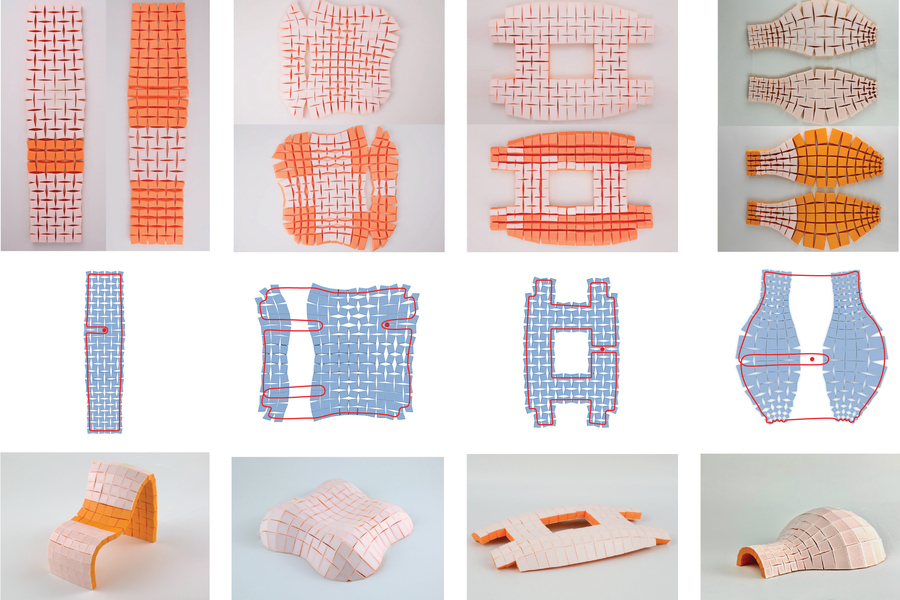
To do this, the researchers created a method that automatically converts a user’s 3D design into a flat structure comprised of tiles, connected by rotating hinges at the corners, which can be fully actuated by pulling a single string one time.

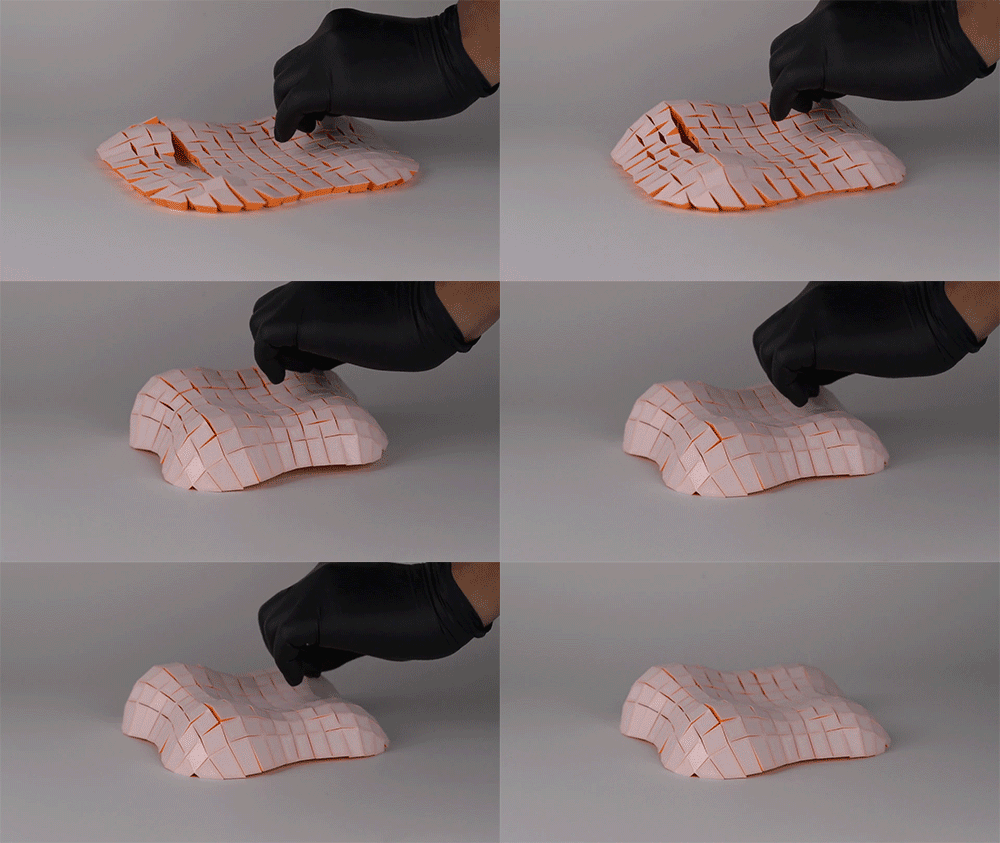
As two hands pull a string, a connected grid of small, square plastic tiles is reshaped into a softly curving structure, much like a pillow.
With a single string pull, a softly curved 3D shape is formed. “I hope people will be able to use this method to create a wide variety of different, deployable structures,” says Akib Zaman. Image courtesy of the researchers.

Their method breaks a user design into a grid of quadrilateral tiles inspired by kirigami, the ancient Japanese art of paper cutting. With kirigami, by cutting a material in certain ways, they can encode it with unique properties. In this case, they use kirigami to create an auxetic mechanism, which is a structure that gets thicker when stretched and thinner when compressed.

After encoding the 3D geometry into a flat set of auxetic tiles, the algorithm computes the minimum number of points that the tightening string must lift to fully deploy the 3D structure. Then, it finds the shortest path that connects those lift points, while including all areas of the object’s boundary that must be connected to guide the structure into its 3D configuration. It does these calculations in such a way that the optimal string path minimizes friction, enabling the structure to be smoothly actuated with just one pull.

“Our method makes it easy for the user. All they have to do is input their design, and our algorithm automatically takes care of the rest. Then all the user needs to do is to fabricate the tiles exactly the way it has been computed by the algorithm,” Zaman says.

For instance, one could fabricate a structure using a multi-material 3D printer that prints the hinges of the tiles with a flexible material and the other surfaces with a hard material.

A scale independent method

One of the biggest challenges the researchers faced was figuring out how the string route and the friction within the string channel can be effectively modeled as close to physical reality.

“While playing with a few fabricated models, we observed that closing boundary tiles is a must to enable a successful deployment and the string must be routed through them. Later, we proved this observation mathematically. Then, we looked back at an age-old physics equation and used it to formulate the optimization problem for friction minimization,” he says.

They built their automatic algorithm into an interactive user interface that allows one to design and optimize configurations to generate manufacturable objects.

The researchers used their method to design several objects of different sizes, from personalized medical items including a splint and a posture corrector to an igloo-like portable structure. They also fabricated a deployable, human-scale chair they designed using their method.

A set of hands pulls a single string from the center of a grid of connected small tiles, and the tiles rise to form a recognizable chair shape.
Researchers want to further explore the design of tiny structures. Here, a tiny chair is formed using a single string pull. Image courtesy of the researchers.

This method is scale independent, so it could be used to create tiny deployable objects that are injected and actuated inside the body, or architectural structures, like the frame of a building, that are deployed and actuated on-site using cranes.

In the future, the researchers want to further explore the design of tiny structures, while also tackling the engineering challenges involved in creating architectural installations, such as determining the ideal cable thickness and the necessary strength of the hinges. In addition, they want to create a self-deploying mechanism, so the structures do not need to be actuated by a human or robot.

This research is funded, in part, by an MIT Research Support Committee Award.

Guided learning lets “untrainable” neural networks realize their potential

Even networks long considered “untrainable” can learn effectively with a bit of a helping hand. Researchers at MIT’s Computer Science and Artificial Intelligence Laboratory (CSAIL) have shown that a brief period of alignment between neural networks, a method they call guidance, can dramatically improve the performance of architectures previously thought unsuitable for modern tasks.

Their findings suggest that many so-called “ineffective” networks may simply start from less-than-ideal starting points, and that short-term guidance can place them in a spot that makes learning easier for the network. 

The team’s guidance method works by encouraging a target network to match the internal representations of a guide network during training. Unlike traditional methods like knowledge distillation, which focus on mimicking a teacher’s outputs, guidance transfers structural knowledge directly from one network to another. This means the target learns how the guide organizes information within each layer, rather than simply copying its behavior. Remarkably, even untrained networks contain architectural biases that can be transferred, while trained guides additionally convey learned patterns. 

“We found these results pretty surprising,” says Vighnesh Subramaniam ’23, MEng ’24, MIT Department of Electrical Engineering and Computer Science (EECS) PhD student and CSAIL researcher, who is a lead author on a paper presenting these findings. “It’s impressive that we could use representational similarity to make these traditionally ‘crappy’ networks actually work.”

Guide-ian angel 

A central question was whether guidance must continue throughout training, or if its primary effect is to provide a better initialization. To explore this, the researchers performed an experiment with deep fully connected networks (FCNs). Before training on the real problem, the network spent a few steps practicing with another network using random noise, like stretching before exercise. The results were striking: Networks that typically overfit immediately remained stable, achieved lower training loss, and avoided the classic performance degradation seen in something called standard FCNs. This alignment acted like a helpful warmup for the network, showing that even a short practice session can have lasting benefits without needing constant guidance.

The study also compared guidance to knowledge distillation, a popular approach in which a student network attempts to mimic a teacher’s outputs. When the teacher network was untrained, distillation failed completely, since the outputs contained no meaningful signal. Guidance, by contrast, still produced strong improvements because it leverages internal representations rather than final predictions. This result underscores a key insight: Untrained networks already encode valuable architectural biases that can steer other networks toward effective learning.

Beyond the experimental results, the findings have broad implications for understanding neural network architecture. The researchers suggest that success — or failure — often depends less on task-specific data, and more on the network’s position in parameter space. By aligning with a guide network, it’s possible to separate the contributions of architectural biases from those of learned knowledge. This allows scientists to identify which features of a network’s design support effective learning, and which challenges stem simply from poor initialization.

Guidance also opens new avenues for studying relationships between architectures. By measuring how easily one network can guide another, researchers can probe distances between functional designs and reexamine theories of neural network optimization. Since the method relies on representational similarity, it may reveal previously hidden structures in network design, helping to identify which components contribute most to learning and which do not.

Salvaging the hopeless

Ultimately, the work shows that so-called “untrainable” networks are not inherently doomed. With guidance, failure modes can be eliminated, overfitting avoided, and previously ineffective architectures brought into line with modern performance standards. The CSAIL team plans to explore which architectural elements are most responsible for these improvements and how these insights can influence future network design. By revealing the hidden potential of even the most stubborn networks, guidance provides a powerful new tool for understanding — and hopefully shaping — the foundations of machine learning.

“It’s generally assumed that different neural network architectures have particular strengths and weaknesses,” says Leyla Isik, Johns Hopkins University assistant professor of cognitive science, who wasn’t involved in the research. “This exciting research shows that one type of network can inherit the advantages of another architecture, without losing its original capabilities. Remarkably, the authors show this can be done using small, untrained ‘guide’ networks. This paper introduces a novel and concrete way to add different inductive biases into neural networks, which is critical for developing more efficient and human-aligned AI.”

Subramaniam wrote the paper with CSAIL colleagues: Research Scientist Brian Cheung; PhD student David Mayo ’18, MEng ’19; Research Associate Colin Conwell; principal investigators Boris Katz, a CSAIL principal research scientist, and Tomaso Poggio, an MIT professor in brain and cognitive sciences; and former CSAIL research scientist Andrei Barbu. Their work was supported, in part, by the Center for Brains, Minds, and Machines, the National Science Foundation, the MIT CSAIL Machine Learning Applications Initiative, the MIT-IBM Watson AI Lab, the U.S. Defense Advanced Research Projects Agency (DARPA), the U.S. Department of the Air Force Artificial Intelligence Accelerator, and the U.S. Air Force Office of Scientific Research.

Their work was recently presented at the Conference and Workshop on Neural Information Processing Systems (NeurIPS).

“Wait, we have the tech skills to build that”

Students can take many possible routes through MIT’s curriculum, which can zigag through different departments, linking classes and disciplines in unexpected ways. With so many options, charting an academic path can be overwhelming, but a new tool called NerdXing is here to help.

The brainchild of senior Julianna Schneider and other students in the MIT Schwarzman College of Computing Undergraduate Advisory Group (UAG), NerdXing lets students search for a class and see all the other classes students have gone on to take in the past, including options that are off the beaten track.

“I hope that NerdXing will democratize course knowledge for everyone,” Schneider says. “I hope that for anyone who’s a freshman and maybe hasn’t picked their major yet, that they can go to NerdXing and start with a class that they would maybe never consider — and then discover that, ‘Oh wait, this is perfect for this really particular thing I want to study.’”

As a student double-majoring in artificial intelligence and decision-making and in mathematics, and doing research in the Biomimetic Robotics Laboratory in the Department of Mechanical Engineering, Schneider knows the benefits of interdisciplinary studies. It’s a part of the reason why she joined the UAG, which advises the MIT Schwarzman College of Computing’s leadership as it advances education and research at the intersections between computing, engineering, the arts, and more.

Through all of her activities, Schneider seeks to make people’s lives better through technology.

“This process of finding a problem in my community and then finding the right technology to solve that — that sort of approach and that framework is what guides all the things I do,” Schneider says. “And even in robotics, the things that I care about are guided by the sort of skills that I think we need to develop to be able to have meaningful applications.”

From Albania to MIT

Before she ever touched a robot or wrote code, Schneider was an accomplished young classical pianist in Albania. When she discovered her passion for robotics at age 13, she applied some of the skills she had learned while playing piano.

“I think on some fundamental level, when I was a pianist, I thought constantly about my motor dynamics as a human being, and how I execute really complex skills but do it over and over again at the top of my ability,” Schneider says. “When it came to robotics, I was building these robotic arms that also had to operate at the top of their ability every time and do really complex tasks. It felt kind of similar to me, like a fun crossover.”

Schneider joined her high school’s robotics team as a middle schooler, and she was so immediately enamored that she ended up taking over most of the coding and building of the team’s robot. She went on to win 14 regional and national awards across the three teams she led throughout middle and high school. It was clear to her that she’d found her calling.

NerdXing wasn’t Schneider’s first experience building new technology. At just 16, she built an app meant to connect English-speaking volunteers from her international school in Tirana, Albania, to local charities that only posted jobs in Albanian. By last year, the platform, called VoluntYOU, had 18 ambassadors across four continents. It has enabled volunteers to give out more than 2,000 burritos in Reno, Nevada; register hundreds of signatures to support women’s rights legislation in Albania; and help with administering Covid-19 vaccines to more than 1,200 individuals a day in Italy.

Schneider says her experience at an international school encouraged her to recognize problems and solutions all around her.

“When I enter a new community and I can immediately be like, ‘Oh wait, if we had this tool, that would be so cool and that would help all these people,’ I think that’s just a derivative of having grown up in a place where you hear about everyone’s super different life experiences,” she says.

Schneider describes NerdXing as a continuation of many of the skills she picked up while building VoluntYOU.

“They were both motivated by seeing a challenge where I thought, ‘Wait, we have the tech skills to build that. This is something that I can envision the solution to.’ And then I wanted to actually go and make that a reality,” Schneider says.

Robotics with a positive impact

At MIT, Schneider started working in the Biomimetic Robotics Laboratory of Professor Sangbae Kim, where she has now participated in three research projects, one of which she’s co-authoring a paper on. She’s part of a team that tests how robots, including the famous back-flipping mini cheetah, move, in order to see how they could complement humans in high-stakes scenarios.

Most of her work has revolved around crafting controllers, including one hybrid-learning and model-based controller that is well-suited to robots with limited onboard computing capacity. It would allow the robot to be used in regions with less access to technology.

“It’s not just doing technology for technology’s sake, but because it will bridge out into the world and make a positive difference. I think legged robotics have some of the best potential to actually be a robotic partner to human beings in the scenarios that are most high-stakes,” Schneider says.

Schneider hopes to further robotic capabilities so she can find applications that will service communities around the world. One of her goals is to help create tools that allow a surgeon to operate on a patient a long distance away. 

To take a break from academics, Schneider has channeled her love of the arts into MIT’s vibrant social dancing scene. This year, she’s especially excited about country line dancing events where the music comes on and students have to guess the choreography.

“I think it’s a really fun way to make friends and to connect with the community,” she says.