
Systems of success


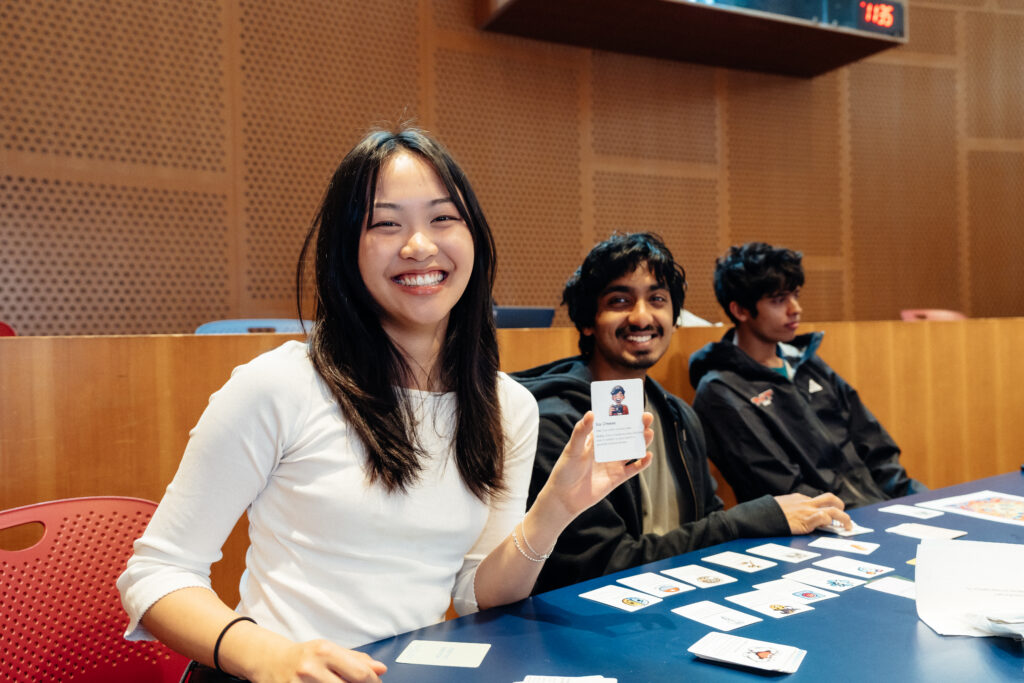 Students taking Hack Yourself collect more than 60 Intention cards through the semester, commemorating their learning. “The idea grew out of a basic problem with experiential courses: Knowledge alone usually doesn’t create behavior change,” say the instructors. “Students can hear a great idea in class and still never apply it afterward. We wanted an artifact that would outlive the semester.” Photo credit: Jiin Kang
 EECS’s new course is not focused on machine learning or microprocessors, on cryptography or quantum computing. Instead, 6.C31, Hack Yourself, draws student interest with an intriguing pitch: that by using computing tools to implement a personal toolkit of more than 60 positive habits, students can substantially improve their college experiences. A joint venture with the Experimental Study Group (ESG), developed by EECS senior lecturer Ana Bell, ESG visiting instructor Carter Jernigan, and ESG senior lecturer Paola Rebusco, Hack Yourself offers students the opportunity to upgrade their lives.
“We wanted to build an MIT course that exposes students, in a structured way, to what we actually know about learning and thriving,” explain the course’s instructors. “That said, MIT students are skeptical unless they can see evidence. They want data. They want methods. So we built the class around research-backed ideas that students can explore themselves, and that’s where computational thinking comes in. The course treats well-being and learning almost like systems problems: how do you gather meaningful data, break a big question into manageable parts, test an intervention, and evaluate whether it worked?”
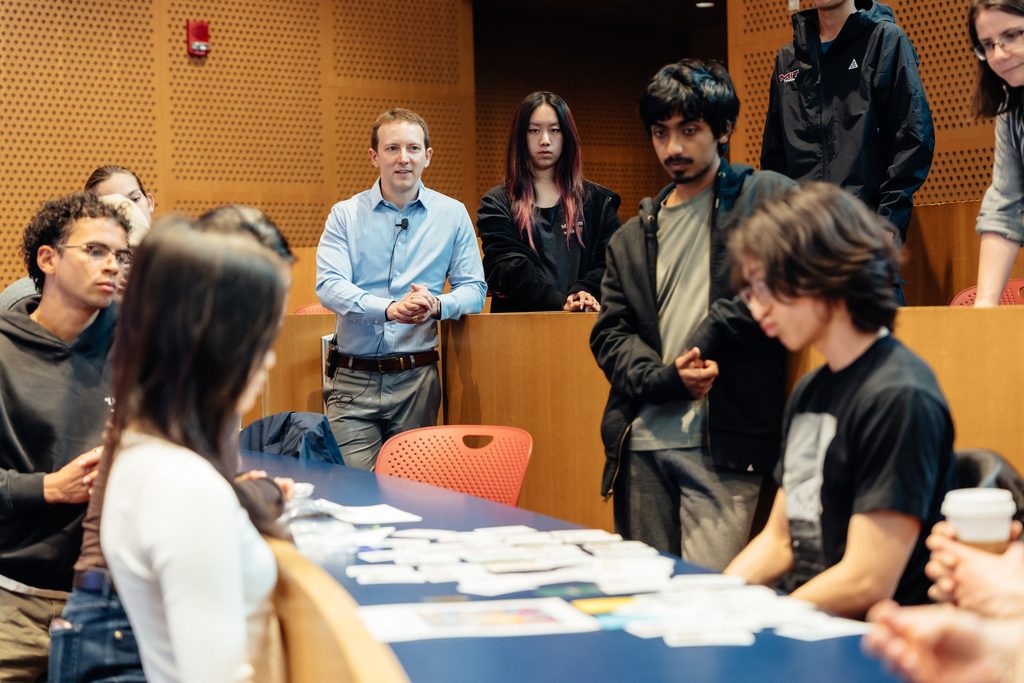
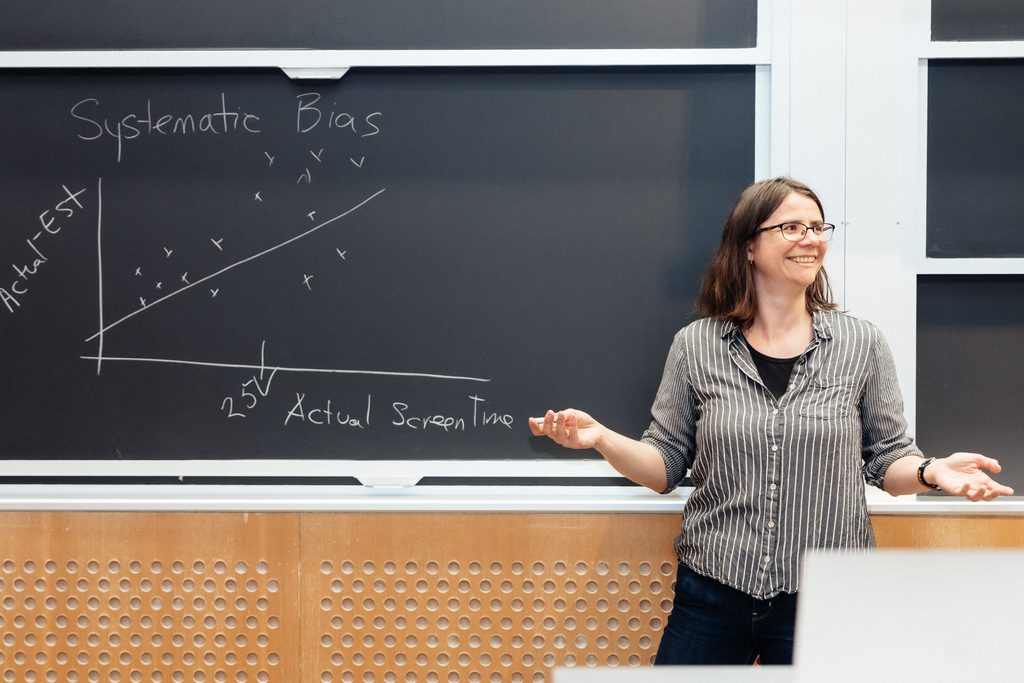
The course’s ambitious goals fall into two categories: personal interventions that students can deploy in their own lives, and analytical skills that they can use to test whether their new habits are working. “It’s an introduction to the data science pipeline and evidence-based thinking,” says Bell. “We start from the idea that good analysis begins with good data. Students spend time learning how to collect information thoughtfully: designing surveys, conducting interviews, thinking about bias and measurement. Those are human-centered skills that complement technical training and remain valuable no matter what technologies exist years from now.”
The data that students collect are as diverse as their goals. “A few patterns come up consistently—reducing smartphone use and getting more consistent sleep,” says Jernigan. “For juniors and seniors especially, a lot of interest centers on work habits, productivity, and the transition into the workplace, which naturally pulls them toward teamwork, leadership, and relationships. What’s interesting is that no single intervention emerged as universally ‘best.’” Many of the course’s assignments center on teamwork, using research-backed interventions for more effective group collaboration. “Some are small interventions students can use anywhere—for instance, replacing default small talk with a prompt like, ‘Tell me something good going on in your life,’” explains Jernigan. “We also teach practices like the pre-mortem, where a group imagines a project has already failed, lists everything that could have gone wrong, and works backward to prevent those problems.” Even the class’s reading assignments are collaborative, using Perusall (a shared annotation app). “We polled students about which strategies were most personally impactful and which they’d recommend to others, and the answers varied a lot,” says Jernigan. “That’s part of the point. Different tools resonate with different people, so we help students build a broad toolkit.”
Part of that toolkit looks like a tiny photo album. The course’s Intention cards are professionally printed, playing-card-sized collectibles that the students accumulate as they move through the course. Each card distills a research-backed habit or strategy into a few words and a colorful AI-generated image as a tangible reminder of the skill. “Students earn a few each week and end up with more than 60 by the end of the semester,” says Jernigan.
As the students gain more cards, they store them in a booklet—but the instructors have noticed them carefully tending and tidying their collections. “It’s been interesting to watch the collection dynamic work in ways we didn’t fully design for,” Rebusco reports. “Students reorganize the cards, revisit old ones when they get new ones, and carry the booklets around. Without explicitly thinking about it, they end up engaging in spaced repetition and recall—the same learning principles we discuss in class.”
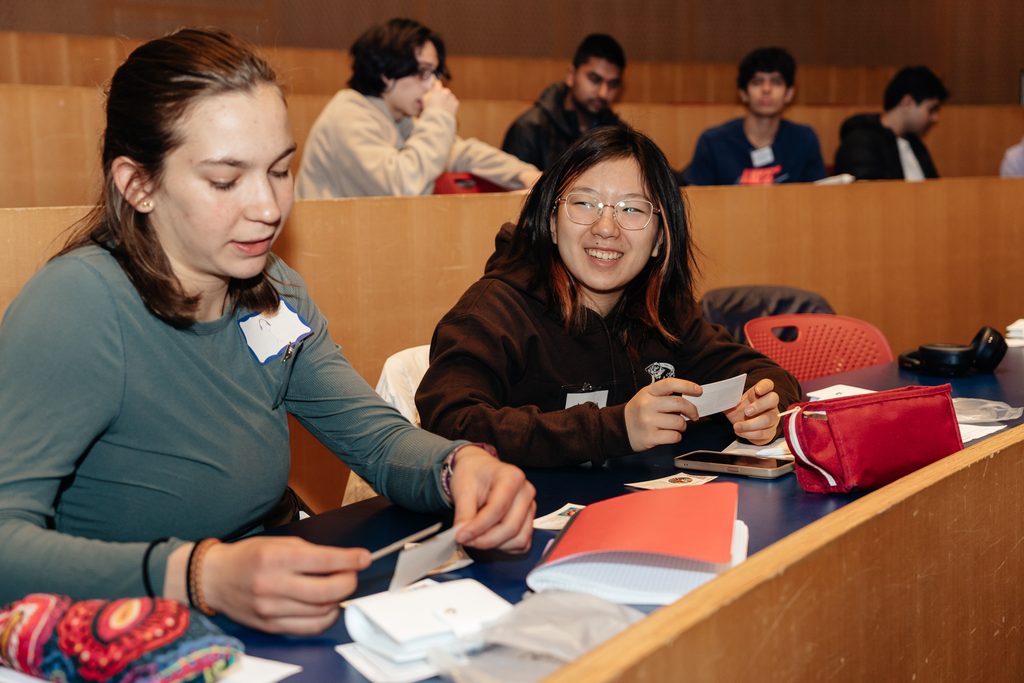
Junior Sarah Hopp has amassed a large collection of the cards. The 6-3 Computer Science and Engineering major, from Stevens Point, WI, has found that the mementos work as both a memory tool and a sentimental souvenir. “With each card, I also tend to remember the class we talked about that intervention, and any positive memories I have from that class experience.” Hopp’s favorite class experience was an assignment, originally developed in 2001 by Laura King, in which the student is challenged to envision her “best possible future self” in close detail for 20 minutes, imagining completed life goals and successful outcomes, before writing that imagined future self a letter. “It gave me time to really think about what I want from my future and what I want it to look like,” says Hopp. “It also forced me to focus on the positives and the accomplishments I want to achieve, rather than thinking about the negatives and my fears for the future.”
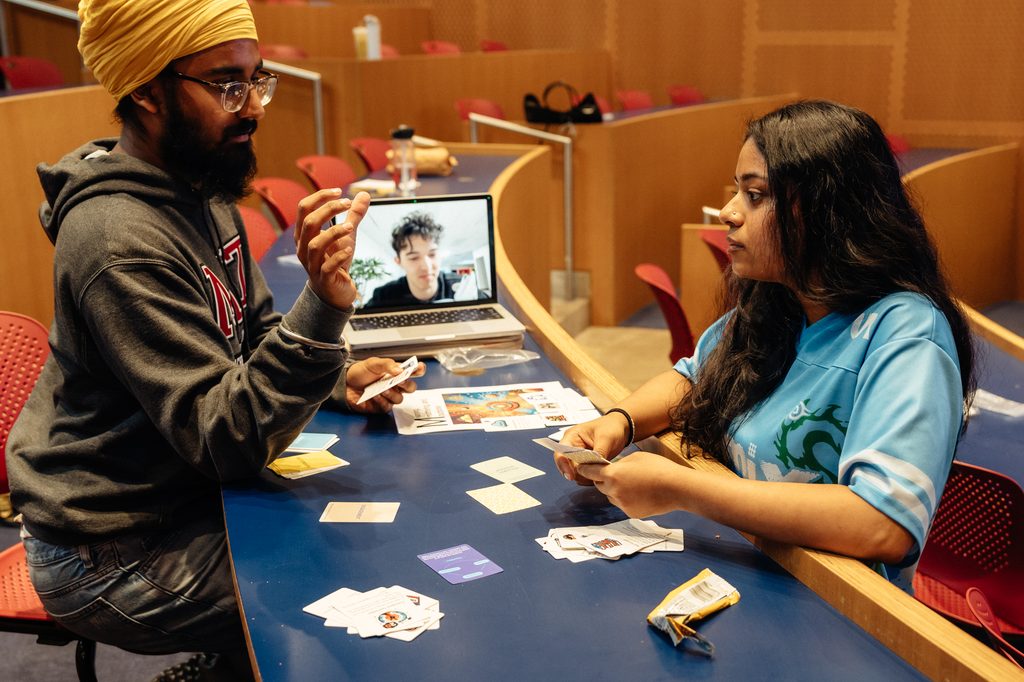
“When I first signed up for Hack Yourself, I looked forward to having a psychologically insightful and reflective class environment that I figured would be a helpful break from my usual STEM-heavy course content,” says student Amitoj Singh, who is majoring in 6-3. “I wanted to build a habit of using strategies from class to improve my lifestyle in college.” One of the strategies Singh implemented stemmed from a class discussion on flow state (a state of full and joyous task absorption experienced when a person is immersed in challenging and creative work). After learning that even brief interruptions could significantly impact productivity and derail flow, Singh changed how he scheduled his time, creating longer and more coherent “blocks” for his desired goals. “I think one of the most powerful tools [the class uses] is the massive pool of research the lectures and content draw from,” says Singh, who is now working on “satisficing,” or learning when to deem an outcome satisfactory rather than chasing a perhaps-unattainable state of optimization.
The Hack Yourself curriculum is intentionally designed to steer students toward small experiments and goals that feel personal to them. “We’ve had students explore relationships, sports performance, music, motivation, and productivity,” says Jernigan. “They develop hypotheses, think about measurement and bias, design surveys or interviews, and create an analysis plan. They don’t run a large-scale study, but they learn how to think rigorously about their proposed questions and hypotheses, using the same kind of decomposition and iterative thinking we use in computing.” Part of that rigor focuses on the use of large language models (LLMs)—specifically how to evaluate the quality of both the prompt and the response. “We ask students to engage critically with modern AI tools,” says Bell. “They can use generative AI to explore ideas or analyze data, but they’re required to reflect on the process and critique the quality of what comes back. The durable skill isn’t fluency with today’s AI—it’s knowing how to evaluate any tool that comes next.”
Bell, Jernigan, and Rebusco hope that their students will leave with the tools to ask better questions—a lifelong skill. As they note, “We intentionally avoided making this another machine learning course. Students already get plenty of exposure to advanced technical tools elsewhere at MIT. In this course we focus on a fundamental element: the data science pipeline itself. How do you collect useful data? How do you ask good questions? How do you design a small experiment before trying to boil the ocean? That mindset scales well, even as technology evolves.”
Media Inquiries
Journalists seeking information about EECS, or interviews with EECS faculty members, should email eecs-communications@mit.edu.
Please note: The EECS Communications Office only handles media inquiries related to MIT’s Department of Electrical Engineering & Computer Science. Please visit other school, department, laboratory, or center websites to locate their dedicated media-relations teams.