


Causality plays a central role across science and engineering, and recent advances have come from deep collaborations between machine learning, statistics, and domain sciences. CLeaR highlights this cross-disciplinary…
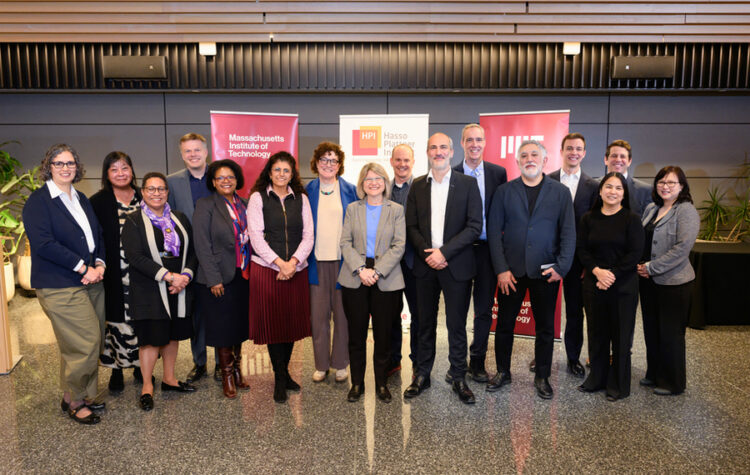
Jointly led by the MIT Morningside Academy for Design, MIT Schwarzman College of Computing, and the Hasso Plattner Institute in Potsdam, the hub will foster a dynamic community where computing, creativity, and human-centered innovation meet.
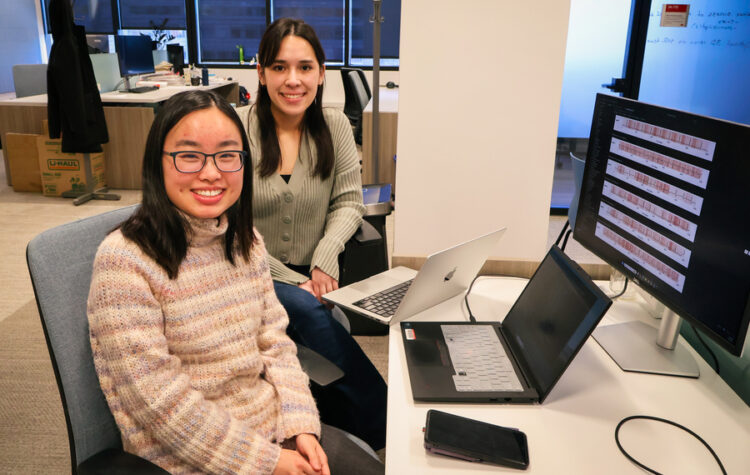
Researchers at MIT, Mass General Brigham, and Harvard Medical School developed a deep-learning model to forecast a patient’s heart failure prognosis up to a year in advance.

By providing holistic information on a cell, an AI-driven method could help scientists better understand disease mechanisms and plan experiments.

To help generative AI models create durable, real-world accessories and decor, the PhysiOpt system runs physics simulations and makes subtle tweaks to its 3D blueprints.

The context of long-term conversations can cause an LLM to begin mirroring the user’s viewpoints, possibly reducing accuracy or creating a virtual echo-chamber.
Doctoral Thesis Title: On Structure, Parallelism, and Approximation in Modern Neural Sequence Modeling Presenter: Morris Yau Presenter’s Affiliation (CSAIL, RLE, LIDS, MTL, etc.): CSAIL Thesis Supervisor(s): Jacob Andreas,…

Tuesday, February 3, 2026 4:00 – 5:00 pm (refreshments at 3:30 pm) Broad Institute Auditorium (415 Main St., Cambridge, MA 02142) and virtually at broad.io/ewsc 📅 Add to calendar ✍️ Learn more and register…
Doctoral Thesis Title: Navigating Generative Vector Fields: Principled Inference for High-Dimensional Inverse ProblemsPresenter: Jeet MohapatraPresenter’s Affiliation : CSAILThesis Supervisor(s): Prof. Tommi Jaakkola Date: 21 January, 2026Time: 10 – 11 am…
While the growing energy demands of AI are worrying, some techniques can also help make power grids cleaner and more efficient.