

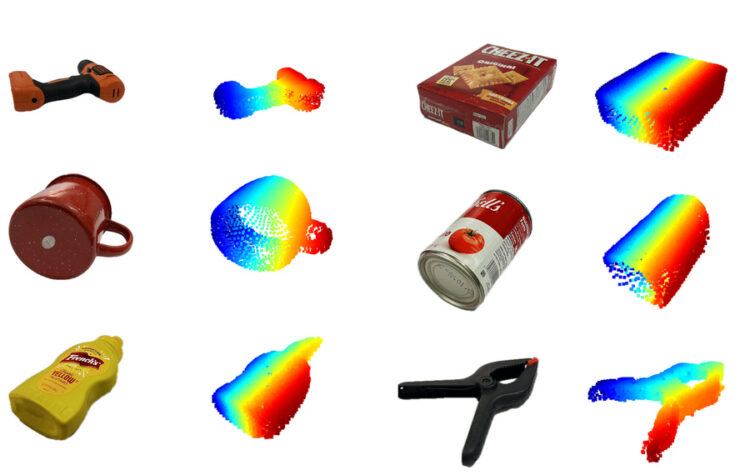
With this new technique, a robot could more accurately detect hidden objects or understand an indoor scene using reflected Wi-Fi signals.

Mixing generative AI with physics to create personal items that work in the real world
To help generative AI models create durable, real-world accessories and decor, the PhysiOpt system runs physics simulations and makes subtle tweaks to its 3D blueprints.
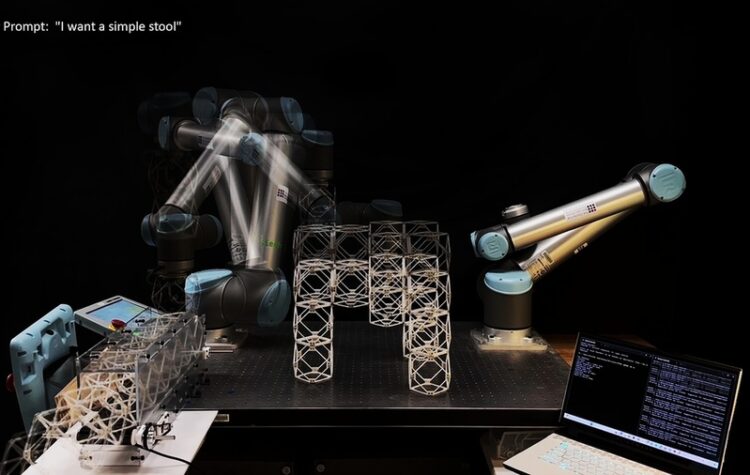
The speech-to-reality system combines 3D generative AI and robotic assembly to create objects on demand.
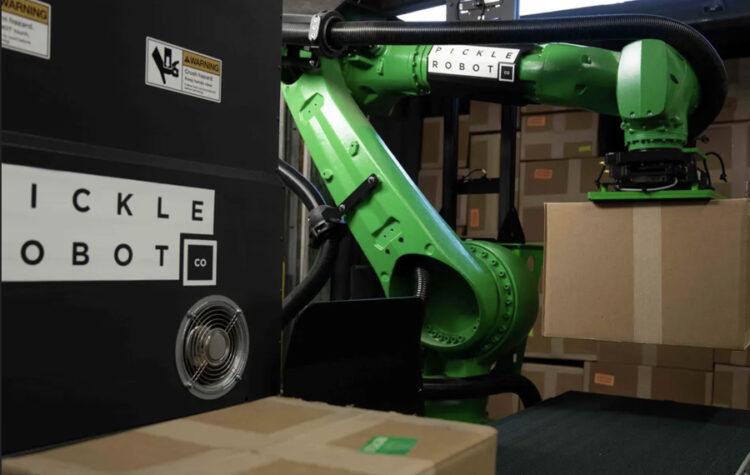
Robots that spare warehouse workers the heavy lifting
Founded by MIT alumni, the Pickle Robot Company has developed machines that can autonomously load and unload trucks inside warehouses and logistic centers.
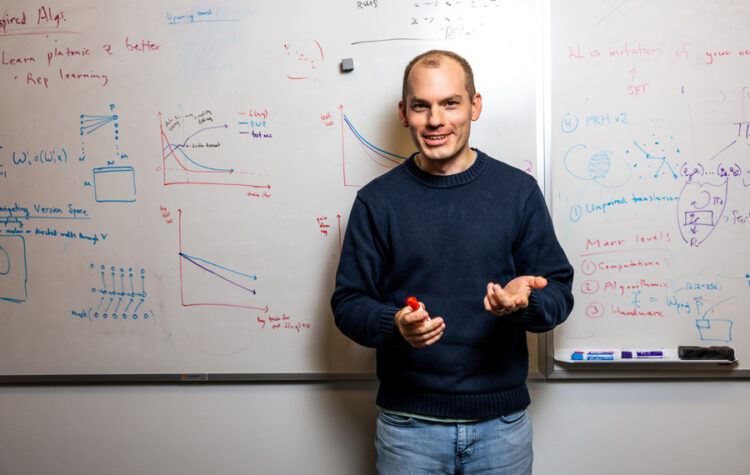
Understanding the nuances of human-like intelligence
Associate Professor Phillip Isola studies the ways in which intelligent machines “think,” in an effort to safely integrate AI into human society.
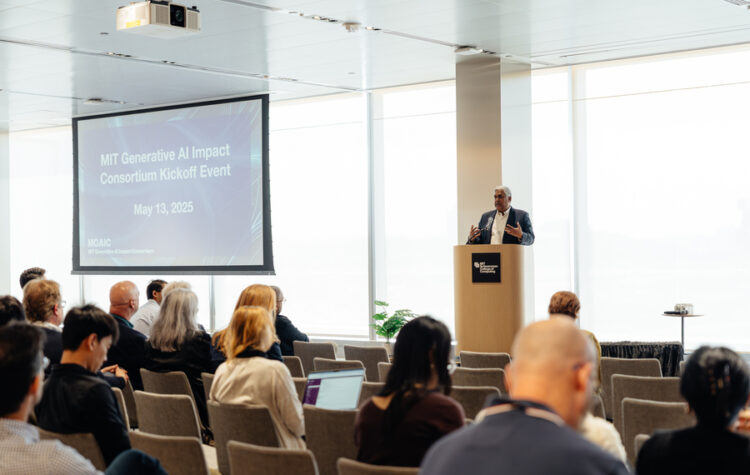
Researchers present bold ideas for AI at MIT Generative AI Impact Consortium kickoff event
Presentations targeted high-impact intersections of AI and other areas, such as health care, business, and education.

MIT researchers introduce Boltz-1, a fully open-source model for predicting biomolecular structures
With models like AlphaFold3 limited to academic research, the team built an equivalent alternative, to encourage innovation more broadly.

Researchers find large language models make inconsistent decisions about whether to call the police when analyzing surveillance videos.

3 Questions: How to prove humanity online
AI agents could soon become indistinguishable from humans online. Could “personhood credentials” protect people against digital imposters?
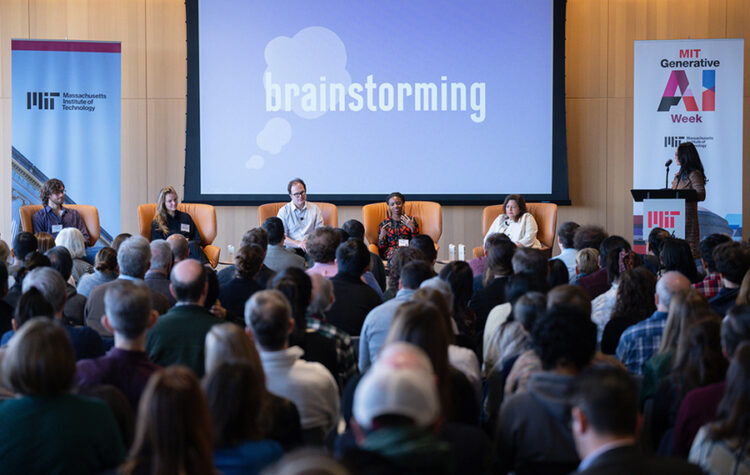
MIT Generative AI Week fosters dialogue across disciplines
During the last week of November, MIT hosted symposia and events aimed at examining the implications and possibilities of generative AI.