

Gunter Stein, Control Systems and Theory Expert, Dies at 84


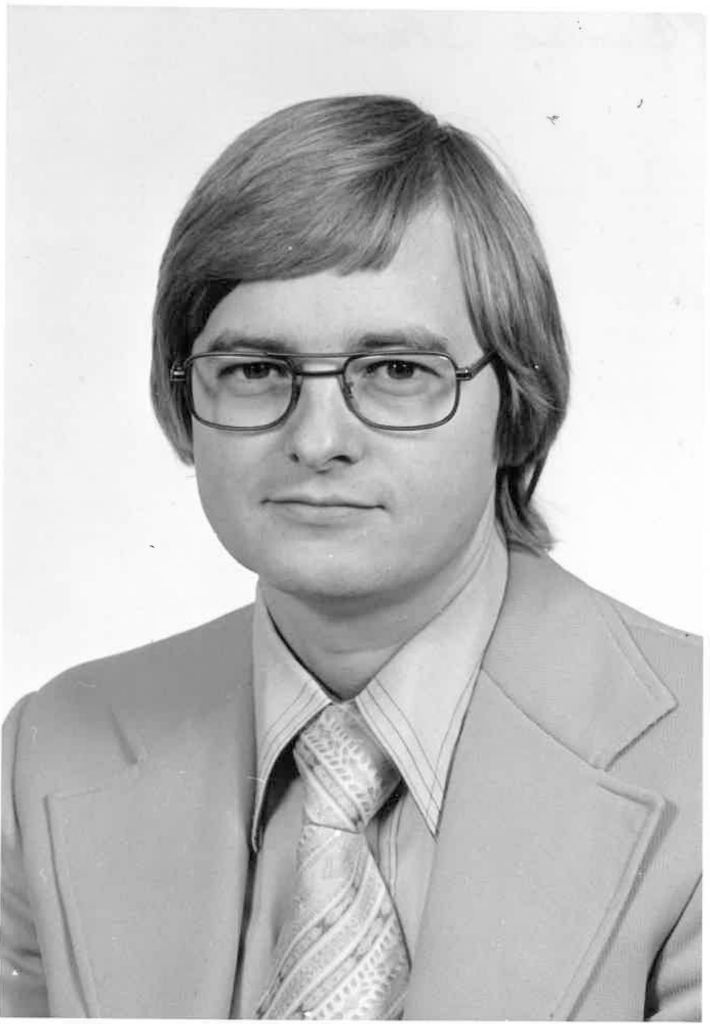 A career employee of Honeywell Labs, Stein was also a valued adjunct professor of EECS and researcher within LIDS. Photo courtesy the Department of Electrical Engineering and Computer Science.
 Gunter Stein, an expert on control systems and theory who helped reconcile competing schools of thought surrounding automated control systems, and whose work helped usher in an era of robust multivariable control, died on July 11th, 2026 in his home state of Minnesota. He was 84 years old.
Born in Germany, Stein emigrated with his family to the United States at a young age. The son of a tool and die maker at Fisher Body Works, Stein earned his BS degree from the General Motors Institute (now Kettering University) in Flint, Michigan, and his MS and PhD in electrical engineering from Purdue University in 1966 and 1969, respectively. He then joined Honeywell Labs, where he spent his more than 50-year career developing systems including aircraft flight controls, spacecraft altitude and orbit controls, and other navigation and control systems for applications as varied as launch boosters, reentry vehicles, ship positioning systems, torpedo engines and autopilots, and precision guided weapons.
As an engineer at Honeywell, Stein’s incisive and rigorous way of approaching problem-solving quickly garnered attention, catching the eye of the then-director of LIDS, Michael Athans, when the laboratory and Honeywell began cooperating on a NASA contract to design the controls for the F-8 aircraft. Stein’s submission on behalf of Honeywell was, at the time, labeled the “most conservative” of the potential submissions, but eventually became the only control system successfully flight-tested. Noting Stein’s talent, Athans approached Stein with a pitch to join MIT in 1977. As Stein’s career and personal life were by that point deeply rooted in Minnesota, he was not interested in relocating full-time, but agreed to an adjunct position with EECS, where he would spend one week per month giving lectures, helping advise graduate students, reading PhD theses, and acting as a principal investigator in LIDS. This arrangement would continue for the next thirty years, and would deeply shape MIT’s overall approach to control theory.
“Stein immediately struck me as a brilliant engineer,” says Munther Dahleh, the William A. Coolidge Professor in EECS and a member of LIDS, who at the time of Stein’s arrival was a newly hired junior member of the faculty. “As a naive researcher who was more of an applied mathematician than a real engineer, I was struck by how Gunter could see through the mathematics and distill what was truly essential for applications.” As Dahleh’s career developed (he would eventually become an associate department head of EECS and the founding director of the Institute for Data, Systems, and Society (IDSS)), his regard for Stein only grew. “Through Gunter’s work at Honeywell and his collaborations with students and faculty at MIT and other universities, robust control entered virtually every area of control applications. He shaped the direction of our field for decades, and his ideas remain a driving force behind many of today’s control applications.”
“Gunter came to LIDS at a propitious time,” said Nils R. Sandell, Jr. SM ’71, EE ’73, PhD ’74, who cotaught 6.291 Classical and Modern Methods for Control System Design with Stein. “With the experience on the NASA project and on others, the emphasis had begun to shift from optimal control to robust control. Gunter was a key part of this evolution, with his keen insight, based on extensive experience, of how classical frequency domain control techniques for single-input, single-output systems dealt with model uncertainty.” Over the course of the next decades, Stein would work on systems for the B-2 bomber and F-47 aircraft, and for many years would serve as a member of the U.S. Airforce Scientific Advisory Board. “I can attest that, decades later, the flight control design methodology that Gunter and his colleagues at Honeywell developed is still being applied to our most advanced aircraft,” said Sandell.
Alan Willsky, Edwin Sibley Webster Professor of EECS (Emeritus), remembered his colleague at LIDS as both a practical and a theoretical force: “Gunter was one of the giants of Automatic Control. His work at Honeywell on advanced control systems is legendary, but what is equally impressive is his impact on Control Theory and his influence on generations of control researchers. The period of years when he split time between Minneapolis and MIT had major influences on how control is taught and researched here at LIDS.”
Years of working with uncertainty and multivariable systems lead Stein to think carefully and deeply about famous failures of engineering, including the nuclear reactor disaster at Chernobyl which captured the world’s attention in 1983. Stein saw the disaster as a stark warning to all designers of control systems, not only for nuclear power plants but for aircraft, spacecraft, and indeed all systems “with automatic controls that cannot be done manually and that, if done improperly, can have dire consequences for property, the environment, and human life.” In his seminal 2003 Bode lecture and essay for Control Systems Magazine, entitled “Respect the Unstable”, he wrote: “We must place renewed emphasis on stating and teaching the principles of our subject clearly and well. The applications out there are simply too serious for us to hide from responsibility under a cloak of mathematics.” Of that famous lecture, Dahleh mused, “His Bode Lecture, which marked the first time the award was given, solidified my view of his remarkable ability to understand very different applications from a common fundamental perspective […] He showed how the challenges posed by complex control engineering systems, from agile aircraft to the Chernobyl disaster, could be understood through the same fundamental ideas that explain the difficulty of controlling an inverted pendulum. Thirty years later, his lecture remains one of the most cited Bode Lectures and one that has had a clear impact on our community.”
Among other honors, Stein was elected Fellow of the IEEE in 1985; awarded the IEEE Control System Society’s first Hendrik Bode Prize in 1989; elected to the National Academy of Engineering in 1994; and awarded the International Federation of Automatic Control’s Nathaniel Nichols Prize in 1999. His impact on the field of control engineering is also measured by the regard of his colleagues, who uniformly remember him as warm, social, and deeply conscientious. “Gunter was a great engineer – the greatest I have known – and he was also a great human being,” said Sandell, who noted the great passion with which Stein, in the Bode lecture, enumerated his responsibilities towards society as an engineer.
“On a personal level, Gunter was incredibly humble and unassuming, and always ready to offer help and support whenever asked,” said Dahleh. “He was a giant in our field and played a major role in shaping it. I am deeply grateful for the opportunity to have learned from him and to have had him as a colleague. He will be dearly missed.”
Predeceased by his parents and wife Nancy, Stein was survived by partner Ann Wynia, siblings Gerry (Lynn) Stein and Gisele Davis and by many nieces and nephews. A skilled sailor and lifelong outdoorsman, Stein spent much of his life exploring the various coastlines and seas of the world, and the forests and lakes of his native Minnesota. Memorial donations can be made in Stein’s name to the Minnesota Nature Conservancy.
Media Inquiries
Journalists seeking information about EECS, or interviews with EECS faculty members, should email eecs-communications@mit.edu.
Please note: The EECS Communications Office only handles media inquiries related to MIT’s Department of Electrical Engineering & Computer Science. Please visit other school, department, laboratory, or center websites to locate their dedicated media-relations teams.