

Tess Smidt named to 2025 cohort of AI2050 Early Career Fellows


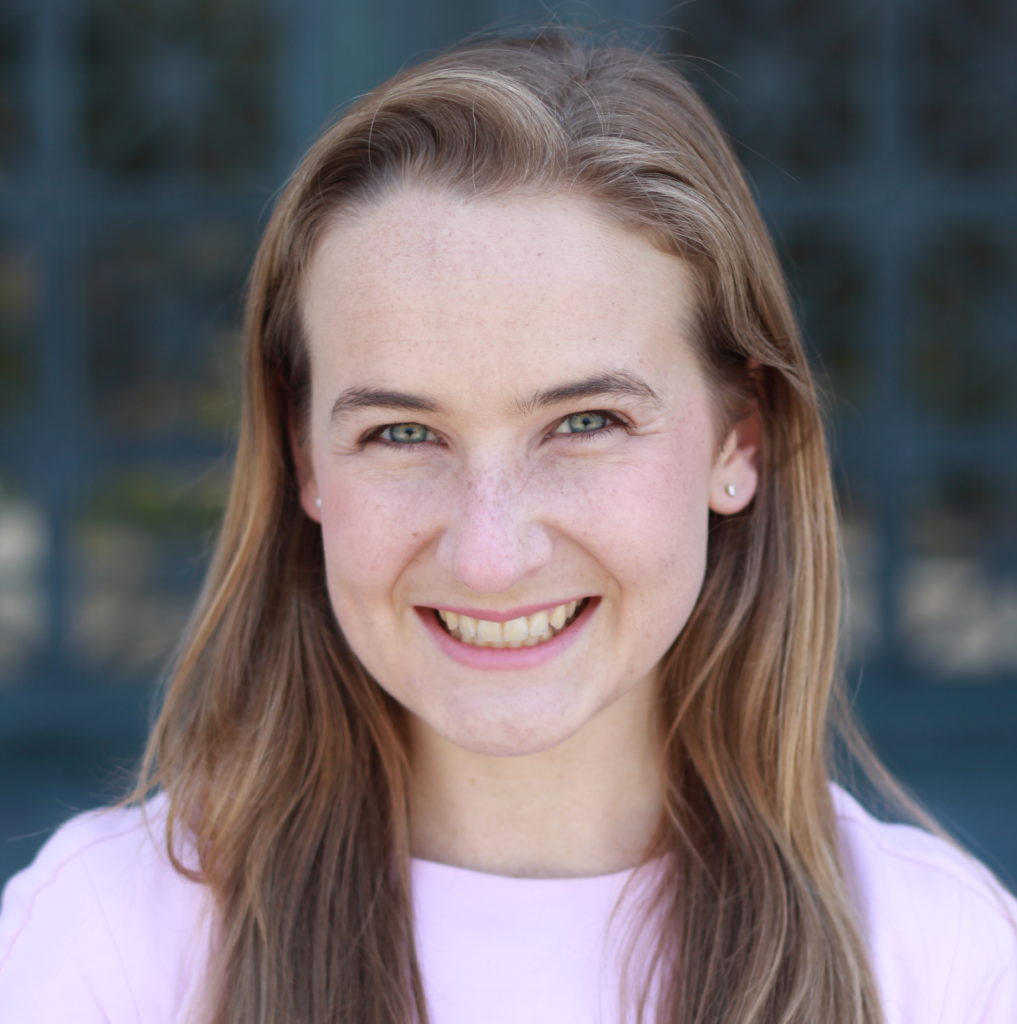
Associate Professor Tess Smidt was among those named to the 2025 cohort of AI2050 Early Career Fellows. The honor is announced annually by Schmidt Sciences, a nonprofit organization founded in 2024 by Eric and Wendy Schmidt that works to accelerate scientific knowledge and breakthroughs with the most promising, advanced tools to support a thriving planet. The organization prioritizes research in areas poised for impact including AI and advanced computing, astrophysics, biosciences, climate, and space—as well as supporting researchers in a variety of disciplines through its science systems program.
Smidt is the principal investigator of the Atomic Architects group at the Research Laboratory of Electronics (RLE), where she works at the intersection of physics, geometry, and machine learning to design algorithms that aid in the understanding of physical systems under physical and geometric constraints, with applications to the design both of new materials and new molecules. She has a particular focus on symmetries present in 3D physical systems, such as rotation, translation, and reflection.
Smidt earned her SB in Physics from MIT in 2012 and her PhD in Physics from the University of California, Berkeley in 2018. Prior to joining the MIT EECS faculty in 2021, she was the 2018 Alvarez Postdoctoral Fellow in Computing Sciences at Lawrence Berkeley National Laboratory and a Software Engineering Intern on the Google Accelerated Sciences team, where she developed Euclidean symmetry equivariant neural networks which naturally handle 3D geometry and geometric tensor data. Besides the AI2050 fellowship, she has received an Air Force Office of Scientific Research Young Investigator Program (AFOSR YIP) award, the EECS Outstanding Educator Award, and a Transformative Research Fund award.
Conceived and co-chaired by Eric Schmidt and James Manyika, AI2050 is a philanthropic initiative aimed at helping to solve hard problems in AI. Within their research, each fellow will contend with the central motivating question of AI2050: “It’s 2050. AI has turned out to be hugely beneficial to society. What happened? What are the most important problems we solved and the opportunities and possibilities we realized to ensure this outcome?”
Media Inquiries
Journalists seeking information about EECS, or interviews with EECS faculty members, should email eecs-communications@mit.edu.
Please note: The EECS Communications Office only handles media inquiries related to MIT’s Department of Electrical Engineering & Computer Science. Please visit other school, department, laboratory, or center websites to locate their dedicated media-relations teams.