


Special edition: Electrical Engineering
Dear alumni and friends far and wide,
It’s an exciting time to be an electrical engineer. The discipline sits at the core of some of the most profound innovations of the 21st century, such as quantum computing. Electrical engineers will be critical partners in solving the thorniest technological challenges faced by humanity: how to harness the power of AI; how to mitigate the worst effects of climate change; how to address humanity’s future in space.
For all these reasons, we’re thrilled to announce MIT’s new degree in electrical engineering, 6-5, “Electrical Engineering With Computing”.
The curriculum came out of a two-year, ground-up re-envisioning of modern electrical engineering education. During the process, our faculty consulted with students, alumni, and industry, on how to best educate modern electrical engineers and prepare them for the landscape of tomorrow. We hope you’ll share our excitement, and learn more about electrical engineering at MIT below!
–Asu Ozdaglar
Department Head, Electrical Engineering and Computer Science
MathWorks Professor of Electrical Engineering and Computer Science
Deputy Dean of Academics, MIT Stephen A. Schwarzman College of Computing
Industry Perspective

Here at Cadence, we view electrical engineering as foundational to all technological progress.
I see a tremendous need for electrical engineers to tackle all the greatest challenges our society faces, from climate change, to greening our power and transportation networks, to harnessing data to solve persistent questions in human health. These challenges will be met with the forces of opportunity of accelerated compute, artificial intelligence and digital twinning. Success requires new engineering fundamentals for tomorrow’s electrical engineers.
We need electrical engineers who have a deep and nuanced understanding of computation.
We need electrical engineers who can develop systems that can process unprecedented amounts of data and help translate it into actionable insight.
We need electrical engineers to grow our microelectronics manufacturing capacity right now; simultaneously, we need them to help develop the next evolution in computing: quantum.
All these needs require not only rigorous fundamentals, but hands-on training with cutting-edge systems and a deep education in computation. I’m so pleased to see MIT thoughtfully re-envisioning electrical engineering education to ensure that their students will be prepared to meet all the challenges of tomorrow.
—Anirudh Devgan, CEO of Cadence Design Systems
Feature Stories
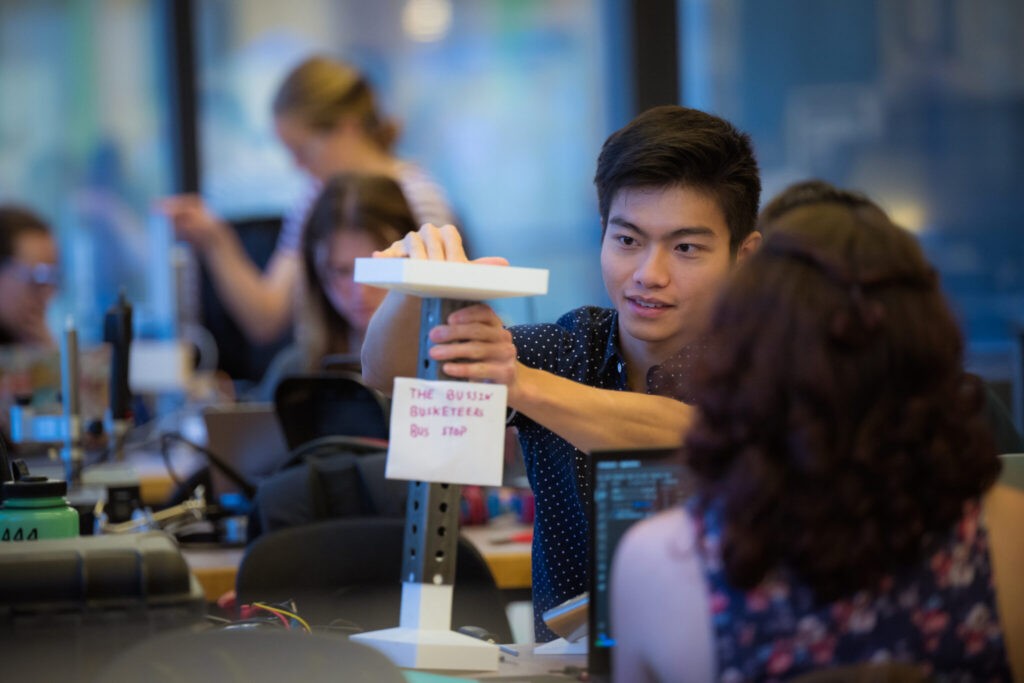
“Engineering for Impact” takes on the Miami heat.
The capstone class challenges EECS students to apply their engineering savvy to real-world problems beyond the MIT campus.
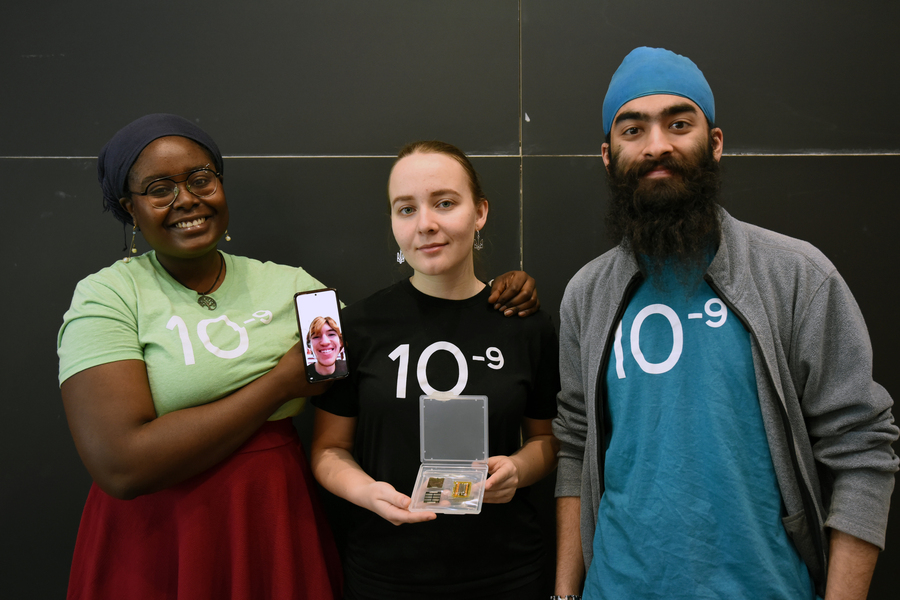
Learning to design with atoms and molecules
A hands-on class teaches undergraduates the fundamentals of quantum mechanics and nanoscale science from inside MIT.nano’s cleanroom.
Q & A
3Qs: Jelena Notaros on the new Silicon Photonics class within 6-5, Electrical Engineering With Computing
One of the signal changes of 6-5 is the organization of upper-level classes into tracks, including an undergraduate engineering sequence in Electromagnetics and Photonics. Jelena Notaros, Assistant Professor in EECS, developed a new class included in that track, “Silicon Photonics”.
3Qs: Dirk Englund on the quantum computing track within 6-5, “Electrical Engineering With Computing”.
In the new quantum track, students learn the foundations of the quantum computing “stack” before creating their own quantum engineered systems in the lab. Dirk Englund, Associate Professor in EECS, has been part of a team of instructors developing the quantum course sequence.
Recent Research in EE
This tiny chip can safeguard user data while enabling efficient computing on a smartphone
Researchers have developed a security solution for power-hungry AI models that offers protection against two common attacks.
MIT scientists tune the entanglement structure in an array of qubits
The advance offers a way to characterize a fundamental resource needed for quantum computing.
Study unlocks nanoscale secrets for designing next-generation solar cells
The work will help researchers tune surface properties of perovskites, a promising alternative and supplement to silicon, for more efficient photovoltaics.
New MIT.nano equipment to accelerate innovation in “tough tech” sectors
The advanced fabrication tools will enable the next generation of microelectronics and microsystems while bridging the gap from the lab to commercialization.
Self-powered sensor automatically harvests magnetic energy
A system designed at MIT could allow sensors to operate in remote settings, without batteries.
Event Spotlight: Milwaukee Tool Demo-Day
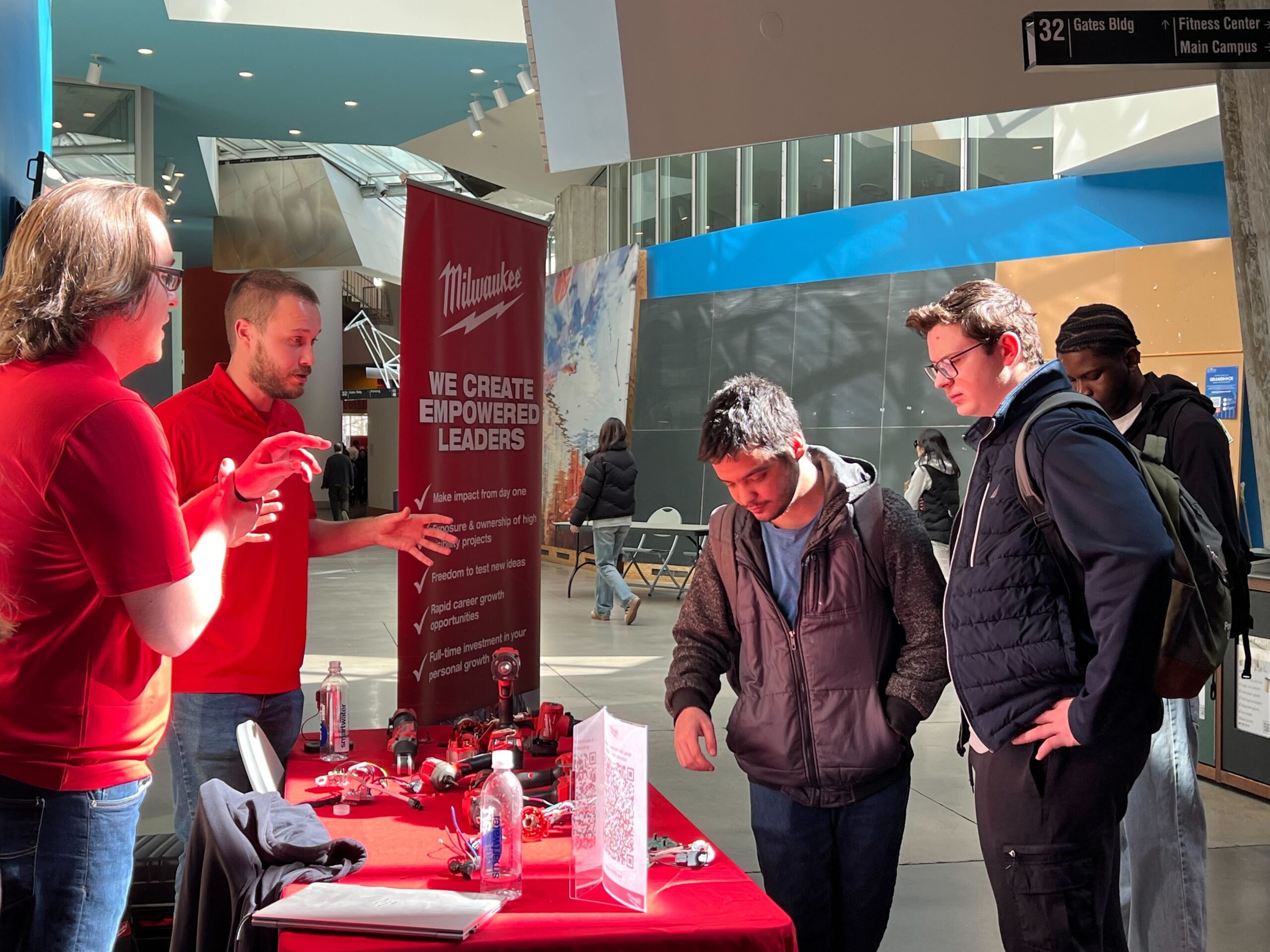
In March, EECS Alliance member company Milwaukee Tool hosted a day full of events on campus. Beginning the day with a faculty breakfast, members of the engineering and recruitment teams were able to network with EECS faculty – resulting in an impromptu lab visit. Afterwards, the Milwaukee Tool team spent part of the day in Stata, engaging with students walking to and from class. Students enjoyed making s’mores with a heat gun! Rounding out the day of activities, the team hosted a demo exploration, allowing students the opportunity to explore new products and learn more about working at Milwaukee Tool.
Please reach out to Ryan McCarthy to get your organization better connected to the EECS department at MIT.
